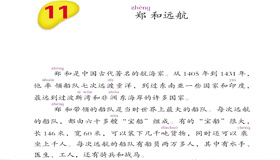
郑和Zhèng Hé是shì中国Zhōngguó古代gǔdài著名zhùmíng的de航海家hánghǎijiā。/Zheng He fue un famoso navegante de la antigua China./Zheng He was a famous navigator of ancient China.
从Cóng1405年nián到dào1431年nián,他Tā率领shuàilǐng船队chuánduì七qī次cì远渡yuǎndù重洋chóngyáng,到过dàoguo东南亚Dōngnányà一些yìxiē国家guójiā和hé印度Yìndù,最zuì远yuǎn到过dàoguo波斯湾Bōsī Wān和hé非洲Fēizhōu东dōng海岸hǎi'àn的de许多xǔduō国家guójiā。/Desde el año 1405 hasta el 1431, lideró siete expediciones marítimas a través de océanos lejanos, llegando a varios países del sudeste asiático y a la India, y, en su punto más lejano, al golfo Pérsico y a numerosos países de la costa oriental de África./From 1405 to 1431, he led fleets on seven voyages across distant oceans, reaching several Southeast Asian countries and India, and at his farthest, the Persian Gulf and many countries on the east coast of Africa.
郑和Zhèng Hé带领dàilǐng的de船队chuánduì是shì当时dāngshí世界shìjiè上shàng最zuì大dà的de船队chuánduì。/La flota que dirigía Zheng He era la flota más grande del mundo en aquella época./The fleet led by Zheng He was the largest fleet in the world at that time.
每měi次cì远航yuǎnháng的de船队chuánduì,都dōu由yóu六十liùshí多duō艘sōu“宝船bǎochuán”组成zǔchéng。/Cada expedición estaba formada por más de sesenta “barcos del tesoro”./Each voyage's fleet was made up of more than sixty “treasure ships.”
有的Yǒude“宝船bǎochuán”很hěn大dà,长cháng146米mǐ,宽kuān60米mǐ,可以kěyǐ装下zhuāngxià几jǐ千qiān吨dūn货物huòwù,同时Tóngshí还hái可以kěyǐ乘坐chéngzuò上千shàngqiān人rén。/Algunos “barcos del tesoro” eran enormes, con 146 metros de largo y 60 metros de ancho, capaces de cargar varios miles de toneladas de mercancía, y a la vez de transportar a más de mil personas./Some “treasure ships” were huge, 146 meters long and 60 meters wide, able to hold several thousand tons of cargo, while also carrying over a thousand people.
每měi次cì远航yuǎnháng的de船队chuánduì有yǒu船员chuányuán两liǎng万wàn多duō人rén,其中Qízhōng有yǒu水手shuǐshǒu、医生yīshēng、工人gōngrén,还hái有yǒu骑兵qíbīng和hé战马zhànmǎ。/Cada expedición tenía más de veinte mil tripulantes, entre los que había marineros, médicos, obreros, y también soldados de caballería con sus caballos de guerra./Each voyage's fleet had more than twenty thousand crew members, including sailors, doctors, workers, and also cavalry soldiers with their war horses.
1405年nián6月yuè,郑和Zhèng Hé第一dìyī次cì远航yuǎnháng时shí,苏州Sūzhōu的de百姓bǎixìng都dōu到dào江边jiāngbiān来lái看kàn船队chuánduì出海chūhǎi。/En junio de 1405, cuando Zheng He emprendió su primera expedición, el pueblo de Suzhou acudió a la orilla del río para ver zarpar a la flota./In June 1405, when Zheng He set out on his first voyage, the people of Suzhou all came to the riverside to watch the fleet set sail.
62艘sōu“宝船bǎochuán”披红挂彩pīhóngguàcǎi,在zài江面jiāngmiàn一字排开yízìpáikāi。在Zài礼炮lǐpào声shēng中zhōng,”宝船bǎochuán“乘风破浪chéngfēngpòlàng,驶向shǐxiàng大海dàhǎi。/Los 62 “barcos del tesoro”, engalanados de rojo y colores festivos, se alineaban en fila sobre la superficie del río. Entre el estruendo de las salvas de honor, los “barcos del tesoro” surcaban las olas y se dirigían hacia el mar./The 62 “treasure ships,” decked out in red and festive colors, lined up in a row on the river's surface. Amid the sound of salutes, the “treasure ships” cut through the wind and waves, heading toward the sea.
船队Chuánduì经过jīngguò中国Zhōngguó南海Nánhǎi,穿过chuānguò马六甲海峡Mǎliùjiǎ Hǎixiá,绕过ràoguò印度Yìndù半岛bàndǎo,访问了fǎngwènle二十多个èrshíduōge国家guójiā。/La flota pasó por el mar de la China Meridional, atravesó el estrecho de Malaca, rodeó la península india, y visitó más de veinte países./The fleet passed through the South China Sea, crossed the Strait of Malacca, went around the Indian peninsula, and visited more than twenty countries.
在Zài远航yuǎnháng中zhōng,哪怕Nǎpà风浪fēnglàng再zài大dà,他们tāmen都dōu能néng战胜zhànshèng困难kùnnan,一往无前yìwǎngwúqián。/Durante la expedición, por muy grandes que fueran el viento y las olas, siempre lograban superar las dificultades y avanzar sin retroceder./During the voyage, no matter how strong the wind and waves, they always managed to overcome difficulties and forge ahead without retreat.
这Zhè次cì远航yuǎnháng历时lìshí两liǎng年nián多duō。/Esta expedición duró más de dos años./This voyage lasted more than two years.
他们Tāmen于yú1407年nián金秋jīnqiū时节shíjié胜利shènglì返回了fǎnhuíle苏州Sūzhōu。/Regresaron triunfantes a Suzhou en el otoño dorado de 1407./They returned triumphantly to Suzhou in the golden autumn of 1407.
郑和Zhèng Hé远航yuǎnháng,把bǎ中国Zhōngguó人民rénmín的de友好yǒuhǎo情谊qíngyì以及yǐjí中国Zhōngguó的de丝绸sīchóu、火药huǒyào和hé造纸术zàozhǐshù等děng带到了dàidàole海外hǎiwài;同时Tóngshí,也yě带回了dàihuíle外国wàiguó朋友péngyou赠送zèngsòng的de礼品lǐpǐn,从而Cóng'ér促进了cùjìnle中外zhōngwài文化wénhuà交流jiāoliú,使Shǐ当时dāngshí的de中国Zhōngguó受到了shòudàole外国wàiguó朋友péngyou的de敬仰jìngyǎng。/Las expediciones de Zheng He llevaron al extranjero la amistad del pueblo chino, así como la seda, la pólvora y la técnica de fabricación de papel de China; al mismo tiempo, trajo de vuelta regalos obsequiados por amigos extranjeros, lo cual impulsó el intercambio cultural entre China y el extranjero, e hizo que la China de aquella época recibiera la admiración de sus amigos extranjeros./Zheng He's voyages brought China's friendship as well as Chinese silk, gunpowder, and papermaking techniques abroad; at the same time, he also brought back gifts presented by foreign friends, thereby promoting cultural exchange between China and other countries, and earning the China of that time the admiration of foreign friends.
郑和Zhèng Hé七qī次cì远航yuǎnháng,创造了chuàngzàole世界shìjiè航海史hánghǎishǐ上shàng的de奇迹qíjì。/Las siete expediciones de Zheng He crearon un milagro en la historia de la navegación mundial./Zheng He's seven voyages created a miracle in the history of world navigation.
他Tā的de伟大wěidà业绩yèjì远远yuǎnyuǎn超过了chāoguòle当时dāngshí欧洲Ōuzhōu最zuì著名zhùmíng的de航海家hánghǎijiā。/Sus grandes logros superaron con creces a los del navegante más famoso de Europa en aquella época./His great achievements far surpassed those of the most famous European navigator of that time.
1) 率shuài/liderar, tasa/lead, rate/HSK 4
• 率领shuàilǐng/liderar/lead, command/HSK 5
• 率先shuàixiān/tomar la delantera/take the lead/HSK 6
• 轻率qīngshuài/imprudente/rash, hasty/HSK 6
• 船长chuánzhǎng率领shuàilǐng船队chuánduì出海chūhǎi。/El capitán lidera la flota hacia el mar./The captain leads the fleet out to sea.
--------------------------------------------------------------------------------
2) 渡dù/cruzar (agua)/cross (water)/HSK 5
• 渡过dùguò/cruzar, superar/cross, get through/HSK 5
• 渡口dùkǒu/embarcadero/ferry crossing/Fuera de HSK
• 渡河dùhé/cruzar el río/cross a river/Fuera de HSK
• 他们tāmen乘船chéngchuán渡过dùguò了le大河dàhé。/Cruzaron el gran río en barco./They crossed the great river by boat.
--------------------------------------------------------------------------------
3) 洲zhōu/continente/continent/HSK 4
• 非洲Fēizhōu/África/Africa/HSK 4
• 美洲Měizhōu/América/the Americas/HSK 5
• 大洋洲Dàyángzhōu/Oceanía/Oceania/Fuera de HSK
• 非洲Fēizhōu有yǒu许多xǔduō野生yěshēng动物dòngwù。/África tiene muchos animales salvajes./Africa has many wild animals.
--------------------------------------------------------------------------------
4) 艘sōu/(clasificador de barcos)/(measure word for ships)/HSK 5
• 一艘船yìsōuchuán/un barco/a ship/HSK 5
• 港口gǎngkǒu停泊tíngbó着zhe一艘yìsōu大船dàchuán。/En el puerto está fondeado un gran barco./A large ship is moored in the harbor.
--------------------------------------------------------------------------------
5) 吨dūn/tonelada/ton/HSK 5
• 一吨货物yìdūnhuòwù/una tonelada de mercancía/one ton of goods/HSK 5
• 吨位dūnwèi/tonelaje/tonnage/Fuera de HSK
• 这zhè艘船sōuchuán能néng载zài重zhòng一千yìqiān吨dūn货物huòwù。/Este barco puede transportar mil toneladas de mercancía./This ship can carry a thousand tons of cargo.
--------------------------------------------------------------------------------
6) 货huò/mercancía/goods/HSK 4
• 货物huòwù/mercancía/goods, cargo/HSK 4
• 百货bǎihuò/artículos diversos/general merchandise/HSK 6
• 货车huòchē/camión de carga/freight truck/HSK 5
• 这zhè辆货车liànghuòchē装满了zhuāngmǎnle货物huòwù。/Este camión está lleno de mercancía./This truck is loaded full of goods.
--------------------------------------------------------------------------------
7) 乘chéng/montar, multiplicar/ride, multiply/HSK 4
• 乘坐chéngzuò/viajar en (transporte)/ride, travel by/HSK 4
• 乘客chéngkè/pasajero/passenger/HSK 4
• 乘车chéngchē/viajar en coche/take a ride, travel by car/HSK 4
• 乘法chéngfǎ/multiplicación/multiplication/HSK 5
• 请qǐng所有suǒyǒu乘客chéngkè系好jìhǎo安全带ānquándài。/Por favor todos los pasajeros abróchense el cinturón./Please all passengers fasten your seatbelts.
--------------------------------------------------------------------------------
8) 披pī/cubrirse con/drape over/HSK 5
• 披风pīfēng/capa/cape, cloak/Fuera de HSK
• 披肩pījiān/chal/shawl/HSK 6
• 披挂pīguà/vestirse (armadura)/put on (armor)/Fuera de HSK
• 她tā披着pīzhe一件yíjiàn红色hóngsè的de披风pīfēng。/Ella lleva puesta una capa roja./She is wearing a red cape.
--------------------------------------------------------------------------------
9) 绕rào/rodear/go around/HSK 4
• 绕路ràolù/dar un rodeo/take a detour/HSK 5
• 围绕wéirào/girar en torno a/revolve around/HSK 5
• 绕口令ràokǒulìng/trabalenguas/tongue twister/HSK 5
• 我们wǒmen不得不bùdébù绕路ràolù回家huíjiā。/No tuvimos más remedio que dar un rodeo para volver a casa./We had no choice but to take a detour home.
--------------------------------------------------------------------------------
10) 访fǎng/visitar/visit/HSK 4
• 访问fǎngwèn/visitar (formal)/visit (formal)/HSK 4
• 出访chūfǎng/visitar (viaje oficial)/make an official visit abroad/HSK 6
• 采访cǎifǎng/entrevistar/interview/HSK 4
• 记者jìzhě采访cǎifǎng了le那位nàwèi科学家kēxuéjiā。/El periodista entrevistó a ese científico./The journalist interviewed that scientist.
--------------------------------------------------------------------------------
11) 返fǎn/regresar/return/HSK 5
• 返回fǎnhuí/regresar/return/HSK 5
• 返航fǎnháng/regresar (barco/avión)/return (ship
• 往返wǎngfǎn/ida y vuelta/round trip/HSK 5
• 船队chuánduì顺利shùnlì地de返航fǎnháng了le。/La flota regresó sin contratiempos./The fleet returned smoothly.
--------------------------------------------------------------------------------
12) 谊yì/amistad/friendship/HSK 5
• 情谊qíngyì/amistad, cariño/friendship, affection/HSK 6
• 友谊yǒuyì/amistad/friendship/HSK 4
• 我们wǒmen的de友谊yǒuyì非常fēicháng珍贵zhēnguì。/Nuestra amistad es muy valiosa./Our friendship is very precious.
--------------------------------------------------------------------------------
13) 丝sī/seda, hilo/silk, thread/HSK 4
• 丝织品sīzhīpǐn/tejido de seda/silk fabric/Fuera de HSK
• 铁丝tiěsī/alambre/wire/HSK 5
• 丝瓜sīguā/calabacín chino/luffa, Chinese okra/Fuera de HSK
• 中国Zhōngguó的de丝织品sīzhīpǐn很hěn有名yǒumíng。/Los tejidos de seda de China son muy famosos./Chinese silk fabrics are very famous.
--------------------------------------------------------------------------------
14) 赠zèng/regalar/present as a gift/HSK 5
• 赠送zèngsòng/regalar/give as a gift/HSK 5
• 赠言zèngyán/palabras de despedida/farewell message/Fuera de HSK
• 赠品zèngpǐn/obsequio/free gift/HSK 6
• 朋友péngyou赠送zèngsòng了le我wǒ一本yìběn书shū。/Un amigo me regaló un libro./A friend gave me a book as a gift.
--------------------------------------------------------------------------------
15) 促cù/impulsar/promote, urge/HSK 4
• 促进cùjìn/impulsar/promote, boost/HSK 4
• 促使cùshǐ/impulsar a que/prompt, urge/HSK 5
• 促成cùchéng/propiciar/bring about, facilitate/HSK 6
• 这次zhècì活动huódòng促进cùjìn了le两国liǎngguó之间zhījiān的de友谊yǒuyì。/Esta actividad fomentó la amistad entre los dos países./This event promoted friendship between the two countries.
--------------------------------------------------------------------------------
16) 绩jì/logro, mérito/achievement, merit/HSK 4
• 业绩yèjì/logros (empresa)/achievements, performance/HSK 6
• 成绩chéngjì/resultado, calificación/result, grade/HSK 3
• 战绩zhànjì/historial de victorias/record, track record/Fuera de HSK
• 他tā的de学习xuéxí成绩chéngjì很hěn好hǎo。/Sus calificaciones son muy buenas./His academic grades are very good.