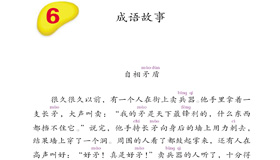
自相矛盾Zìxiāngmáodùn/Contradecirse a sí mismo (Lanza y escudo)/Self-Contradiction (Spear and Shield)
很久很久Hěnjiǔhěnjiǔ以前yǐqián,有yǒu一个yíge人rén在zài街上jiēshang卖mài兵器bīngqì。/Hace muchísimo tiempo, había un hombre que vendía armas en la calle./Long, long ago, there was a man selling weapons in the street.
他Tā手里shǒulǐ拿着názhe一支yìzhī长矛chángmáo,大声dàshēng叫卖jiàomài:“我的Wǒde矛máo是shì天下tiānxià最zuì锋利fēnglì的de,什么Shénme东西dōngxi都dōu挡不住dǎngbuzhù它tā。”/Tenía en la mano una lanza larga, y pregonaba en voz alta: “¡Mi lanza es la más afilada del mundo, nada puede detenerla!”/He held a long spear in his hand and called out loudly: “My spear is the sharpest under heaven, nothing can stop it!”
说完Shuōwán,他tā手持shǒuchí长矛chángmáo向xiàng身后shēnhòu的de墙上qiángshàng用力yònglì刺去cìqù,结果Jiéguǒ墙上qiángshàng穿了chuānle一个yíge洞dòng。/Al decir esto, blandió la lanza y la clavó con fuerza en la pared que tenía detrás; como resultado, la pared quedó perforada con un agujero./After saying this, he thrust the spear hard into the wall behind him, and as a result, the wall was pierced with a hole.
周围的Zhōuwéide人rén看了kànle都dōu鼓起掌来gǔqǐzhǎnglái,还hái有人yǒurén在zài高声gāoshēng叫好jiàohǎo:“好Hǎo矛máo!/La gente de alrededor, al verlo, se pusieron a aplaudir, y algunos gritaban con entusiasmo: “¡Qué lanza!/The people around, seeing this, all applauded, and some shouted enthusiastically: “What a spear!
真是Zhēnshì好hǎo矛máo!”/¡Vaya lanza tan buena!”/What a fine spear!”
卖mài兵器bīngqì的de人rén听了tīngle,十分shífēn得意déyì,于是Yúshì又yòu举起jǔqǐ一块yíkuài厚厚的hòuhòude盾牌dùnpái来lái叫卖jiàomài:“你们Nǐmen看kàn,这zhè块kuài盾dùn是shì天下tiānxià最zuì坚固jiāngù的de,什么Shénme兵器bīngqì都dōu刺不穿cìbuchuān它tā。”/El vendedor de armas, al oír esto, se sintió muy complacido, y entonces levantó también un grueso escudo y empezó a pregonar: “¡Miren, este escudo es el más sólido del mundo, ningún arma puede atravesarlo!”/The weapons seller, hearing this, was very pleased with himself, so he picked up a thick shield and began hawking it too: “Look, this shield is the sturdiest under heaven, no weapon can pierce it!”
周围的Zhōuwéide人rén听了tīngle,都dōu感到gǎndào奇怪qíguài。/La gente de alrededor, al oírlo, se sintió extrañada./The people around, hearing this, all felt puzzled.
有Yǒu一个yíge士兵shìbīng上前shàngqián问道wèndào:“用Yòng你的nǐde长矛chángmáo刺cì你的nǐde盾dùn,又yòu会huì怎样zěnyàng呢ne?”/Un soldado se adelantó y preguntó: “Si usas tu lanza para atravesar tu escudo, ¿qué pasaría?”/A soldier stepped forward and asked: “If you used your spear to stab your shield, what would happen?”
周围的Zhōuwéide人rén听后tīnghòu都dōu笑了xiàole。/La gente que lo escuchó se echó a reír./The people who heard this all laughed.
卖mài兵器bīngqì的de人rén傻眼了shǎyǎnle,不知道bùzhīdào如何rúhé回答huídá,只好zhǐhǎo收起shōuqǐ兵器bīngqì赶快gǎnkuài走了zǒule。/El vendedor de armas se quedó pasmado, sin saber qué responder, y no tuvo más remedio que recoger sus armas e irse a toda prisa./The weapons seller was dumbfounded, not knowing how to answer, and had no choice but to gather up his weapons and hurry away.
--------------------------------------------------------------------------------
精卫Jīngwèi填海tiánhǎi/Jingwei llena el mar/Jingwei Fills the Sea
传说Chuánshuō上古shànggǔ时代shídài,炎帝Yándì有yǒu个gè女儿nǚ'ér。/Cuenta la leyenda que, en la antigüedad remota, el Emperador Yan tenía una hija./Legend has it that in ancient times, Emperor Yan had a daughter.
一天Yìtiān,她tā独自dúzì一人yìrén出海chūhǎi去qù玩wán,忽然hūrán海上hǎishàng刮起了guāqǐle大风dàfēng,掀起了xiānqǐle巨浪jùlàng,顿时Dùnshí天昏地暗tiānhūndì'àn。/Un día, salió sola al mar a jugar; de repente se levantó un fuerte viento sobre el mar, se formaron olas gigantescas, y al instante el cielo se oscureció por completo./One day, she went out to sea alone to play; suddenly a strong wind rose over the sea, huge waves surged up, and instantly the sky turned pitch dark.
她Tā来不及láibùjí上岸shàng'àn,淹死了yānsǐle。/No le dio tiempo a llegar a la orilla, y se ahogó./She didn't have time to reach the shore, and drowned.
她Tā死后sǐhòu,化作huàzuò一只yìzhī小鸟xiǎoniǎo,名字míngzi叫jiào“精卫Jīngwèi”。/Después de morir, se transformó en un pajarito, cuyo nombre era “Jingwei”./After she died, she turned into a little bird, whose name was “Jingwei.”
精卫Jīngwèi恨透了hèntòule大海dàhǎi。/Jingwei odiaba profundamente el mar./Jingwei hated the sea deeply.
她Tā想xiǎng:我Wǒ非fēi把bǎ大海dàhǎi填平tiánpíng不可bùkě。/Pensó: tengo que rellenar el mar sí o sí./She thought: I absolutely must fill up the sea.
于是Yúshì,她tā一次yícì又yòu一次yícì地de从cóng山上shānshàng衔来xiánlái石子shízǐ和hé树枝shùzhī,扔进rēngjìn大海dàhǎi里lǐ。/Así que, una y otra vez, traía piedritas y ramas de la montaña en el pico y las tiraba al mar./So, again and again, she carried pebbles and twigs from the mountain in her beak and threw them into the sea.
石子Shízǐ和hé树枝shùzhī都dōu被bèi海浪hǎilàng冲走了chōngzǒule。/Pero las piedritas y las ramas siempre se las llevaban las olas./But the pebbles and twigs were always swept away by the waves.
尽管Jǐnguǎn这样zhèyàng,精卫Jīngwèi填海tiánhǎi的de决心juéxīn一点儿yìdiǎnr也yě没méi动摇dòngyáo,还是háishi不停地bùtíngde从cóng山上shānshàng衔来xiánlái石子shízǐ和hé树枝shùzhī扔进rēngjìn大海dàhǎi里lǐ。/A pesar de esto, la determinación de Jingwei de rellenar el mar no flaqueó en absoluto; siguió sin parar trayendo piedritas y ramas de la montaña para tirarlas al mar./Despite this, Jingwei's resolve to fill the sea did not waver in the slightest; she kept on ceaselessly carrying pebbles and twigs from the mountain to throw into the sea.
后来Hòulái,人们rénmen用yòng“精卫Jīngwèi填海tiánhǎi”表示biǎoshì不bú怕pà艰难jiānnán、努力nǔlì奋斗fèndòu、坚持jiānchí到底dàodǐ的de决心juéxīn。/Más tarde, la gente empezó a usar “Jingwei llena el mar” para expresar la determinación de no temer las dificultades, esforzarse al máximo y perseverar hasta el final./Later, people began using “Jingwei fills the sea” to express the determination to not fear hardship, strive hard, and persevere to the end.
1) 矛máo/lanza/spear/HSK 5
• 矛盾máodùn/contradicción/contradiction/HSK 4
• 长矛chángmáo/lanza larga/long spear/Fuera de HSK
• 自相矛盾zìxiāngmáodùn/contradecirse a sí mismo/self-contradictory/Fuera de HSK
• 他tā说的话shuōdehuà前后qiánhòu矛盾máodùn。/Lo que dijo se contradice./What he said is contradictory.
--------------------------------------------------------------------------------
2) 盾dùn/escudo/shield/HSK 5
• 矛盾máodùn/contradicción/contradiction/HSK 4
• 盾牌dùnpái/escudo/shield/Fuera de HSK
• 后盾hòudùn/respaldo/backing, support/HSK 6
• 战士zhànshì手持shǒuchí盾牌dùnpái。/El guerrero sostiene un escudo./The warrior holds a shield.
--------------------------------------------------------------------------------
3) 兵bīng/soldado, arma/soldier, weapon/HSK 4
• 兵器bīngqì/arma/weapon/Fuera de HSK
• 士兵shìbīng/soldado/soldier/HSK 5
• 兵马bīngmǎ/tropas/troops, army/Fuera de HSK
• 古代gǔdài的de士兵shìbīng使用shǐyòng各种gèzhǒng兵器bīngqì。/Los soldados antiguos usaban diversas armas./Ancient soldiers used various weapons.
--------------------------------------------------------------------------------
4) 器qì/instrumento, aparato/instrument, apparatus/HSK 3
• 兵器bīngqì/arma/weapon/Fuera de HSK
• 机器jīqì/máquina/machine/HSK 3
• 武器wǔqì/arma/weapon/HSK 5
• 这zhè台tái机器jīqì效率xiàolǜ很hěn高gāo。/Esta máquina es muy eficiente./This machine is very efficient.
--------------------------------------------------------------------------------
5) 持chí/sostener, mantener/hold, maintain/HSK 4
• 主持zhǔchí/presidir, conducir/host, preside/HSK 4
• 坚持jiānchí/persistir/persist/HSK 3
• 支持zhīchí/apoyar/support/HSK 3
• 她tā坚持jiānchí每天měitiān锻炼duànliàn身体shēntǐ。/Ella persiste en hacer ejercicio todos los días./She persists in exercising every day.
--------------------------------------------------------------------------------
6) 刺cì/pinchar, espina/stab, thorn/HSK 4
• 刺刀cìdāo/bayoneta/bayonet/Fuera de HSK
• 刺伤cìshāng/herir (pinchando)/stab, wound/HSK 6
• 鱼刺yúcì/espina de pescado/fish bone/HSK 4
• 小心xiǎoxīn,别bié被鱼刺bèi yúcì卡住kǎzhù。/Ten cuidado, no te atragantes con las espinas del pescado./Be careful not to choke on the fish bones.
--------------------------------------------------------------------------------
7) 坚jiān/firme/firm/HSK 3
• 坚持jiānchí/persistir/persist/HSK 3
• 坚决jiānjué/resuelto/firm, resolute/HSK 5
• 坚定jiāndìng/firme, decidido/steadfast, determined/HSK 4
• 坚强jiānqiáng/fuerte (carácter)/strong (character)/HSK 4
• 她tā是shì一个yíge坚强jiānqiáng的de女孩nǚhái。/Ella es una chica fuerte./She is a strong girl.
--------------------------------------------------------------------------------
8) 固gù/sólido, fijo/solid, fixed/HSK 4
• 坚固jiāngù/sólido/solid, sturdy/HSK 5
• 固体gùtǐ/sólido (estado)/solid (state)/HSK 6
• 固定gùdìng/fijo/fixed/HSK 4
• 这zhè座桥zuòqiáo非常fēicháng坚固jiāngù。/Este puente es muy sólido./This bridge is very sturdy.
--------------------------------------------------------------------------------
9) 傻shǎ/tonto/silly/HSK 4
• 傻子shǎzi/tonto/fool/Fuera de HSK
• 傻瓜shǎguā/tonto (coloquial)/fool, silly (colloquial)/HSK 5
• 傻笑shǎxiào/reír tontamente/giggle foolishly/HSK 6
• 别bié傻笑shǎxiào了le,快kuài说shuō正经zhèngjing事shì。/Deja de reír tontamente y habla en serio./Stop giggling and get serious.
--------------------------------------------------------------------------------
10) 填tián/rellenar/fill in/HSK 4
• 填空tiánkòng/rellenar espacios en blanco/fill in the blank/HSK 4
• 填表tiánbiǎo/rellenar un formulario/fill out a form/HSK 4
• 填写tiánxiě/rellenar/fill in, complete/HSK 4
• 请qǐng填写tiánxiě这zhè张表格zhāngbiǎogé。/Por favor rellena este formulario./Please fill out this form.
--------------------------------------------------------------------------------
11) 浪làng/ola/wave/HSK 4
• 浪花lànghuā/espuma de las olas/sea spray, foam/HSK 5
• 风浪fēnglàng/viento y olas/wind and waves/HSK 6
• 海浪hǎilàng/ola marina/ocean wave/HSK 4
• 海浪hǎilàng一波yìbō一波地yìbōde拍打pāidǎ着zhe沙滩shātān。/Las olas del mar rompen contra la playa una tras otra./The ocean waves crash against the beach one after another.
--------------------------------------------------------------------------------
12) 昏hūn/oscuro, mareado/dim, dizzy/HSK 5
• 黄昏huánghūn/crepúsculo/dusk/HSK 4
• 昏暗hūn'àn/tenue, oscuro/dim, dark/HSK 6
• 昏迷hūnmí/estar inconsciente/be unconscious/HSK 6
• 黄昏huánghūn的de天空tiānkōng很hěn美měi。/El cielo del crepúsculo es muy hermoso./The dusk sky is very beautiful.
--------------------------------------------------------------------------------
13) 淹yān/ahogar, inundar/drown, flood/HSK 5
• 淹没yānmò/sumergir/submerge, inundate/HSK 6
• 淹死yānsǐ/ahogarse/drown/Fuera de HSK
• 洪水hóngshuǐ淹没yānmò了le整个zhěnggè村庄cūnzhuāng。/La inundación sumergió todo el pueblo./The flood submerged the entire village.
--------------------------------------------------------------------------------
14) 恨hèn/odiar/hate/HSK 4
• 痛恨tònghèn/odiar profundamente/hate deeply/HSK 6
• 怨恨yuànhèn/resentimiento/resentment/HSK 6
• 仇恨chóuhèn/odio/hatred/HSK 6
• 悔恨huǐhèn/arrepentimiento/remorse/HSK 6
• 他tā对duì这zhè种zhǒng行为xíngwéi感到gǎndào痛恨tònghèn。/Él siente un odio profundo por este tipo de comportamiento./He feels deep hatred for this kind of behavior.
--------------------------------------------------------------------------------
15) 尽jǐn/al máximo, agotar/to the utmost, exhaust/HSK 4
• 尽管jǐnguǎn/aunque/although/HSK 4
• 尽量jǐnliàng/en la medida de lo posible/as much as possible/HSK 4
• 尽快jǐnkuài/lo antes posible/as soon as possible/HSK 4
• 请qǐng尽量jǐnliàng早zǎo点儿diǎnr到dào。/Por favor llega lo antes posible./Please arrive as early as possible.
--------------------------------------------------------------------------------
16) 斗dòu/luchar/fight, struggle/HSK 4
• 奋斗fèndòu/luchar, esforzarse/strive, fight for/HSK 4
• 斗争dòuzhēng/lucha/struggle/HSK 5
• 战斗zhàndòu/combatir/fight, battle/HSK 5
• 他tā为wèi了le理想lǐxiǎng不断búduàn奋斗fèndòu。/Él lucha continuamente por su ideal./He continuously fights for his ideal.