
** 9_世界奇迹金字塔/Shìjiè qíjì jīnzìtǎ/La pirámide, maravilla del mundo/The Pyramids, World Wonder **
** 额外内容/Contenido adicional/Additional Content **
** 家庭/Jiātíng/FAMILIA/FAMILY **

** 词汇/Cíhuì/VOCABULARIO/VOCABULARY. **
** 历史/Lìshǐ/La historia/history **
** 宝宝游埃及/Bǎobǎo yóu Āijí/Baobao viaja a Egipto/Baobao Visits Egypt **
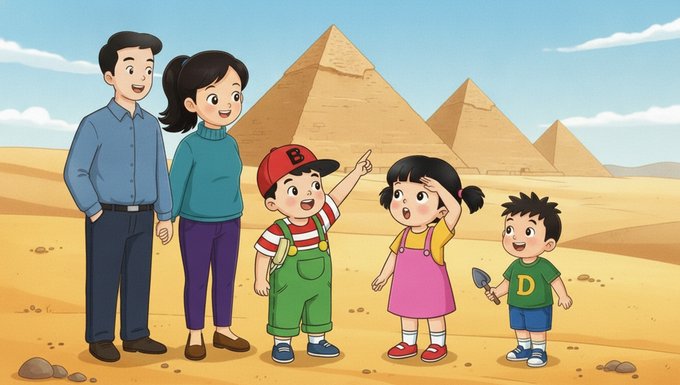
场景一/Chǎngjǐng yī/Escena 1/Scene 1
寒假, (Baobao) 一家来到 (Egipto/Egypt) 。在 (El Cairo/Cairo) 西南的 (Desierto/Wilderness) 里,三座 (Pirámide/Pyramid) 像巨人一样 (Erguirse/Tower) 着。
En las vacaciones de invierno, la familia de (宝宝Bǎobǎo) viajó a (埃及Āijí) . En el (荒漠huāngmò) al suroeste de (开罗Kāiluó) , tres (金字塔jīnzìtǎ) se (矗立chùlì) como gigantes.
In the winter holidays, (宝宝Bǎobǎo) 's family went to (埃及Āijí) . In the (荒漠huāngmò) south-west of (开罗Kāiluó) , three (金字塔jīnzìtǎ) (矗立chùlì) like giants.
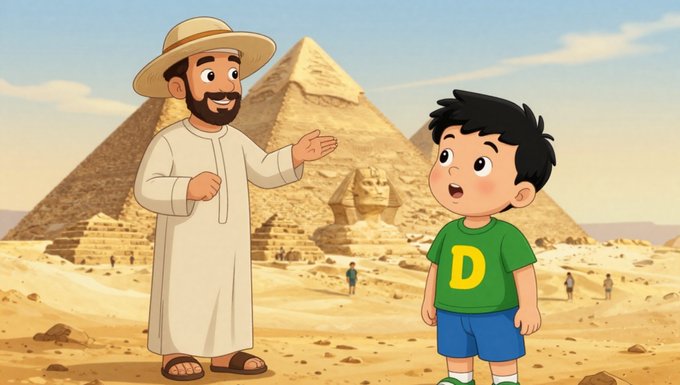
场景二/Chǎngjǐng èr/Escena 2/Scene 2
导游说:‘ (Pirámide/Pyramid) 是古 (Egipto/Egypt) 帝王的 (Tumba/Tomb) 。最大的 (Pirámide/Pyramid) (Hace (desde hoy)/Ago) 已经有四千多年了。’
El guía explicó: ‘Las (金字塔jīnzìtǎ) son las (陵墓língmù) de los faraones del antiguo (埃及Āijí) . La más grande se construyó (距今jùjīn) más de cuatro mil años’.
The guide explained: ‘The (金字塔jīnzìtǎ) are the (陵墓língmù) of the ancient (埃及Āijí) kings. The largest was built over four thousand years (距今jùjīn) .’
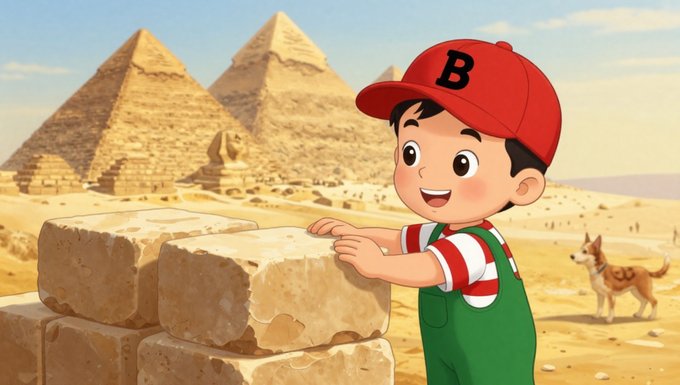
场景三/Chǎngjǐng sān/Escena 3/Scene 3
‘因为风化 (Erosión/Erosion) ,它比原来矮了。有人 (Calcular/Estimate) ,它是用二百三十万块大石头 (Construido con/Built of) 的。’
‘Por la (剥蚀bōshí) del viento ahora es más baja que antes. Hay quien ha (估算gūsuàn) que está (砌成qìchéng) dos millones trescientos mil bloques de piedra’.
‘Because of wind (剥蚀bōshí) , it's lower than it used to be. Some have (估算gūsuàn) that it is (砌成qìchéng) two million three hundred thousand stone blocks.’
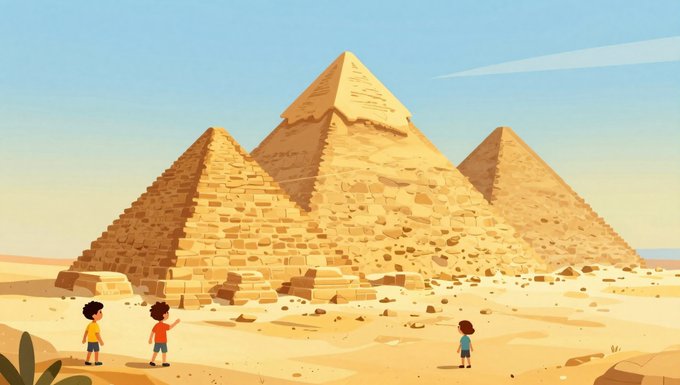
场景四/Chǎngjǐng sì/Escena 4/Scene 4
‘石块之间没有用 (Argamasa/Mortar) (Unir/Bond) ,四个 (Cara inclinada/Sloping face) 正对东南西北, (Margen de error/Error) 只有一点二七厘米。’
‘Los bloques no están (粘连niánlián) con (灰浆huījiāng) , y sus cuatro (斜面xiémiàn) miran exactamente a los cuatro puntos cardinales, con un (误差wùchā) de solo un coma veintisiete centímetros’.
‘The blocks aren't (粘连niánlián) with (灰浆huījiāng) , and the four (斜面xiémiàn) point exactly north, south, east and west, with an (误差wùchā) of just one point two seven centimetres.’
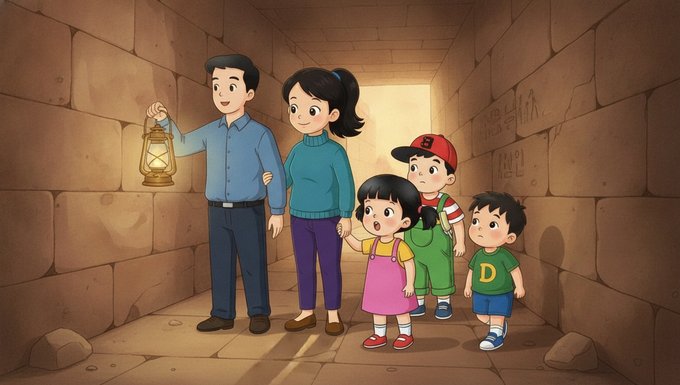
场景五/Chǎngjǐng wǔ/Escena 5/Scene 5
他们走进 (Estrecho/Narrow) 的通道,来到 (Cámara funeraria/Burial chamber) 。导游说:‘通气孔还 (Servir también de/Double as) 帝王灵魂出去活动的出入口呢。’
Recorrieron un pasadizo (窄窄zhǎizhǎi) hasta la (墓室mùshì) . El guía dijo: ‘Los conductos de aire (兼作jiānzuò) puerta para que el alma del faraón saliera a pasear’.
They went through a (窄窄zhǎizhǎi) passage into the (墓室mùshì) . The guide said: ‘The air shafts (兼作jiānzuò) doorways for the king's soul to go out and wander.’
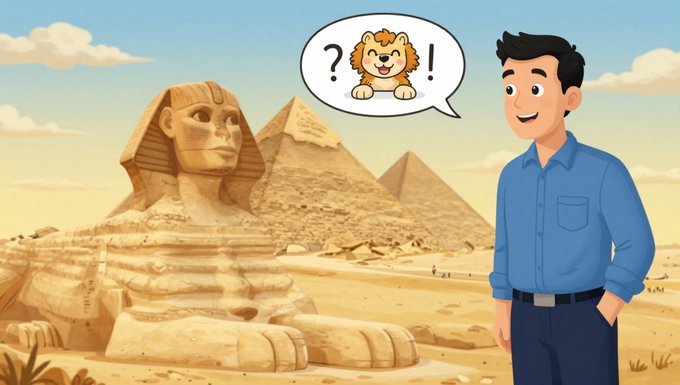
场景六/Chǎngjǐng liù/Escena 6/Scene 6
(Pirámide/Pyramid) 旁边有一座 (Esfinge/Sphinx) 。 (Papá,padre/Dad,father) 讲:‘传说他 (Como siempre/As usual) 给路人出 (Adivinanza/Riddle) ,猜不着的人就被他 (Tragar/Swallow) 下去。’
Junto a las (金字塔jīnzìtǎ) está la (狮身人面像shīshēn rénmiànxiàng) . (爸爸Bàba) contó: ‘Según la leyenda, (照例zhàolì) les ponía una (谜语míyǔ) a los viajeros, y al que no acertaba se lo (吞tūn) ’.
Beside the (金字塔jīnzìtǎ) stands the (狮身人面像shīshēn rénmiànxiàng) . (爸爸Bàba) said: ‘Legend says it (照例zhàolì) asked travellers a (谜语míyǔ) , and (吞tūn) anyone who couldn't answer.’
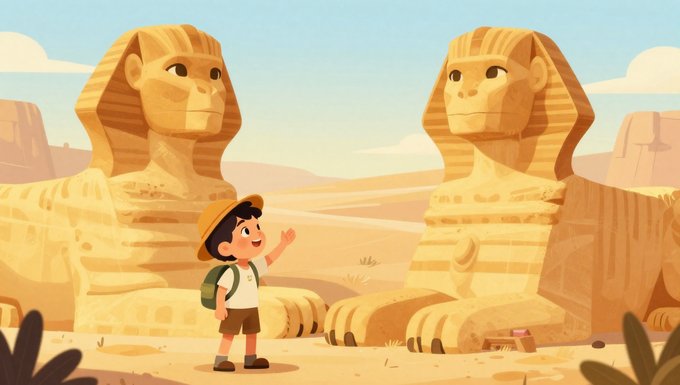
场景七/Chǎngjǐng qī/Escena 7/Scene 7
‘ (Adivinanza/Riddle) 是:什么东西早上四条腿,中午两条腿,晚上三条腿?一个年轻人 (Basarse en/Rely on) 着智慧回答:‘是人!’’
‘La (谜语míyǔ) era: ¿qué tiene cuatro patas por la mañana, dos al mediodía y tres por la noche? Un joven, (凭píng) su ingenio, respondió: ‘¡El hombre!’’
‘The (谜语míyǔ) was: what has four legs in the morning, two at noon and three in the evening? A young man, (凭píng) his wits, answered: ‘Man!’’
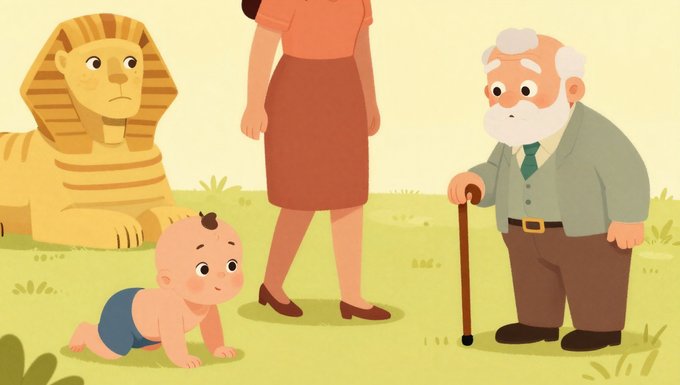
场景八/Chǎngjǐng bā/Escena 8/Scene 8
‘‘人老了要 (Apoyarse en/Lean on) 着 (Bastón/Walking stick) ,就是三条腿。’斯芬克斯听了, (Quedarse sin palabras/Speechless) 。’
‘‘De viejo, el hombre se (拄zhǔ) un (拐杖guǎizhàng) : son tres patas’. La Esfinge se (哑口无言yǎ kǒu wú yán) ’.
‘‘When a man is old, he (拄zhǔ) a (拐杖guǎizhàng) : that makes three legs.’ The Sphinx was left (哑口无言yǎ kǒu wú yán) .’
场景九/Chǎngjǐng jiǔ/Escena 9/Scene 9
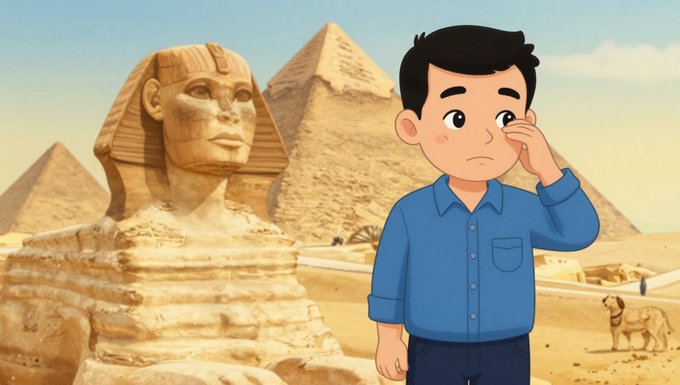
(Papá,padre/Dad,father) 说:‘可惜, (Esfinge/Sphinx) 的胡子被 (Napoleón/Napoleon) 的军队 (Golpear/Smash) 落了。’
(爸爸Bàba) dijo: ‘Es una pena que las tropas de (拿破仑Nápòlún) le (砸zá) la barba a la (狮身人面像shīshēn rénmiànxiàng) ’.
(爸爸Bàba) said: ‘It's a pity that (拿破仑Nápòlún) 's troops (砸zá) off the (狮身人面像shīshēn rénmiànxiàng) 's beard.’
场景十/Chǎngjǐng shí/Escena 10/Scene 10
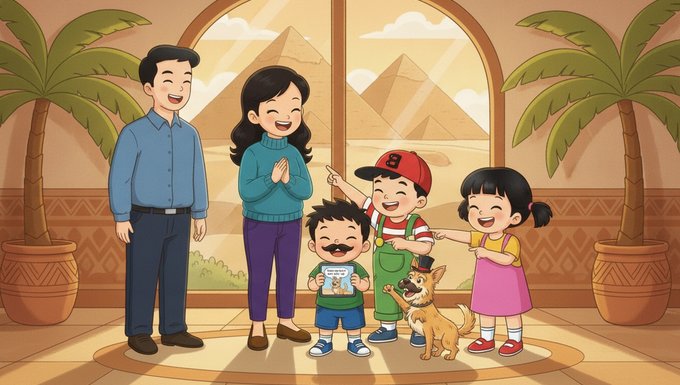
(Dudú) 也给大家出 (Adivinanza/Riddle) :‘什么东西有四条腿,天天跟着我们?’大家笑着说:‘ (Rocky) !’
(嘟嘟Dūdū) también puso una (谜语míyǔ) : ‘¿Qué tiene cuatro patas y nos sigue todos los días?’. Todos respondieron riendo: ‘¡ (洛基Luòjī) !’
(嘟嘟Dūdū) asked a (谜语míyǔ) too: ‘What has four legs and follows us every day?’ Everyone laughed: ‘ (洛基Luòjī) !’
@ Zhongwen 资料 (SWF, PDF, MP3 等) 的版权归属于:中国华文教育网 - Overseas Chinese Language and Culture Education Online。
@ Los materiales Zhongwen (SWF, PDF, MP3, etc.) son propiedad de: 中国华文教育网 - Overseas Chinese Language and Culture Education Online.
@ The materials Zhongwen (SWF, PDF, MP3, etc.) are the property of: 中国华文教育网 - Overseas Chinese Language and Culture Education Online.

主题/Zhǔtí/Tema/Theme

其他/Qítā/Otros/Others.

阅读/Yuèdú/Lectura/Reading.

PDF与视频/PDF,videos Y Quiz/PDF, Videos and Quiz

额外内容/Contenido adicional/Additional Content
