
** 7_音乐之都/Yīnyuè zhī dū/La capital de la música/The Capital of Music **
** 额外内容/Contenido adicional/Additional Content **
** 家庭/Jiātíng/FAMILIA/FAMILY **

** 词汇/Cíhuì/VOCABULARIO/VOCABULARY. **
** 历史/Lìshǐ/La historia/history **
** 维也纳的新年/Wéiyěnà de xīnnián/Año Nuevo en Viena/New Year in Vienna **
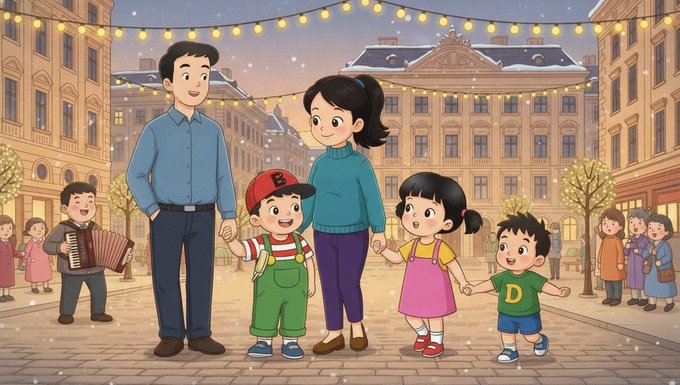
场景一/Chǎngjǐng yī/Escena 1/Scene 1
寒假, (Baobao) 一家来到 (Viena/Vienna) 。 (Caer la noche/Night falls) ,整个城市 (Bullir/Seethe with excitement) 起来,到处都是音乐。
En las vacaciones de invierno, la familia de (宝宝Bǎobǎo) llegó a (维也纳Wéiyěnà) . Al (夜幕降临yèmù jiànglín) , toda la ciudad empezó a (沸腾fèiténg) y había música por todas partes.
In the winter holidays, (宝宝Bǎobǎo) 's family arrived in (维也纳Wéiyěnà) . As (夜幕降临yèmù jiànglín) , the whole city began to (沸腾fèiténg) , and there was music everywhere.
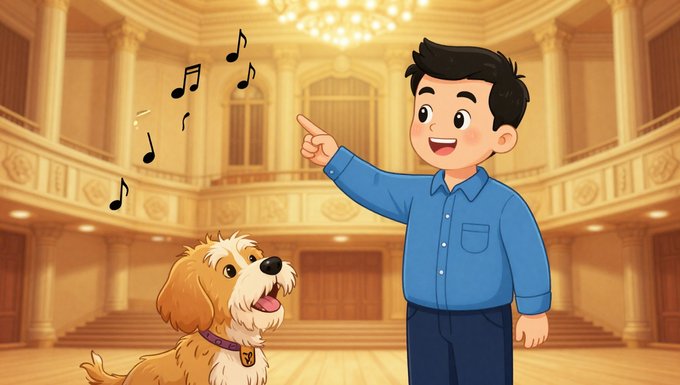
场景二/Chǎngjǐng èr/Escena 2/Scene 2
(Papá,padre/Dad,father) 说:‘这里的音乐会常常 (Toda la noche/All night long) ,所以 (Viena/Vienna) 叫‘音乐之都’。’
(爸爸Bàba) dijo: ‘Aquí los conciertos duran a menudo (通宵达旦tōngxiāo dádàn) ; por eso a (维也纳Wéiyěnà) la llaman ‘la capital de la música’’.
(爸爸Bàba) said: ‘Concerts here often go on (通宵达旦tōngxiāo dádàn) ; that's why (维也纳Wéiyěnà) is called ‘the capital of music’.’
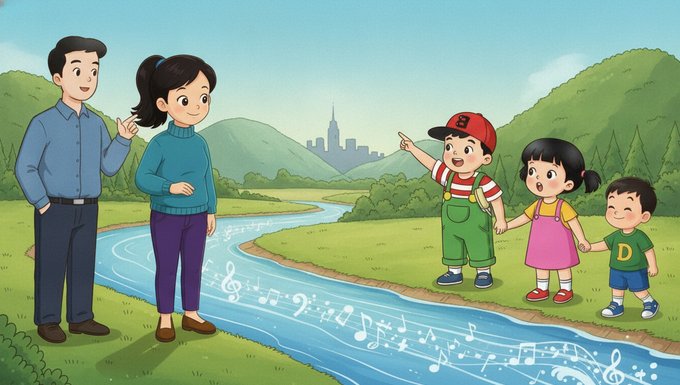
场景三/Chǎngjǐng sān/Escena 3/Scene 3
他们走到 (Danubio/Danube) 边,河水 (Murmullo del agua/Gurgling) 地 (Fluir/Flow) , (Salpicar/Splash up) 的浪花像一个个音符。
Fueron a la orilla del (多瑙河Duōnǎo Hé) ; el agua (流淌liútǎng) con un (哗哗huāhuā) y las olas que (溅起jiànqǐ) parecían notas musicales.
They walked to the bank of the (多瑙河Duōnǎo Hé) ; the water (流淌liútǎng) with a (哗哗huāhuā) sound, and the waves that (溅起jiànqǐ) looked like musical notes.

场景四/Chǎngjǐng sì/Escena 4/Scene 4
(Mamá,madre/Mom,mother) 说:‘ (Viena/Vienna) 是音乐的 (Fuente/Source) , (Gestar/Nurture) 了很多音乐家。海顿和 (Mozart/Mozart) 都在这里 (Componer/Compose) 过乐曲。’
(妈妈Māmā) dijo: ‘ (维也纳Wéiyěnà) es una (源泉yuánquán) de música que ha (孕育yùnyù) a muchos músicos. Haydn y (莫扎特Mòzhātè) (谱写pǔxiě) aquí sus obras’.
(妈妈Māmā) said: ‘ (维也纳Wéiyěnà) is a (源泉yuánquán) of music that has (孕育yùnyù) many musicians. Haydn and (莫扎特Mòzhātè) both (谱写pǔxiě) works here.’
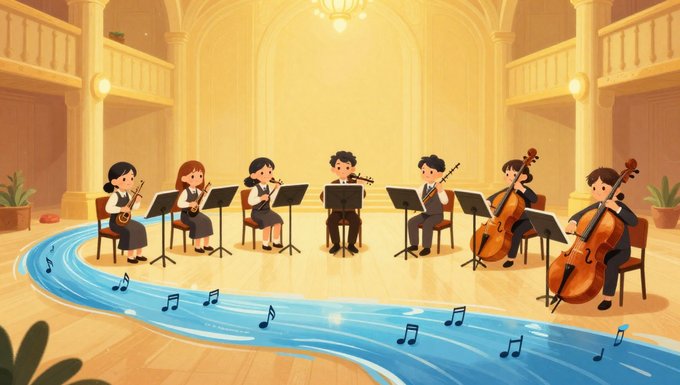
场景五/Chǎngjǐng wǔ/Escena 5/Scene 5
‘这些音乐大师和 (Viena/Vienna) (Fundirse en uno/Merge into one) 。施特劳斯 (Inmortal/Immortal) 的《蓝色 (Danubio/Danube) 》 (Causar furor/Take by storm) 了全世界。’
‘Estos grandes maestros se (融为一体róng wéi yì tǐ) con (维也纳Wéiyěnà) . El (不朽bùxiǔ) ‘ (多瑙河Duōnǎo Hé) azul’ de Strauss (风靡fēngmǐ) en todo el mundo’.
‘These great masters (融为一体róng wéi yì tǐ) with (维也纳Wéiyěnà) . Strauss's (不朽bùxiǔ) ‘Blue (多瑙河Duōnǎo Hé) ’ (风靡fēngmǐ) .’
场景六/Chǎngjǐng liù/Escena 6/Scene 6
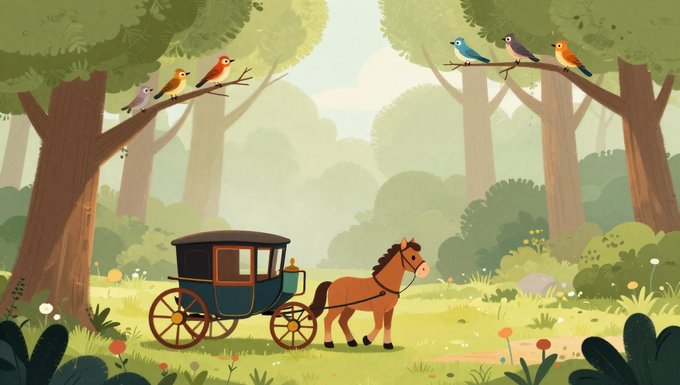
‘这首曲子写出了他对 (Rico/Rich) 故乡的 (Amor/Love) 。另一首曲子 (Narrar/Narrate) 了森林的清晨:一鸟起 (Cantar los pájaros/Sing (of birds) ) ,百鸟 (Responder cantando/Sing in response) ,还有‘ (Clop clop/Clip-clop) ’的马蹄声。’
‘Esta pieza expresa su (爱恋àiliàn) por su (富饶fùráo) tierra natal. Otra (叙述xùshù) una mañana en el bosque: un pájaro empieza a (鸣míng) , cien pájaros le (相和xiānghè) , y se oye el (嘚嘚dēdē) de los caballos’.
‘This piece expresses his (爱恋àiliàn) for his (富饶fùráo) homeland. Another (叙述xùshù) a morning in the forest: one bird begins to (鸣míng) , a hundred birds (相和xiānghè) , and you hear the (嘚嘚dēdē) of horses' hooves.’
场景七/Chǎngjǐng qī/Escena 7/Scene 7
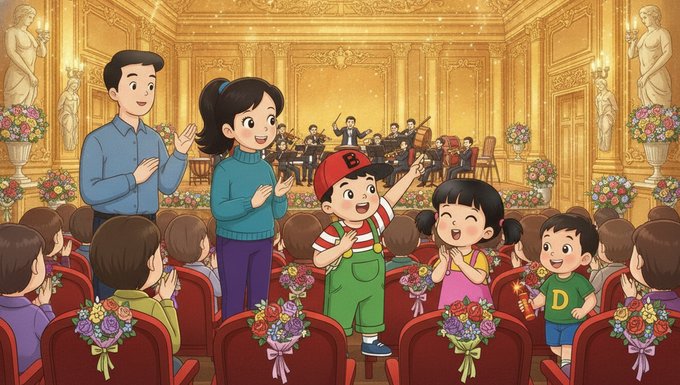
新年那天,他们去听新年音乐会。大家跟着 (Vals/Waltz) 的节奏一起拍手。
El día de Año Nuevo fueron al concierto de Año Nuevo. Todo el público daba palmas al ritmo del (华尔兹huá'ěrzī) .
On New Year's Day they went to the New Year's Concert. Everyone clapped along to the rhythm of the (华尔兹huá'ěrzī) .
场景八/Chǎngjǐng bā/Escena 8/Scene 8
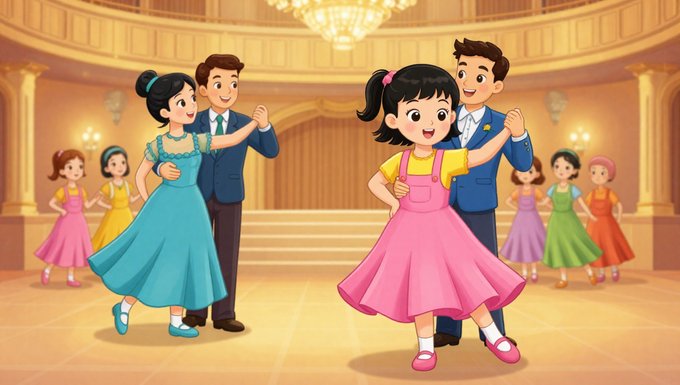
(Tíngting) 说:‘ (Viena/Vienna) 的音乐 (Nutrir/Nourish) 着每一个人, (Vals/Waltz) 真有 (Encanto/Charm) !’
(婷婷Tíngtíng) dijo: ‘La música de (维也纳Wéiyěnà) (滋养zīyǎng) a todo el mundo. ¡El (华尔兹huá'ěrzī) tiene un (魅力mèilì) especial!’
(婷婷Tíngtíng) said: ‘The music of (维也纳Wéiyěnà) (滋养zīyǎng) everyone. The (华尔兹huá'ěrzī) has such (魅力mèilì) !’
场景九/Chǎngjǐng jiǔ/Escena 9/Scene 9
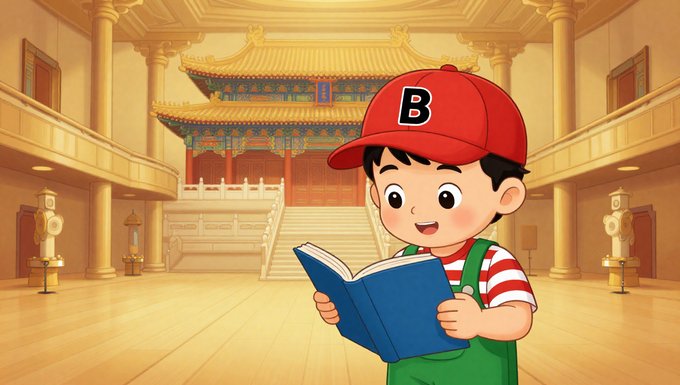
(Baobao) 在书上读到:‘ (Viena/Vienna) 曾经是神圣 (Roma/Rome) 帝国和 (Imperio austrohúngaro/Austro-Hungarian Empire) 的首都,它的艺术收藏 (Admirado en todo el mundo/World-renowned) 。’
(宝宝Bǎobǎo) leyó en un libro: ‘ (维也纳Wéiyěnà) fue la capital del Sacro Imperio (罗马Luómǎ) y del (奥匈帝国Ào-Xiōng dìguó) , y sus colecciones de arte son (举世瞩目jǔshì zhǔmù) ’.
(宝宝Bǎobǎo) read in a book: ‘ (维也纳Wéiyěnà) was once the capital of the Holy (罗马Luómǎ) Empire and the (奥匈帝国Ào-Xiōng dìguó) , and its art collections are (举世瞩目jǔshì zhǔmù) .’
场景十/Chǎngjǐng shí/Escena 10/Scene 10
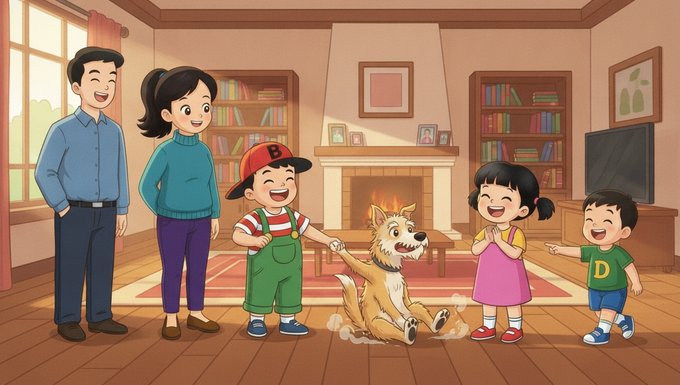
回到家, (Dudú) 拉着 (Rocky) 跳 (Vals/Waltz) , (Rocky) 转了几圈就跑了。
Ya en casa, (嘟嘟Dūdū) sacó a bailar el (华尔兹huá'ěrzī) a (洛基Luòjī) , pero (洛基Luòjī) dio unas vueltas y salió corriendo.
Back home, (嘟嘟Dūdū) pulled (洛基Luòjī) into a (华尔兹huá'ěrzī) , but (洛基Luòjī) spun around a few times and ran off.
@ Zhongwen 资料 (SWF, PDF, MP3 等) 的版权归属于:中国华文教育网 - Overseas Chinese Language and Culture Education Online。
@ Los materiales Zhongwen (SWF, PDF, MP3, etc.) son propiedad de: 中国华文教育网 - Overseas Chinese Language and Culture Education Online.
@ The materials Zhongwen (SWF, PDF, MP3, etc.) are the property of: 中国华文教育网 - Overseas Chinese Language and Culture Education Online.

主题/Zhǔtí/Tema/Theme

其他/Qítā/Otros/Others.

阅读/Yuèdú/Lectura/Reading.

PDF与视频/PDF,videos Y Quiz/PDF, Videos and Quiz

额外内容/Contenido adicional/Additional Content
