
** 4_泰戈尔的故事/Tàigē'ěr de gùshi/La historia de Tagore/The Story of Tagore **
** 额外内容/Contenido adicional/Additional Content **
** 家庭/Jiātíng/FAMILIA/FAMILY **

** 词汇/Cíhuì/VOCABULARIO/VOCABULARY. **
** 历史/Lìshǐ/La historia/history **
** 婷婷写诗/Tíngting xiě shī/Tíngting escribe un poema/Tingting Writes a Poem **
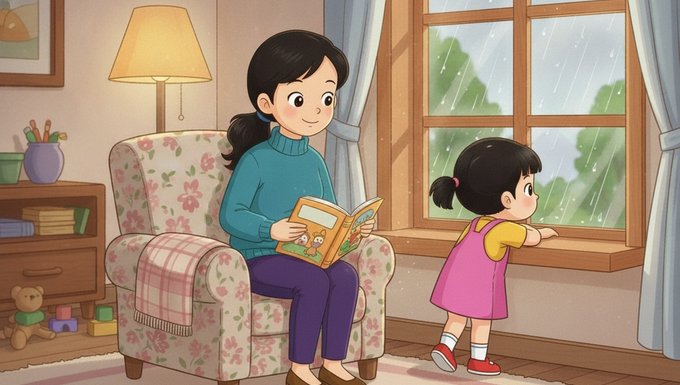
场景一/Chǎngjǐng yī/Escena 1/Scene 1
下雨天, (Tíngting) (Apoyarse/Lean on) 在窗台上看雨。 (Mamá,madre/Mom,mother) 说:‘ (Tagore/Tagore) 第一次写诗,也是在这样的雨天。’
Era un día de lluvia y (婷婷Tíngtíng) estaba (趴pā) en el alféizar mirando llover. (妈妈Māmā) dijo: ‘ (泰戈尔Tàigē'ěr) escribió su primer poema en un día de lluvia como este’.
It was a rainy day, and (婷婷Tíngtíng) was (趴pā) on the windowsill watching the rain. (妈妈Māmā) said: ‘ (泰戈尔Tàigē'ěr) wrote his first poem on a rainy day just like this.’
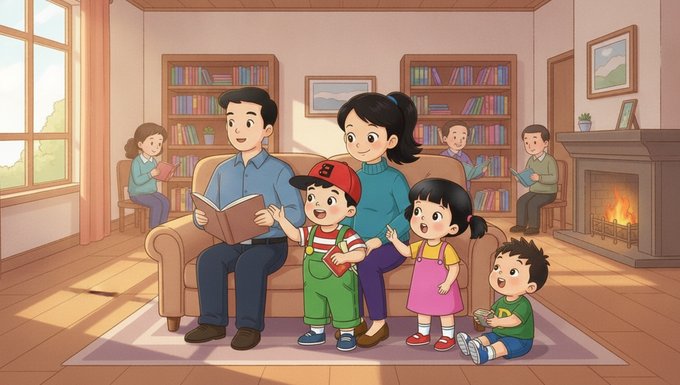
场景二/Chǎngjǐng èr/Escena 2/Scene 2
‘ (Tagore/Tagore) 是印度的伟大诗人。他家里人都爱文学,他从小就受到了文学的 (Influencia/Influence) 。’
‘ (泰戈尔Tàigē'ěr) fue un gran poeta de la India. En su familia a todos les encantaba la literatura, y desde pequeño recibió su (熏陶xūntáo) ’.
‘ (泰戈尔Tàigē'ěr) was a great Indian poet. Everyone in his family loved literature, and from childhood he grew up under its (熏陶xūntáo) .’
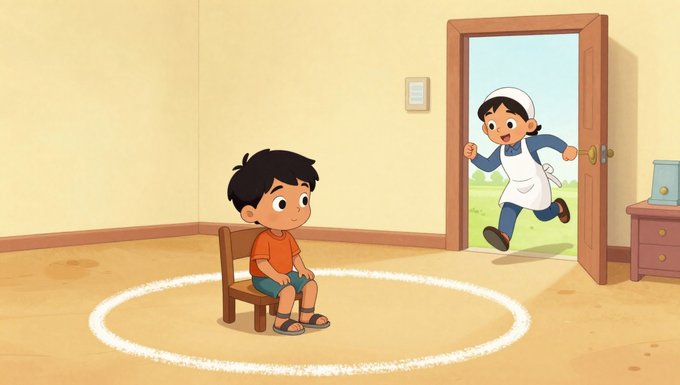
场景三/Chǎngjǐng sān/Escena 3/Scene 3
‘小时候,一个 (Juguetón/Fond of play) 的 (Criado/Servant) 让他 (Quedarse/Stay) 在一个圆圈里,自己跑出去玩了。’
‘De niño, un (仆人púrén) muy (贪玩tānwán) le hizo (待dāi) dentro de un círculo y se marchó a jugar’.
‘When he was little, a (贪玩tānwán) (仆人púrén) made him (待dāi) inside a circle and ran off to play.’
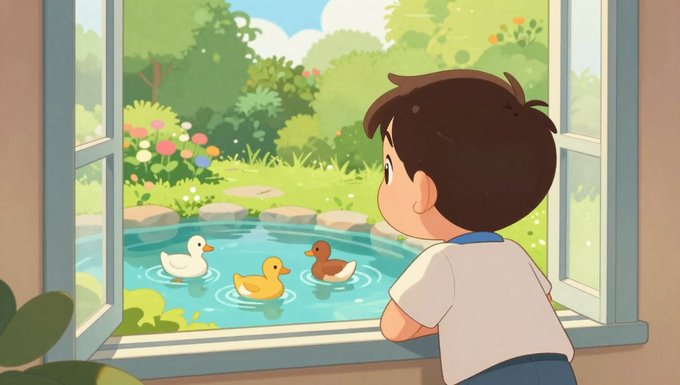
场景四/Chǎngjǐng sì/Escena 4/Scene 4
‘他 (Apoyarse/Lean on) 在窗台上,看见池塘里有一群 (Pato/Duck) 在游来游去。’
‘Se (趴pā) en la ventana y vio una bandada de (鸭子yāzi) nadando en el estanque’.
‘He (趴pā) on the windowsill and saw a flock of (鸭子yāzi) swimming in the pond.’

场景五/Chǎngjǐng wǔ/Escena 5/Scene 5
‘他写道:‘春天的雨, (Repiqueteo de lluvia/Pitter-patter) 地落在 (Platanero/Banana plant) 叶上, (Platanero/Banana plant) 叶轻轻地 (Temblar/Tremble) ……’’
‘Escribió: ‘La lluvia de primavera cae con su (淅淅沥沥xīxī lìlì) sobre las hojas del (芭蕉bājiāo) , y las hojas (颤动chàndòng) suavemente...’’
‘He wrote: ‘The spring rain falls (淅淅沥沥xīxī lìlì) on the (芭蕉bājiāo) leaves, and the leaves (颤动chàndòng) gently...’’
场景六/Chǎngjǐng liù/Escena 6/Scene 6
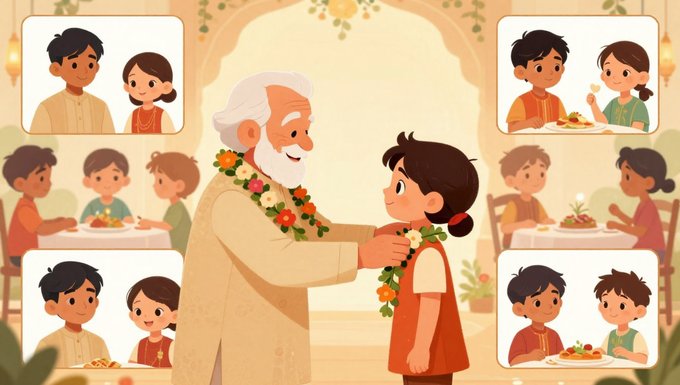
‘他十八岁出版了诗集《 (Sandhya Sangeet/Sandhya Sangeet) 》。大作家 (Chattopadhyay/Chattopadhyay) (Sonriente/Smiling) 地把花环套在他的脖子上。’
‘A los dieciocho años publicó el poemario ‘ (桑底亚桑吉特Sāngdǐyà Sāngjítè) ’. El gran escritor (却脱柏西亚Quètuōbǎixīyà) , (笑眯眯xiàomīmī) , le colgó al cuello una guirnalda de flores’.
‘At eighteen he published the poetry collection ‘ (桑底亚桑吉特Sāngdǐyà Sāngjítè) ’. The great writer (却脱柏西亚Quètuōbǎixīyà) , (笑眯眯xiàomīmī) , put a garland of flowers around his neck.’

场景七/Chǎngjǐng qī/Escena 7/Scene 7
‘他 (Coger del brazo/Take by the arm) 着 (Tagore/Tagore) 说:‘这是我们印度 (Mundo de la poesía/Poetry world) 上的一颗新星!’ (Tagore/Tagore) 觉得很 (Avergonzado/Ashamed) ,决心写出更好的诗。’
‘Lo (挽wǎn) y dijo: ‘¡Es una nueva estrella del (诗坛shītán) de la India!’. (泰戈尔Tàigē'ěr) se sintió (惭愧cánkuì) y decidió escribir poemas aún mejores’.
‘He (挽wǎn) and said: ‘This is a new star in India's (诗坛shītán) !’ (泰戈尔Tàigē'ěr) felt (惭愧cánkuì) and resolved to write even better poems.’

场景八/Chǎngjǐng bā/Escena 8/Scene 8
‘孩子们笑他像个 (Loco/Madman) ,他说:‘诗人是比 (Loco/Madman) 更疯的人啊!’’
‘Los niños se reían diciendo que parecía un (疯子fēngzi) , y él respondió: ‘¡Un poeta está aún más loco que un (疯子fēngzi) !’’
‘The children laughed that he looked like a (疯子fēngzi) , and he replied: ‘A poet is even madder than a (疯子fēngzi) !’’
场景九/Chǎngjǐng jiǔ/Escena 9/Scene 9
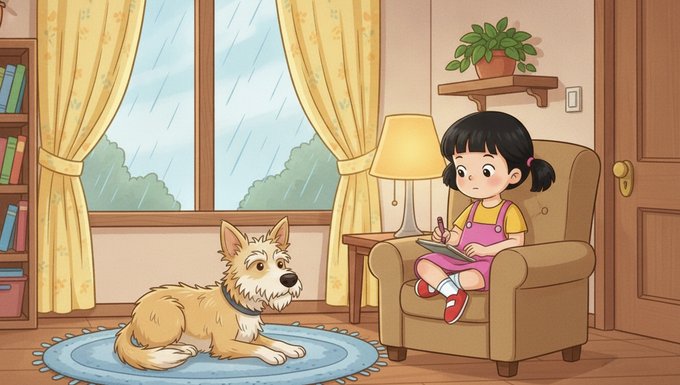
(Tíngting) 也拿起笔,写了一首小诗:‘雨点落在窗前, (Rocky) (Apoyarse/Lean on) 在门边……’
(婷婷Tíngtíng) también cogió un lápiz y escribió un poemita: ‘Las gotas caen en la ventana, (洛基Luòjī) se (趴pā) junto a la puerta...’
(婷婷Tíngtíng) picked up a pen too and wrote a little poem: ‘Raindrops fall by the window, (洛基Luòjī) (趴pā) by the door...’
场景十/Chǎngjǐng shí/Escena 10/Scene 10
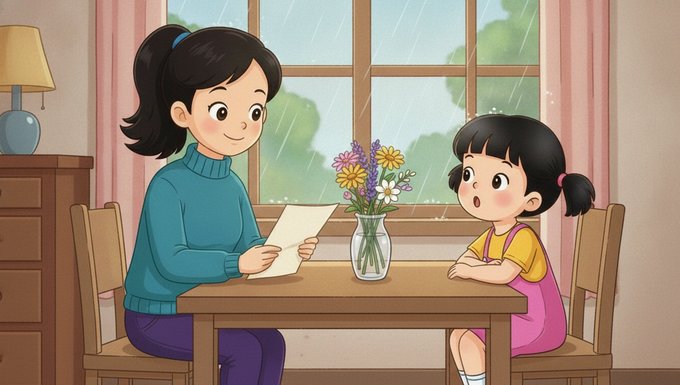
(Mamá,madre/Mom,mother) 说:‘ (Tagore/Tagore) 的诗像一朵永远 (Fragante/Fragrant) 的花。你的诗也很美!’
(妈妈Māmā) dijo: ‘Los poemas de (泰戈尔Tàigē'ěr) son como una flor siempre (芬芳fēnfāng) . ¡El tuyo también es muy bonito!’
(妈妈Māmā) said: ‘ (泰戈尔Tàigē'ěr) 's poems are like a flower that is forever (芬芳fēnfāng) . Your poem is lovely too!’
@ Zhongwen 资料 (SWF, PDF, MP3 等) 的版权归属于:中国华文教育网 - Overseas Chinese Language and Culture Education Online。
@ Los materiales Zhongwen (SWF, PDF, MP3, etc.) son propiedad de: 中国华文教育网 - Overseas Chinese Language and Culture Education Online.
@ The materials Zhongwen (SWF, PDF, MP3, etc.) are the property of: 中国华文教育网 - Overseas Chinese Language and Culture Education Online.

主题/Zhǔtí/Tema/Theme

其他/Qítā/Otros/Others.

阅读/Yuèdú/Lectura/Reading.

PDF与视频/PDF,videos Y Quiz/PDF, Videos and Quiz

额外内容/Contenido adicional/Additional Content
