
** 10_徐悲鸿的故事/Xú Bēihóng de gùshi/La historia de Xu Beihong/The Story of Xu Beihong **
** 额外内容/Contenido adicional/Additional Content **
** 家庭/Jiātíng/FAMILIA/FAMILY **

** 词汇/Cíhuì/VOCABULARIO/VOCABULARY. **
** 历史/Lìshǐ/La historia/history **
** 婷婷画奔马/Tíngting huà bēnmǎ/Tíngting pinta un caballo al galope/Tingting Paints a Galloping Horse **
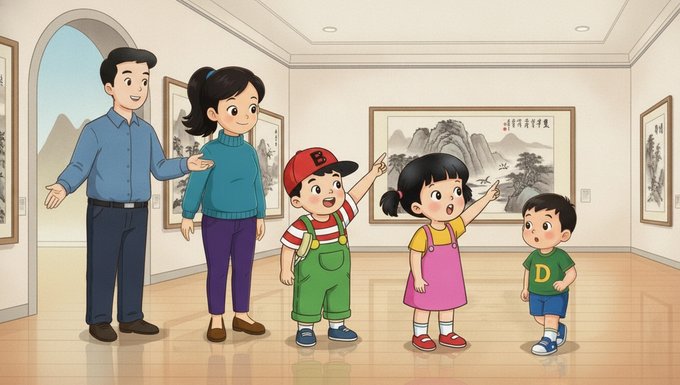
场景一/Chǎngjǐng yī/Escena 1/Scene 1
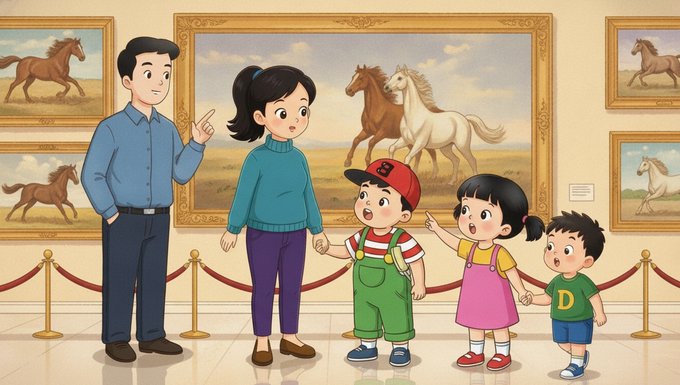
周末,全家去 (Museo/Museum) 看 (Pintura china/Chinese painting) 展览。
El fin de semana, toda la familia fue al (博物馆bówùguǎn) a ver una exposición de (中国画Zhōngguóhuà) .
At the weekend, the whole family went to the (博物馆bówùguǎn) to see an exhibition of (中国画Zhōngguóhuà) .
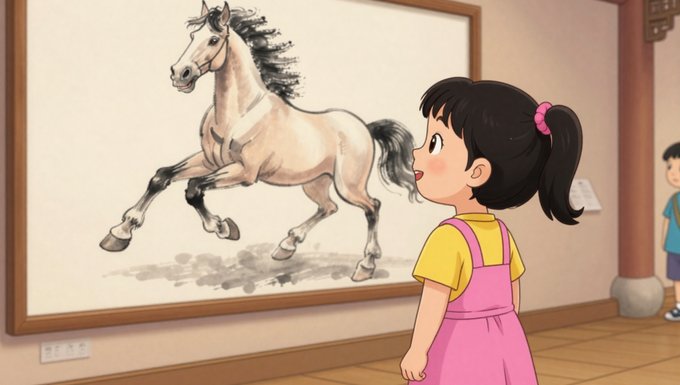
场景二/Chǎngjǐng èr/Escena 2/Scene 2
(Tíngting) 在一 (Clasificador para cuadros/Measure word for paintings) 《 (Caballo al galope/Galloping Horse) 》前停了下来:‘这匹马好像要从画里跑出来了!’
(婷婷Tíngtíng) se detuvo delante de un (幅fú) , ‘ (奔马图Bēnmǎ Tú) ’: ‘¡Parece que el caballo va a salirse del cuadro!’.
(婷婷Tíngtíng) stopped in front of a (幅fú) , ‘ (奔马图Bēnmǎ Tú) ’: ‘The horse looks like it's about to run out of the painting!’
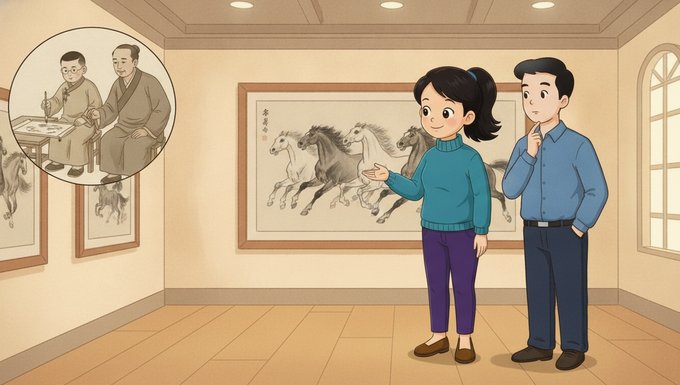
场景三/Chǎngjǐng sān/Escena 3/Scene 3
(Mamá,madre/Mom,mother) 说:‘这是 (Xu Beihong/Xu Beihong) 画的。他九岁就跟父亲学 (Pintura china/Chinese painting) ,打下了很好的 (Base/Foundation) 。’
(妈妈Māmā) dijo: ‘Lo pintó (徐悲鸿Xú Bēihóng) . A los nueve años empezó a aprender (中国画Zhōngguóhuà) con su padre y se formó una buena (基础jīchǔ) ’.
(妈妈Māmā) said, ‘ (徐悲鸿Xú Bēihóng) painted it. At nine he began learning (中国画Zhōngguóhuà) from his father and built a solid (基础jīchǔ) .’
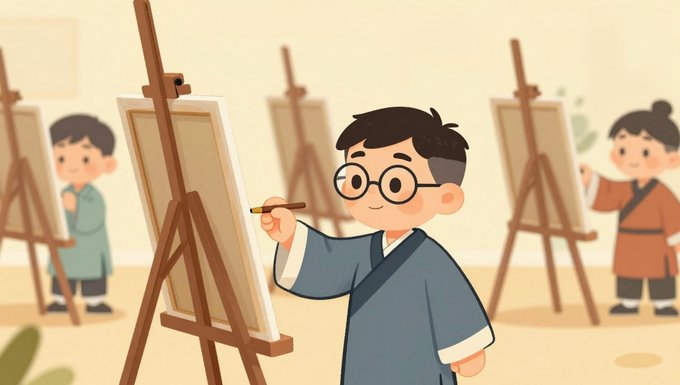
场景四/Chǎngjǐng sì/Escena 4/Scene 4
‘后来他去了法国 (París/Paris) ,在 (Museo del Louvre/Louvre Museum) (Con mucho esfuerzo/Diligently) 地 (Copiar (un cuadro)/Copy (a painting) ) (Cuadro famoso/Famous painting) 。’
‘Más tarde fue a (巴黎Bālí) , en Francia, y en el (卢浮宫Lúfúgōng) (临摹línmó) (名画mínghuà) (刻苦kèkǔ) ’.
‘Later he went to (巴黎Bālí) , France, and at the (卢浮宫Lúfúgōng) he (刻苦kèkǔ) (临摹línmó) (名画mínghuà) .’
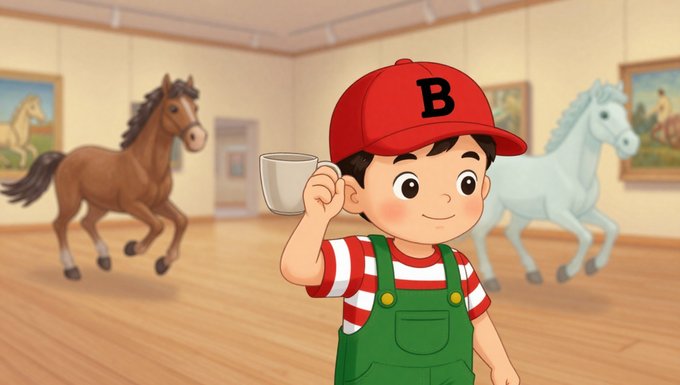
场景五/Chǎngjǐng wǔ/Escena 5/Scene 5
(Baobao) 说:‘他画的马真 (Realista/Lifelike) ,我好像听到了 (Ruido de cascos/Sound of hooves) 。’
(宝宝Bǎobǎo) dijo: ‘Sus caballos son tan (逼真bīzhēn) que me parece oír el (马蹄声mǎtíshēng) ’.
(宝宝Bǎobǎo) said, ‘His horses are so (逼真bīzhēn) that I can almost hear the (马蹄声mǎtíshēng) .’
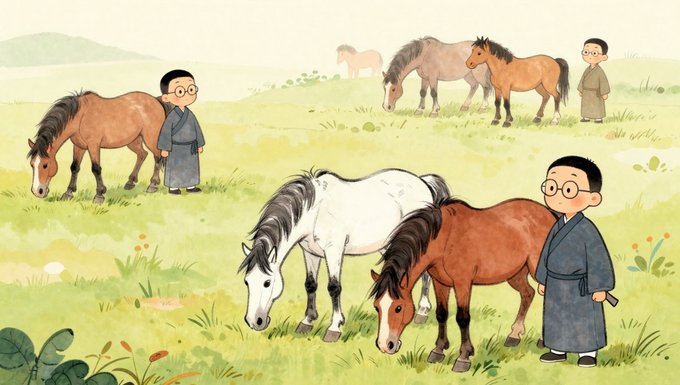
场景六/Chǎngjǐng liù/Escena 6/Scene 6
(Mamá,madre/Mom,mother) 说:‘因为他除了练习绘画 (Técnica/Technique) ,还常常 (Observar/Observe) 马的生活,研究马的 (Costumbres/Habits) 。’
(妈妈Māmā) dijo: ‘Es porque, además de practicar la (技巧jìqiǎo) de pintura, (观察guānchá) a menudo la vida de los caballos y estudiaba sus (习性xíxìng) ’.
(妈妈Māmā) said, ‘That's because, besides practicing painting (技巧jìqiǎo) , he often (观察guānchá) horses' lives and studied their (习性xíxìng) .’
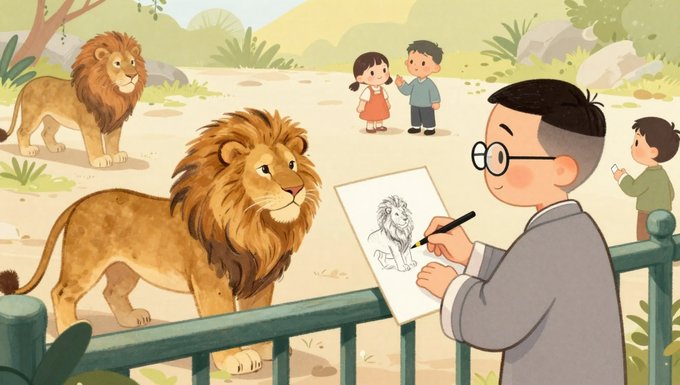
场景七/Chǎngjǐng qī/Escena 7/Scene 7
‘为了画好 (León/Lion) ,他 (En el pasado/Once) 天天去 (Zoológico/Zoo) ,一边 (Observar/Observe) 一边画。’
‘Para pintar bien los (狮子shīzi) , (曾经céngjīng) fue cada día al (动物园dòngwùyuán) a (观察guānchá) mientras pintaba’.
‘To paint (狮子shīzi) well, he (曾经céngjīng) went to the (动物园dòngwùyuán) every day, painting while he (观察guānchá) them.’
场景八/Chǎngjǐng bā/Escena 8/Scene 8
‘他 (Ser digno de/Truly be) 是伟大的画家。他用 (Excelente/Outstanding) 的 (Obra/Work) 告诉我们:只有 (Con mucho esfuerzo/Diligently) 练习,才能成功。’
‘Era (不愧búkuì) ser llamado un gran pintor. Con sus (优秀yōuxiù) (作品zuòpǐn) nos enseña que solo practicando (刻苦kèkǔ) se llega al éxito’.
‘He (不愧búkuì) a great painter. His (优秀yōuxiù) (作品zuòpǐn) teach us that only by practicing (刻苦kèkǔ) can we succeed.’
场景九/Chǎngjǐng jiǔ/Escena 9/Scene 9
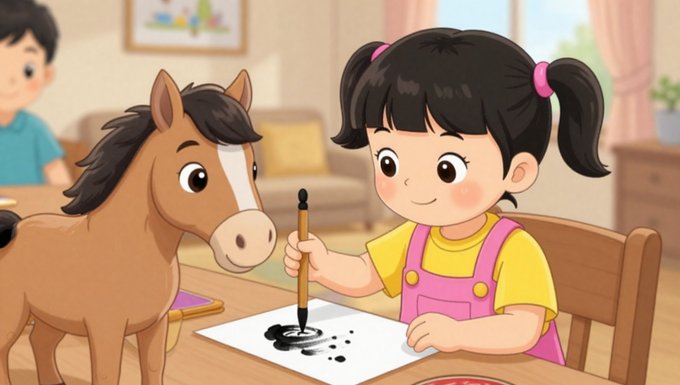
回到家, (Tíngting) 马上拿出画笔,照着书上的《 (Caballo al galope/Galloping Horse) 》画了一匹马。
Al volver a casa, (婷婷Tíngtíng) sacó enseguida sus pinceles y pintó un caballo copiando el ‘ (奔马图Bēnmǎ Tú) ’ de un libro.
Back home, (婷婷Tíngtíng) immediately took out her brushes and painted a horse, copying ‘ (奔马图Bēnmǎ Tú) ’ from a book.
场景十/Chǎngjǐng shí/Escena 10/Scene 10
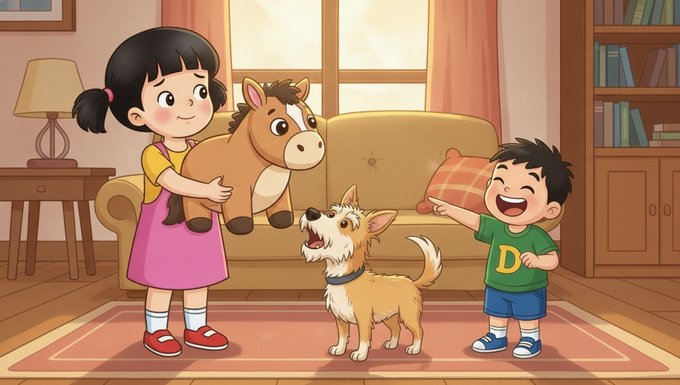
(Dudú) 看了说:‘姐姐画的马像一只小狗!’ (Tíngting) 说:‘那我还要多 (Observar/Observe) ,打好 (Base/Foundation) !’
(嘟嘟Dūdū) lo miró y dijo: ‘¡El caballo de mi hermana parece un perrito!’. (婷婷Tíngtíng) dijo: ‘¡Entonces tengo que (观察guānchá) más y hacerme una buena (基础jīchǔ) !’.
(嘟嘟Dūdū) looked and said, ‘Sister's horse looks like a puppy!’ (婷婷Tíngtíng) said, ‘Then I need to (观察guānchá) more and build a good (基础jīchǔ) !’
@ Zhongwen 资料 (SWF, PDF, MP3 等) 的版权归属于:中国华文教育网 - Overseas Chinese Language and Culture Education Online。
@ Los materiales Zhongwen (SWF, PDF, MP3, etc.) son propiedad de: 中国华文教育网 - Overseas Chinese Language and Culture Education Online.
@ The materials Zhongwen (SWF, PDF, MP3, etc.) are the property of: 中国华文教育网 - Overseas Chinese Language and Culture Education Online.

主题/Zhǔtí/Tema/Theme

其他/Qítā/Otros/Others.

阅读/Yuèdú/Lectura/Reading.

PDF与视频/PDF,videos Y Quiz/PDF, Videos and Quiz

额外内容/Contenido adicional/Additional Content
