
** 12_聂耳/Niè Ěr/Nie Er/Nie Er **
** 额外内容/Contenido adicional/Additional Content **
** 家庭/Jiātíng/FAMILIA/FAMILY **

** 词汇/Cíhuì/VOCABULARIO/VOCABULARY. **
** 历史/Lìshǐ/La historia/history **
** 宝宝学小提琴/Bǎobǎo xué xiǎotíqín/Baobao aprende violín/Baobao Learns the Violin **
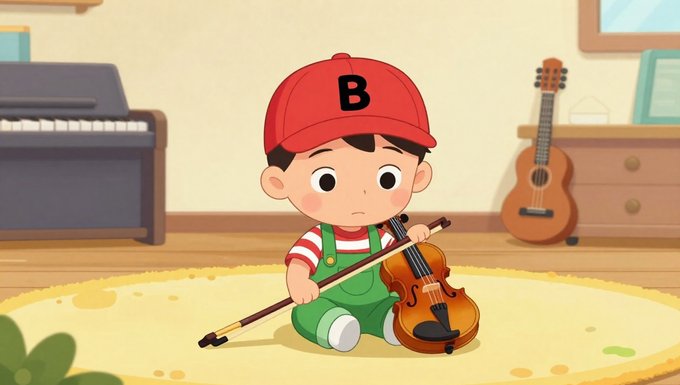
场景一/Chǎngjǐng yī/Escena 1/Scene 1
(Baobao) 开始学 (Violín/Violin) ,可是练了几天就不想练了。
(宝宝Bǎobǎo) empezó a aprender (小提琴xiǎotíqín) , pero a los pocos días ya no quería practicar.
(宝宝Bǎobǎo) started learning the (小提琴xiǎotíqín) , but after a few days he didn't want to practice anymore.
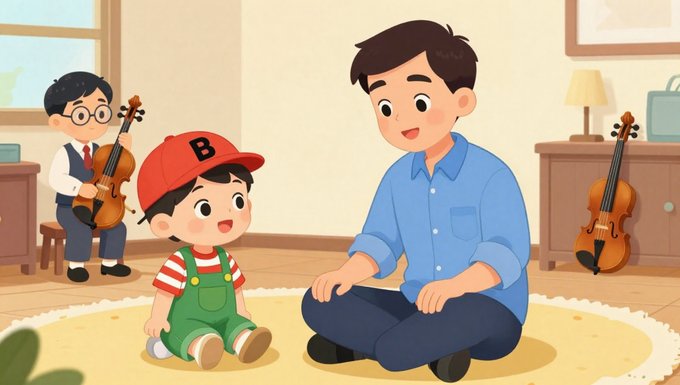
场景二/Chǎngjǐng èr/Escena 2/Scene 2
(Papá,padre/Dad,father) 给他讲了 (Nie Er/Nie Er) 的故事。 (Nie Er/Nie Er) 是中国 (Famoso/Famous) 的 (Compositor/Composer) 。
(爸爸Bàba) le contó la historia de (聂耳Niè Ěr) , un (著名zhùmíng) (作曲家zuòqǔjiā) chino.
(爸爸Bàba) told him the story of (聂耳Niè Ěr) , a (著名zhùmíng) Chinese (作曲家zuòqǔjiā) .
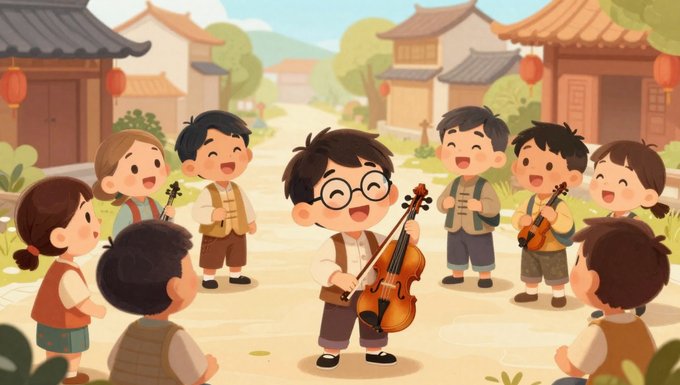
场景三/Chǎngjǐng sān/Escena 3/Scene 3
‘ (Nie Er/Nie Er) 从小就喜欢唱歌,一首 (Canción/Song) 听两遍就会唱了。’
‘A (聂耳Niè Ěr) le gustaba cantar desde pequeño; oía una (歌曲gēqǔ) dos veces y ya se la sabía’.
‘ (聂耳Niè Ěr) loved singing as a child; after hearing a (歌曲gēqǔ) twice, he could sing it.’
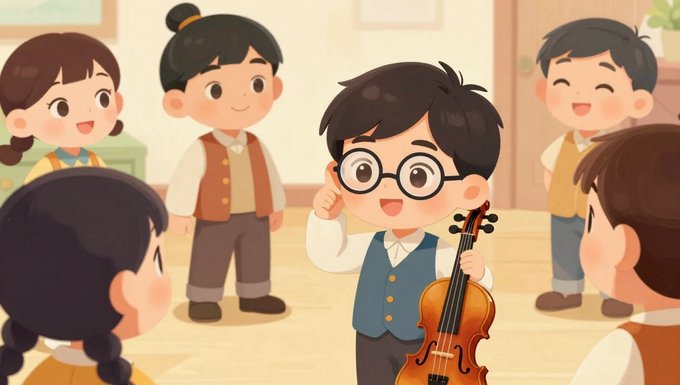
场景四/Chǎngjǐng sì/Escena 4/Scene 4
‘人们说他的 (Oído/Ear) (Especialmente/Especially) (Agudo/Sharp) ,他就给自己改名叫‘ (Nie Er/Nie Er) ’。’
‘La gente decía que tenía un (耳朵ěrduo) (特别tèbié) (灵líng) , así que se cambió el nombre a ‘ (聂耳Niè Ěr) ’’.
‘People said his (耳朵ěrduo) were (特别tèbié) (灵líng) , so he changed his name to ‘ (聂耳Niè Ěr) ’.’
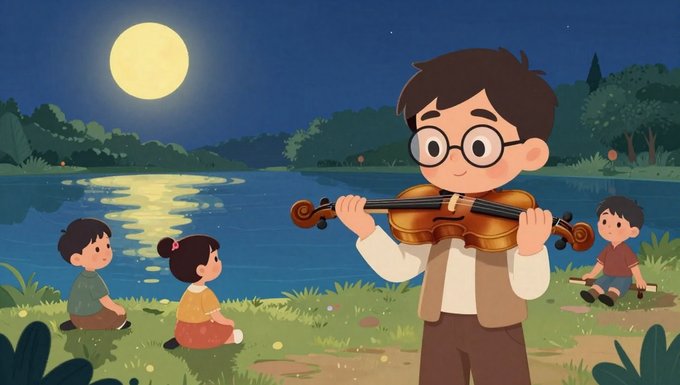
场景五/Chǎngjǐng wǔ/Escena 5/Scene 5
‘有一次,他在湖边 (Practicar (un instrumento)/Practice (an instrument) ) ,练了整整一夜。’
‘Una vez estuvo (练琴liànqín) junto al lago toda la noche’.
‘Once, he (练琴liànqín) by the lake the whole night.’
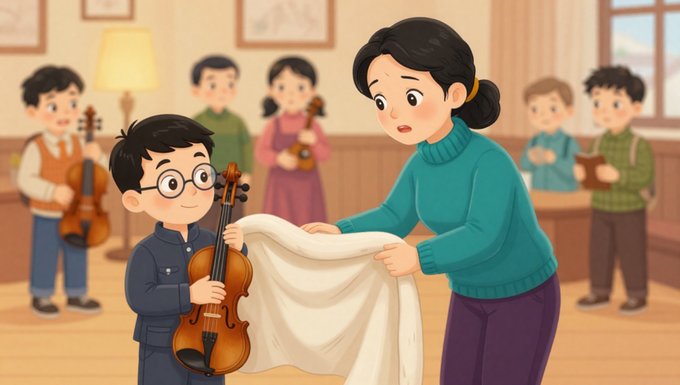
场景六/Chǎngjǐng liù/Escena 6/Scene 6
‘ (Mamá,madre/Mom,mother) (Sentir pena por/Feel sorry for) 地说:‘你也得睡觉啊。’ (Nie Er/Nie Er) 说:‘ (Día/Daytime) 的时间不够用啊!’’
‘Su madre, (心疼xīnténg) , le dijo: ‘Tienes que dormir’. (聂耳Niè Ěr) respondió: ‘¡El tiempo del (白天báitiān) no me alcanza!’’.
‘His mother, (心疼xīnténg) , said, ‘You need to sleep.’ (聂耳Niè Ěr) said, ‘There isn't enough time in the (白天báitiān) !’’
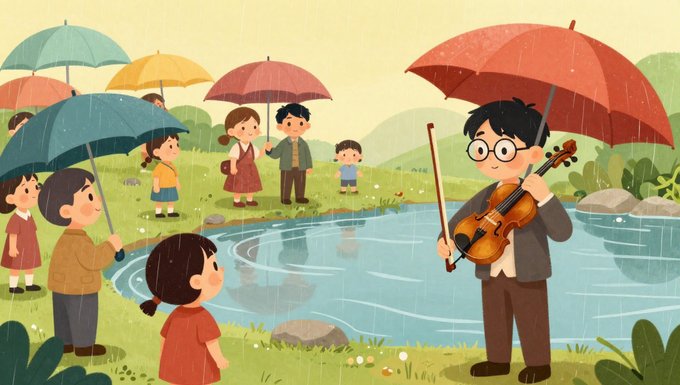
场景七/Chǎngjǐng qī/Escena 7/Scene 7
‘还有一次,他在河边 (Practicar (un instrumento)/Practice (an instrument) ) ,琴声 (Atraer/Attract) 了很多 (Transeúnte/Passer-by) 。下雨了,大家都不肯走。’
‘Otra vez, (练琴liànqín) junto al río, su música (吸引xīyǐn) a muchos (行人xíngrén) . Empezó a llover y nadie quería irse’.
‘Another time, as he (练琴liànqín) by the river, his music (吸引xīyǐn) many (行人xíngrén) . It began to rain, but nobody wanted to leave.’
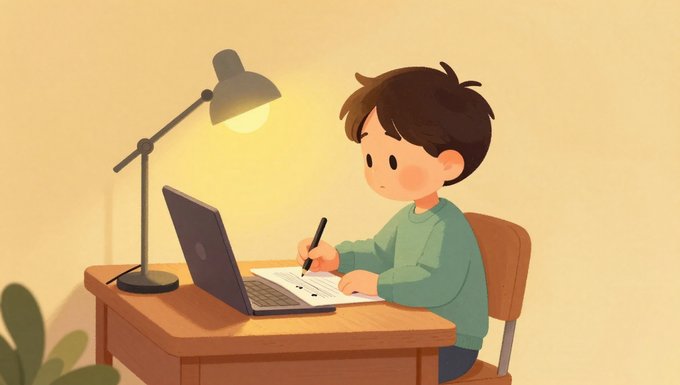
场景八/Chǎngjǐng bā/Escena 8/Scene 8
‘那时候,日本 (Invasor/Invader) (Invadir/Invade) 了中国 (Tres provincias del noreste/Three Northeastern Provinces) 。 (Nie Er/Nie Er) 非常 (Indignado/Indignant) , (Componer/Create) 了《 (Marcha de los Voluntarios/March of the Volunteers) 》, (Animar/Inspire) 人们 (Resistir/Resist) (Invasor/Invader) 。’
‘En aquella época, los (侵略者qīnlüèzhě) japoneses (入侵rùqīn) las (东北三省Dōngběi sān shěng) de China. (聂耳Niè Ěr) , muy (气愤qìfèn) , (创作chuàngzuò) la (义勇军进行曲Yìyǒngjūn Jìnxíngqǔ) para (鼓舞gǔwǔ) a la gente a (反抗fǎnkàng) a los (侵略者qīnlüèzhě) ’.
‘At that time, Japanese (侵略者qīnlüèzhě) (入侵rùqīn) China's (东北三省Dōngběi sān shěng) . Deeply (气愤qìfèn) , (聂耳Niè Ěr) (创作chuàngzuò) the (义勇军进行曲Yìyǒngjūn Jìnxíngqǔ) to (鼓舞gǔwǔ) people to (反抗fǎnkàng) the (侵略者qīnlüèzhě) .’
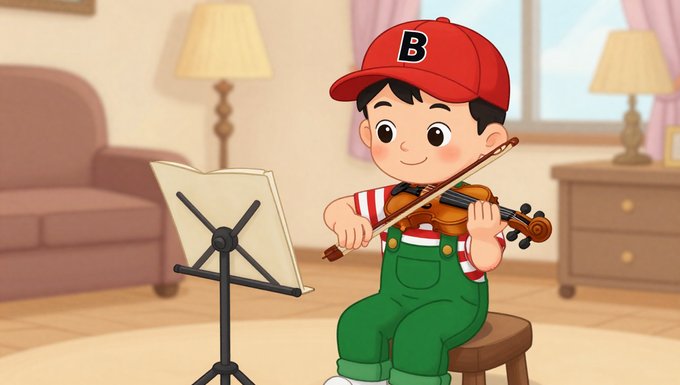
场景九/Chǎngjǐng jiǔ/Escena 9/Scene 9
‘后来,它成了 (República Popular China/People's Republic of China) 的 (Himno nacional/National anthem) 。’ (Baobao) 听了,很受 (Animar/Inspire) ,每天都认真 (Practicar (un instrumento)/Practice (an instrument) ) 。
‘Más tarde se convirtió en el (国歌guógē) de la (中华人民共和国Zhōnghuá Rénmín Gònghéguó) ’. (宝宝Bǎobǎo) se sintió muy (鼓舞gǔwǔ) y desde entonces (练琴liànqín) con empeño todos los días.
‘Later it became the (国歌guógē) of the (中华人民共和国Zhōnghuá Rénmín Gònghéguó) .’ (宝宝Bǎobǎo) felt very (鼓舞gǔwǔ) and from then on (练琴liànqín) hard every day.
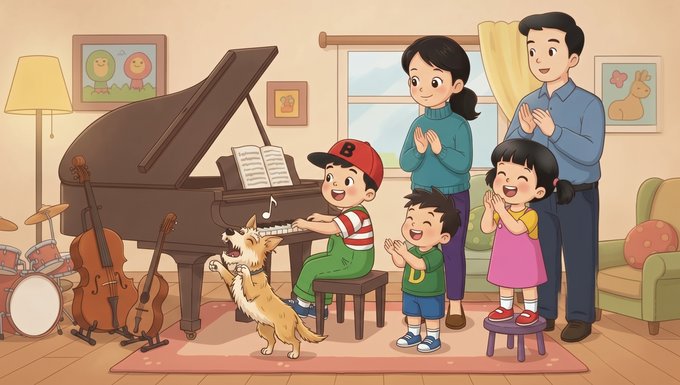
场景十/Chǎngjǐng shí/Escena 10/Scene 10
一个月以后, (Baobao) 给全家拉了一首 (Canción/Song) 。 (Dudú) 说:‘哥哥的琴声也 (Atraer/Attract) 了 (Rocky) !’
Un mes después, (宝宝Bǎobǎo) tocó una (歌曲gēqǔ) para toda la familia. (嘟嘟Dūdū) dijo: ‘¡La música de mi hermano también (吸引xīyǐn) a (洛基Luòjī) !’.
A month later, (宝宝Bǎobǎo) played a (歌曲gēqǔ) for the whole family. (嘟嘟Dūdū) said, ‘My brother's music (吸引xīyǐn) (洛基Luòjī) too!’
@ Zhongwen 资料 (SWF, PDF, MP3 等) 的版权归属于:中国华文教育网 - Overseas Chinese Language and Culture Education Online。
@ Los materiales Zhongwen (SWF, PDF, MP3, etc.) son propiedad de: 中国华文教育网 - Overseas Chinese Language and Culture Education Online.
@ The materials Zhongwen (SWF, PDF, MP3, etc.) are the property of: 中国华文教育网 - Overseas Chinese Language and Culture Education Online.

主题/Zhǔtí/Tema/Theme

其他/Qítā/Otros/Others.

阅读/Yuèdú/Lectura/Reading.

PDF与视频/PDF,videos Y Quiz/PDF, Videos and Quiz

额外内容/Contenido adicional/Additional Content
