
** 8_唐人街/Tángrénjiē/Barrio chino/Chinatown **
** 额外内容/Contenido adicional/Additional Content **
** 家庭/Jiātíng/FAMILIA/FAMILY **

** 词汇/Cíhuì/VOCABULARIO/VOCABULARY. **
** 历史/Lìshǐ/La historia/history **
** 唐人街过春节/Tángrénjiē guò Chūnjié/Año Nuevo en el barrio chino/Spring Festival in Chinatown **
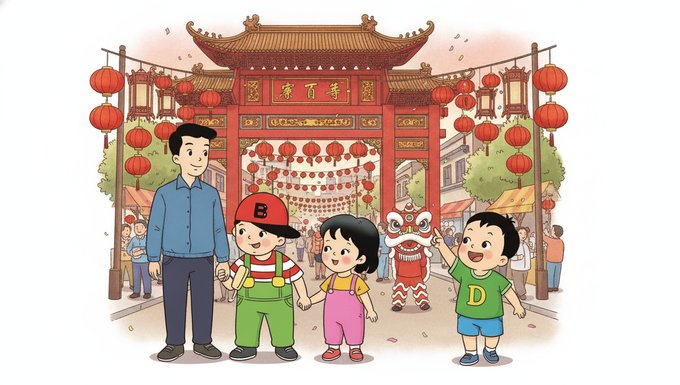
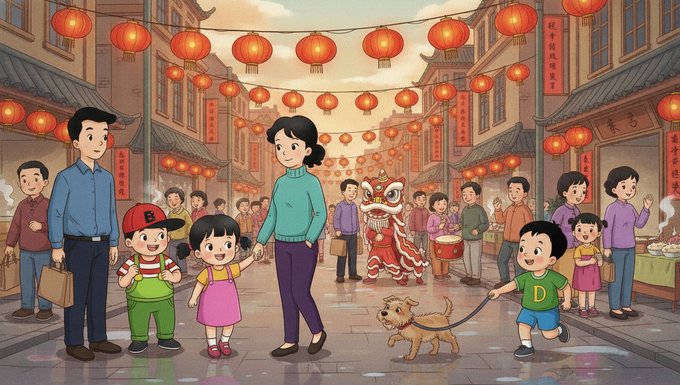
场景一/Chǎngjǐng yī/Escena 1/Scene 1
(Año Nuevo chino/Chinese New Year) 到了, (Papá,padre/Dad,father) 带全家去 (Barrio chino/Chinatown) 过年。
Llegó el (春节Chūnjié) y (爸爸Bàba) llevó a toda la familia a celebrarlo en el (唐人街Tángrénjiē) .
(春节Chūnjié) arrived, and (爸爸Bàba) took the whole family to celebrate in (唐人街Tángrénjiē) .
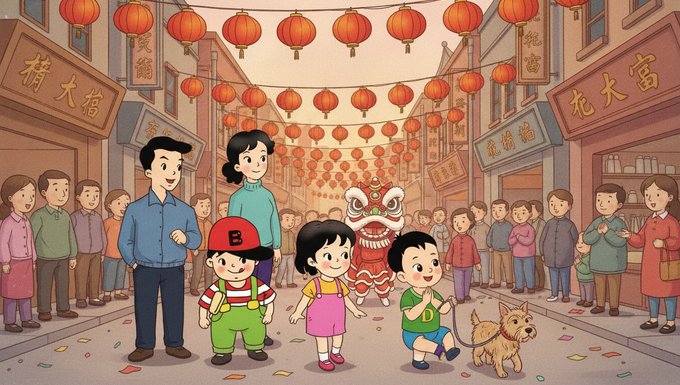
场景二/Chǎngjǐng èr/Escena 2/Scene 2
(Barrio chino/Chinatown) 上 (Por todas partes/Everywhere) 都是汉字, (Por todas partes/Everywhere) 都有人讲汉语。
En el (唐人街Tángrénjiē) había caracteres chinos (到处dàochù) , y (到处dàochù) se oía hablar chino.
In (唐人街Tángrénjiē) there were Chinese characters (到处dàochù) , and people spoke Chinese (到处dàochù) .
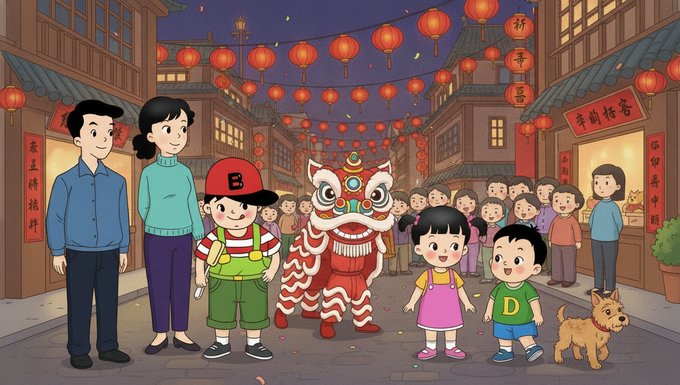
场景三/Chǎngjǐng sān/Escena 3/Scene 3
家家户户都 (Pegar pareados/Put up couplets) , (Colgar farolillos rojos/Hang red lanterns) , (Animado/Lively) 极了。
Todas las casas (贴对联tiē duìlián) y (挂红灯guà hóngdēng) . ¡Estaba (热闹rènao) !
Every household (贴对联tiē duìlián) and (挂红灯guà hóngdēng) . It was so (热闹rènao) !
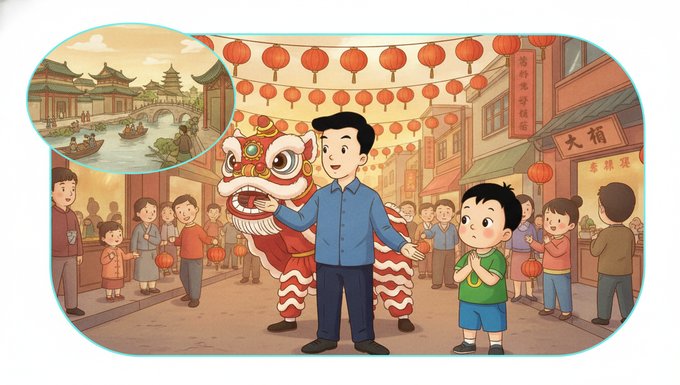
场景四/Chǎngjǐng sì/Escena 4/Scene 4
(Papá,padre/Dad,father) 说:‘在中国 (Historia/History) 上, (Dinastía Tang/Tang dynasty) 很 (Próspero/Prosperous) 、很 (Próspero y poderoso/Prosperous and strong) ,所以 (Chino de ultramar/Overseas Chinese) 常常叫自己‘唐人’。’
(爸爸Bàba) dijo: ‘En la (历史lìshǐ) de China, la (唐代Tángdài) fue muy (繁荣fánróng) y (富强fùqiáng) , por eso los (华侨huáqiáo) se llaman a sí mismos ‘gente Tang’’.
(爸爸Bàba) said, ‘In Chinese (历史lìshǐ) , the (唐代Tángdài) was very (繁荣fánróng) and (富强fùqiáng) , so (华侨huáqiáo) often call themselves ‘Tang people’.’
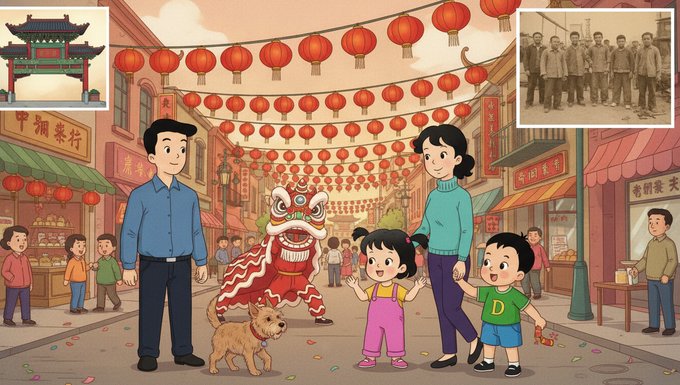
场景五/Chǎngjǐng wǔ/Escena 5/Scene 5
‘ (Chino de ultramar/Overseas Chinese) (Concentrado/Concentrated) 生活的地方,就叫 (Barrio chino/Chinatown) 。’
‘El lugar donde los (华侨huáqiáo) viven (集中jízhōng) se llama (唐人街Tángrénjiē) ’.
‘The place where (华侨huáqiáo) live (集中jízhōng) together is called (唐人街Tángrénjiē) .’
场景六/Chǎngjǐng liù/Escena 6/Scene 6
‘美国 (San Francisco/San Francisco) 的 (Barrio chino/Chinatown) 很有名。 (Chino de ultramar/Overseas Chinese) 在那里开 (Restaurante/Restaurant) 、做 (Negocio/Business) ,开发美国西海岸也有他们的 (Mérito/Contribution) 。’
‘El (唐人街Tángrénjiē) de (旧金山Jiùjīnshān) , en Estados Unidos, es muy famoso. Allí los (华侨huáqiáo) abrieron (餐馆cānguǎn) e hicieron (买卖mǎimai) , y también tuvieron (功劳gōngláo) en el desarrollo de la costa oeste’.
‘The (唐人街Tángrénjiē) in (旧金山Jiùjīnshān) is very famous. (华侨huáqiáo) opened (餐馆cānguǎn) and did (买卖mǎimai) there, and they deserve (功劳gōngláo) for developing the American West Coast.’
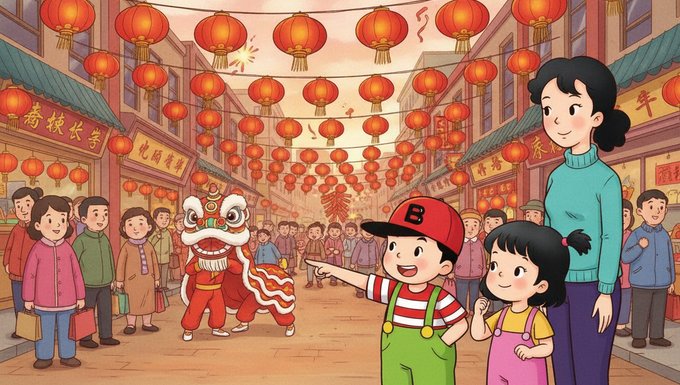
场景七/Chǎngjǐng qī/Escena 7/Scene 7
(Baobao) 说:‘ (Barrio chino/Chinatown) 的 (Chino de ultramar/Overseas Chinese) (Cada vez más/More and more) 多,街道也 (Cada vez más/More and more) (Próspero/Prosperous) 了。’
(宝宝Bǎobǎo) dijo: ‘En el (唐人街Tángrénjiē) hay (越来越yuèláiyuè) (华侨huáqiáo) , y las calles son (越来越yuèláiyuè) (繁荣fánróng) ’.
(宝宝Bǎobǎo) said, ‘There are (越来越yuèláiyuè) (华侨huáqiáo) in (唐人街Tángrénjiē) , and the streets are (越来越yuèláiyuè) (繁荣fánróng) .’
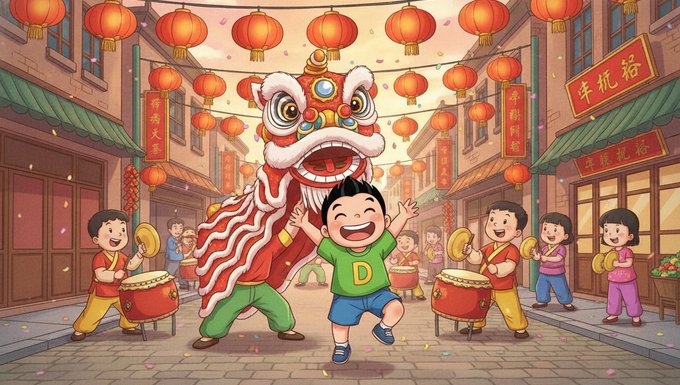
场景八/Chǎngjǐng bā/Escena 8/Scene 8
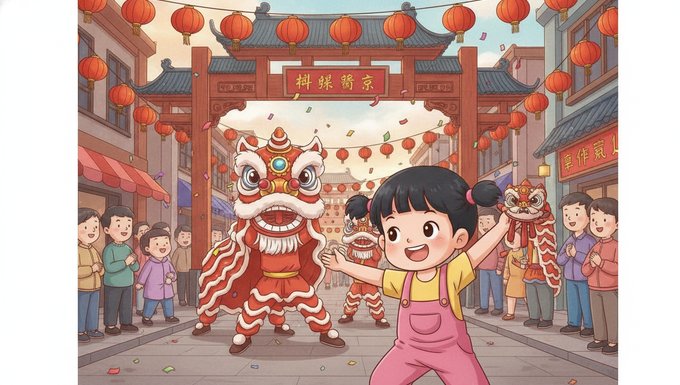
突然,锣鼓响了, (Danza del león/Lion dance) 开始了! (Dudú) 高兴得跳了起来。
De repente sonaron los tambores y empezó la (舞狮子wǔ shīzi) . ¡ (嘟嘟Dūdū) saltó de alegría!
Suddenly the drums sounded and the (舞狮子wǔ shīzi) began! (嘟嘟Dūdū) jumped for joy.
场景九/Chǎngjǐng jiǔ/Escena 9/Scene 9
(Tíngting) 说:‘我也想学 (Danza del león/Lion dance) !’
(婷婷Tíngtíng) dijo: ‘¡Yo también quiero aprender la (舞狮子wǔ shīzi) !’.
(婷婷Tíngtíng) said, ‘I want to learn the (舞狮子wǔ shīzi) too!’
场景十/Chǎngjǐng shí/Escena 10/Scene 10
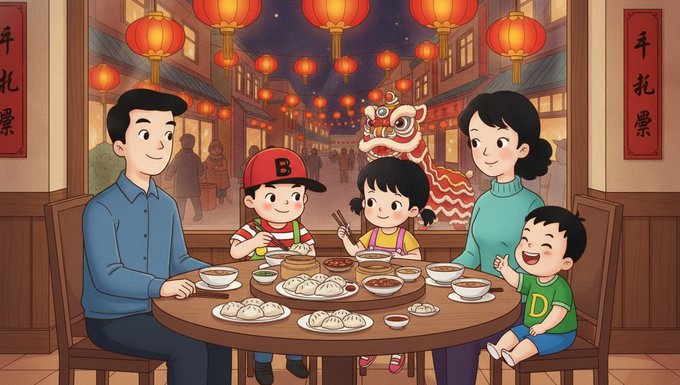
晚上,他们在 (Restaurante/Restaurant) 里吃 (Empanadillas/Dumplings) 。 (Dudú) 说:‘ (Barrio chino/Chinatown) 的 (Año Nuevo chino/Chinese New Year) 真 (Animado/Lively) !’
Por la noche comieron (饺子jiǎozi) en un (餐馆cānguǎn) . (嘟嘟Dūdū) dijo: ‘¡El (春节Chūnjié) en el (唐人街Tángrénjiē) es muy (热闹rènao) !’.
In the evening they ate (饺子jiǎozi) in a (餐馆cānguǎn) . (嘟嘟Dūdū) said, ‘ (春节Chūnjié) in (唐人街Tángrénjiē) is so (热闹rènao) !’
@ Zhongwen 资料 (SWF, PDF, MP3 等) 的版权归属于:中国华文教育网 - Overseas Chinese Language and Culture Education Online。
@ Los materiales Zhongwen (SWF, PDF, MP3, etc.) son propiedad de: 中国华文教育网 - Overseas Chinese Language and Culture Education Online.
@ The materials Zhongwen (SWF, PDF, MP3, etc.) are the property of: 中国华文教育网 - Overseas Chinese Language and Culture Education Online.

主题/Zhǔtí/Tema/Theme

其他/Qítā/Otros/Others.

阅读/Yuèdú/Lectura/Reading.

PDF与视频/PDF,videos Y Quiz/PDF, Videos and Quiz

额外内容/Contenido adicional/Additional Content
