
** 9_古诗二首/Gǔshī èr shǒu/Dos poemas antiguos/Two Ancient Poems **
** 额外内容/Contenido adicional/Additional Content **
** 家庭/Jiātíng/FAMILIA/FAMILY **

** 词汇/Cíhuì/VOCABULARIO/VOCABULARY. **
** 历史/Lìshǐ/La historia/history **
** 清明节的雨/Qīngmíngjié de yǔ/La lluvia de Qingming/Rain at Qingming **
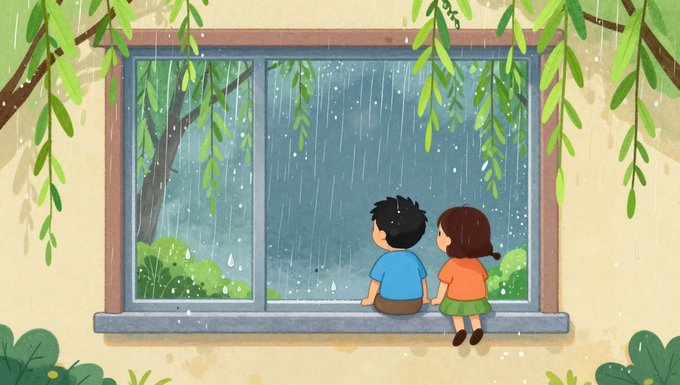
场景一/Chǎngjǐng yī/Escena 1/Scene 1
(Fiesta de Qingming/Qingming Festival) 到了,外面下着小雨。
Llegó la (清明节Qīngmíngjié) y fuera caía una lluvia fina.
The (清明节Qīngmíngjié) arrived, and a light rain was falling outside.
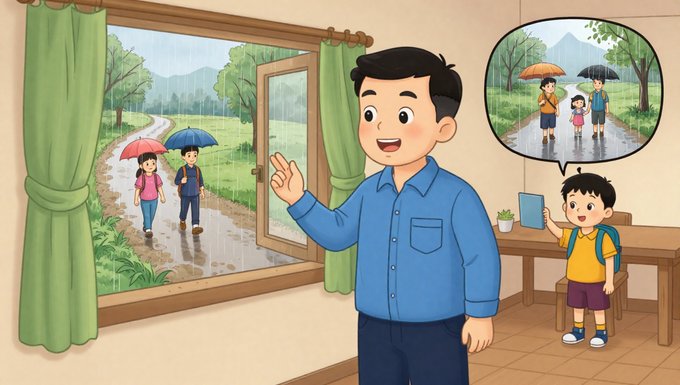
场景二/Chǎngjǐng èr/Escena 2/Scene 2
(Papá,padre/Dad,father) 望着窗外,念道:‘ (Qingming/Qingming) 时节雨 (Sin cesar/Unceasingly) ,路上 (Caminante/Traveler) (Estar a punto de/Be about to) (Con el alma rota/Heartbroken) 。’
(爸爸Bàba) miró por la ventana y recitó: ‘En tiempos de (清明Qīngmíng) la lluvia cae (纷纷fēnfēn) ; los (行人xíngrén) del camino (欲yù) quedarse (断魂duànhún) ’.
(爸爸Bàba) looked out the window and recited, ‘At (清明Qīngmíng) the rain falls (纷纷fēnfēn) ; (行人xíngrén) on the road (欲yù) be (断魂duànhún) .’
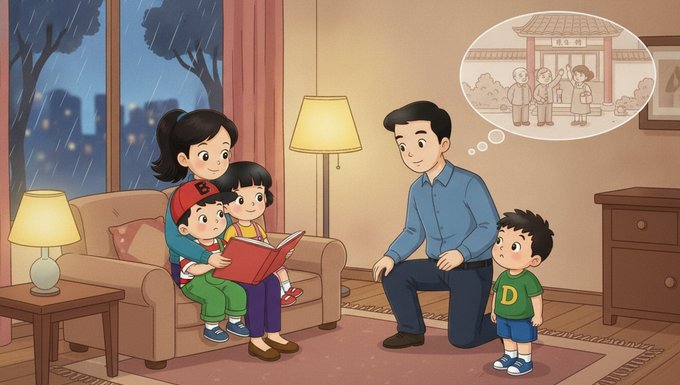
场景三/Chǎngjǐng sān/Escena 3/Scene 3
(Dudú) 问:‘ (Caminante/Traveler) 为什么那么伤心?’ (Papá,padre/Dad,father) 说:‘因为他们 (Echar de menos/Miss) (Tierra natal/Hometown) 的 (Familiares/Relatives) 。’
(嘟嘟Dūdū) preguntó: ‘¿Por qué están tan tristes los (行人xíngrén) ?’. (爸爸Bàba) dijo: ‘Porque (想念xiǎngniàn) a sus (亲人qīnrén) de su (故乡gùxiāng) ’.
(嘟嘟Dūdū) asked, ‘Why are the (行人xíngrén) so sad?’ (爸爸Bàba) said, ‘Because they (想念xiǎngniàn) their (亲人qīnrén) in their (故乡gùxiāng) .’
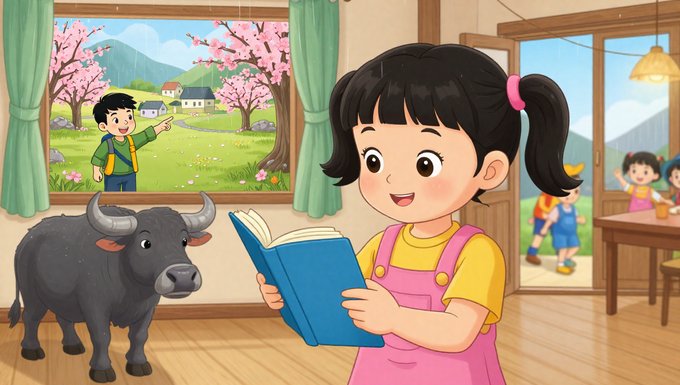
场景四/Chǎngjǐng sì/Escena 4/Scene 4
(Tíngting) 接着背:‘借问 (Taberna/Tavern) 何处有, (Pastorcillo/Shepherd boy) 遥指 (Aldea de los Albaricoqueros/Apricot Blossom Village) 。’
(婷婷Tíngtíng) siguió: ‘Pregunto dónde hay una (酒家jiǔjiā) ; el (牧童mùtóng) señala a lo lejos la (杏花村Xìnghuā Cūn) ’.
(婷婷Tíngtíng) went on, ‘I ask where a (酒家jiǔjiā) might be; the (牧童mùtóng) points far off to (杏花村Xìnghuā Cūn) .’
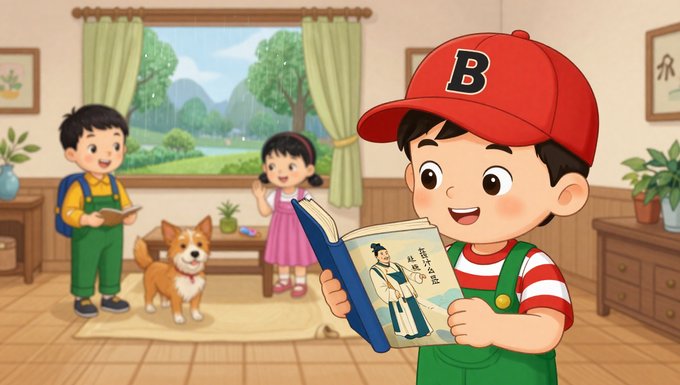
场景五/Chǎngjǐng wǔ/Escena 5/Scene 5
(Baobao) 说:‘这首诗是 (Dinastía Tang/Tang Dynasty) 诗人 (Du Mu/Du Mu) 写的。’
(宝宝Bǎobǎo) dijo: ‘Este poema lo escribió (杜牧Dù Mù) , un poeta de la (唐代Tángdài) ’.
(宝宝Bǎobǎo) said, ‘This poem was written by (杜牧Dù Mù) , a poet of the (唐代Tángdài) .’
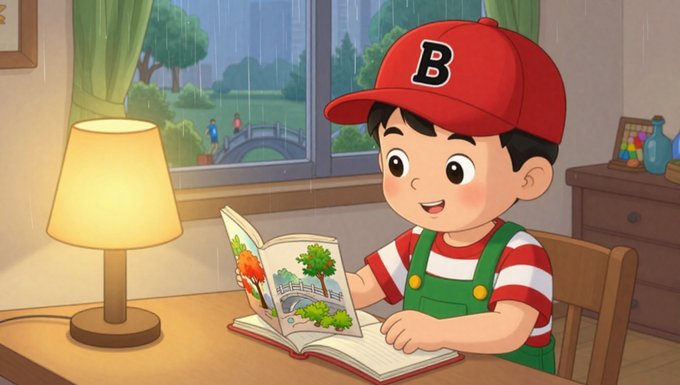
场景六/Chǎngjǐng liù/Escena 6/Scene 6
晚上, (Baobao) 又学了 (Zhang Ji/Zhang Ji) 的《 (Amarre nocturno en el Puente de los Arces/Night Mooring at Maple Bridge) 》。
Por la noche, (宝宝Bǎobǎo) aprendió otro poema: ‘ (枫桥夜泊Fēngqiáo Yè Bó) ’, de (张继Zhāng Jì) .
In the evening, (宝宝Bǎobǎo) learned another poem: ‘ (枫桥夜泊Fēngqiáo Yè Bó) ’ by (张继Zhāng Jì) .

场景七/Chǎngjǐng qī/Escena 7/Scene 7
他背道:‘月落乌啼 (Escarcha/Frost) 满天,江枫 (Luces de los pescadores/Fishing lights) 对 (Sueño triste/Sorrowful sleep) 。’
Recitó: ‘Se pone la luna, grazna el cuervo, la (霜shuāng) llena el cielo; arces del río y (渔火yúhuǒ) acompañan mi (愁眠chóumián) ’.
He recited, ‘The moon sets, a crow caws, (霜shuāng) fills the sky; river maples and (渔火yúhuǒ) keep my (愁眠chóumián) company.’
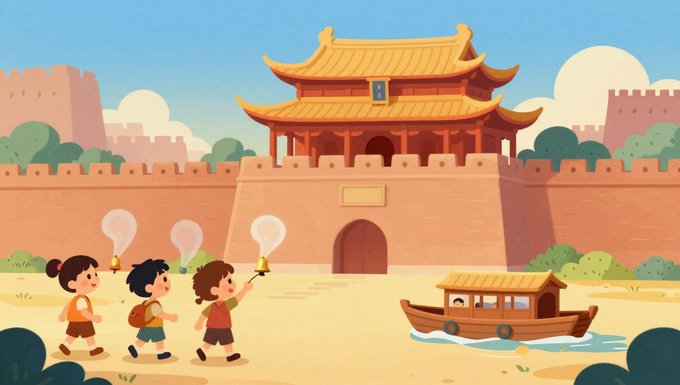
场景八/Chǎngjǐng bā/Escena 8/Scene 8
‘ (Gusu/Gusu) 城外 (Templo de Hanshan/Hanshan Temple) ,夜半 (Toque de campana/Sound of a bell) 到 (Barco de viajeros/Passenger boat) 。’
‘Fuera de la ciudad de (姑苏Gūsū) , el (寒山寺Hánshān Sì) ; a medianoche su (钟声zhōngshēng) llega al (客船kèchuán) ’.
‘Outside the city of (姑苏Gūsū) stands (寒山寺Hánshān Sì) ; at midnight its (钟声zhōngshēng) reaches the (客船kèchuán) .’
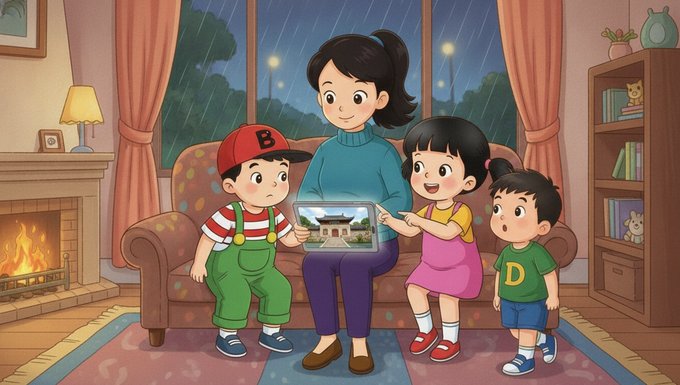
场景九/Chǎngjǐng jiǔ/Escena 9/Scene 9
(Mamá,madre/Mom,mother) 说:‘ (Gusu/Gusu) 就是 (Suzhou/Suzhou) , (Templo de Hanshan/Hanshan Temple) 现在还在呢!’
(妈妈Māmā) dijo: ‘ (姑苏Gūsū) es (苏州Sūzhōu) , ¡y el (寒山寺Hánshān Sì) todavía existe!’.
(妈妈Māmā) said, ‘ (姑苏Gūsū) is (苏州Sūzhōu) , and (寒山寺Hánshān Sì) is still there!’
场景十/Chǎngjǐng shí/Escena 10/Scene 10
(Baobao) 说:‘下次回中国,我们去 (Suzhou/Suzhou) 听 (Templo de Hanshan/Hanshan Temple) 的 (Toque de campana/Sound of a bell) 吧!’
(宝宝Bǎobǎo) dijo: ‘¡La próxima vez que vayamos a China, vayamos a (苏州Sūzhōu) a oír el (钟声zhōngshēng) del (寒山寺Hánshān Sì) !’.
(宝宝Bǎobǎo) said, ‘Next time we go to China, let's go to (苏州Sūzhōu) and hear the (钟声zhōngshēng) of (寒山寺Hánshān Sì) !’
@ Zhongwen 资料 (SWF, PDF, MP3 等) 的版权归属于:中国华文教育网 - Overseas Chinese Language and Culture Education Online。
@ Los materiales Zhongwen (SWF, PDF, MP3, etc.) son propiedad de: 中国华文教育网 - Overseas Chinese Language and Culture Education Online.
@ The materials Zhongwen (SWF, PDF, MP3, etc.) are the property of: 中国华文教育网 - Overseas Chinese Language and Culture Education Online.

主题/Zhǔtí/Tema/Theme

其他/Qítā/Otros/Others.

阅读/Yuèdú/Lectura/Reading.

PDF与视频/PDF,videos Y Quiz/PDF, Videos and Quiz

额外内容/Contenido adicional/Additional Content
