
** 9_古诗二首/Gǔshī èr shǒu/Dos poemas antiguos/Two Ancient Poems **
** 额外内容/Contenido adicional/Additional Content **
** 家庭/Jiātíng/FAMILIA/FAMILY **

** 词汇/Cíhuì/VOCABULARIO/VOCABULARY. **
** 历史/Lìshǐ/La historia/history **
** 重阳节想念爷爷奶奶/Chóngyángjié xiǎngniàn yéye nǎinai/Echando de menos a los abuelos en el Doble Nueve/Missing Grandpa and Grandma on Double Ninth **
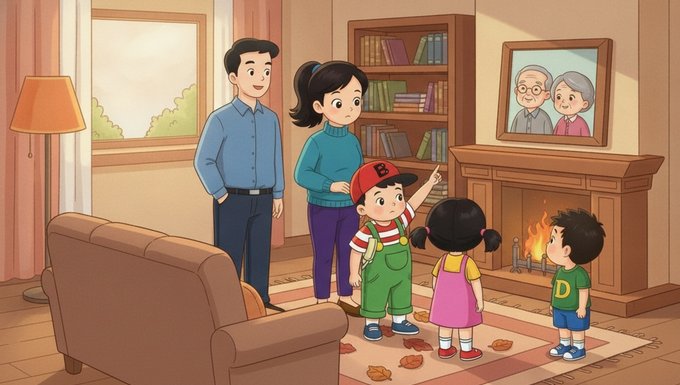
场景一/Chǎngjǐng yī/Escena 1/Scene 1
秋天, (Fiesta del Doble Nueve/Double Ninth Festival) 到了,全家都很 (Echar de menos/Miss) 在中国的 (Abuelo/Grandpa) (Abuela/Grandma) 。
En otoño llegó la (重阳节Chóngyángjié) , y toda la familia (想念xiǎngniàn) al (爷爷Yéye) y a la (奶奶Nǎinai) , que viven en China.
In autumn, the (重阳节Chóngyángjié) came, and the whole family (想念xiǎngniàn) (爷爷Yéye) and (奶奶Nǎinai) in China.
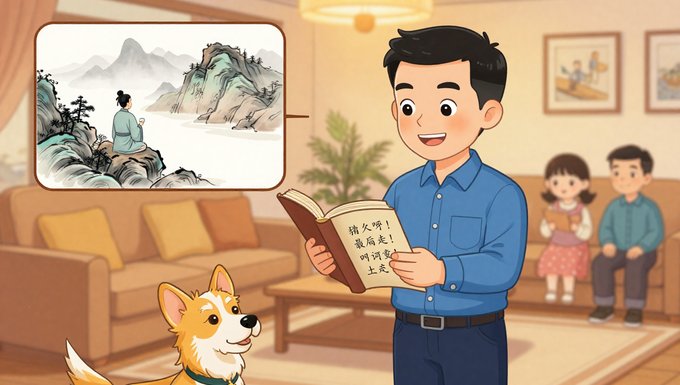
场景二/Chǎngjǐng èr/Escena 2/Scene 2
(Papá,padre/Dad,father) 说:‘ (Dinastía Tang/Tang Dynasty) 诗人 (Wang Wei/Wang Wei) 在 (Fiesta del Doble Nueve/Double Ninth Festival) (Recordar/Remember) 起山东的 (Hermanos/Brothers) ,写了一首诗。’
(爸爸Bàba) dijo: ‘En la (重阳节Chóngyángjié) , el poeta de la (唐代Tángdài) (王维Wáng Wéi) (忆yì) a sus (兄弟xiōngdì) de Shandong y escribió un poema’.
(爸爸Bàba) said, ‘On the (重阳节Chóngyángjié) , (王维Wáng Wéi) , a poet of the (唐代Tángdài) , (忆yì) his (兄弟xiōngdì) in Shandong and wrote a poem.’
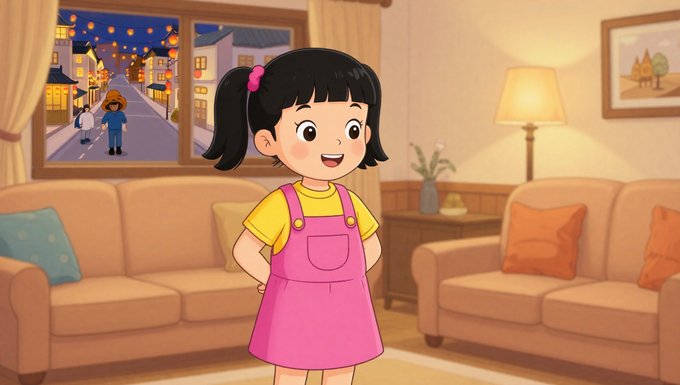
场景三/Chǎngjǐng sān/Escena 3/Scene 3
(Tíngting) 背道:‘独在 (Tierra extraña/Foreign land) 为异客, (Cada vez que llega/Every time) (Fiesta/Festival) 倍思亲。’
(婷婷Tíngtíng) recitó: ‘Solo en (异乡yìxiāng) , soy un forastero; (每逢měiféng) una (佳节jiājié) , añoro el doble a los míos’.
(婷婷Tíngtíng) recited, ‘Alone in a (异乡yìxiāng) , I am a stranger; (每逢měiféng) a (佳节jiājié) comes, I miss my family twice as much.’
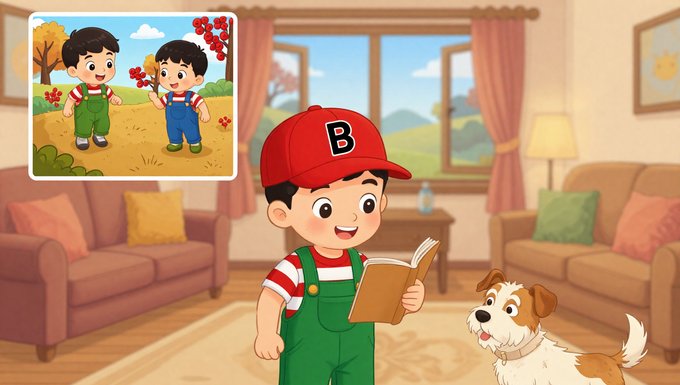
场景四/Chǎngjǐng sì/Escena 4/Scene 4
(Baobao) 接着背:‘遥知 (Hermanos/Brothers) (Subir a lo alto/Climb a height) 处, (Llevar por todas partes/Wear everywhere) (Cornejo/Dogwood) 少一人。’
(宝宝Bǎobǎo) siguió: ‘Sé que a lo lejos mis (兄弟xiōngdì) han (登高dēnggāo) ; todos (遍插biànchā) ramas de (茱萸zhūyú) , y falta uno’.
(宝宝Bǎobǎo) went on, ‘I know my (兄弟xiōngdì) far away have (登高dēnggāo) ; they all (遍插biànchā) (茱萸zhūyú) , but one is missing.’
场景五/Chǎngjǐng wǔ/Escena 5/Scene 5
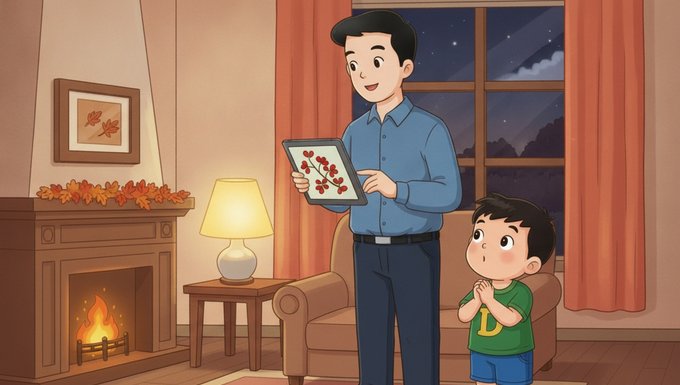
(Dudú) 问:‘ (Cornejo/Dogwood) 是什么?’ (Papá,padre/Dad,father) 说:‘是一种 (Planta/Plant) ,古时候 (Fiesta del Doble Nueve/Double Ninth Festival) (Subir a lo alto/Climb a height) 的时候,人们把它插在身上。’
(嘟嘟Dūdū) preguntó: ‘¿Qué es el (茱萸zhūyú) ?’. (爸爸Bàba) dijo: ‘Es una (植物zhíwù) . Antiguamente, en la (重阳节Chóngyángjié) , la gente se ponía una ramita al (登高dēnggāo) ’.
(嘟嘟Dūdū) asked, ‘What is (茱萸zhūyú) ?’ (爸爸Bàba) said, ‘It's a (植物zhíwù) . In ancient times, people wore a sprig of it when they (登高dēnggāo) on the (重阳节Chóngyángjié) .’
场景六/Chǎngjǐng liù/Escena 6/Scene 6
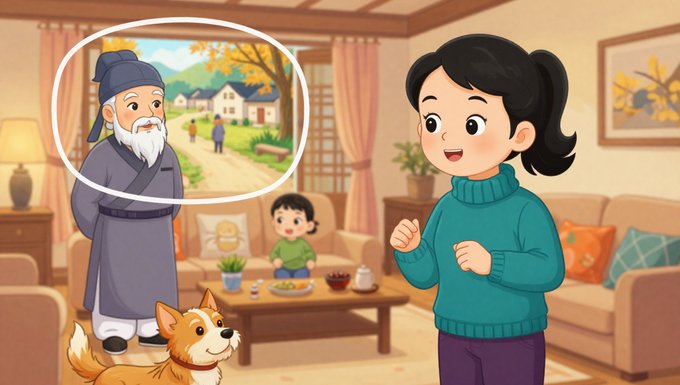
(Mamá,madre/Mom,mother) 说:‘还有一首诗叫《 (Escrito al volver a mi pueblo/Written on Returning Home) 》,是 (He Zhizhang/He Zhizhang) 写的:‘少小离家老大回, (Acento natal/Native accent) 无改 (Pelo de las sienes/Hair at the temples) (Encanecer/Thin and grey) 。’’
(妈妈Māmā) dijo: ‘Hay otro poema, ‘ (回乡偶书Huí xiāng ǒu shū) ’, de (贺知章Hè Zhīzhāng) : ‘Me fui de casa de niño y volví de viejo; mi (乡音xiāngyīn) no ha cambiado, pero el (鬓毛bìnmáo) se me ha (衰shuāi) ’’.
(妈妈Māmā) said, ‘There's another poem, ‘ (回乡偶书Huí xiāng ǒu shū) ’, by (贺知章Hè Zhīzhāng) : ‘I left home young and returned old; my (乡音xiāngyīn) is unchanged, but the (鬓毛bìnmáo) has (衰shuāi) .’’
场景七/Chǎngjǐng qī/Escena 7/Scene 7
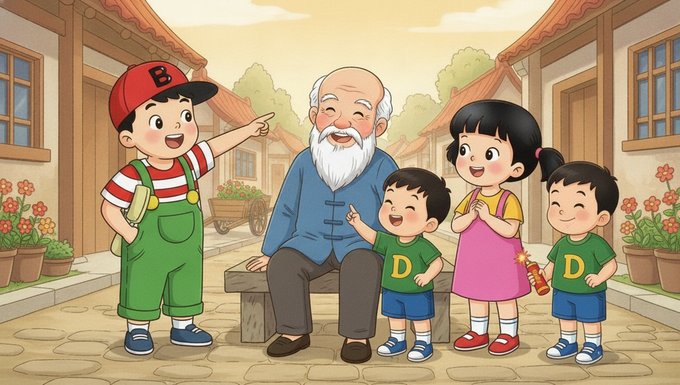
‘他小时候离开 (Tierra natal/Hometown) ,老了才回来, (Acento natal/Native accent) 没有改, (Pelo de las sienes/Hair at the temples) 却白了。’
‘Se fue de su (家乡jiāxiāng) de niño y no volvió hasta la vejez; su (乡音xiāngyīn) no había cambiado, pero el (鬓毛bìnmáo) se le había vuelto blanco’.
‘He left his (家乡jiāxiāng) as a child and didn't return until he was old; his (乡音xiāngyīn) hadn't changed, but the (鬓毛bìnmáo) had turned white.’
场景八/Chǎngjǐng bā/Escena 8/Scene 8
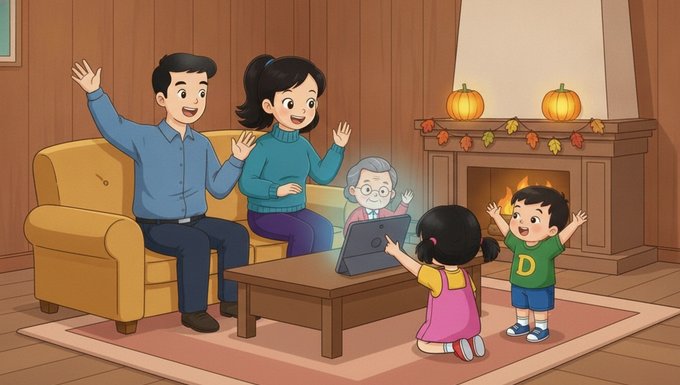
晚上,全家和 (Abuelo/Grandpa) (Abuela/Grandma) (Videollamada/Video call) (Charlar/Chat) 。
Por la noche, toda la familia (聊天liáotiān) con el (爷爷Yéye) y la (奶奶Nǎinai) por (视频shìpín) .
In the evening, the whole family (聊天liáotiān) with (爷爷Yéye) and (奶奶Nǎinai) on a (视频shìpín) .
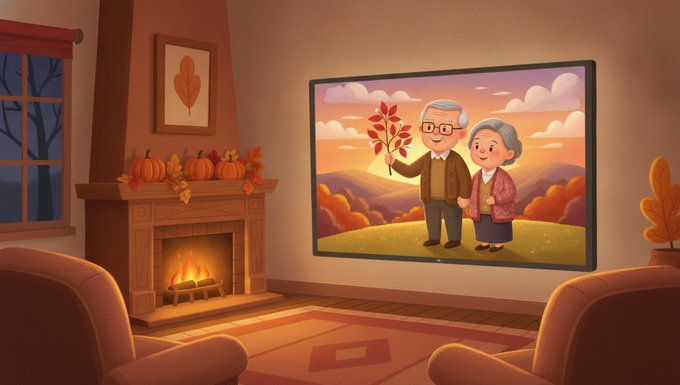
场景九/Chǎngjǐng jiǔ/Escena 9/Scene 9
(Abuelo/Grandpa) 说:‘今天我们也去 (Subir a lo alto/Climb a height) 了,还给你们留了 (Cornejo/Dogwood) !’
El (爷爷Yéye) dijo: ‘Hoy nosotros también hemos (登高dēnggāo) , ¡y os hemos guardado unas ramitas de (茱萸zhūyú) !’.
(爷爷Yéye) said, ‘We (登高dēnggāo) today too, and we saved some (茱萸zhūyú) for you!’
场景十/Chǎngjǐng shí/Escena 10/Scene 10
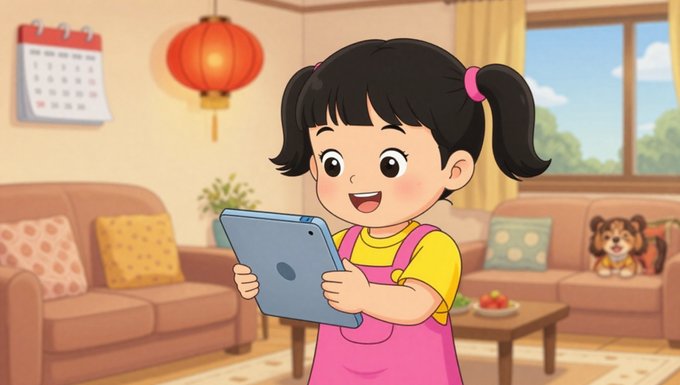
(Tíngting) 说:‘明年 (Año Nuevo chino/Chinese New Year) 我们回中国,就不会少一人了!’
(婷婷Tíngtíng) dijo: ‘¡El próximo (春节Chūnjié) volveremos a China y ya no faltará nadie!’.
(婷婷Tíngtíng) said, ‘Next (春节Chūnjié) we'll go back to China, and no one will be missing!’
@ Zhongwen 资料 (SWF, PDF, MP3 等) 的版权归属于:中国华文教育网 - Overseas Chinese Language and Culture Education Online。
@ Los materiales Zhongwen (SWF, PDF, MP3, etc.) son propiedad de: 中国华文教育网 - Overseas Chinese Language and Culture Education Online.
@ The materials Zhongwen (SWF, PDF, MP3, etc.) are the property of: 中国华文教育网 - Overseas Chinese Language and Culture Education Online.

主题/Zhǔtí/Tema/Theme

其他/Qítā/Otros/Others.

阅读/Yuèdú/Lectura/Reading.

PDF与视频/PDF,videos Y Quiz/PDF, Videos and Quiz

额外内容/Contenido adicional/Additional Content
