
** 6_成语故事/Chéngyǔ gùshi/Historias de modismos (Chengyu)/Idiom Stories **
** 额外内容/Contenido adicional/Additional Content **
** 家庭/Jiātíng/FAMILIA/FAMILY **

** 词汇/Cíhuì/VOCABULARIO/VOCABULARY. **
** 历史/Lìshǐ/La historia/history **
** 婷婷学成语/Tíngting xué chéngyǔ/Tíngting aprende chengyu/Tingting Learns Idioms **
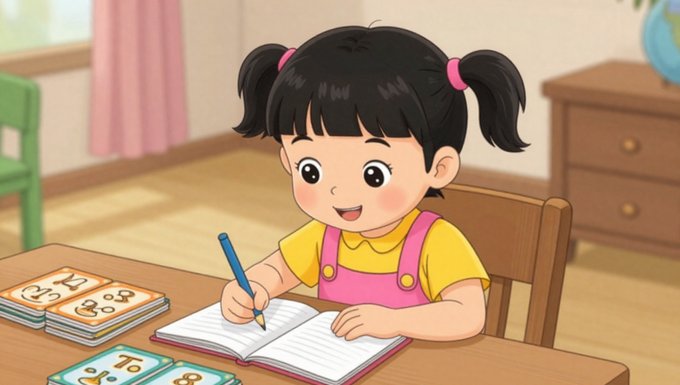
场景一/Chǎngjǐng yī/Escena 1/Scene 1
(Tíngting) 下星期要参加 (Chengyu (frase hecha china)/Chengyu (Chinese idiom) ) 比赛,她每天都在 (Con cuidado/Carefully) 准备, (Además/And also) 每天学一 (Clasificador para frases/Measure word for sentences) 新 (Chengyu (frase hecha china)/Chengyu (Chinese idiom) ) 。
(婷婷Tíngtíng) tiene un concurso de (成语chéngyǔ) la semana que viene; se prepara (仔细zǐxì) todos los días y, (并且bìngqiě) , aprende cada día una (句jù) hecha nueva.
(婷婷Tíngtíng) has a (成语chéngyǔ) contest next week; she prepares (仔细zǐxì) every day (并且bìngqiě) learns a new (句jù) each day.
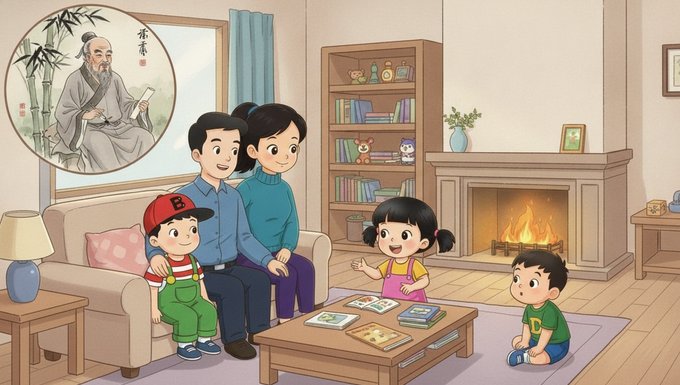
场景二/Chǎngjǐng èr/Escena 2/Scene 2
她给大家讲:‘古时候有个画家叫 (Wen Yuke/Wen Yuke) ,他特别喜欢画 (Bambú/Bamboo) 。’
Les contó a todos: ‘En la antigüedad hubo un pintor llamado (文与可Wén Yǔkě) al que le encantaba pintar (竹子zhúzi) ’.
She told everyone, ‘Long ago there was a painter called (文与可Wén Yǔkě) who loved painting (竹子zhúzi) .’
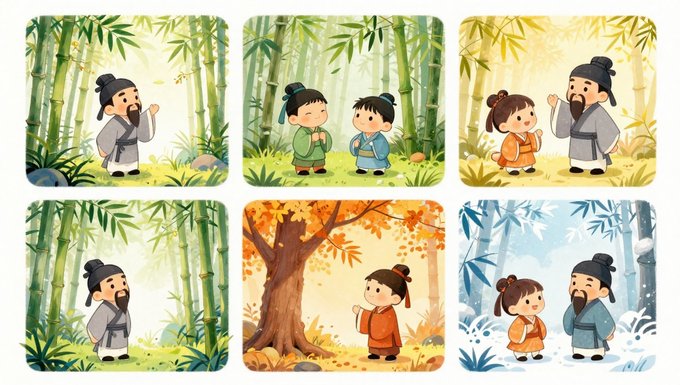
场景三/Chǎngjǐng sān/Escena 3/Scene 3
‘他一年四季都 (Con cuidado/Carefully) (Observar/Observe) (Bambú/Bamboo) (Crecer/Grow) 的 (Situación/Condition) 。’
‘Durante todo el año (观察guānchá) (仔细zǐxì) cómo (生长shēngzhǎng) el (竹子zhúzi) y en qué (情况qíngkuàng) estaba’.
‘All year round he (仔细zǐxì) (观察guānchá) the (竹子zhúzi) and the (情况qíngkuàng) in which it (生长shēngzhǎng) .’
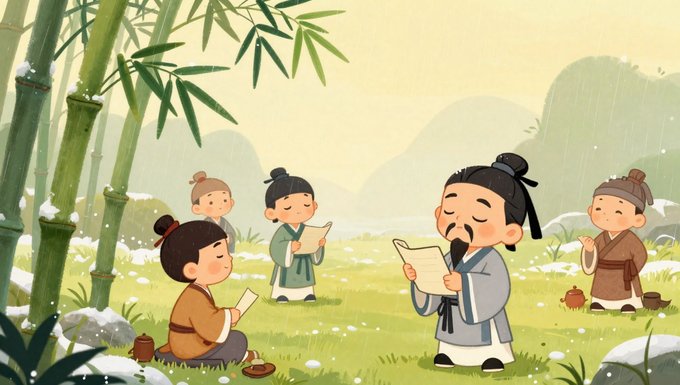
场景四/Chǎngjǐng sì/Escena 4/Scene 4
‘在不同的 (Clima/Climate) 里, (O/Or) 在刮风下雨的时候, (Bambú/Bamboo) 的样子也不一样,他都记在心里。’
‘Con cada (气候qìhòu) , (或者huòzhě) cuando hacía viento y llovía, el (竹子zhúzi) tenía un aspecto distinto, y él lo guardaba todo en la memoria’.
‘In different (气候qìhòu) , (或者huòzhě) when it was windy and rainy, the (竹子zhúzi) looked different, and he kept it all in his mind.’
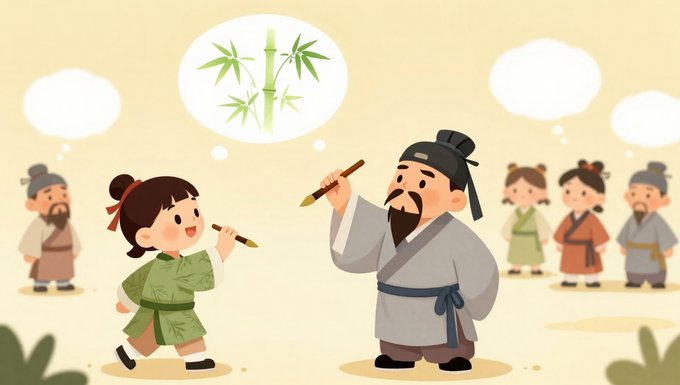
场景五/Chǎngjǐng wǔ/Escena 5/Scene 5
‘所以他画 (Bambú/Bamboo) 的时候,心里早就有了 (Bambú/Bamboo) 的 (Imagen/Image) ,这就叫‘ (Tenerlo todo bien pensado/Have a well-thought-out plan) ’。’
‘Por eso, cuando pintaba (竹子zhúzi) , ya tenía su (形象xíngxiàng) en la cabeza. A eso se le llama ‘ (胸有成竹xiōngyǒuchéngzhú) ’’.
‘So when he painted (竹子zhúzi) , he already had its (形象xíngxiàng) in his mind. That's what ‘ (胸有成竹xiōngyǒuchéngzhú) ’ means.’
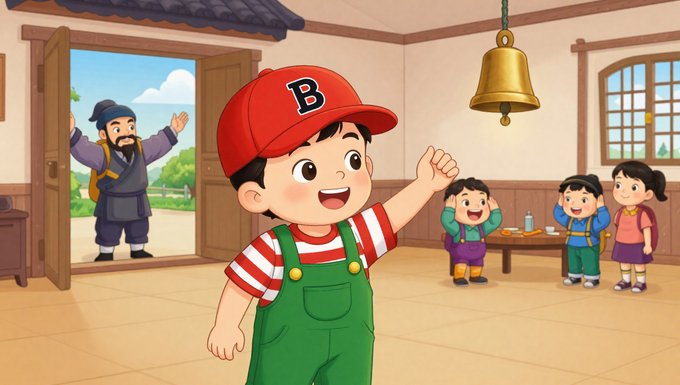
场景六/Chǎngjǐng liù/Escena 6/Scene 6
(Baobao) 说:‘我也讲一个:有个人想 (Robar/Steal) 别人门上的铃,怕被人听见,就 (Taparse/Cover) 了自己的耳朵。’
(宝宝Bǎobǎo) dijo: ‘Yo también cuento uno: un hombre quería (偷走tōuzǒu) la campanilla de una puerta y, para que no lo oyeran, se (捂住wǔzhù) las orejas’.
(宝宝Bǎobǎo) said, ‘I'll tell one too: a man wanted to (偷走tōuzǒu) the bell on someone's gate, and so no one would hear, he (捂住wǔzhù) his own ears.’

场景七/Chǎngjǐng qī/Escena 7/Scene 7
‘结果铃一响,他马上被抓住了。这就是‘ (Engañarse a uno mismo/Deceive oneself) ’,说的是 (Tonto/Foolish) 的人 (Engañar/Deceive) 自己。’
‘En cuanto sonó la campanilla, lo atraparon. Eso es ‘ (掩耳盗铃yǎn'ěrdàolíng) ’: una persona (愚蠢yúchǔn) que se (欺骗qīpiàn) a sí misma’.
‘As soon as the bell rang, he was caught. That's ‘ (掩耳盗铃yǎn'ěrdàolíng) ’: a (愚蠢yúchǔn) person who (欺骗qīpiàn) himself.’
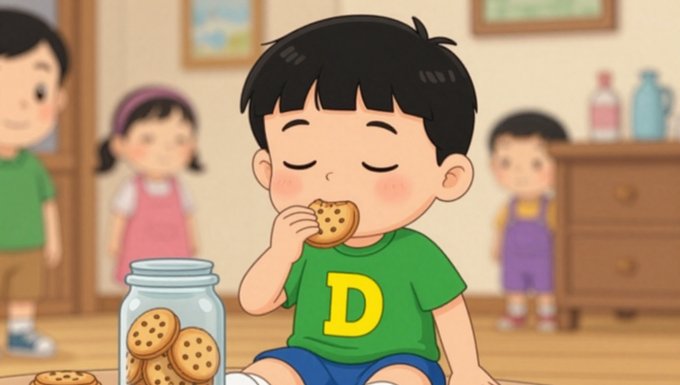
场景八/Chǎngjǐng bā/Escena 8/Scene 8
这时, (Dudú) 闭着眼睛 (A escondidas/Secretly) 吃饼干,说:‘我看不见你们,你们也看不见我!’
En ese momento, (嘟嘟Dūdū) se comía unas galletas (偷偷tōutōu) con los ojos cerrados y dijo: ‘¡Yo no os veo, así que vosotros tampoco me veis!’.
Just then, (嘟嘟Dūdū) was (偷偷tōutōu) eating cookies with his eyes closed and said, ‘I can't see you, so you can't see me!’
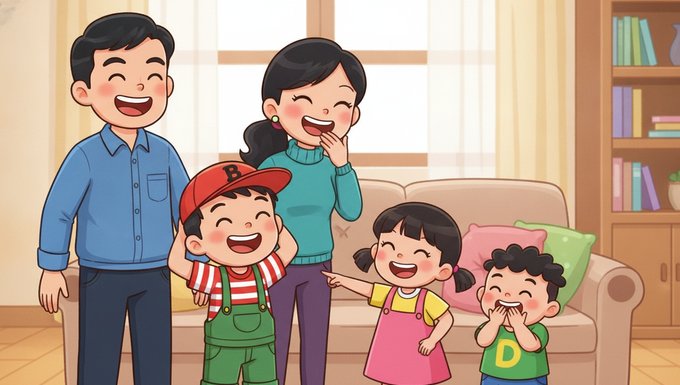
场景九/Chǎngjǐng jiǔ/Escena 9/Scene 9
(Tíngting) 笑着说:‘ (Dudú) ,你这就是 (Engañarse a uno mismo/Deceive oneself) !’大家都 (No saber si reír o llorar/Not know whether to laugh or cry) 。
(婷婷Tíngtíng) se rio y dijo: ‘¡ (嘟嘟Dūdū) , eso es justo ‘ (掩耳盗铃yǎn'ěrdàolíng) ’!’. Todos (啼笑皆非tíxiào-jiēfēi) .
(婷婷Tíngtíng) laughed and said, ‘ (嘟嘟Dūdū) , that's exactly ‘ (掩耳盗铃yǎn'ěrdàolíng) ’!’ Everyone (啼笑皆非tíxiào-jiēfēi) .
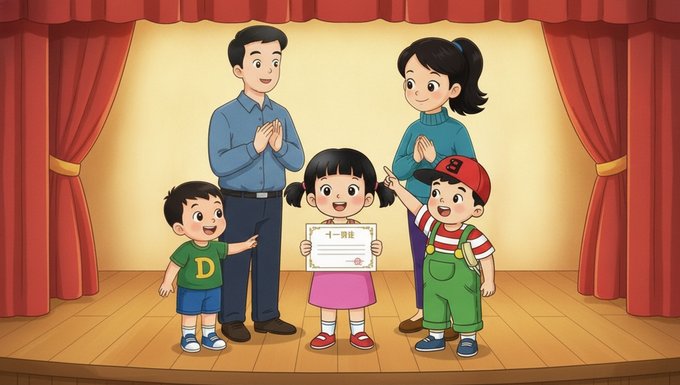
场景十/Chǎngjǐng shí/Escena 10/Scene 10
比赛那天, (Tíngting) (Tenerlo todo bien pensado/Have a well-thought-out plan) ,得了第一名,大家都很 (Admirar/Admire) 她。
El día del concurso, (婷婷Tíngtíng) lo (胸有成竹xiōngyǒuchéngzhú) y ganó el primer premio. Todos la (佩服pèifú) mucho.
On the day of the contest, (婷婷Tíngtíng) (胸有成竹xiōngyǒuchéngzhú) and won first place. Everyone (佩服pèifú) her.
@ Zhongwen 资料 (SWF, PDF, MP3 等) 的版权归属于:中国华文教育网 - Overseas Chinese Language and Culture Education Online。
@ Los materiales Zhongwen (SWF, PDF, MP3, etc.) son propiedad de: 中国华文教育网 - Overseas Chinese Language and Culture Education Online.
@ The materials Zhongwen (SWF, PDF, MP3, etc.) are the property of: 中国华文教育网 - Overseas Chinese Language and Culture Education Online.

主题/Zhǔtí/Tema/Theme

其他/Qítā/Otros/Others.

阅读/Yuèdú/Lectura/Reading.

PDF与视频/PDF,videos Y Quiz/PDF, Videos and Quiz

额外内容/Contenido adicional/Additional Content
