
PRIMARIA_C1_N2_29_T21
** 29_T21_小壁虎借尾巴/Xiǎo bìhǔ jiè wěiba/La salamanquesa pide una cola prestada/The Little Gecko Borrows a Tail **
** 额外内容/Contenido adicional/Additional Content **
** 扩大和替换/Kuòdà hé tìhuàn/Ampliar y sustituir/Expand and substitute. **
借/pedir prestado/borrow
借尾巴/pedir prestada una cola/borrow a tail
把尾巴借给我/préstame tu cola/lend me your tail
小鱼姐姐,您把尾巴借给我行吗?/Hermana pez, ¿me prestas tu cola?/Sister Fish, could you lend me your tail?
尾巴/cola/tail
用尾巴拨水/mover el agua con la cola/paddle with the tail
我要用尾巴拨水呢。/Necesito la cola para nadar./I need my tail to paddle through the water.
--------------------------------------------------------------------------------
小壁虎转身一看,高兴得叫了起来我长出一条新尾巴啦!/La salamanquesa se da la vuelta y grita de alegría: «¡Me ha salido una cola nueva!»./The little gecko turns round and cries out happily, “I've grown a new tail!”
--------------------------------------------------------------------------------
小鱼/pececillo/little fish
· 拨水/nadar (mover el agua)./paddle the water.
老牛/buey/old ox
· 赶蝇子/espantar moscas./drive away flies.
燕子/golondrina/swallow
· 掌握方向/dirigir el vuelo./steer.
小壁虎/salamanquesa/little gecko
· 长出新尾巴/le crece una cola nueva./grows a new tail.
** 想一想, 说一说/Xiǎng yi xiǎng, shuō yi shuō/Piensa y responde/Think and answer the following questions **
--------------------------------------------------------------------------------
小壁虎向谁借过尾巴?结果怎么样?/¿A quién le pide la cola la salamanquesa? ¿Qué pasa al final?/Whom does the little gecko ask for a tail? How does it turn out?
小鱼、老牛、燕子的尾巴各有什么用?/¿Para qué le sirve la cola al pez, al buey y a la golondrina?/What do the fish, the ox and the swallow each use their tails for?
** 家庭/Jiātíng/FAMILIA/FAMILY **
--------------------------------------------------------------------------------
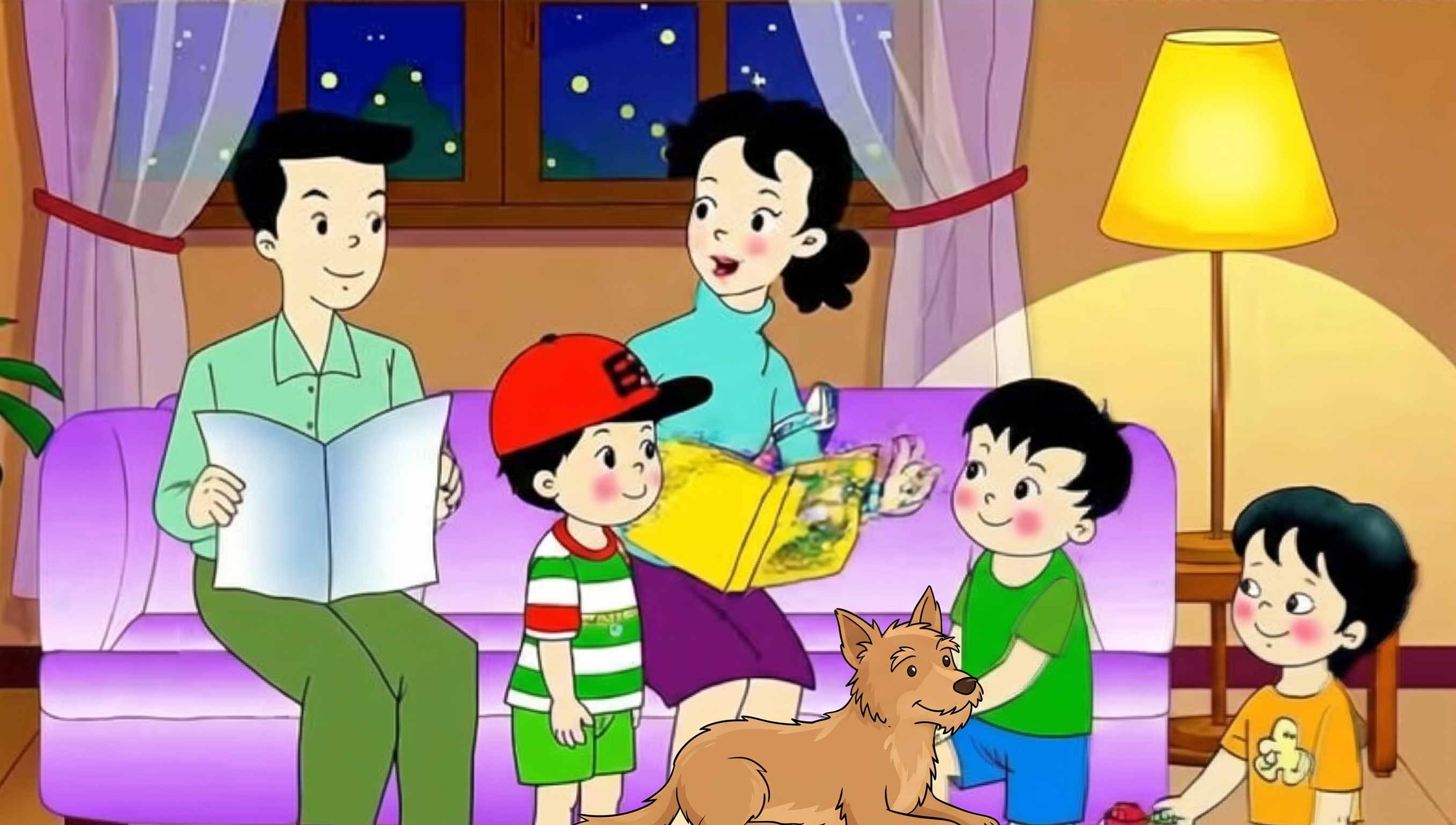
宝宝一家/La familia de Baobao/Baobao's family
爸爸/Papá, padre/Dad, father
妈妈/Mamá, madre/Mum, mother
宝宝/Baobao/Baobao
婷婷/Tíngting/Tíngting
嘟嘟/Dudú/Dudú
洛基/Rocky/Rocky
** 对话/Duìhuà/Diálogo/Dialogue **
--------------------------------------------------------------------------------
婷婷快看,墙上有一只小壁虎!/Tíngting: ¡Mirad, hay una salamanquesa en la pared!/Tíngting: Look, there's a little gecko on the wall!
嘟嘟咦,它的尾巴怎么断了?/Dudú: Anda, ¿por qué tiene la cola rota?/Dudú: Hey, why has its tail broken off?
爸爸壁虎遇到危险的时候,会挣断尾巴逃走。/Papá: Cuando una salamanquesa está en peligro, se suelta la cola para escapar./Dad: When a gecko is in danger, it breaks off its tail to escape.
宝宝那它没有尾巴,多难看啊!/Baobao: ¡Pues sin cola qué fea se ve!/Baobao: But it looks so ugly without a tail!
妈妈别担心,过一段时间,它会长出一条新尾巴。/Mamá: No os preocupéis: dentro de un tiempo le crecerá una cola nueva./Mum: Don't worry, after a while it will grow a new tail.
婷婷就像课文里的小壁虎一样!/Tíngting: ¡Como la salamanquesa del cuento!/Tíngting: Just like the little gecko in the story!
嘟嘟小鱼用尾巴拨水,老牛用尾巴赶蝇子,燕子用尾巴掌握方向。/Dudú: El pez usa la cola para nadar, el buey para espantar moscas y la golondrina para dirigir el vuelo./Dudú: The fish uses its tail to paddle, the ox to drive away flies and the swallow to steer.
宝宝那洛基用尾巴做什么呢?/Baobao: ¿Y Rocky para qué usa la cola?/Baobao: So what does Rocky use his tail for?
洛基汪汪!/Rocky: ¡Guau!/Rocky: Woof!
婷婷洛基用尾巴跟我们打招呼!/Tíngting: ¡Rocky usa la cola para saludarnos!/Tíngting: Rocky uses his tail to say hello to us!
▶ 📝 评论 / Comentarios / Comments
小壁虎借尾巴:动物尾巴的作用:
1. 猜字的方法: 课后要求学生找出不认识的字,猜猜读音和意思,再说说是怎么猜出来的。壁 (bì) 、墙 (qiáng) 、蚊 (wén) 都是形声字,一边表音,一边表义:“蚊”是虫字旁,和虫子有关;“墙”是土字旁,和泥土有关。
2. 礼貌和反复: 小壁虎借尾巴时用 您 (nín) 和 ……行吗? (……xíng ma?) ,还亲切地称呼“小鱼姐姐”“牛伯伯”“燕子阿姨”,是有礼貌的好孩子。三段借尾巴的经过结构相同,适合分角色演一演。
3. 科学知识: 小鱼用尾巴 拨水 (bō shuǐ) ,老牛用尾巴 赶蝇子 (gǎn yíngzi) ,燕子用尾巴 掌握方向 (zhǎngwò fāngxiàng) ,壁虎的尾巴断了还能再长出来。可以让学生说一说:你还知道哪些动物的尾巴有什么用?
Comentario Pedagógico: La salamanquesa pide una cola prestada: para qué sirve la cola de los animales:
1. Cómo adivinar caracteres: El libro pide buscar los caracteres desconocidos, adivinar su lectura y su significado y explicar cómo se ha hecho. 壁 (bì) , 墙 (qiáng) y 蚊 (wén) son fonético-semánticos: una parte da el sonido y otra el significado; 蚊 lleva el componente 虫 (insectos) y 墙 el componente 土 (tierra).
2. Cortesía y repetición: Al pedir la cola, la salamanquesa usa 您 (nín) (usted) y ……行吗? (……xíng ma?) (¿podría…?), y llama con cariño «hermana pez», «tío buey» y «tía golondrina»: es una niña bien educada. Los tres episodios tienen la misma estructura y son ideales para representarlos por personajes.
3. Conocimiento del medio: El pez usa la cola para 拨水 (bō shuǐ) (nadar), el buey para 赶蝇子 (gǎn yíngzi) (espantar moscas), la golondrina para 掌握方向 (zhǎngwò fāngxiàng) (dirigir el vuelo), y a la salamanquesa le vuelve a crecer la cola. Se puede preguntar a los alumnos qué otros animales conocen y para qué usan la cola.
Pedagogical Commentary: The Little Gecko Borrows a Tail: what animals' tails are for:
1. How to guess characters: The book asks students to find unfamiliar characters, guess their sound and meaning, and explain how they did it. 壁 (bì) , 墙 (qiáng) and 蚊 (wén) are phono-semantic: one part gives the sound and the other the meaning; 蚊 has the 虫 (insect) component and 墙 the 土 (earth) component.
2. Politeness and repetition: When asking for a tail, the gecko uses 您 (nín) (polite “you”) and ……行吗? (……xíng ma?) (“could you…?”), and warmly calls them “Sister Fish”, “Uncle Ox” and “Auntie Swallow”: a well-mannered child. The three episodes share the same structure and are ideal for acting out in parts.
3. Nature knowledge: The fish uses its tail to 拨水 (bō shuǐ) (paddle), the ox to 赶蝇子 (gǎn yíngzi) (drive away flies), the swallow to 掌握方向 (zhǎngwò fāngxiàng) (steer), and the gecko's tail grows back. Students can share what other animals use their tails for.

主题/Zhǔtí/Tema/Theme

其他/Qítā/Otros/Others.

词汇 Cíhuì/Vocabulario/Vocabulary

PDF与视频/PDF,videos Y Quiz/PDF, Videos and Quiz
