
PRIMARIA_C1_N2_25_T17
** 25_T17_动物王国开大会/Dòngwù wángguó kāi dàhuì/El reino animal celebra una asamblea/The Animal Kingdom Holds a Meeting **
** 额外内容/Contenido adicional/Additional Content **
** 扩大和替换/Kuòdà hé tìhuàn/Ampliar y sustituir/Expand and substitute. **
通知/avisar/notify
通知大家/avisar a todos/tell everyone
老虎让狗熊通知大家/el tigre le encarga al oso que avise a todos/the tiger asks the bear to tell everyone
动物王国要开大会,老虎让狗熊通知大家。/El reino animal va a celebrar una asamblea y el tigre le encarga al oso que avise a todos./The animal kingdom is holding a big meeting, and the tiger asks the bear to tell everyone.
开大会/celebrar la asamblea/hold the meeting
明天开大会/celebrar la asamblea mañana/hold the meeting tomorrow
明天上午八点开大会/celebrar la asamblea mañana a las ocho/hold the meeting at eight tomorrow morning
明天上午八点,在森林广场开大会,请大家准时参加!/¡Mañana a las ocho de la mañana hay asamblea en la plaza del bosque, venid todos puntuales!/Tomorrow at eight in the morning there's a big meeting in the forest square; please be there on time!
--------------------------------------------------------------------------------
这一次,大家都明白了。第二天上午,动物们都来到森林广场,准时参加了大会。/Esta vez todos lo entienden. A la mañana siguiente, los animales llegan a la plaza del bosque y asisten puntuales a la asamblea./This time everyone understands. The next morning, the animals all come to the forest square and arrive at the meeting on time.
--------------------------------------------------------------------------------
时间/hora/time
· 月日上午点/22 de abril, a las 8 de la mañana./22 April, 8 a.m.
地点/lugar/place
· 教学楼门前/delante del edificio de aulas./in front of the classroom building.
参加人/participantes/participants
· 参加入场式的同学/los alumnos del desfile inaugural./pupils in the opening parade.
事情/asunto/matter
· 集合/reunirse./assemble.
通知人/quién avisa/notified by
· 少先队大队部/la brigada de los Jóvenes Pioneros./the Young Pioneers brigade.
通知时间/fecha del aviso/date of notice
· 月日/20 de abril./20 April.
** 想一想, 说一说/Xiǎng yi xiǎng, shuō yi shuō/Piensa y responde/Think and answer the following questions **
--------------------------------------------------------------------------------
狗熊一共通知了几次?为什么?/¿Cuántas veces tuvo que dar el aviso el oso? ¿Por qué?/How many times did the bear have to make the announcement? Why?
写通知的时候,要把什么说清楚?/Al escribir un aviso, ¿qué hay que dejar claro?/When writing a notice, what must you make clear?
** 家庭/Jiātíng/FAMILIA/FAMILY **
--------------------------------------------------------------------------------
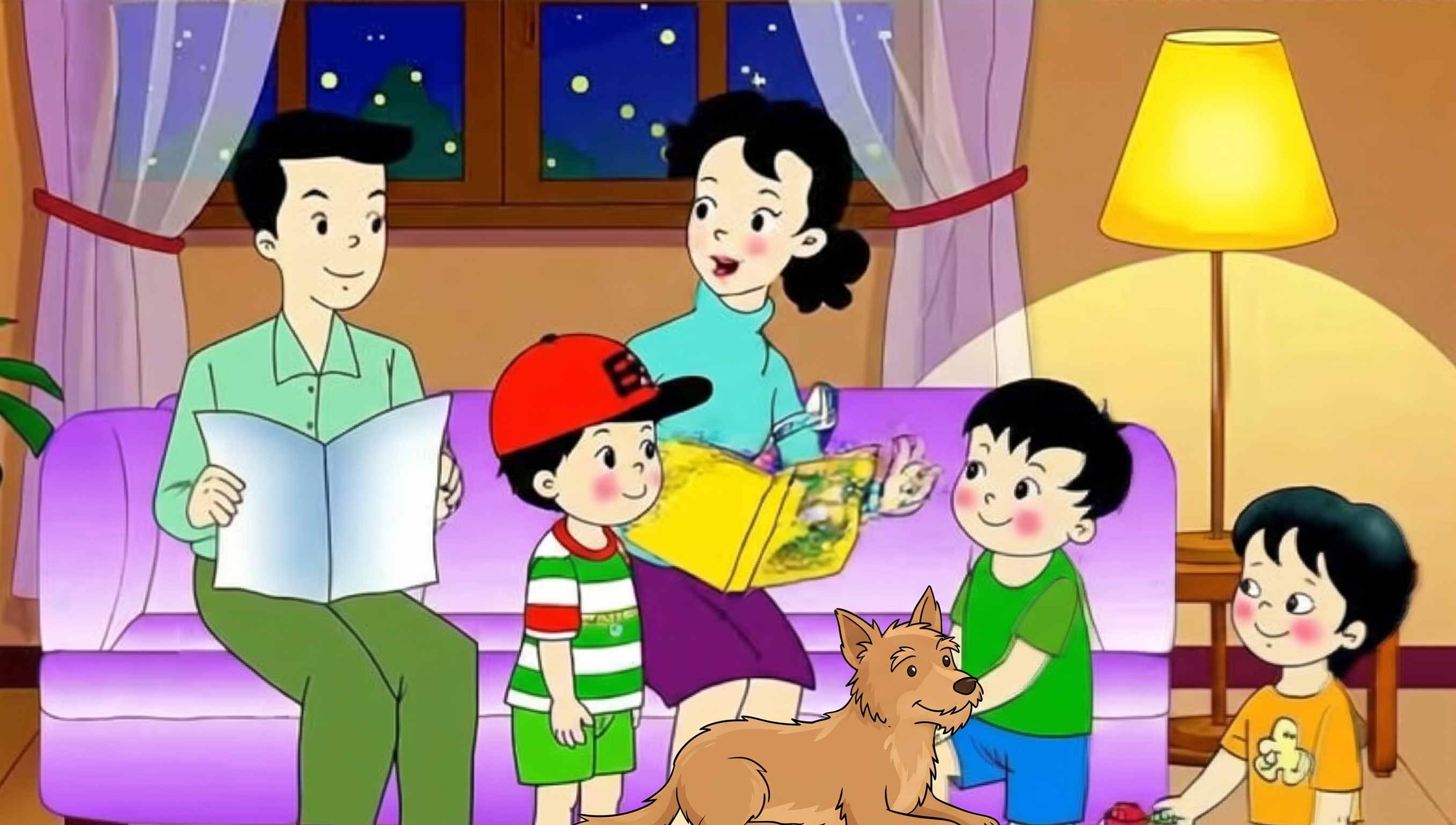
宝宝一家/La familia de Baobao/Baobao's family
爸爸/Papá, padre/Dad, father
妈妈/Mamá, madre/Mum, mother
宝宝/Baobao/Baobao
婷婷/Tíngting/Tíngting
嘟嘟/Dudú/Dudú
洛基/Rocky/Rocky
** 对话/Duìhuà/Diálogo/Dialogue **
--------------------------------------------------------------------------------
婷婷大家注意,我们要去郊游,请大家都参加!/Tíngting: ¡Atención todos! Nos vamos de excursión, ¡venid todos!/Tíngting: Attention, everyone! We're going on an outing, please all come!
嘟嘟你说一百遍,我们也去不了。/Dudú: Aunque lo digas cien veces, no podremos ir./Dudú: You can say it a hundred times, but we still can't go.
婷婷为什么?/Tíngting: ¿Por qué?/Tíngting: Why?
嘟嘟因为你没说什么时候去!/Dudú: ¡Porque no has dicho cuándo!/Dudú: Because you didn't say when!
宝宝还有,在哪儿集合呢?你得说清楚。/Baobao: Y además, ¿dónde quedamos? Tienes que decirlo claro./Baobao: And where do we meet? You've got to say it clearly.
婷婷对,对,对!爸爸,我们什么时候去?/Tíngting: ¡Claro, claro, claro! Papá, ¿cuándo vamos?/Tíngting: Right, right, right! Dad, when are we going?
爸爸星期六上午九点,在小区门口集合。/Papá: El sábado a las nueve de la mañana, en la puerta de la urbanización./Dad: Saturday at nine in the morning, meeting at the gate of our estate.
婷婷请注意啦!星期六上午九点,在小区门口集合,去公园郊游,请大家准时参加!/Tíngting: ¡Atención, por favor! El sábado a las nueve de la mañana quedamos en la puerta de la urbanización para ir de excursión al parque. ¡Sed puntuales!/Tíngting: Attention, please! On Saturday at nine in the morning we meet at the estate gate to go on an outing to the park. Please be on time!
妈妈这一次,大家都明白了!/Mamá: ¡Esta vez lo hemos entendido todos!/Mum: This time everyone understands!
洛基汪汪!/Rocky: ¡Guau!/Rocky: Woof!
嘟嘟洛基也会准时参加的!/Dudú: ¡Rocky también llegará puntual!/Dudú: Rocky will be on time too!
▶ 📝 评论 / Comentarios / Comments
动物王国开大会:把话说清楚:
1. 通知的要素: 狗熊一共通知了四次:先没说日子,又没说时间,再没说 地点 (dìdiǎn) ,最后才说清楚“明天上午八点,在森林广场”。课文告诉学生,发通知一定要把 时间 (shíjiān) 、地点 (dìdiǎn) 等说清楚。课后的“通知”可以让学生找出时间、地点、参加人、事情、通知人和通知时间。
2. 分角色朗读: 狗熊、狐狸、大灰狼、梅花鹿和老虎的话各有特点,可以分角色读一读。伸了伸舌头 (shēn le shēn shétou) 、做了个鬼脸 (zuò le gè guǐliǎn) 、捶捶自己的脑袋 (chuíchui zìjǐ de nǎodai) 等动作也可以演一演。
3. 重复的结构: 课文用“一连说了十遍”“你说一百遍,大会也开不起来”反复出现,情节层层推进,读起来很有趣,也帮助学生记住故事的顺序。
Comentario Pedagógico: El reino animal celebra una asamblea: decir las cosas con claridad:
1. Los elementos de un aviso: El oso tiene que dar el aviso cuatro veces: primero no dice el día, luego no dice la hora, después no dice el 地点 (dìdiǎn) (lugar), y solo al final lo deja claro: «mañana a las ocho, en la plaza del bosque». El texto enseña que en un aviso hay que precisar la 时间 (shíjiān) (hora) y el lugar. Con el «通知» del final, los alumnos pueden localizar la hora, el lugar, los participantes, el asunto, quién avisa y la fecha.
2. Lectura por personajes: Las intervenciones del oso, el zorro, el lobo, el ciervo y el tigre tienen cada una su tono, así que se pueden leer por personajes. Gestos como 伸了伸舌头 (shēn le shēn shétou) (sacar la lengua), 做了个鬼脸 (zuò le gè guǐliǎn) (hacer una mueca) o 捶捶自己的脑袋 (chuíchui zìjǐ de nǎodai) (darse golpecitos en la cabeza) se pueden representar.
3. Estructura repetida: Frases como «一连说了十遍» o «你说一百遍,大会也开不起来» se repiten mientras la trama avanza paso a paso; esto hace la lectura divertida y ayuda a recordar el orden de la historia.
Pedagogical Commentary: The Animal Kingdom Holds a Meeting: saying things clearly:
1. The parts of a notice: The bear has to make the announcement four times: first he leaves out the day, then the time, then the 地点 (dìdiǎn) (place), and only at the end makes it clear: “tomorrow at eight, in the forest square”. The text teaches that a notice must state the 时间 (shíjiān) (time) and place clearly. Using the “通知” at the end, students can find the time, place, participants, matter, sender and date.
2. Reading in parts: The bear, fox, wolf, deer and tiger each speak in their own way, so the text can be read in parts. Actions like 伸了伸舌头 (shēn le shēn shétou) (sticking out his tongue), 做了个鬼脸 (zuò le gè guǐliǎn) (pulling a face) and 捶捶自己的脑袋 (chuíchui zìjǐ de nǎodai) (tapping his head) can be acted out.
3. A repeated structure: Phrases such as “一连说了十遍” and “你说一百遍,大会也开不起来” recur as the plot moves forward step by step, making the story fun to read and helping students remember its order.

主题/Zhǔtí/Tema/Theme

其他/Qítā/Otros/Others.

词汇 Cíhuì/Vocabulario/Vocabulary

PDF与视频/PDF,videos Y Quiz/PDF, Videos and Quiz
