
PRIMARIA_C1_N2_16_L05
** 16_L05_动物儿歌/Dòngwù érgē/Canción de los animalitos/Little Creatures Rhyme **
** 额外内容/Contenido adicional/Additional Content **
** 扩大和替换/Kuòdà hé tìhuàn/Ampliar y sustituir/Expand and substitute. **
飞/volar/fly
展翅飞/extender las alas y volar/spread its wings and fly
蜻蜓展翅飞/la libélula extiende las alas y vuela/the dragonfly spreads its wings and flies
蜻蜓半空展翅飞。/La libélula extiende las alas y vuela por el aire./The dragonfly spreads its wings and flies in mid-air.
网/red, tela/net, web
结网/tejer la tela/spin a web
蜘蛛房前结网忙。/La araña teje su tela, atareada, delante de la casa./The spider is busy spinning its web in front of the house.
--------------------------------------------------------------------------------
蚂蚁地上运食粮。/Las hormigas acarrean comida por el suelo./The ants carry food along the ground.
--------------------------------------------------------------------------------
蜻蜓/libélula/dragonfly
· 展翅/extiende las alas./spreads its wings.
蝴蝶/mariposa/butterfly
· 飞舞/revolotea./flutters.
蚯蚓/lombriz/earthworm
· 松土/remueve la tierra./loosens the soil.
蚂蚁/hormiga/ant
· 搬家/se muda de casa./moves house.
蝌蚪/renacuajo/tadpole
· 游水/nada./swims.
蜘蛛/araña/spider
· 结网/teje su tela./spins a web.
** 想一想, 说一说/Xiǎng yi xiǎng, shuō yi shuō/Piensa y responde/Think and answer the following questions **
--------------------------------------------------------------------------------
儿歌里写了哪些小动物?它们在做什么?/¿Qué animalitos salen en la canción? ¿Qué están haciendo?/Which little creatures are in the rhyme? What are they doing?
这些字为什么大多有虫字旁?/¿Por qué casi todos estos caracteres llevan el componente «虫»?/Why do most of these characters have the “虫” (insect) component?
** 家庭/Jiātíng/FAMILIA/FAMILY **
--------------------------------------------------------------------------------
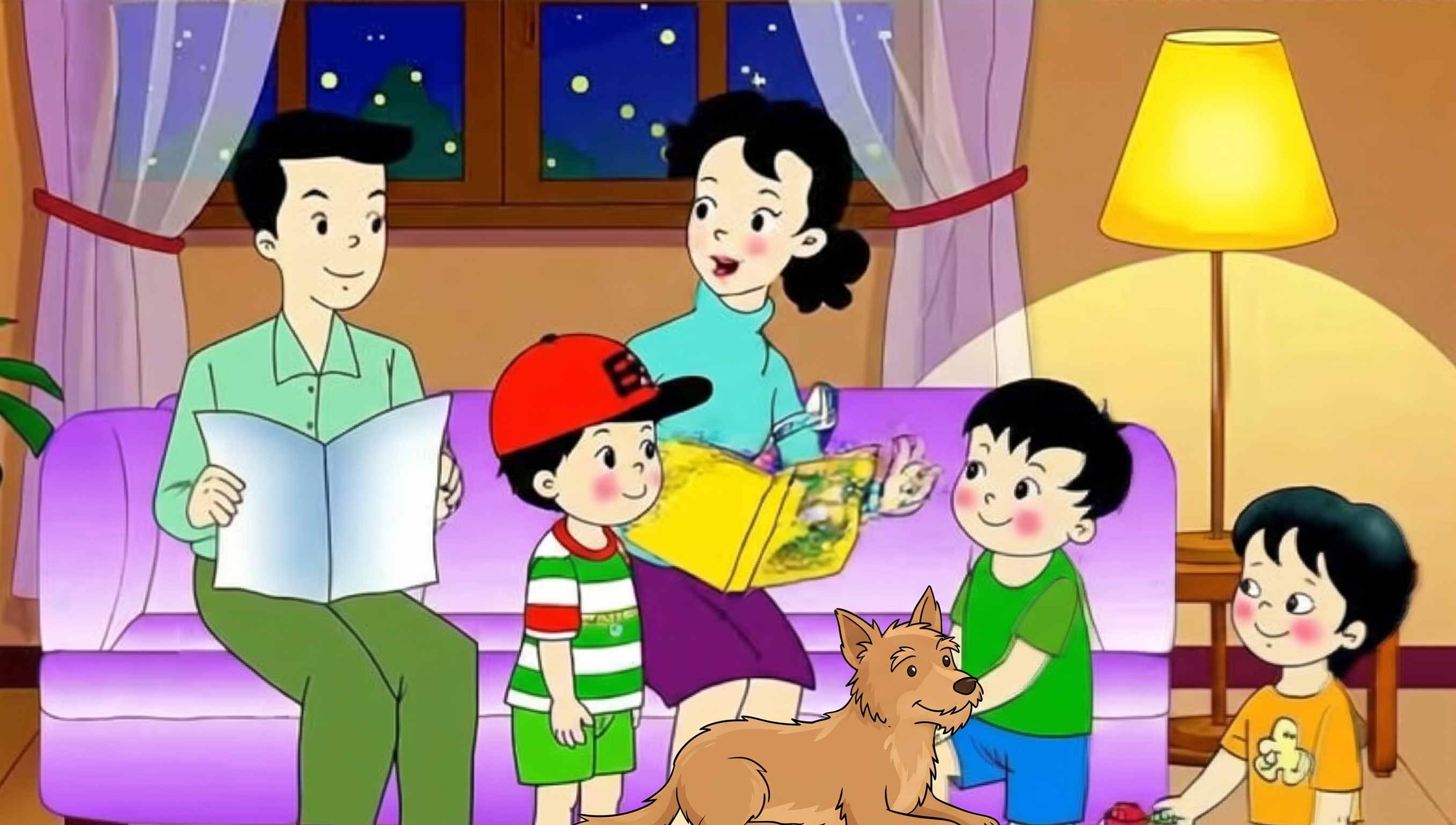
宝宝一家/La familia de Baobao/Baobao's family
爸爸/Papá, padre/Dad, father
妈妈/Mamá, madre/Mum, mother
宝宝/Baobao/Baobao
婷婷/Tíngting/Tíngting
嘟嘟/Dudú/Dudú
洛基/Rocky/Rocky
** 对话/Duìhuà/Diálogo/Dialogue **
--------------------------------------------------------------------------------
嘟嘟快看!池塘里有好多小蝌蚪!/Dudú: ¡Mirad! ¡En la charca hay un montón de renacuajos!/Dudú: Look! There are loads of little tadpoles in the pond!
婷婷它们游得真欢呀!/Tíngting: ¡Qué contentos nadan!/Tíngting: They're swimming so happily!
宝宝你们看,荷叶上停着一只蜻蜓。/Baobao: Mirad, hay una libélula posada en la hoja de loto./Baobao: Look, there's a dragonfly sitting on the lotus leaf.
嘟嘟我想捉住它!/Dudú: ¡Quiero atraparla!/Dudú: I want to catch it!
妈妈别捉它。蜻蜓会吃蚊子,是我们的好朋友。/Mamá: No la cojas. Las libélulas se comen los mosquitos; son nuestras amigas./Mum: Don't catch it. Dragonflies eat mosquitoes; they're our friends.
婷婷地上有一队蚂蚁,它们在运食粮呢!/Tíngting: ¡En el suelo hay una fila de hormigas acarreando comida!/Tíngting: There's a line of ants on the ground, carrying food!
宝宝墙角还有一只蜘蛛在结网。/Baobao: Y en el rincón hay una araña tejiendo su tela./Baobao: And there's a spider spinning a web in the corner.
爸爸小动物们都很忙啊!/Papá: ¡Qué atareados están todos los animalitos!/Dad: All the little creatures are so busy!
洛基汪汪!/Rocky: ¡Guau!/Rocky: Woof!
嘟嘟洛基,别吓跑了蝴蝶!/Dudú: ¡Rocky, no espantes a las mariposas!/Dudú: Rocky, don't scare the butterflies away!
▶ 📝 评论 / Comentarios / Comments
动物儿歌:虫字旁与小动物:
1. 虫字旁: 蜻蜓 (qīngtíng) 、蝴蝶 (húdié) 、蚯蚓 (qiūyǐn) 、蚂蚁 (mǎyǐ) 、蝌蚪 (kēdǒu) 、蜘蛛 (zhīzhū) 都是虫字旁,和小动物有关。这些词大多由两个字组成,两个字要连在一起才有意思。
2. 儿歌的结构: 每一句都是“动物+地方+做什么”:蜻蜓—半空—展翅飞,蚂蚁—地上—运食粮。“读一读,记一记”里的“蜻蜓展翅、蚂蚁搬家、蜘蛛结网”也是同样的结构,学生可以照样子说一说。
3. 观察自然: 可以带学生到校园里观察小动物,说一说它们在哪里、在做什么,并懂得 爱护 (àihù) 小动物。
1. 虫字旁: 蜻蜓 (qīngtíng) 、蝴蝶 (húdié) 、蚯蚓 (qiūyǐn) 、蚂蚁 (mǎyǐ) 、蝌蚪 (kēdǒu) 、蜘蛛 (zhīzhū) 都是虫字旁,和小动物有关。这些词大多由两个字组成,两个字要连在一起才有意思。
2. 儿歌的结构: 每一句都是“动物+地方+做什么”:蜻蜓—半空—展翅飞,蚂蚁—地上—运食粮。“读一读,记一记”里的“蜻蜓展翅、蚂蚁搬家、蜘蛛结网”也是同样的结构,学生可以照样子说一说。
3. 观察自然: 可以带学生到校园里观察小动物,说一说它们在哪里、在做什么,并懂得 爱护 (àihù) 小动物。
Comentario Pedagógico: Canción de los animalitos: el componente 虫 y los pequeños animales:
1. El componente 虫: 蜻蜓 (qīngtíng) , 蝴蝶 (húdié) , 蚯蚓 (qiūyǐn) , 蚂蚁 (mǎyǐ) , 蝌蚪 (kēdǒu) y 蜘蛛 (zhīzhū) llevan todos el componente 虫 (insecto), relacionado con los animalitos. Casi todas estas palabras tienen dos caracteres que solo tienen sentido juntos.
2. La estructura de la canción: Cada verso sigue el esquema «animal + lugar + acción»: libélula — en el aire — vuela; hormigas — en el suelo — acarrean comida. Las expresiones de “读一读,记一记” (蜻蜓展翅, 蚂蚁搬家, 蜘蛛结网) siguen la misma estructura y sirven de modelo.
3. Observar la naturaleza: Se puede salir al patio a observar animalitos, decir dónde están y qué hacen, y aprender a 爱护 (àihù) (cuidar) a los animales.
Pedagogical Commentary: Little Creatures Rhyme: the 虫 component and small animals:
1. The 虫 component: 蜻蜓 (qīngtíng) , 蝴蝶 (húdié) , 蚯蚓 (qiūyǐn) , 蚂蚁 (mǎyǐ) , 蝌蚪 (kēdǒu) and 蜘蛛 (zhīzhū) all carry the 虫 (insect) component, linked to small creatures. Most of these words are made of two characters that only make sense together.
2. The structure of the rhyme: Each line follows “creature + place + action”: dragonfly — in mid-air — flies; ants — on the ground — carry food. The expressions in “读一读,记一记” (蜻蜓展翅, 蚂蚁搬家, 蜘蛛结网) follow the same pattern and can be used as models.
3. Observing nature: Students can go out into the school grounds to watch little creatures, say where they are and what they're doing, and learn to 爱护 (àihù) (care for) animals.

主题/Zhǔtí/Tema/Theme

其他/Qítā/Otros/Others.

词汇 Cíhuì/Vocabulario/Vocabulary

PDF与视频/PDF,videos Y Quiz/PDF, Videos and Quiz
