
PRIMARIA_C1_N2_13_T09
** 13_T09_夜色/Yèsè/La noche/The Night **
** 额外内容/Contenido adicional/Additional Content **
** 扩大和替换/Kuòdà hé tìhuàn/Ampliar y sustituir/Expand and substitute. **
胆子/valor/nerve
胆子很小/ser miedoso/be timid
我从前胆子很小/antes yo era muy miedoso/I used to be timid
我从前胆子很小,现在我很勇敢。/Antes era muy miedoso, pero ahora soy muy valiente./I used to be timid, but now I'm very brave.
原来/resulta que/it turns out
原来花草都在微笑/resulta que las flores y la hierba sonríen/it turns out the flowers and grass are smiling
爸爸拉我去散步,原来花草都像白天一样微笑。/Papá me llevó a pasear y resultó que las flores y la hierba sonreían igual que de día./Dad took me for a walk, and it turned out the flowers and grass were smiling just like in the daytime.
--------------------------------------------------------------------------------
从此再黑再黑的夜晚,我也能看见小鸟怎样在月光下睡觉/Desde entonces, por muy oscura que sea la noche, puedo ver cómo duermen los pajaritos bajo la luz de la luna…/Since then, however dark the night, I can see how the little birds sleep in the moonlight…
--------------------------------------------------------------------------------
胆/valor/guts
· 胆子/arrojo./nerve.
· 胆量/coraje./courage.
· 大胆/atrevido./bold.
勇/valeroso/valiant
· 勇敢/valiente./brave.
· 勇气/valor./courage.
· 勇士/guerrero valiente./warrior.
原/original; llanura/original; plain
· 原来/resulta que./it turns out.
· 草原/pradera./grassland.
· 高原/meseta./plateau.
微/pequeño/tiny
· 微笑/sonrisa./smile.
· 微小/diminuto./minute.
· 微风/brisa./breeze.
** 想一想, 说一说/Xiǎng yi xiǎng, shuō yi shuō/Piensa y responde/Think and answer the following questions **
--------------------------------------------------------------------------------
我从前为什么不敢往外瞧?/¿Por qué antes el niño no se atrevía a mirar fuera?/Why didn't the child dare to look outside before?
后来我为什么不怕黑了?/¿Por qué después dejó de tener miedo a la oscuridad?/Why did the child stop being afraid of the dark?
** 家庭/Jiātíng/FAMILIA/FAMILY **
--------------------------------------------------------------------------------
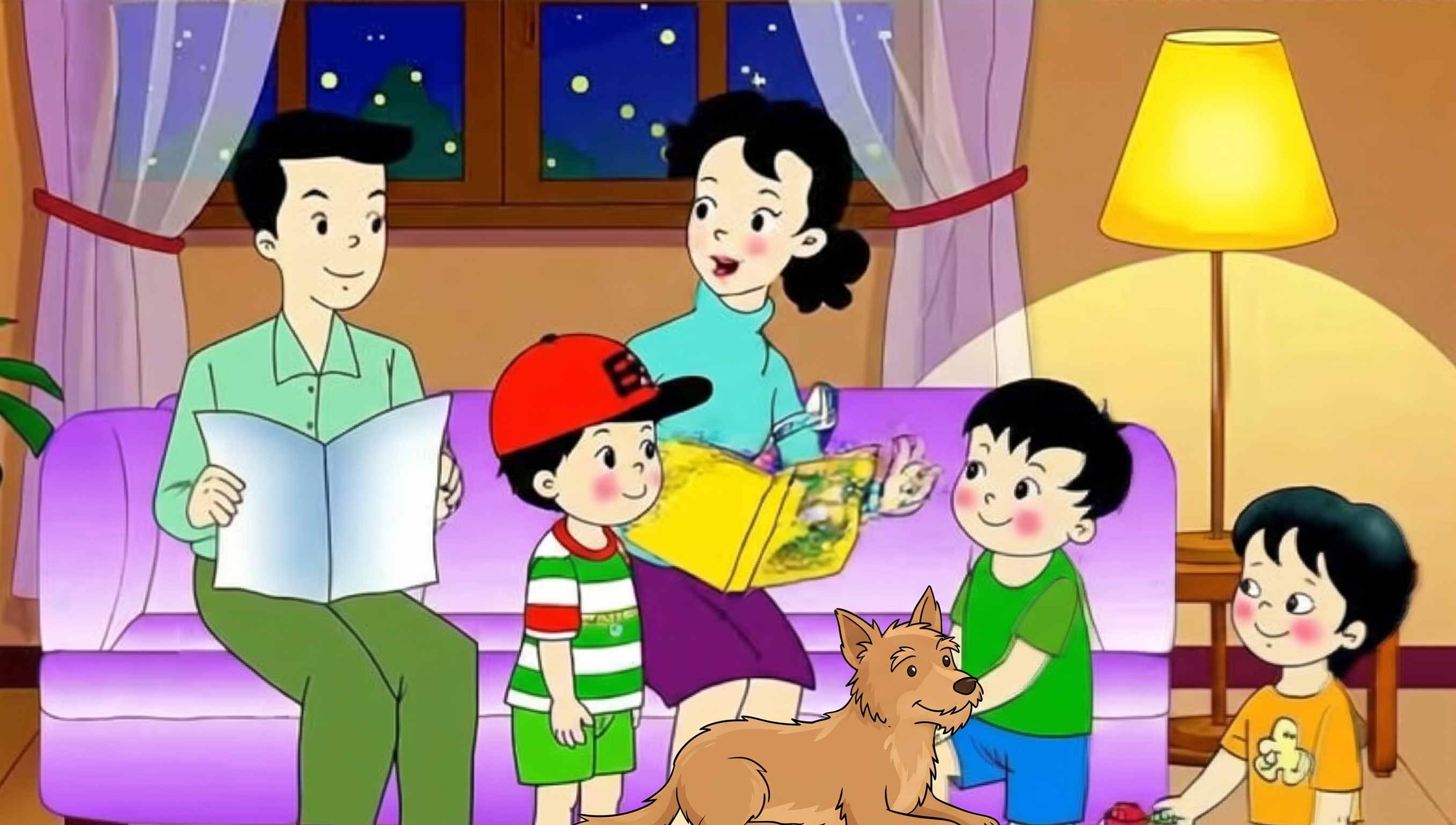
宝宝一家/La familia de Baobao/Baobao's family
爸爸/Papá, padre/Dad, father
妈妈/Mamá, madre/Mum, mother
宝宝/Baobao/Baobao
婷婷/Tíngting/Tíngting
嘟嘟/Dudú/Dudú
洛基/Rocky/Rocky
** 对话/Duìhuà/Diálogo/Dialogue **
--------------------------------------------------------------------------------
嘟嘟妈妈,天黑了,我不敢往外瞧。/Dudú: Mamá, se ha hecho de noche y no me atrevo a mirar fuera./Dudú: Mum, it's dark and I don't dare look outside.
妈妈别怕,嘟嘟,你要勇敢一点儿。/Mamá: No tengas miedo, Dudú, sé un poco valiente./Mum: Don't be scared, Dudú, try to be a bit braver.
爸爸走,我们一起去散步吧!/Papá: ¡Venga, vamos a dar un paseo juntos!/Dad: Come on, let's go for a walk together!
嘟嘟可是外面黑黑的/Dudú: Pero fuera está muy oscuro…/Dudú: But it's so dark outside…
爸爸有爸爸在,不用怕。你看,天上有月亮,还有星星。/Papá: Papá está aquí, no hace falta tener miedo. Mira, en el cielo está la luna, y también hay estrellas./Dad: Dad's here, there's nothing to be scared of. Look, there's the moon in the sky, and the stars too.
婷婷花草都在月光下微笑呢!/Tíngting: ¡Las flores y la hierba sonríen bajo la luna!/Tíngting: The flowers and grass are smiling in the moonlight!
嘟嘟真的!树上的小鸟也睡着了。/Dudú: ¡Es verdad! Los pajaritos del árbol también se han dormido./Dudú: It's true! The little birds in the tree have fallen asleep too.
宝宝原来夜晚这么美!/Baobao: ¡Quién iba a decir que la noche era tan bonita!/Baobao: Who knew the night was so beautiful!
洛基汪汪!/Rocky: ¡Guau!/Rocky: Woof!
嘟嘟有洛基陪着,我的胆子也大了!/Dudú: ¡Con Rocky a mi lado, ya no soy tan miedoso!/Dudú: With Rocky beside me, I feel braver too!
▶ 📝 评论 / Comentarios / Comments
夜色:从怕黑到爱上夜晚:
1. 一字组多词: “读一读,记一记”用一个字组成三个词:胆 (dǎn) → 胆子、胆量、大胆;勇 (yǒng) → 勇敢、勇气、勇士;原 (yuán) → 原来、草原、高原;微 (wēi) → 微笑、微小、微风。帮助学生积累词语。
2. 词语和句式: 讲了又讲 (jiǎng le yòu jiǎng) 表示讲了很多次;偏要 (piānyào) 表示坚持要做;原来 (yuánlái) 表示发现了真实的情况;“再黑再黑”表示无论多么黑。可以让学生用这些词语说句子。
3. 克服害怕: 孩子从“胆子很小很小”到在夜晚看见“花草都像白天一样微笑”,在爸爸的陪伴下变得 勇敢 (yǒnggǎn) 。可以让学生说一说自己害怕什么、怎样变得勇敢。
Comentario Pedagógico: La noche: de tener miedo a la oscuridad a disfrutar de la noche:
1. Un carácter, varias palabras: “读一读,记一记” forma tres palabras con cada carácter: 胆 (dǎn) → 胆子, 胆量, 大胆; 勇 (yǒng) → 勇敢, 勇气, 勇士; 原 (yuán) → 原来, 草原, 高原; 微 (wēi) → 微笑, 微小, 微风. Así los alumnos amplían su vocabulario.
2. Palabras y estructuras: 讲了又讲 (jiǎng le yòu jiǎng) significa «contar una y otra vez»; 偏要 (piānyào) indica empeño; 原来 (yuánlái) expresa el descubrimiento de algo («resulta que…»); y “再黑再黑” significa «por muy oscuro que sea». Los alumnos pueden hacer frases con ellas.
3. Vencer el miedo: El niño pasa de ser «muy, muy miedoso» a descubrir que de noche «las flores sonríen como de día», y con la compañía de su padre se vuelve 勇敢 (yǒnggǎn) . Se puede invitar a los alumnos a contar qué les da miedo y cómo podrían ser más valientes.
Pedagogical Commentary: The Night: from fearing the dark to loving the night:
1. One character, several words: “读一读,记一记” builds three words from each character: 胆 (dǎn) → 胆子, 胆量, 大胆; 勇 (yǒng) → 勇敢, 勇气, 勇士; 原 (yuán) → 原来, 草原, 高原; 微 (wēi) → 微笑, 微小, 微风. This helps students build vocabulary.
2. Words and patterns: 讲了又讲 (jiǎng le yòu jiǎng) means “tell again and again”; 偏要 (piānyào) shows insistence; 原来 (yuánlái) expresses discovering the truth (“it turns out…”); and “再黑再黑” means “however dark”. Students can make sentences with them.
3. Overcoming fear: The child goes from being “very, very timid” to discovering that at night “the flowers smile just as in the daytime”, and with Dad's company becomes 勇敢 (yǒnggǎn) . Students can talk about what scares them and how they might become braver.

主题/Zhǔtí/Tema/Theme

其他/Qítā/Otros/Others.

词汇 Cíhuì/Vocabulario/Vocabulary

PDF与视频/PDF,videos Y Quiz/PDF, Videos and Quiz
