
PRIMARIA_C1_N2_11_T07
** 11_T07_怎么都快乐/Zěnme dōu kuàilè/Siempre es divertido/It's Fun Any Way **
** 额外内容/Contenido adicional/Additional Content **
** 扩大和替换/Kuòdà hé tìhuàn/Ampliar y sustituir/Expand and substitute. **
讲/contar/tell
讲故事/contar cuentos/tell stories
你讲我听/tú cuentas y yo escucho/you tell and I listen
讲故事得有人听才行,你讲我听,我讲你听。/Para contar un cuento hace falta alguien que escuche: tú cuentas y yo escucho, yo cuento y tú escuchas./Telling stories needs someone to listen: you tell and I listen, I tell and you listen.
游戏/juego/game
什么游戏都能玩/se puede jugar a cualquier juego/you can play any game
人多,什么游戏都能玩。/Con mucha gente se puede jugar a cualquier juego./With lots of people, you can play any game.
--------------------------------------------------------------------------------
连开运动会也可以。/¡Hasta se puede organizar una competición deportiva!/You can even hold a sports day!
--------------------------------------------------------------------------------
跳/saltar/jump
· 绳/cuerda (跳绳: saltar a la comba)./rope (跳绳: skip).
踢/dar patadas/kick
· 足球/fútbol./football.
讲/contar/tell
· 故事/cuento./story.
听/escuchar/listen
· 音乐/música./music.
打/jugar (con pelota)/play (ball games)
· 排球/voleibol./volleyball.
玩/jugar/play
· 游戏/juego./game.
** 想一想, 说一说/Xiǎng yi xiǎng, shuō yi shuō/Piensa y responde/Think and answer the following questions **
--------------------------------------------------------------------------------
一个人可以玩什么?许多人可以玩什么?/¿A qué se puede jugar solo? ¿Y entre muchos?/What can you play on your own? And with lots of people?
你最喜欢和几个人一起玩?玩什么?/¿Con cuántas personas te gusta más jugar? ¿A qué?/How many people do you most like playing with? What do you play?
** 家庭/Jiātíng/FAMILIA/FAMILY **
--------------------------------------------------------------------------------
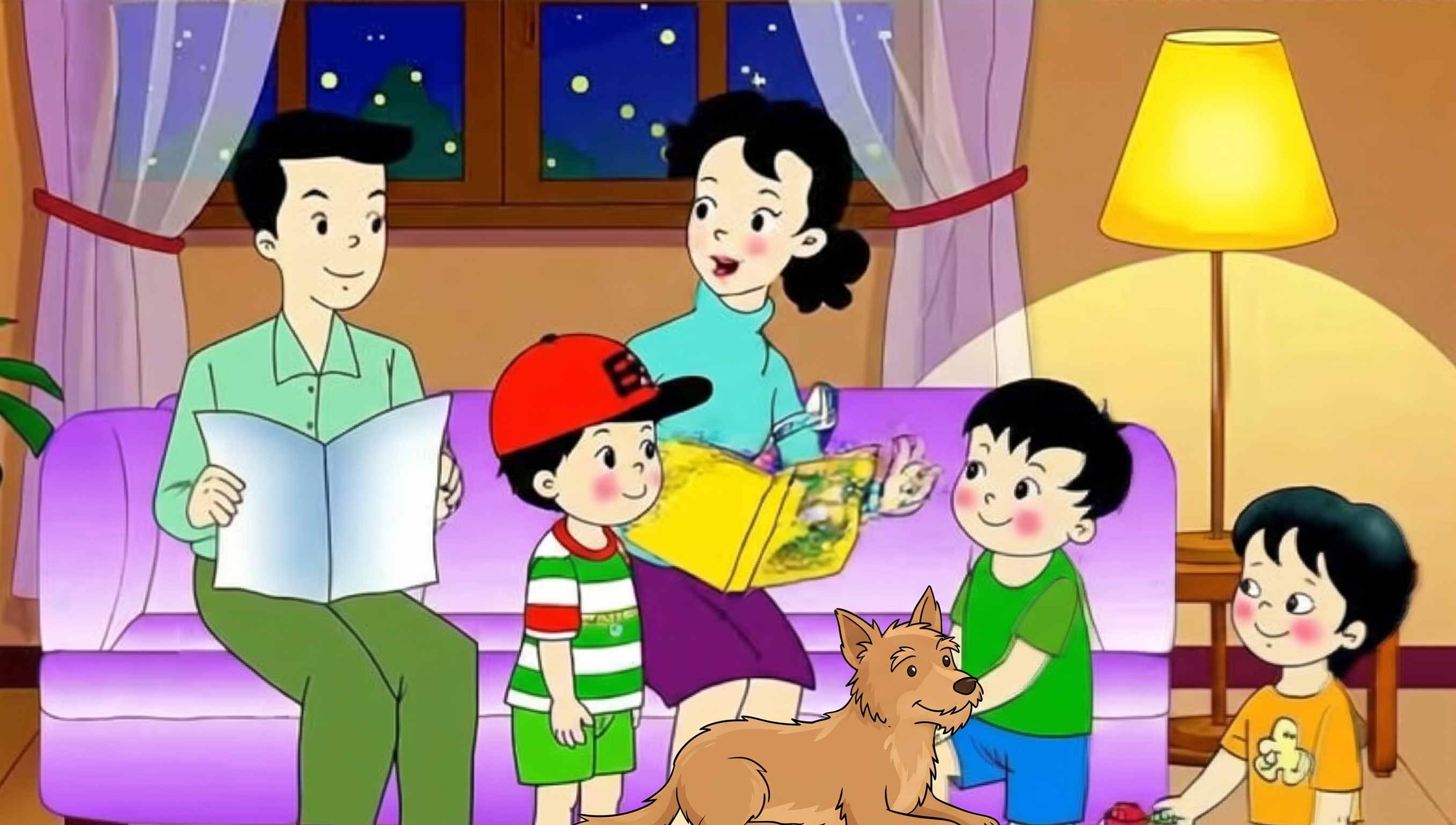
宝宝一家/La familia de Baobao/Baobao's family
爸爸/Papá, padre/Dad, father
妈妈/Mamá, madre/Mum, mother
宝宝/Baobao/Baobao
婷婷/Tíngting/Tíngting
嘟嘟/Dudú/Dudú
洛基/Rocky/Rocky
** 对话/Duìhuà/Diálogo/Dialogue **
--------------------------------------------------------------------------------
婷婷今天星期六,我们玩什么?/Tíngting: Hoy es sábado, ¿a qué jugamos?/Tíngting: It's Saturday today, what shall we play?
宝宝我们三个人一起跳绳吧!两个人甩绳子,一个人跳。/Baobao: ¡Saltemos a la comba los tres! Dos dan vueltas a la cuerda y uno salta./Baobao: Let's skip together, the three of us! Two swing the rope and one jumps.
嘟嘟好!你跳,我跳,轮流跳。/Dudú: ¡Vale! Tú saltas, yo salto, saltamos por turnos./Dudú: OK! You jump, I jump, we take turns.
爸爸我和妈妈也来玩!/Papá: ¡Mamá y yo también jugamos!/Dad: Mum and I want to play too!
妈妈人多了,我们可以玩老鹰捉小鸡。/Mamá: Ahora que somos más, podemos jugar al águila y los pollitos./Mum: Now there are more of us, we can play eagle catches chicks.
婷婷太好了!爸爸当老鹰,妈妈当母鸡!/Tíngting: ¡Genial! ¡Papá hace de águila y mamá de gallina!/Tíngting: Brilliant! Dad can be the eagle and Mum the mother hen!
嘟嘟我们当小鸡!/Dudú: ¡Nosotros somos los pollitos!/Dudú: We'll be the chicks!
洛基汪汪!/Rocky: ¡Guau!/Rocky: Woof!
宝宝洛基也想当小鸡!/Baobao: ¡Rocky también quiere ser pollito!/Baobao: Rocky wants to be a chick too!
婷婷一个人玩,很好!许多人玩,更好!/Tíngting: Jugar solo está muy bien. ¡Jugar muchos, todavía mejor!/Tíngting: Playing on your own is great. Playing with lots of people is even better!
▶ 📝 评论 / Comentarios / Comments
怎么都快乐:一个人、几个人、许多人都能玩:
1. 多音字: 得 (děi) 在“讲故事得有人听才行”里读 děi,表示“需要”;在“得到”里读 dé;在“跑得快”里读 de。行 (xíng) 在“银行”里读 háng。结合句子帮助学生分辨。
2. 动词搭配: 不同的游戏要用不同的动词:踢 (tī) 足球、毽子,打 (dǎ) 篮球、排球、羽毛球,下 (xià) 象棋,跳 (tiào) 绳。“读一读,说一说”可以让学生说出更多这样的词语。
3. 快乐与合作: 一个人玩、两个人玩、许多人玩,都有不同的乐趣。课文让学生体会独处的安静,也懂得和别人一起玩时要 轮流 (lúnliú) 、要合作。
1. 多音字: 得 (děi) 在“讲故事得有人听才行”里读 děi,表示“需要”;在“得到”里读 dé;在“跑得快”里读 de。行 (xíng) 在“银行”里读 háng。结合句子帮助学生分辨。
2. 动词搭配: 不同的游戏要用不同的动词:踢 (tī) 足球、毽子,打 (dǎ) 篮球、排球、羽毛球,下 (xià) 象棋,跳 (tiào) 绳。“读一读,说一说”可以让学生说出更多这样的词语。
3. 快乐与合作: 一个人玩、两个人玩、许多人玩,都有不同的乐趣。课文让学生体会独处的安静,也懂得和别人一起玩时要 轮流 (lúnliú) 、要合作。
Comentario Pedagógico: Siempre es divertido: se puede jugar solo, entre pocos o entre muchos:
1. Caracteres con varias lecturas: 得 (děi) se lee děi en “讲故事得有人听才行” y significa «hacer falta»; se lee dé en 得到 (obtener) y de en 跑得快 (correr rápido). 行 (xíng) se lee háng en 银行 (banco). Las frases ayudan a distinguirlas.
2. Verbos para cada juego: Cada juego tiene su verbo: 踢 (tī) para el fútbol y el volante (con el pie), 打 (dǎ) para el baloncesto, el voleibol y el bádminton, 下 (xià) para el ajedrez y 跳 (tiào) para la comba. Con “读一读,说一说” los alumnos pueden buscar más combinaciones.
3. Diversión y cooperación: Jugar solo, de dos en dos o entre muchos tiene una gracia distinta. El texto enseña a disfrutar de la calma de estar solo y a respetar los 轮流 (lúnliú) (turnos) y cooperar cuando se juega con otros.
Pedagogical Commentary: It's Fun Any Way: playing alone, in small groups or with lots of people:
1. Characters with more than one reading: 得 (děi) is read děi in “讲故事得有人听才行”, meaning “to need”; dé in 得到 (obtain); and de in 跑得快 (run fast). 行 (xíng) is read háng in 银行 (bank). Example sentences help students tell them apart.
2. Verbs for each game: Each game takes its own verb: 踢 (tī) for football and shuttlecock (with the foot), 打 (dǎ) for basketball, volleyball and badminton, 下 (xià) for chess and 跳 (tiào) for skipping. The “读一读,说一说” section lets students find more combinations.
3. Fun and cooperation: Playing alone, in pairs or with lots of people each has its own charm. The text helps students enjoy quiet time alone and learn to take 轮流 (lúnliú) (turns) and cooperate when playing with others.

主题/Zhǔtí/Tema/Theme

其他/Qítā/Otros/Others.

词汇 Cíhuì/Vocabulario/Vocabulary

PDF与视频/PDF,videos Y Quiz/PDF, Videos and Quiz
