
PRIMARIA_C1_N2_09_T05
** 09_T05_小公鸡和小鸭子/Xiǎo gōngjī hé xiǎo yāzi/El gallito y el patito/The Little Rooster and the Little Duck **
** 额外内容/Contenido adicional/Additional Content **
** 扩大和替换/Kuòdà hé tìhuàn/Ampliar y sustituir/Expand and substitute. **
跟/seguir/follow
跟在小鸭子后面/ir detrás del patito/follow behind the little duck
偷偷地跟在小鸭子后面/seguir al patito a escondidas/secretly follow the little duck
小公鸡偷偷地跟在小鸭子后面,也下了水。/El gallito siguió al patito a escondidas y también se metió en el agua./The little rooster secretly followed the little duck into the water.
游/nadar/swim
飞快地游/nadar rapidísimo/swim very fast
小鸭子飞快地游到小公鸡身边。/El patito nadó rapidísimo hasta el gallito./The little duck swam as fast as he could to the little rooster.
--------------------------------------------------------------------------------
小公鸡上了岸,笑着对小鸭子说鸭子哥哥,谢谢你。/El gallito llegó a la orilla y le dijo sonriendo al patito: «Hermano pato, gracias»./The little rooster reached the bank and said to the little duck with a smile, “Big brother Duck, thank you.”
--------------------------------------------------------------------------------
跟/seguir/follow
· 偷偷地/a escondidas./secretly.
游/nadar/swim
· 飞快地/rapidísimo./very fast.
说/decir/say
· 笑着/sonriendo./with a smile.
走/andar/walk
· 高兴地/alegremente./happily.
** 想一想, 说一说/Xiǎng yi xiǎng, shuō yi shuō/Piensa y responde/Think and answer the following questions **
--------------------------------------------------------------------------------
小公鸡怎样帮助了小鸭子?/¿Cómo ayudó el gallito al patito?/How did the little rooster help the little duck?
小鸭子又怎样帮助了小公鸡?/¿Y cómo ayudó el patito al gallito?/And how did the little duck help the little rooster?
** 家庭/Jiātíng/FAMILIA/FAMILY **
--------------------------------------------------------------------------------
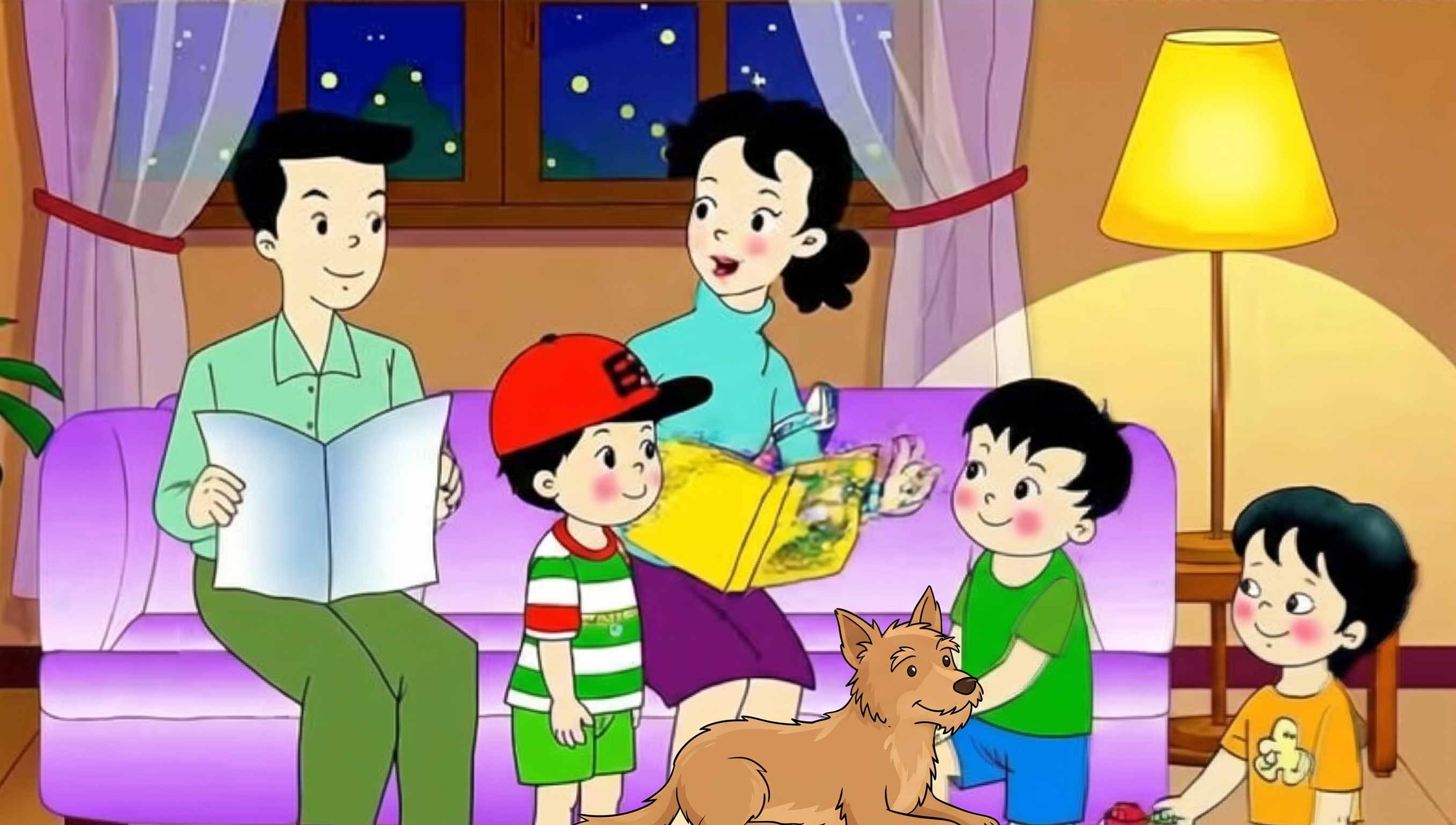
宝宝一家/La familia de Baobao/Baobao's family
爸爸/Papá, padre/Dad, father
妈妈/Mamá, madre/Mum, mother
宝宝/Baobao/Baobao
婷婷/Tíngting/Tíngting
嘟嘟/Dudú/Dudú
洛基/Rocky/Rocky
** 对话/Duìhuà/Diálogo/Dialogue **
--------------------------------------------------------------------------------
嘟嘟爸爸,我也想跟你们一起去游泳!/Dudú: ¡Papá, yo también quiero ir a nadar con vosotros!/Dudú: Dad, I want to go swimming with you too!
爸爸你还不会游泳,不能一个人下水。/Papá: Todavía no sabes nadar; no puedes meterte solo en el agua./Dad: You can't swim yet; you mustn't go into the water on your own.
嘟嘟我不信,我能行!/Dudú: ¡No me lo creo, yo puedo!/Dudú: I don't believe it, I can do it!
妈妈你忘了小公鸡吗?它偷偷地下了水,差点儿淹死。/Mamá: ¿Te has olvidado del gallito? Se metió en el agua a escondidas y casi se ahoga./Mum: Have you forgotten the little rooster? He secretly went into the water and nearly drowned.
婷婷幸亏小鸭子飞快地游过去救了它。/Tíngting: Menos mal que el patito nadó rapidísimo y lo salvó./Tíngting: Luckily the little duck swam over as fast as he could and saved him.
宝宝嘟嘟,我先教你游泳吧。我们互相帮助,就像小公鸡和小鸭子一样!/Baobao: Dudú, primero te enseño yo a nadar. ¡Nos ayudamos el uno al otro, como el gallito y el patito!/Baobao: Dudú, let me teach you to swim first. We'll help each other, just like the little rooster and the little duck!
嘟嘟好!谢谢你,宝宝哥哥!/Dudú: ¡Vale! ¡Gracias, Baobao!/Dudú: OK! Thank you, big brother Baobao!
洛基汪汪!/Rocky: ¡Guau!/Rocky: Woof!
婷婷洛基会游泳,它说它也可以帮忙!/Tíngting: Rocky sabe nadar, ¡dice que él también puede ayudar!/Tíngting: Rocky can swim, he says he can help too!
▶ 📝 评论 / Comentarios / Comments
小公鸡和小鸭子:互相帮助的好朋友:
1. “也”字家族: 也 (yě) 加上不同的偏旁,可以变成 他 (tā) (亻)、地 (dì) (土)、“池”(氵)。河 (hé) 是三点水,和水有关;说 (shuō) 是言字旁,和说话有关。引导学生通过偏旁记字。
2. 让句子更生动: “读一读,比一比”告诉学生:加上 偷偷地 (tōutōu de) 、飞快地 (fēikuài de) 这样的词,句子会更具体、更生动。可以让学生照样子给句子加上“……地”。
3. 互相帮助: 小公鸡帮小鸭子捉虫子,小鸭子救了小公鸡。可以让学生分角色朗读对话,读出小鸭子的着急和小公鸡的感谢,体会朋友之间要 互相帮助 (hùxiāng bāngzhù) 。
1. “也”字家族: 也 (yě) 加上不同的偏旁,可以变成 他 (tā) (亻)、地 (dì) (土)、“池”(氵)。河 (hé) 是三点水,和水有关;说 (shuō) 是言字旁,和说话有关。引导学生通过偏旁记字。
2. 让句子更生动: “读一读,比一比”告诉学生:加上 偷偷地 (tōutōu de) 、飞快地 (fēikuài de) 这样的词,句子会更具体、更生动。可以让学生照样子给句子加上“……地”。
3. 互相帮助: 小公鸡帮小鸭子捉虫子,小鸭子救了小公鸡。可以让学生分角色朗读对话,读出小鸭子的着急和小公鸡的感谢,体会朋友之间要 互相帮助 (hùxiāng bāngzhù) 。
Comentario Pedagógico: El gallito y el patito: buenos amigos que se ayudan:
1. La familia de 也: Al añadir componentes a 也 (yě) se obtienen 他 (tā) (亻, persona), 地 (dì) (土, tierra) y 池 (氵, agua). 河 (hé) lleva los tres puntos del agua y 说 (shuō) el componente de la palabra (讠). Así se recuerdan los caracteres por sus componentes.
2. Frases más vivas: El apartado “读一读,比一比” muestra que palabras como 偷偷地 (tōutōu de) (a escondidas) o 飞快地 (fēikuài de) (rapidísimo) hacen la frase más concreta y expresiva. Los alumnos pueden añadir “…地” a otras frases siguiendo el modelo.
3. Ayudarse mutuamente: El gallito ayuda al patito a conseguir gusanos y el patito salva al gallito. Se puede leer el diálogo por personajes, transmitiendo la preocupación del patito y la gratitud del gallito, para comprender que los amigos deben 互相帮助 (hùxiāng bāngzhù) .
Pedagogical Commentary: The Little Rooster and the Little Duck: good friends who help each other:
1. The 也 family: Adding components to 也 (yě) gives 他 (tā) (亻, person), 地 (dì) (土, earth) and 池 (氵, water). 河 (hé) has the three water dots and 说 (shuō) the speech component (讠). Students can remember characters through their components.
2. Livelier sentences: The “读一读,比一比” section shows that words like 偷偷地 (tōutōu de) (secretly) and 飞快地 (fēikuài de) (as fast as can be) make a sentence more precise and vivid. Students can add “…地” to other sentences following the model.
3. Helping each other: The little rooster helps the little duck catch worms, and the little duck saves the little rooster. Students can read the dialogue in parts, showing the duck's worry and the rooster's gratitude, and understand that friends should 互相帮助 (hùxiāng bāngzhù) .

主题/Zhǔtí/Tema/Theme

其他/Qítā/Otros/Others.

词汇 Cíhuì/Vocabulario/Vocabulary

PDF与视频/PDF,videos Y Quiz/PDF, Videos and Quiz
