
PRIMARIA_C1_N2_03_L03
** 03_L03_小青蛙/Xiǎo qīngwā/La ranita/The Little Frog **
** 额外内容/Contenido adicional/Additional Content **
** 扩大和替换/Kuòdà hé tìhuàn/Ampliar y sustituir/Expand and substitute. **
晴/despejado/sunny
天气晴/el tiempo está despejado/the weather is fine
今天天气晴/hoy hace buen tiempo/the weather is fine today
今天天气晴,我们去河边玩。/Hoy hace buen tiempo; vamos a jugar a la orilla del río./The weather is fine today; we're going to play by the river.
爱护/cuidar/take care of
爱护青蛙/cuidar a las ranas/take care of frogs
我们要爱护小青蛙。/Tenemos que cuidar a las ranitas./We must take good care of little frogs.
--------------------------------------------------------------------------------
请你爱护小青蛙,好让禾苗不生病。/Por favor, cuida a la ranita, para que los brotes no enfermen./Please take good care of the little frog, so that the young crops don't get sick.
--------------------------------------------------------------------------------
晴天/día soleado/sunny day
· 日/sol./sun.
· 青/da el sonido./gives the sound.
清水/agua clara/clear water
· 氵/agua./water.
· 青/da el sonido./gives the sound.
心情/estado de ánimo/mood
· 忄/corazón./heart.
· 青/da el sonido./gives the sound.
请问/disculpe/excuse me
· 讠/hablar./speech.
· 青/da el sonido./gives the sound.
眼睛/ojos/eyes
· 目/ojo./eye.
· 青/da el sonido./gives the sound.
** 想一想, 说一说/Xiǎng yi xiǎng, shuō yi shuō/Piensa y responde/Think and answer the following questions **
--------------------------------------------------------------------------------
小青蛙做了什么好事情?/¿Qué buenas acciones hace la ranita?/What good deeds does the little frog do?
我们为什么要爱护青蛙?/¿Por qué debemos cuidar a las ranas?/Why should we take good care of frogs?
** 家庭/Jiātíng/FAMILIA/FAMILY **
--------------------------------------------------------------------------------
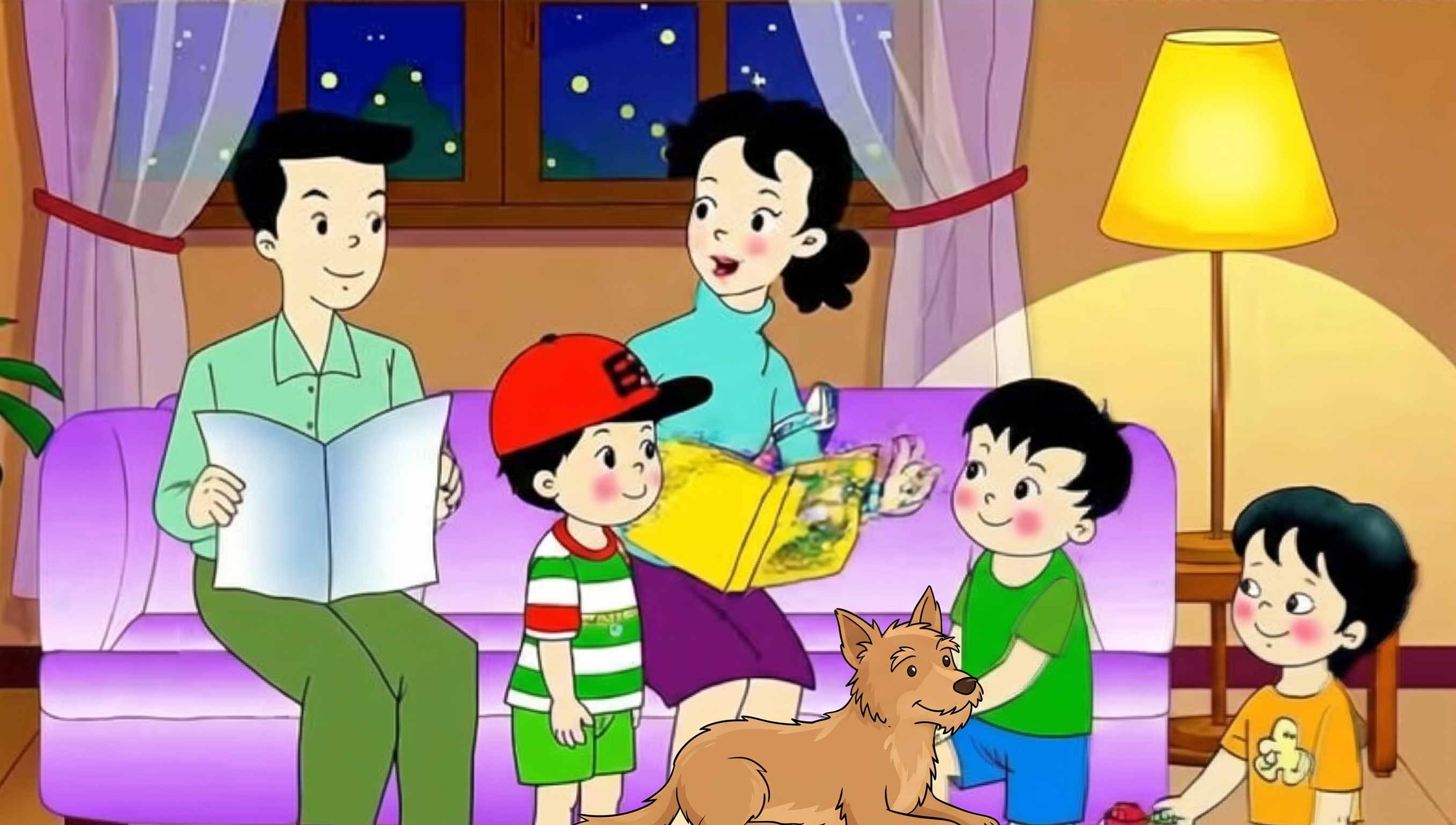
宝宝一家/La familia de Baobao/Baobao's family
爸爸/Papá, padre/Dad, father
妈妈/Mamá, madre/Mum, mother
宝宝/Baobao/Baobao
婷婷/Tíngting/Tíngting
嘟嘟/Dudú/Dudú
洛基/Rocky/Rocky
** 对话/Duìhuà/Diálogo/Dialogue **
--------------------------------------------------------------------------------
宝宝你们看,荷叶上有一只小青蛙!/Baobao: ¡Mirad, en la hoja de loto hay una ranita!/Baobao: Look, there's a little frog on the lotus leaf!
婷婷它的眼睛好大呀!/Tíngting: ¡Qué ojos tan grandes tiene!/Tíngting: What big eyes it has!
嘟嘟我要把它带回家!/Dudú: ¡Me la quiero llevar a casa!/Dudú: I want to take it home!
爸爸不行。青蛙吃害虫,保护禾苗。/Papá: No. Las ranas se comen los insectos dañinos y protegen los cultivos./Dad: No. Frogs eat pests and protect the crops.
妈妈青蛙做了不少好事情,我们要爱护它。/Mamá: Las ranas hacen muchas cosas buenas; tenemos que cuidarlas./Mum: Frogs do many good things; we must take care of them.
洛基汪汪!/Rocky: ¡Guau!/Rocky: Woof!
婷婷洛基,别吓它!/Tíngting: ¡Rocky, no la asustes!/Tíngting: Rocky, don't scare it!
嘟嘟好吧。小青蛙,再见!你要好好保护禾苗哦!/Dudú: Vale. ¡Adiós, ranita! ¡Protege bien los brotes!/Dudú: OK. Goodbye, little frog! Take good care of the crops!
宝宝今天天气晴,河水也清清的,真舒服!/Baobao: Hoy hace buen tiempo y el agua del río está clarita, ¡qué gusto!/Baobao: The weather is fine today and the river water is clear, how nice!
▶ 📝 评论 / Comentarios / Comments
小青蛙:“青”字家族与形声字:
1. 字族识字: 青 (qīng) 加上不同的偏旁,就变成了 清 (qīng) 、晴 (qíng) 、睛 (jīng) 、情 (qíng) 、请 (qǐng) 。“青”表示读音,偏旁表示意思:有水才“清”,有日才“晴”,有目才是“睛”,有心才有“情”,说话要“请”。这是学习形声字的好机会。
2. 韵律与朗读: 儿歌每句末尾押 -ing 韵(晴 (qíng) 、睛 (jīng) 、情 (qíng) 、病 (bìng) ),读起来琅琅上口,适合反复朗读和背诵。
3. 爱护动物: 小青蛙 保护 (bǎohù) 禾苗、吃害虫,做了很多好事。课文引导学生认识青蛙是人类的朋友,懂得 爱护 (àihù) 小动物。
Comentario Pedagógico: La ranita: la familia del carácter 青 y los caracteres fonético-semánticos:
1. Aprender por familias: Al añadir distintos componentes a 青 (qīng) se obtienen 清 (qīng) , 晴 (qíng) , 睛 (jīng) , 情 (qíng) y 请 (qǐng) . “青” aporta el sonido y el componente aporta el significado: con agua es “claro” (清), con sol es “despejado” (晴), con ojo es “pupila” (睛), con corazón es “sentimiento” (情) y con palabra es “por favor” (请). Es una ocasión ideal para descubrir los caracteres fonético-semánticos.
2. Ritmo y lectura: Los versos riman en -ing (晴 (qíng) , 睛 (jīng) , 情 (qíng) , 病 (bìng) ), así que la canción suena muy bien y es fácil de leer en voz alta y recitar.
3. Cuidar a los animales: La ranita 保护 (bǎohù) los brotes y se come los insectos dañinos. El texto ayuda a ver a la rana como amiga del ser humano y a aprender a 爱护 (àihù) a los animales.
Pedagogical Commentary: The Little Frog: the 青 character family and phono-semantic characters:
1. Learning by families: Adding different components to 青 (qīng) gives 清 (qīng) , 晴 (qíng) , 睛 (jīng) , 情 (qíng) and 请 (qǐng) . “青” gives the sound and the component gives the meaning: with water it is “clear” (清), with the sun “sunny” (晴), with an eye “eyeball” (睛), with a heart “feeling” (情), and with speech “please” (请). A perfect chance to discover phono-semantic characters.
2. Rhythm and reading: The lines rhyme in -ing (晴 (qíng) , 睛 (jīng) , 情 (qíng) , 病 (bìng) ), so the rhyme flows nicely and is easy to read aloud and recite.
3. Caring for animals: The little frog 保护 (bǎohù) the crops and eats pests. The text helps students see frogs as friends of people and learn to 爱护 (àihù) animals.

主题/Zhǔtí/Tema/Theme

其他/Qítā/Otros/Others.

词汇 Cíhuì/Vocabulario/Vocabulary

PDF与视频/PDF,videos Y Quiz/PDF, Videos and Quiz
