
PRIMARIA_C1_N2_02_L02
** 02_L02_姓氏歌/Xìngshì gē/La canción de los apellidos/The Surname Song **
** 额外内容/Contenido adicional/Additional Content **
** 扩大和替换/Kuòdà hé tìhuàn/Ampliar y sustituir/Expand and substitute. **
姓/apellidarse/be surnamed
姓李/apellidarse Li/be surnamed Li
我姓李/me apellido Li/my surname is Li
我姓李,木子李。/Me apellido Li, el Li de 木 y 子./My surname is Li, the Li made of 木 and 子.
什么/qué/what
什么张/¿qué Zhang?/which Zhang?
什么张?弓长张。/¿Qué Zhang? El Zhang de 弓 y 长./Which Zhang? The Zhang made of 弓 and 长.
--------------------------------------------------------------------------------
中国姓氏有很多。/En China hay muchísimos apellidos./China has many, many surnames.
--------------------------------------------------------------------------------
你姓什么?/¿Cómo te apellidas?/What's your surname?
· 我姓方/me apellido Fang./my surname is Fang.
· 方向的方/el Fang de 方向./the Fang in 方向.
他姓什么?/¿Cómo se apellida él?/What's his surname?
· 他姓王/se apellida Wang./his surname is Wang.
· 国王的王/el Wang de 国王./the Wang in 国王.
她姓什么?/¿Cómo se apellida ella?/What's her surname?
· 她姓吴/se apellida Wu./her surname is Wu.
· 口天吴/el Wu de 口 y 天./the Wu made of 口 and 天.
** 想一想, 说一说/Xiǎng yi xiǎng, shuō yi shuō/Piensa y responde/Think and answer the following questions **
--------------------------------------------------------------------------------
你姓什么?是哪个字?/¿Cómo te apellidas? ¿Qué carácter es?/What's your surname? Which character is it?
班里的同学都有哪些姓?/¿Qué apellidos tienen tus compañeros de clase?/What surnames do your classmates have?
** 家庭/Jiātíng/FAMILIA/FAMILY **
--------------------------------------------------------------------------------
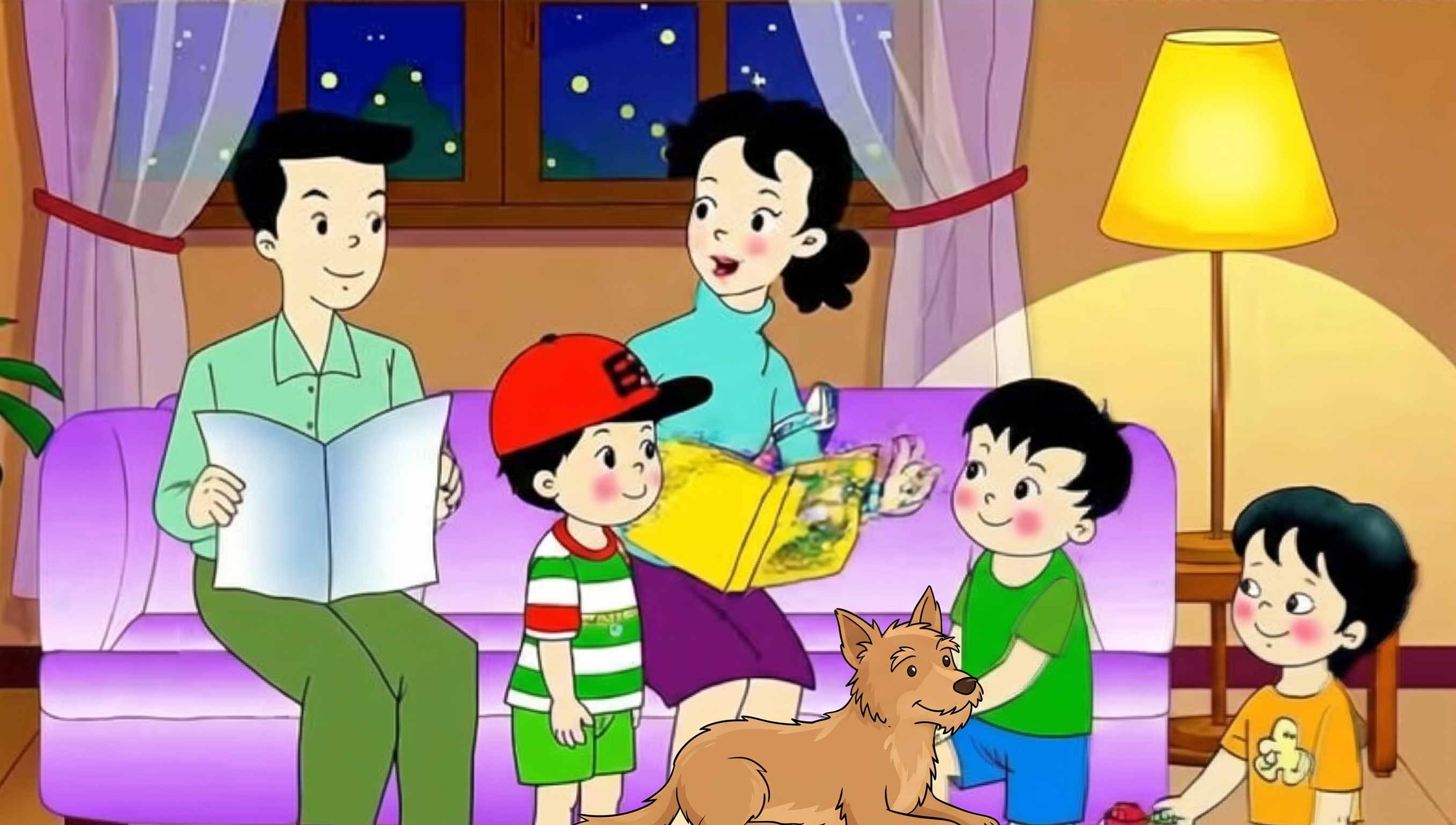
宝宝一家/La familia de Baobao/Baobao's family
爸爸/Papá, padre/Dad, father
妈妈/Mamá, madre/Mum, mother
宝宝/Baobao/Baobao
婷婷/Tíngting/Tíngting
嘟嘟/Dudú/Dudú
洛基/Rocky/Rocky
** 对话/Duìhuà/Diálogo/Dialogue **
--------------------------------------------------------------------------------
吴老师同学们好!我姓吴,口天吴。/Profesora Wu: ¡Hola, niños! Me apellido Wu, el Wu de 口 y 天./Teacher Wu: Hello, children! My surname is Wu, the Wu made of 口 and 天.
婷婷吴老师好!我叫婷婷。/Tíngting: ¡Hola, profesora Wu! Me llamo Tíngting./Tíngting: Hello, Teacher Wu! My name is Tíngting.
吴老师你好!你呢?你姓什么?/Profesora Wu: ¡Hola! ¿Y tú? ¿Cómo te apellidas?/Teacher Wu: Hello! And you? What's your surname?
小方我姓方。/Xiaofang: Me apellido Fang./Xiaofang: My surname is Fang.
吴老师什么方?/Profesora Wu: ¿Qué Fang?/Teacher Wu: Which Fang?
小方方向的方。/Xiaofang: El Fang de 方向./Xiaofang: The Fang in 方向.
婷婷中国姓氏真多呀!有赵、钱、孙、李/Tíngting: ¡Cuántos apellidos hay en China! Zhao, Qian, Sun, Li…/Tíngting: China has so many surnames! Zhao, Qian, Sun, Li…
吴老师还有两个字的姓,比如诸葛和欧阳。/Profesora Wu: También hay apellidos de dos caracteres, como Zhuge y Ouyang./Teacher Wu: There are also two-character surnames, like Zhuge and Ouyang.
小方我知道,东方也是两个字的姓!/Xiaofang: ¡Yo sé que Dongfang también es un apellido de dos caracteres!/Xiaofang: I know, Dongfang is also a two-character surname!
▶ 📝 评论 / Comentarios / Comments
姓氏歌:拆字识字与中国姓氏文化:
1. 拆字识字: 姓氏歌用“拆字”的方法帮助学生记住字形:李 (lǐ) 是“木+子”,张 (zhāng) 是“弓+长”,吴 (wú) 是“口+天”。学生在拆一拆、合一合的过程中,自然记住了字的结构。
2. 问答句式: 课文用 你姓什么? (Nǐ xìng shénme?) 和 什么……? (shénme……?) 一问一答,学生可以照样子做问答游戏,用不同的方法介绍自己的姓。
3. 姓氏文化: 中国姓氏很多,有单姓,也有 诸葛 (Zhūgě) 、欧阳 (Ōuyáng) 这样的复姓。“赵钱孙李,周吴郑王”出自《百家姓》,可以借此让学生了解中国传统文化。
1. 拆字识字: 姓氏歌用“拆字”的方法帮助学生记住字形:李 (lǐ) 是“木+子”,张 (zhāng) 是“弓+长”,吴 (wú) 是“口+天”。学生在拆一拆、合一合的过程中,自然记住了字的结构。
2. 问答句式: 课文用 你姓什么? (Nǐ xìng shénme?) 和 什么……? (shénme……?) 一问一答,学生可以照样子做问答游戏,用不同的方法介绍自己的姓。
3. 姓氏文化: 中国姓氏很多,有单姓,也有 诸葛 (Zhūgě) 、欧阳 (Ōuyáng) 这样的复姓。“赵钱孙李,周吴郑王”出自《百家姓》,可以借此让学生了解中国传统文化。
Comentario Pedagógico: La canción de los apellidos: descomponer caracteres y la cultura de los apellidos chinos:
1. Descomponer para aprender: La canción enseña a recordar la forma de los caracteres descomponiéndolos: 李 (lǐ) es “木 + 子”, 张 (zhāng) es “弓 + 长” y 吴 (wú) es “口 + 天”. Al separar y volver a unir las piezas, los alumnos memorizan la estructura de forma natural.
2. Preguntas y respuestas: El texto alterna 你姓什么? (Nǐ xìng shénme?) y 什么……? (shénme……?) , de modo que los alumnos pueden jugar a preguntar y responder, presentando su apellido de distintas maneras.
3. La cultura de los apellidos: En China hay muchísimos apellidos: los hay de un carácter y de dos, como 诸葛 (Zhūgě) u 欧阳 (Ōuyáng) . La serie “赵钱孙李,周吴郑王” procede del clásico «Los cien apellidos» (百家姓), y sirve para acercar a los alumnos a la cultura tradicional china.
Pedagogical Commentary: The Surname Song: breaking characters apart and the culture of Chinese surnames:
1. Learning by breaking apart: The song helps students remember character shapes by splitting them: 李 (lǐ) is “木 + 子”, 张 (zhāng) is “弓 + 长” and 吴 (wú) is “口 + 天”. Taking the pieces apart and putting them back together, students naturally memorise each character's structure.
2. Questions and answers: The text alternates 你姓什么? (Nǐ xìng shénme?) and 什么……? (shénme……?) , so students can play a question-and-answer game and introduce their surname in different ways.
3. The culture of surnames: China has a great many surnames, both single-character ones and two-character ones like 诸葛 (Zhūgě) and 欧阳 (Ōuyáng) . The sequence “赵钱孙李,周吴郑王” comes from the classic “Hundred Family Surnames” (百家姓), a good way to introduce students to traditional Chinese culture.

主题/Zhǔtí/Tema/Theme

其他/Qítā/Otros/Others.

词汇 Cíhuì/Vocabulario/Vocabulary

PDF与视频/PDF,videos Y Quiz/PDF, Videos and Quiz
