
** 10_空城计/Kōngchéngjì/Estratagema de la ciudad vacía/Empty Fort Strategy **
** 额外内容/Contenido adicional/Additional Content **
** 家庭/Jiātíng/FAMILIA/FAMILY **

** 词汇/Cíhuì/VOCABULARIO/VOCABULARY. **
** 历史/Lìshǐ/La historia/history **
** 嘟嘟的空城计/Dūdū de kōngchéngjì/La estratagema de Dudú/Dudu's Empty Fort Strategy **
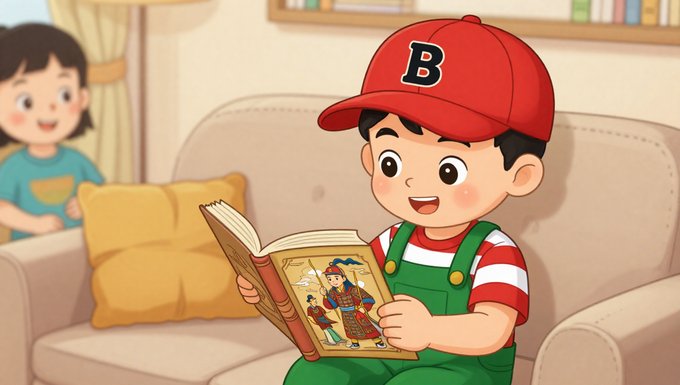
场景一/Chǎngjǐng yī/Escena 1/Scene 1
(Baobao) 在看《 (Los Tres Reinos/Three Kingdoms) 演义》,他最佩服 (Zhuge Liang/Zhuge Liang) 。
(宝宝Bǎobǎo) estaba leyendo el ‘Romance de los (三国Sānguó) ’, y a quien más admiraba era a (诸葛亮Zhūgě Liàng) .
(宝宝Bǎobǎo) was reading the ‘Romance of the (三国Sānguó) ’, and the person he admired most was (诸葛亮Zhūgě Liàng) .
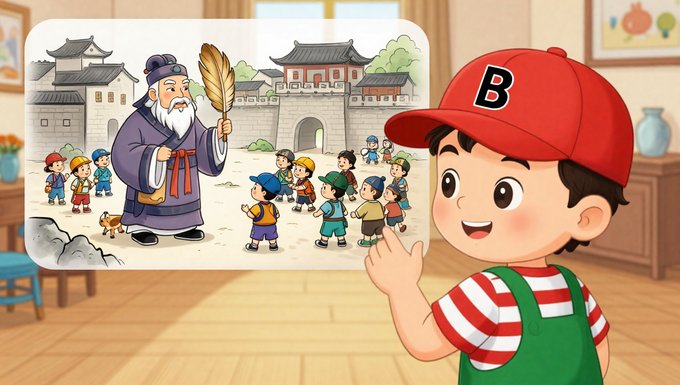
场景二/Chǎngjǐng èr/Escena 2/Scene 2
他给大家讲 (Estratagema de la ciudad vacía/Empty Fort Strategy) :‘有一次, (Zhuge Liang/Zhuge Liang) 带着五千兵马到西城 (Distrito/County) 去运粮草。’
Les contó la (空城计kōngchéngjì) : ‘Una vez, (诸葛亮Zhūgě Liàng) llevó cinco mil soldados al (县xiàn) de Xicheng a por provisiones’.
He told everyone about the (空城计kōngchéngjì) : ‘Once, (诸葛亮Zhūgě Liàng) took five thousand soldiers to Xicheng (县xiàn) to fetch supplies.’
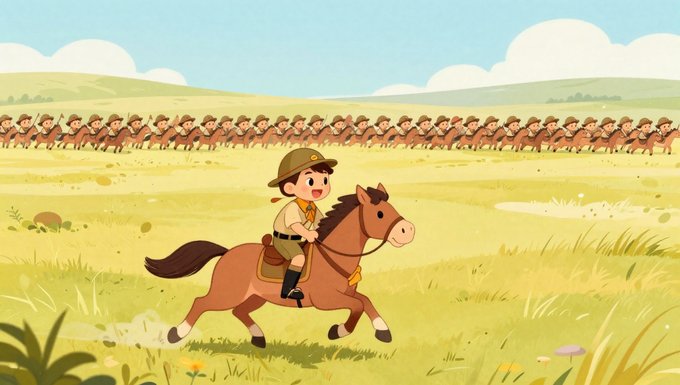
场景三/Chǎngjǐng sān/Escena 3/Scene 3
‘忽然, (Sima Yi/Sima Yi) 带着十五万大军打过来了! (Zhuge Liang/Zhuge Liang) 身边一个 (General/General) 也没有。’
‘¡De repente, (司马懿Sīmǎ Yì) atacó con ciento cincuenta mil soldados! (诸葛亮Zhūgě Liàng) no tenía a su lado ni un solo (将领jiànglǐng) ’.
‘Suddenly, (司马懿Sīmǎ Yì) attacked with an army of a hundred and fifty thousand! (诸葛亮Zhūgě Liàng) didn't have a single (将领jiànglǐng) with him.’
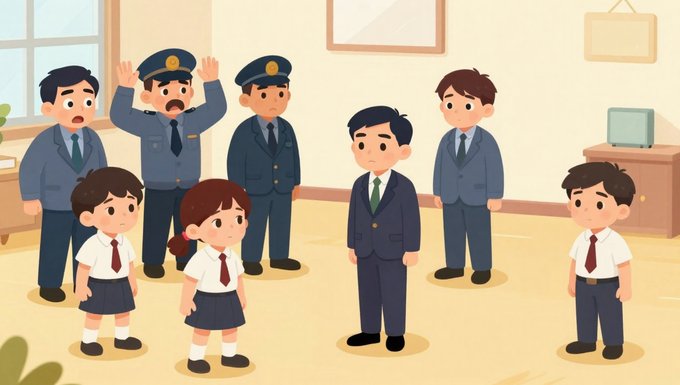
场景四/Chǎngjǐng sì/Escena 4/Scene 4
‘官员们万分 (Angustiado/Anxious) , (Sin saber qué hacer/At a loss) ,只有 (Zhuge Liang/Zhuge Liang) (Sereno/Calm) 如常。’
‘Los funcionarios estaban muy (焦虑jiāolǜ) y (手足无措shǒuzú wú cuò) ; solo (诸葛亮Zhūgě Liàng) seguía (镇定zhèndìng) ’.
‘The officials were extremely (焦虑jiāolǜ) and (手足无措shǒuzú wú cuò) ; only (诸葛亮Zhūgě Liàng) stayed (镇定zhèndìng) .’
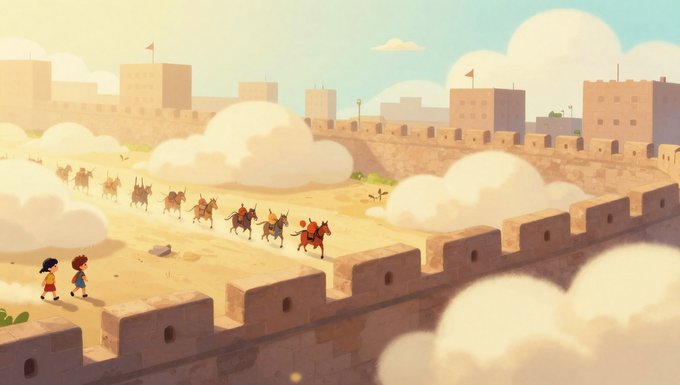
场景五/Chǎngjǐng wǔ/Escena 5/Scene 5
‘他登上城楼一看,前面 (Polvo/Dust) 飞扬, (Ejército enemigo/Enemy army) 正向西城杀来。’
‘Subió a la muralla y vio que el (尘土chéntǔ) se levantaba a lo lejos: el (敌军díjūn) avanzaba hacia la ciudad’.
‘He climbed the city wall and saw (尘土chéntǔ) rising ahead: the (敌军díjūn) was charging towards the city.’
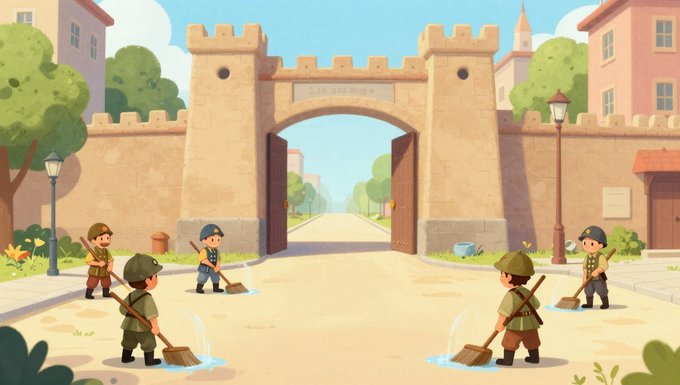
场景六/Chǎngjǐng liù/Escena 6/Scene 6
‘ (Zhuge Liang/Zhuge Liang) 让人打开城门,派老兵在街上 (Echar agua/Sprinkle water) 、 (Barrer/Sweep) 。’
‘ (诸葛亮Zhūgě Liàng) mandó abrir las puertas y puso a unos soldados viejos a (洒水sǎshuǐ) y (扫地sǎodì) en las calles’.
‘ (诸葛亮Zhūgě Liàng) had the gates opened and sent old soldiers to (洒水sǎshuǐ) and (扫地sǎodì) the streets.’
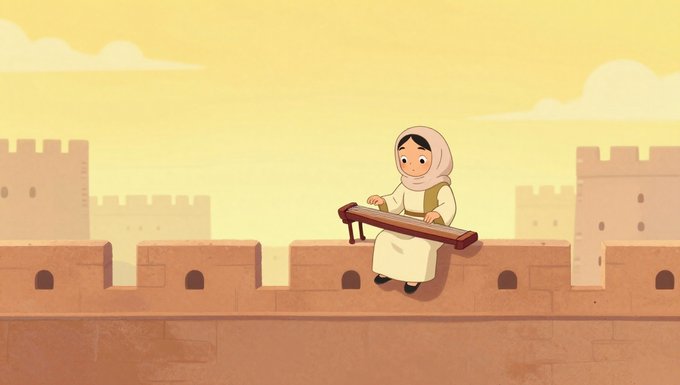
场景七/Chǎngjǐng qī/Escena 7/Scene 7
‘他自己戴上 (Turbante/Headscarf) ,坐在城楼上 (Despreocupado/Leisurely) 地弹琴 (Para entretenerse/For one's own amusement) 。’
‘Él se puso un (头巾tóujīn) , se sentó en la muralla y, muy (悠闲yōuxián) , tocó el qin (自娱zìyú) ’.
‘He put on a (头巾tóujīn) , sat on the city wall and played the zither (悠闲yōuxián) (自娱zìyú) .’
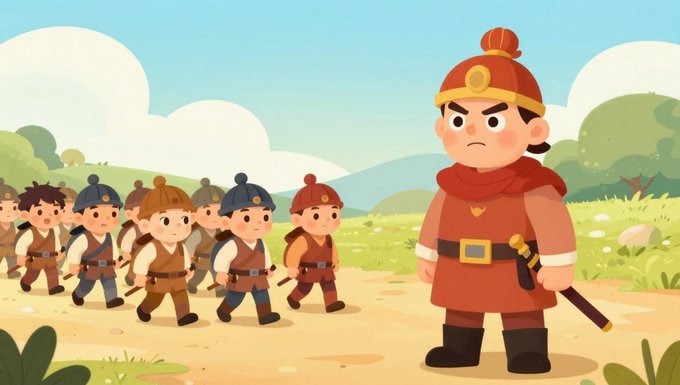
场景八/Chǎngjǐng bā/Escena 8/Scene 8
‘ (Sima Yi/Sima Yi) 想:‘ (Zhuge Liang/Zhuge Liang) 一向 (Prudente/Cautious) ,城里一定有 (Emboscada/Ambush) !’就带兵撤走了。’
‘ (司马懿Sīmǎ Yì) pensó: ‘ (诸葛亮Zhūgě Liàng) siempre es (谨慎jǐnshèn) ; ¡seguro que hay una (埋伏máifu) !’. Y se retiró con su ejército’.
‘ (司马懿Sīmǎ Yì) thought, ‘ (诸葛亮Zhūgě Liàng) is always (谨慎jǐnshèn) ; there must be an (埋伏máifu) !’ So he withdrew his army.’
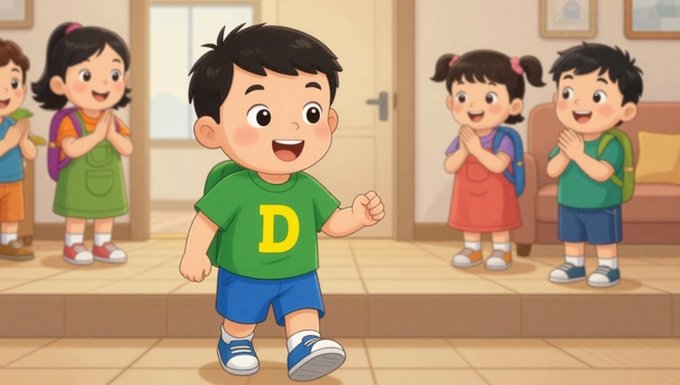
场景九/Chǎngjǐng jiǔ/Escena 9/Scene 9
‘ (Zhuge Liang/Zhuge Liang) (Tararear/Hum) 着 (Cancioncilla/Little tune) 走下城楼。’ (Dudú) 说:‘ (Zhuge Liang/Zhuge Liang) 真聪明!我也要试试!’
‘ (诸葛亮Zhūgě Liàng) bajó de la muralla (哼hēng) una (小调xiǎodiào) ’. (嘟嘟Dūdū) dijo: ‘¡Qué listo! ¡Yo también quiero probarlo!’.
‘ (诸葛亮Zhūgě Liàng) came down from the wall (哼hēng) a (小调xiǎodiào) .’ (嘟嘟Dūdū) said, ‘He's so clever! I want to try it too!’
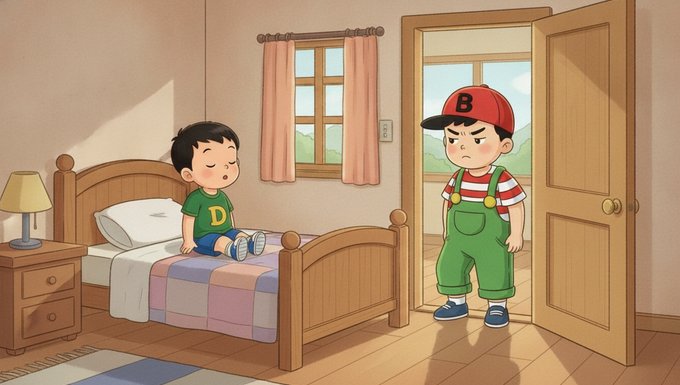
场景十/Chǎngjǐng shí/Escena 10/Scene 10
玩捉迷藏时, (Dudú) 打开房门, (Despreocupado/Leisurely) 地坐在床上 (Tararear/Hum) (Cancioncilla/Little tune) 。 (Baobao) 以为有 (Emboscada/Ambush) ,真的不敢进去!
Jugando al escondite, (嘟嘟Dūdū) abrió la puerta de su cuarto y se sentó en la cama, (悠闲yōuxián) , (哼hēng) una (小调xiǎodiào) . ¡ (宝宝Bǎobǎo) creyó que era una (埋伏máifu) y no se atrevió a entrar!
Playing hide-and-seek, (嘟嘟Dūdū) opened his bedroom door and sat (悠闲yōuxián) on his bed, (哼hēng) a (小调xiǎodiào) . (宝宝Bǎobǎo) thought it was an (埋伏máifu) and really didn't dare go in!
@ Zhongwen 资料 (SWF, PDF, MP3 等) 的版权归属于:中国华文教育网 - Overseas Chinese Language and Culture Education Online。
@ Los materiales Zhongwen (SWF, PDF, MP3, etc.) son propiedad de: 中国华文教育网 - Overseas Chinese Language and Culture Education Online.
@ The materials Zhongwen (SWF, PDF, MP3, etc.) are the property of: 中国华文教育网 - Overseas Chinese Language and Culture Education Online.

主题/Zhǔtí/Tema/Theme

其他/Qítā/Otros/Others.

阅读/Yuèdú/Lectura/Reading.

PDF与视频/PDF,videos Y Quiz/PDF, Videos and Quiz

额外内容/Contenido adicional/Additional Content
