
PRIMARIA_C1_N2_28_T20
** 28_T20_咕咚/Gūdōng/¡Pluf!/Kerplunk! **
** 额外内容/Contenido adicional/Additional Content **
** 扩大和替换/Kuòdà hé tìhuàn/Ampliar y sustituir/Expand and substitute. **
跟着/detrás de/following
一个跟着一个/uno detrás de otro/one after another
狐狸呀,山羊啊,小鹿哇,一个跟着一个跑起来。/El zorro, la cabra, el cervatillo… echan a correr uno detrás de otro./The fox, the goat, the fawn… start running one after another.
看见/ver/see
你看见了?/¿Lo has visto?/Did you see it?
咕咚在哪里,你看见了?/¿Dónde está el «pluf»? ¿Lo has visto?/Where is the ‘kerplunk’? Did you see it?
--------------------------------------------------------------------------------
大伙你看看我,我看看你,都笑了。/Todos se miran unos a otros y se echan a reír./Everyone looks at each other and bursts out laughing.
--------------------------------------------------------------------------------
兔子/conejo/rabbit
· 吓了一跳,拔腿就跑/se asusta y sale corriendo./gets a fright and runs off.
小猴子/monito/little monkey
· 跟着跑起来/corre detrás./runs after him.
大伙/todos/everyone
· 一个跟着一个跑/corren uno tras otro./run one after another.
野牛/búfalo/wild ox
· 拦住大象,问清楚/detiene al elefante y pregunta./stops the elephant and asks.
** 想一想, 说一说/Xiǎng yi xiǎng, shuō yi shuō/Piensa y responde/Think and answer the following questions **
--------------------------------------------------------------------------------
动物们为什么跟着兔子一起跑?/¿Por qué los animales corren detrás del conejo?/Why do the animals run with the rabbit?
野牛是怎么做的?/¿Qué hace el búfalo?/What does the wild ox do?
** 家庭/Jiātíng/FAMILIA/FAMILY **
--------------------------------------------------------------------------------
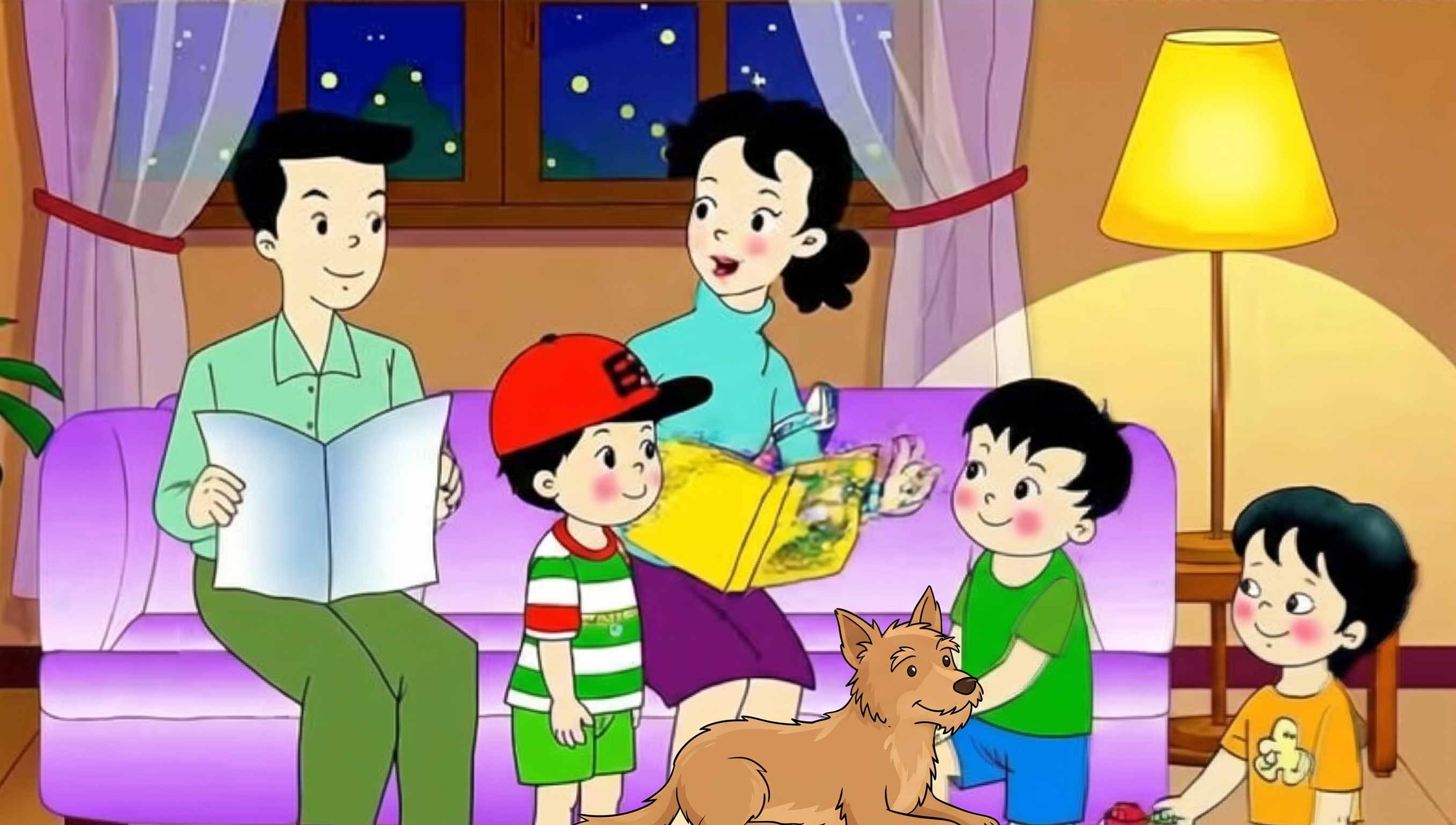
宝宝一家/La familia de Baobao/Baobao's family
爸爸/Papá, padre/Dad, father
妈妈/Mamá, madre/Mum, mother
宝宝/Baobao/Baobao
婷婷/Tíngting/Tíngting
嘟嘟/Dudú/Dudú
洛基/Rocky/Rocky
** 对话/Duìhuà/Diálogo/Dialogue **
--------------------------------------------------------------------------------
嘟嘟不好啦!厨房里有可怕的声音,咚!/Dudú: ¡Socorro! ¡En la cocina se oye un ruido terrible: pum!/Dudú: Oh no! There's a scary noise in the kitchen: thud!
婷婷啊?是什么?我们快跑吧!/Tíngting: ¿Qué? ¿Qué es? ¡Corramos!/Tíngting: What? What is it? Let's run!
宝宝别急,你看见了吗?/Baobao: Tranquilos, ¿lo has visto?/Baobao: Hold on, did you see it?
嘟嘟没看见,我只是听见了。/Dudú: No lo he visto, solo lo he oído./Dudú: No, I didn't see it, I only heard it.
爸爸我们一起去看看,把事情弄清楚。/Papá: Vamos a verlo juntos y a aclarar qué pasa./Dad: Let's go and look together, and find out what's going on.
妈妈原来是苹果从桌子上掉到地上了。/Mamá: ¡Ah, era una manzana que se ha caído de la mesa al suelo!/Mum: So it was an apple that fell off the table onto the floor!
婷婷咕咚!哈哈,就像故事里的木瓜一样!/Tíngting: ¡Pluf! ¡Ja, ja, como la papaya del cuento!/Tíngting: Kerplunk! Ha ha, just like the papaya in the story!
宝宝我们不能像小动物们那样,听到什么就跟着跑。/Baobao: No debemos hacer como los animalitos, que salen corriendo con lo primero que oyen./Baobao: We mustn't be like the little animals and run off at whatever we hear.
爸爸对,遇到事情要动脑筋,自己去看一看。/Papá: Eso es: cuando pase algo, hay que pensar y comprobarlo uno mismo./Dad: That's right, when something happens, use your head and go and see for yourself.
洛基汪汪!/Rocky: ¡Guau!/Rocky: Woof!
嘟嘟洛基,原来你也被吓了一跳!/Dudú: ¡Rocky, tú también te has llevado un susto!/Dudú: Rocky, so you got a fright too!
▶ 📝 评论 / Comentarios / Comments
咕咚:遇事要动脑筋:
1. 猜读生字: 这篇课文大部分没有注音,要求学生在课文中找出不认识的字,猜猜它们的读音。可以借助形声字(如 拦 (lán) 的“兰”、逃 (táo) 的“兆”)、联系上下文或看插图来猜,培养独立识字的能力。咕咚 (gūdōng) 是模仿声音的词。
2. 句式: 一边……一边…… (yìbiān……yìbiān……) 写出动物们边跑边叫的样子;一个跟着一个 (yí gè gēnzhe yí gè) 写出大家盲目跟着跑;“狐狸呀,山羊啊,小鹿哇”用不同的语气词列举,读起来很有节奏。
3. 故事的道理: 大家只听别人说,都没有亲眼看见,就跟着逃跑;只有 野牛 (yěniú) 拦住大家问清楚,又亲自去湖边看个明白。故事告诉学生:遇到事情要动脑筋,不要盲目跟从。
Comentario Pedagógico: ¡Pluf!: pensar antes de dejarse llevar:
1. Adivinar caracteres: Casi todo el texto va sin pinyin y se pide a los alumnos que busquen los caracteres que no conocen y adivinen cómo se leen, apoyándose en el componente fonético (兰 en 拦 (lán) , 兆 en 逃 (táo) ), en el contexto o en las ilustraciones. Así se fomenta la autonomía al leer. 咕咚 (gūdōng) es una onomatopeya.
2. Estructuras: 一边……一边…… (yìbiān……yìbiān……) describe a los animales gritando mientras corren; 一个跟着一个 (yí gè gēnzhe yí gè) muestra cómo todos se dejan arrastrar; y «狐狸呀,山羊啊,小鹿哇» enumera con distintas partículas, lo que da ritmo a la lectura.
3. La moraleja: Todos huyen solo porque otros lo dicen, sin haber visto nada; únicamente el 野牛 (yěniú) (búfalo) se detiene a preguntar y va al lago a comprobarlo. El cuento enseña a pensar por uno mismo y a no seguir ciegamente a los demás.
Pedagogical Commentary: Kerplunk!: think before you follow the crowd:
1. Guessing characters: Most of the text has no pinyin, and students are asked to find characters they don't know and guess how they're read, using the sound component (兰 in 拦 (lán) , 兆 in 逃 (táo) ), the context or the pictures. This builds independent reading. 咕咚 (gūdōng) is a sound word.
2. Sentence patterns: 一边……一边…… (yìbiān……yìbiān……) shows the animals shouting as they run; 一个跟着一个 (yí gè gēnzhe yí gè) shows how everyone blindly follows; and “狐狸呀,山羊啊,小鹿哇” lists them with different particles, giving the reading rhythm.
3. The moral: Everyone runs away just because others say so, without seeing anything; only the 野牛 (yěniú) (wild ox) stops to ask and goes to the lake to find out. The story teaches children to think for themselves and not follow others blindly.

主题/Zhǔtí/Tema/Theme

其他/Qítā/Otros/Others.

词汇 Cíhuì/Vocabulario/Vocabulary

PDF与视频/PDF,videos Y Quiz/PDF, Videos and Quiz
