
PRIMARIA_C1_N2_21_T13
** 21_T13_荷叶圆圆/Héyè yuányuán/Las hojas de loto redondas/Round Lotus Leaves **
** 额外内容/Contenido adicional/Additional Content **
** 扩大和替换/Kuòdà hé tìhuàn/Ampliar y sustituir/Expand and substitute. **
摇篮/cuna/cradle
荷叶是摇篮/la hoja de loto es una cuna/the lotus leaf is a cradle
荷叶是我的摇篮/la hoja de loto es mi cuna/the lotus leaf is my cradle
小水珠说荷叶是我的摇篮。/La gotita de agua dice: «La hoja de loto es mi cuna»./The little water drop says, “The lotus leaf is my cradle.”
苹果/manzana/apple
苹果红红的/la manzana es roja/the apple is red
苹果圆圆的,红红的。/La manzana es redonda y roja./The apple is round and red.
--------------------------------------------------------------------------------
荷叶圆圆的,绿绿的。/Las hojas de loto son redondas y verdes./The lotus leaves are round and green.
--------------------------------------------------------------------------------
小水珠/gotita de agua/little water drop
· 摇篮/cuna./cradle.
小蜻蜓/libélula/little dragonfly
· 停机坪/pista de aterrizaje./landing pad.
小青蛙/ranita/little frog
· 歌台/escenario./stage.
小鱼儿/pececillo/little fish
· 凉伞/sombrilla./sunshade.
** 想一想, 说一说/Xiǎng yi xiǎng, shuō yi shuō/Piensa y responde/Think and answer the following questions **
--------------------------------------------------------------------------------
荷叶是谁的摇篮、停机坪、歌台和凉伞?/¿Para quién es la hoja de loto una cuna, una pista de aterrizaje, un escenario y una sombrilla?/For whom is the lotus leaf a cradle, a landing pad, a stage and a sunshade?
荷叶还可以是谁的什么?/¿Qué más podría ser la hoja de loto, y para quién?/What else could the lotus leaf be, and for whom?
** 家庭/Jiātíng/FAMILIA/FAMILY **
--------------------------------------------------------------------------------
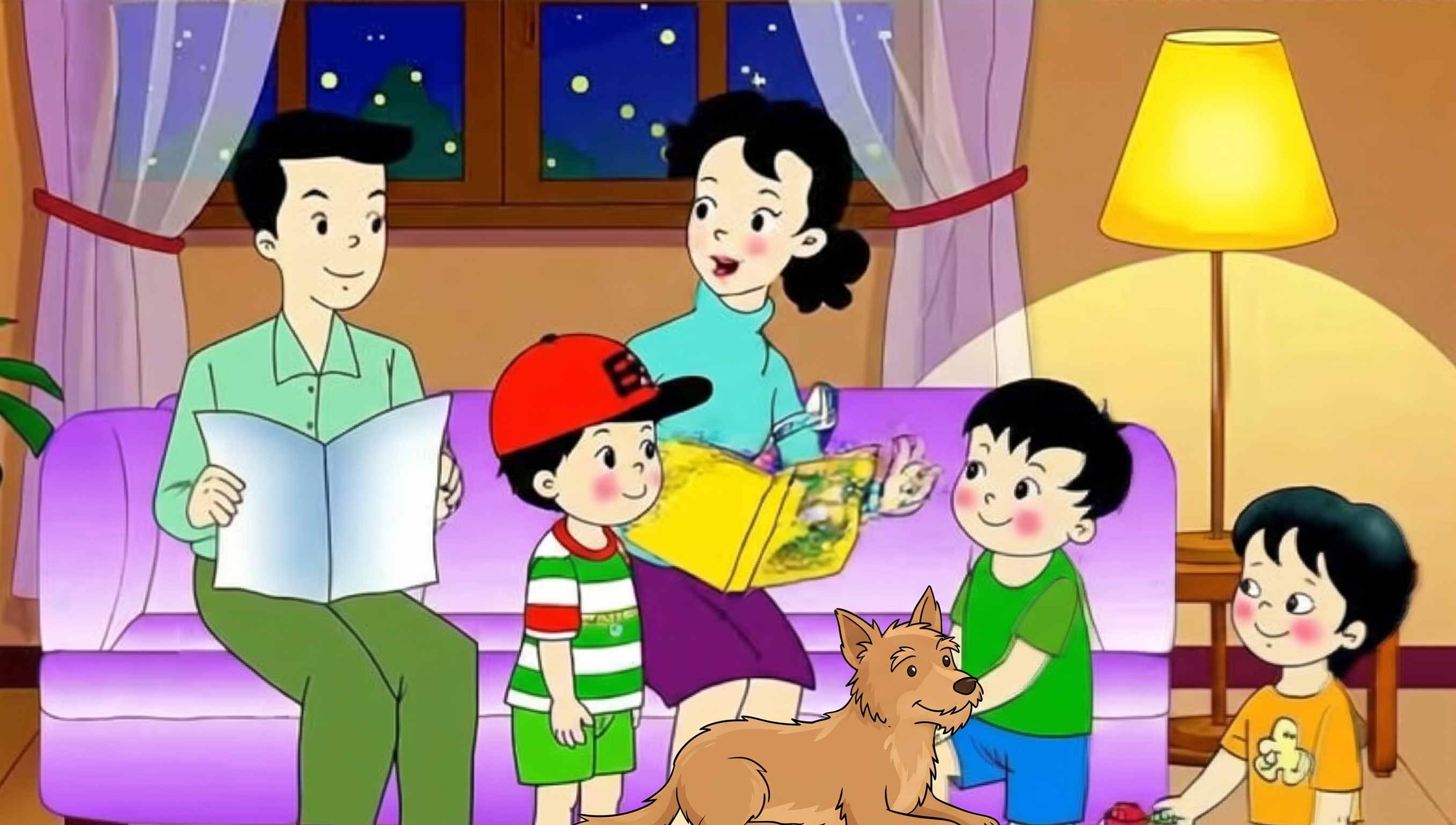
宝宝一家/La familia de Baobao/Baobao's family
爸爸/Papá, padre/Dad, father
妈妈/Mamá, madre/Mum, mother
宝宝/Baobao/Baobao
婷婷/Tíngting/Tíngting
嘟嘟/Dudú/Dudú
洛基/Rocky/Rocky
** 对话/Duìhuà/Diálogo/Dialogue **
--------------------------------------------------------------------------------
婷婷荷叶圆圆的,绿绿的,真美!/Tíngting: Las hojas de loto son redondas y verdes, ¡qué bonitas!/Tíngting: The lotus leaves are round and green, so beautiful!
宝宝你们看,荷叶上有一颗小水珠,亮晶晶的。/Baobao: Mirad, en la hoja hay una gotita de agua, muy brillante./Baobao: Look, there's a little water drop on the leaf, all sparkly.
嘟嘟荷叶是小水珠的摇篮!/Dudú: ¡La hoja es la cuna de la gotita!/Dudú: The lotus leaf is the water drop's cradle!
婷婷一只小蜻蜓立在荷叶上,荷叶是它的停机坪。/Tíngting: Una libélula se ha posado en la hoja: es su pista de aterrizaje./Tíngting: A little dragonfly is standing on the leaf: it's its landing pad.
宝宝小青蛙在荷叶上呱呱地唱歌,荷叶是它的歌台。/Baobao: La ranita canta en la hoja, croac, croac: es su escenario./Baobao: The little frog is singing croak, croak on the leaf: it's its stage.
嘟嘟小鱼儿在荷叶下游来游去,荷叶是它的凉伞!/Dudú: Los pececillos nadan bajo la hoja: ¡es su sombrilla!/Dudú: The little fish swim about under the leaf: it's their sunshade!
妈妈你们说得真好!那荷叶还可以是谁的什么呢?/Mamá: ¡Qué bien lo decís! ¿Y qué más podría ser la hoja, y para quién?/Mum: Well said! So what else could the lotus leaf be, and for whom?
婷婷荷叶还可以是小蚂蚁的小船!/Tíngting: ¡Podría ser la barquita de una hormiga!/Tíngting: It could be a little ant's boat!
洛基汪汪!/Rocky: ¡Guau!/Rocky: Woof!
嘟嘟荷叶太小了,不能给洛基当雨伞!/Dudú: ¡La hoja es demasiado pequeña para que Rocky la use de paraguas!/Dudú: The leaf's too small to be Rocky's umbrella!
▶ 📝 评论 / Comentarios / Comments
荷叶圆圆:荷叶给小伙伴们带来的快乐:
1. 叠词的妙用: 圆圆 (yuányuán) 、绿绿 (lǜlǜ) 、亮晶晶 (liàngjīngjīng) 、笑嘻嘻 (xiàoxīxī) 让句子更生动。课后“读一读,写一写”让学生照样子描写:苹果圆圆的,红红的。
2. 重复的句式: 每一段都是“小……说:‘荷叶是我的……。’小……在荷叶上……”。小水珠、小蜻蜓、小青蛙、小鱼儿分别把荷叶当作 摇篮 (yáolán) 、停机坪 (tíngjīpíng) 、歌台 (gētái) 、凉伞 (liángsǎn) ,学生可以接着想象:荷叶还可以是谁的什么。
3. 夏天的美: 课文用童话的语言写出了夏天荷塘的美和小动物们的快乐,适合有感情地朗读和背诵。
Comentario Pedagógico: Las hojas de loto redondas: la alegría que la hoja da a sus amiguitos:
1. El encanto de la duplicación: 圆圆 (yuányuán) , 绿绿 (lǜlǜ) , 亮晶晶 (liàngjīngjīng) y 笑嘻嘻 (xiàoxīxī) dan viveza a las frases. El ejercicio “读一读,写一写” pide describir siguiendo el modelo: 苹果圆圆的,红红的 (la manzana es redonda y roja).
2. Estructura repetida: Cada párrafo sigue el esquema «el pequeño… dice: “la hoja de loto es mi…”; el pequeño… en la hoja…». La gotita, la libélula, la ranita y el pececillo usan la hoja como 摇篮 (yáolán) (cuna), 停机坪 (tíngjīpíng) (pista de aterrizaje), 歌台 (gētái) (escenario) y 凉伞 (liángsǎn) (sombrilla). Los alumnos pueden seguir imaginando qué más podría ser la hoja y para quién.
3. La belleza del verano: Con lenguaje de cuento, el texto pinta la belleza del estanque de lotos en verano y la alegría de los animalitos; es ideal para leer con expresión y memorizar.
Pedagogical Commentary: Round Lotus Leaves: the joy a lotus leaf brings its little friends:
1. The charm of reduplication: 圆圆 (yuányuán) , 绿绿 (lǜlǜ) , 亮晶晶 (liàngjīngjīng) and 笑嘻嘻 (xiàoxīxī) bring the sentences to life. The “读一读,写一写” exercise asks students to describe following the model: 苹果圆圆的,红红的 (the apple is round and red).
2. A repeated pattern: Each paragraph follows “Little… says: ‘The lotus leaf is my…’ Little… on the leaf…”. The water drop, dragonfly, frog and fish use the leaf as a 摇篮 (yáolán) (cradle), 停机坪 (tíngjīpíng) (landing pad), 歌台 (gētái) (stage) and 凉伞 (liángsǎn) (sunshade). Students can go on imagining what else the leaf could be, and for whom.
3. The beauty of summer: In fairy-tale language, the text paints the beauty of a summer lotus pond and the joy of the little creatures; it's ideal for expressive reading and reciting.

主题/Zhǔtí/Tema/Theme

其他/Qítā/Otros/Others.

词汇 Cíhuì/Vocabulario/Vocabulary

PDF与视频/PDF,videos Y Quiz/PDF, Videos and Quiz
