
PRIMARIA_C1_N2_15_T11
** 15_T11_彩虹/Cǎihóng/El arcoíris/The Rainbow **
** 额外内容/Contenido adicional/Additional Content **
** 扩大和替换/Kuòdà hé tìhuàn/Ampliar y sustituir/Expand and substitute. **
如果/si/if
如果我提着水壶/si llevo la regadera/if I carry the watering can
如果我提着它走到桥上/si la llevo y subo al puente/if I carry it onto the bridge
如果我把水洒下来,那不就是我在下雨吗?/Si echo el agua hacia abajo, ¿no sería como si yo hiciera llover?/If I sprinkle the water down, wouldn't that be me making it rain?
荡/columpiarse/swing
荡来荡去/columpiarse de un lado a otro/swing back and forth
坐着秋千荡来荡去,花裙子飘啊飘的。/Me columpio de un lado a otro, con la falda de flores al viento./I swing back and forth, with my flowery skirt fluttering.
--------------------------------------------------------------------------------
雨停了,天上有一座美丽的桥。/Ha dejado de llover y en el cielo hay un puente precioso./The rain has stopped, and there's a beautiful bridge in the sky.
--------------------------------------------------------------------------------
荡/columpiarse/swing
· 荡来荡去/de un lado a otro./back and forth.
飘/flotar/float
· 飘来飘去/flotar de aquí para allá./float about.
游/nadar/swim
· 游来游去/nadar de aquí para allá./swim about.
跑/correr/run
· 跑来跑去/correr de aquí para allá./run about.
** 想一想, 说一说/Xiǎng yi xiǎng, shuō yi shuō/Piensa y responde/Think and answer the following questions **
--------------------------------------------------------------------------------
小女孩想用水壶、镜子和秋千做什么?/¿Qué quiere hacer la niña con la regadera, el espejo y el columpio?/What does the little girl want to do with the watering can, the mirror and the swing?
她为什么一直问你高兴吗?/¿Por qué no deja de preguntar «¿Estarías contento?»?/Why does she keep asking “Would you be happy?”
** 家庭/Jiātíng/FAMILIA/FAMILY **
--------------------------------------------------------------------------------
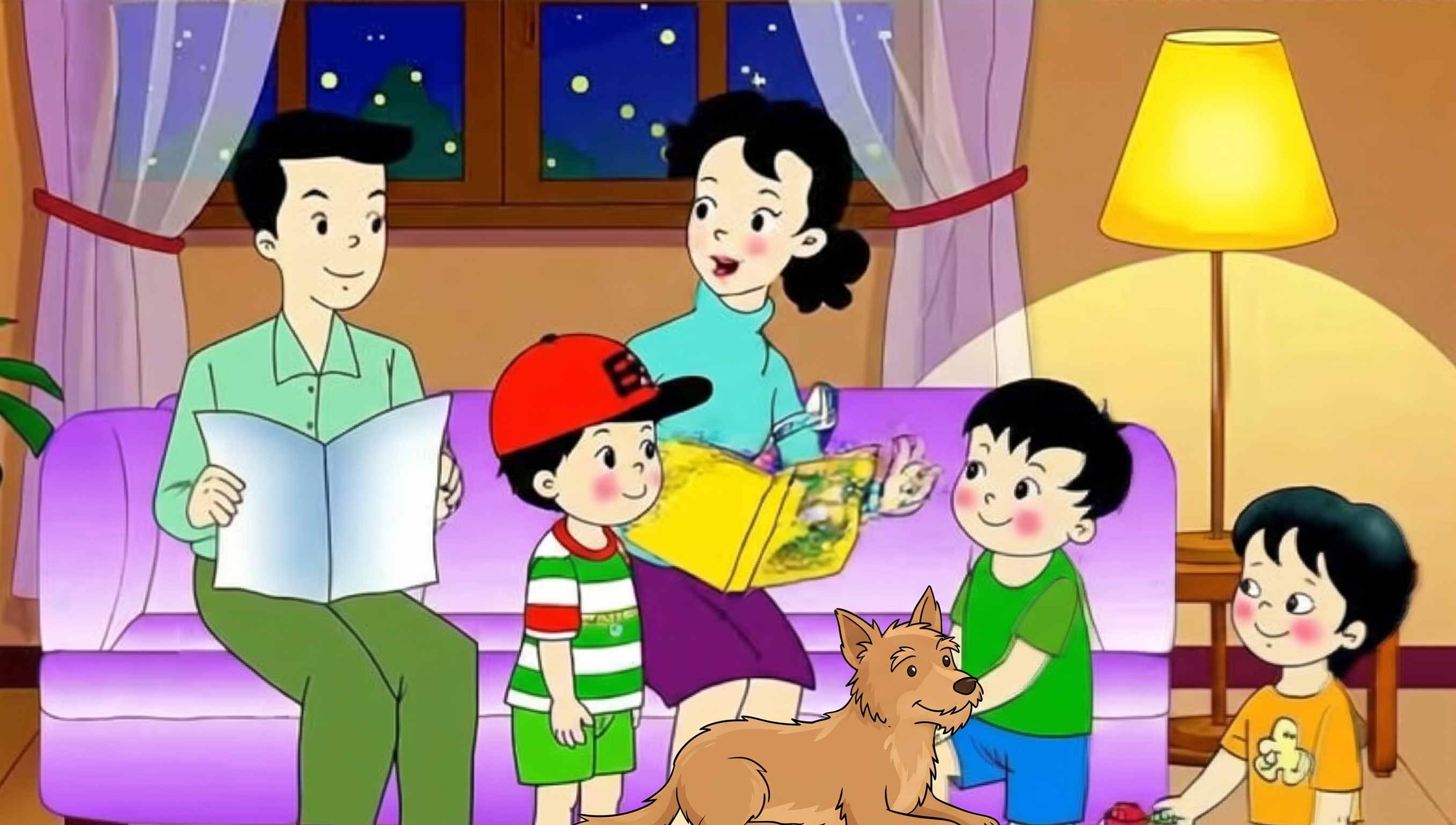
宝宝一家/La familia de Baobao/Baobao's family
爸爸/Papá, padre/Dad, father
妈妈/Mamá, madre/Mum, mother
宝宝/Baobao/Baobao
婷婷/Tíngting/Tíngting
嘟嘟/Dudú/Dudú
洛基/Rocky/Rocky
** 对话/Duìhuà/Diálogo/Dialogue **
--------------------------------------------------------------------------------
婷婷快来看!雨停了,天上有一道彩虹!/Tíngting: ¡Venid a ver! Ha dejado de llover y hay un arcoíris en el cielo./Tíngting: Come and look! The rain has stopped and there's a rainbow in the sky!
嘟嘟好像一座美丽的桥啊!/Dudú: ¡Parece un puente precioso!/Dudú: It looks like a beautiful bridge!
宝宝如果我能走到彩虹桥上,就把水洒下来,帮爸爸浇花。/Baobao: Si pudiera subir al puente del arcoíris, echaría agua hacia abajo para ayudar a papá a regar las flores./Baobao: If I could walk onto the rainbow bridge, I'd sprinkle water down to help Dad water the flowers.
婷婷如果我拿着妈妈的镜子走到桥上,天上就多了一个月亮!/Tíngting: ¡Si subiera al puente con el espejo de mamá, en el cielo habría una luna más!/Tíngting: If I took Mum's mirror up onto the bridge, there'd be one more moon in the sky!
嘟嘟我要把秋千挂在彩虹上,荡来荡去!/Dudú: ¡Yo colgaría el columpio del arcoíris y me columpiaría de un lado a otro!/Dudú: I'd hang the swing on the rainbow and swing back and forth!
妈妈你们的想法真有趣!/Mamá: ¡Qué ideas tan divertidas tenéis!/Mum: What fun ideas you have!
爸爸你们这么想着我们,我们很高兴!/Papá: ¡Nos alegra mucho que penséis tanto en nosotros!/Dad: We're very happy that you think of us so much!
洛基汪汪!/Rocky: ¡Guau!/Rocky: Woof!
嘟嘟洛基也想在彩虹桥上跑来跑去!/Dudú: ¡Rocky también quiere correr de un lado a otro por el puente del arcoíris!/Dudú: Rocky wants to run about on the rainbow bridge too!
▶ 📝 评论 / Comentarios / Comments
彩虹:孩子的想象和对家人的爱:
1. 偏旁表义: 浇 (jiāo) 和 洒 (sǎ) 是三点水,和水有关;提 (tí) 、挑 (tiāo) 、拿 (ná) 都和手的动作有关;裙 (qún) 是衣字旁,和衣服有关。引导学生借助偏旁理解字义。
2. 句式: 课文三次用 如果……不就……吗? (rúguǒ……bú jiù……ma?) 说出美好的想象,又三次问 你高兴吗? (Nǐ gāoxìng ma?) ,读的时候要读出孩子的天真和期待。“读一读,说一说”里的“荡来荡去、飘来飘去”等词语也可以让学生照样子说一说。
3. 想象与爱: 小女孩想借彩虹桥帮爸爸浇田、帮妈妈照镜子、在秋千上变成彩云给哥哥看,处处想着家人。可以让学生想一想:如果你走上彩虹桥,你想为家人做什么?
Comentario Pedagógico: El arcoíris: la imaginación de una niña y el cariño por su familia:
1. Componentes con significado: 浇 (jiāo) y 洒 (sǎ) llevan los tres puntos del agua; 提 (tí) , 挑 (tiāo) y 拿 (ná) tienen que ver con acciones de la mano; 裙 (qún) lleva el componente de la ropa (衤). Los componentes ayudan a entender el significado.
2. Estructuras: El texto repite tres veces 如果……不就……吗? (rúguǒ……bú jiù……ma?) («si…, ¿no sería…?») para expresar sus fantasías, y otras tres 你高兴吗? (Nǐ gāoxìng ma?) («¿estarías contento?»); hay que leerlo con la inocencia e ilusión de una niña. Las expresiones de “读一读,说一说” (荡来荡去, 飘来飘去…) sirven para practicar el patrón «X来X去».
3. Imaginación y cariño: La niña quiere usar el puente del arcoíris para regar los campos de su padre, ponerle a su madre una luna por espejo y convertirse en nube de colores para su hermano: en todo piensa en su familia. Se puede preguntar a los alumnos qué harían ellos por su familia si subieran a ese puente.
Pedagogical Commentary: The Rainbow: a child's imagination and her love for her family:
1. Meaningful components: 浇 (jiāo) and 洒 (sǎ) have the three water dots; 提 (tí) , 挑 (tiāo) and 拿 (ná) are all hand actions; 裙 (qún) has the clothing component (衤). Components help students work out meanings.
2. Sentence patterns: The text uses 如果……不就……吗? (rúguǒ……bú jiù……ma?) (“if…, wouldn't…?”) three times to express the girl's daydreams, and asks 你高兴吗? (Nǐ gāoxìng ma?) (“would you be happy?”) three times; it should be read with a child's innocence and eagerness. The expressions in “读一读,说一说” (荡来荡去, 飘来飘去…) let students practise the “X来X去” pattern.
3. Imagination and love: The girl wants to use the rainbow bridge to water her father's fields, give her mother a moon for a mirror and become a colourful cloud for her brother: she thinks of her family in everything. Students can be asked what they would do for their family if they walked onto the rainbow bridge.

主题/Zhǔtí/Tema/Theme

其他/Qítā/Otros/Others.

词汇 Cíhuì/Vocabulario/Vocabulary

PDF与视频/PDF,videos Y Quiz/PDF, Videos and Quiz
