
PRIMARIA_C1_N2_12_T08
** 12_T08_静夜思/Jìng yè sī/Pensamientos en una noche tranquila/Quiet Night Thoughts **
** 额外内容/Contenido adicional/Additional Content **
** 扩大和替换/Kuòdà hé tìhuàn/Ampliar y sustituir/Expand and substitute. **
月/luna/moon
明月/luna brillante/bright moon
望明月/contemplar la luna/gaze at the bright moon
举头望明月,低头思故乡。/Alzo la cabeza y contemplo la luna, bajo la cabeza y pienso en mi tierra./I raise my head and gaze at the bright moon, I lower my head and think of home.
故乡/tierra natal/hometown
想念故乡/echar de menos la tierra natal/miss one's hometown
看到月亮,我就想念故乡。/Cuando veo la luna, echo de menos mi tierra./When I see the moon, I miss my hometown.
--------------------------------------------------------------------------------
床前明月光,疑是地上霜。/Ante mi cama, la luz brillante de la luna: parece escarcha sobre el suelo./Before my bed, the bright moonlight: I wonder if it's frost upon the ground.
--------------------------------------------------------------------------------
举头/alzar la cabeza/raise one's head
· 低头/bajar la cabeza./lower one's head.
前/delante/front
· 后/detrás./back.
高/alto/high
· 低/bajo./low.
天上/en el cielo/in the sky
· 地上/en el suelo./on the ground.
** 想一想, 说一说/Xiǎng yi xiǎng, shuō yi shuō/Piensa y responde/Think and answer the following questions **
--------------------------------------------------------------------------------
诗人看到床前的月光,以为是什么?/¿Qué cree el poeta que es la luz de la luna ante su cama?/What does the poet think the moonlight before his bed is?
诗人抬头看月亮的时候,想起了什么?/Al mirar la luna, ¿en qué piensa el poeta?/When the poet looks up at the moon, what does he think of?
** 家庭/Jiātíng/FAMILIA/FAMILY **
--------------------------------------------------------------------------------
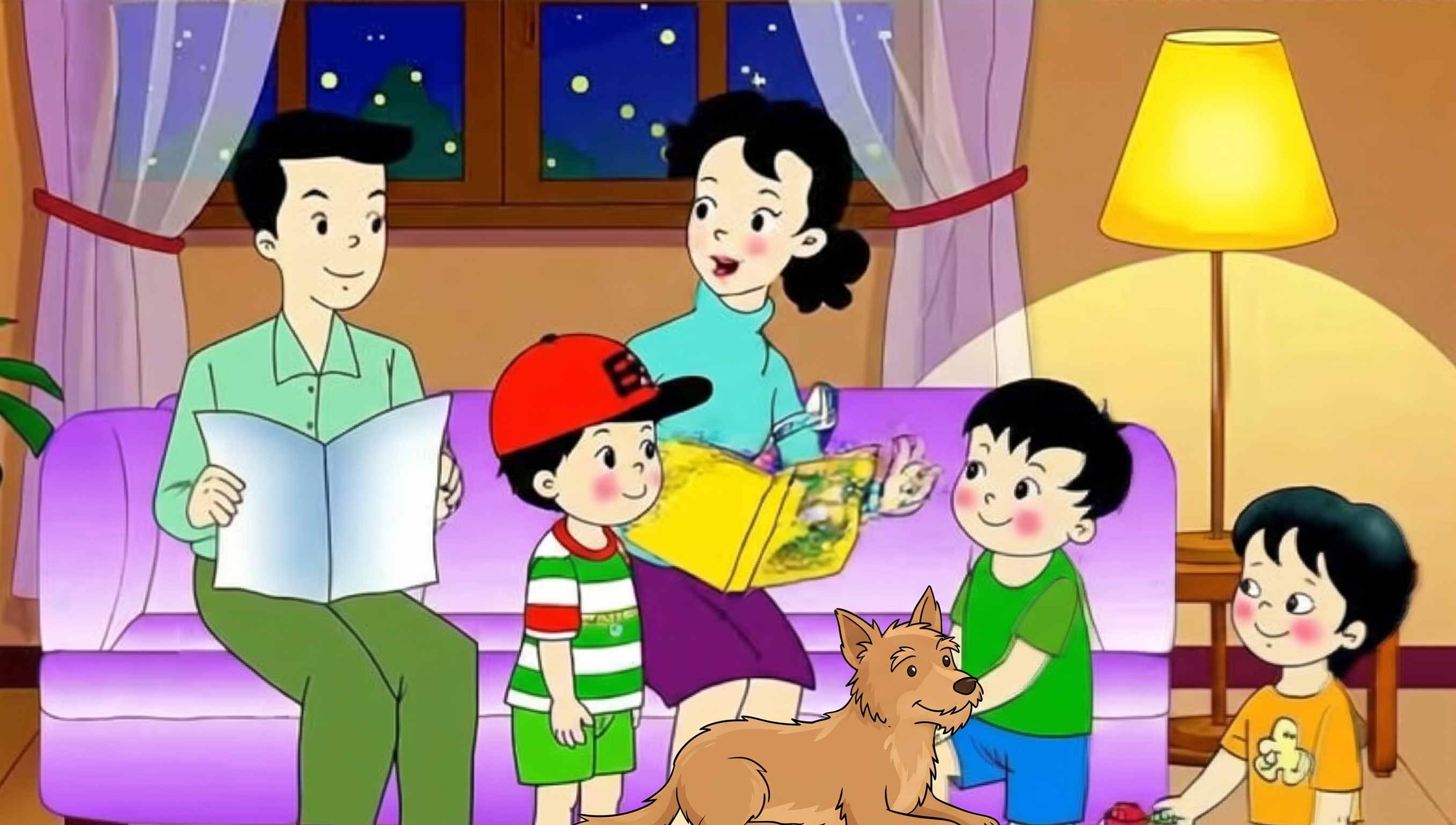
宝宝一家/La familia de Baobao/Baobao's family
爸爸/Papá, padre/Dad, father
妈妈/Mamá, madre/Mum, mother
宝宝/Baobao/Baobao
婷婷/Tíngting/Tíngting
嘟嘟/Dudú/Dudú
洛基/Rocky/Rocky
** 对话/Duìhuà/Diálogo/Dialogue **
--------------------------------------------------------------------------------
婷婷妈妈,你看,今晚的月亮好圆好亮啊!/Tíngting: ¡Mamá, mira qué luna tan redonda y brillante hay esta noche!/Tíngting: Mum, look how round and bright the moon is tonight!
妈妈是啊。月光照在地上,白白的。/Mamá: Sí. La luz de la luna deja el suelo blanquito./Mum: Yes. The moonlight makes the ground all white.
宝宝像霜一样!床前明月光,疑是地上霜。/Baobao: ¡Como si fuera escarcha! «Ante mi cama, la luz brillante de la luna; parece escarcha sobre el suelo»./Baobao: Just like frost! “Before my bed, the bright moonlight; I wonder if it's frost upon the ground.”
爸爸宝宝会背《静夜思》了!李白看到月亮,就想起了故乡。/Papá: ¡Baobao ya se sabe «Pensamientos en una noche tranquila»! Al ver la luna, Li Bai se acordó de su tierra./Dad: Baobao can recite “Quiet Night Thoughts”! When Li Bai saw the moon, he thought of his hometown.
嘟嘟什么是故乡?/Dudú: ¿Qué es la «tierra natal»?/Dudú: What's a hometown?
妈妈故乡就是我们出生、长大的地方。/Mamá: La tierra natal es el lugar donde nacemos y crecemos./Mum: Your hometown is the place where you were born and grew up.
爸爸爷爷奶奶住在我的故乡。看到月亮,我也想念他们。/Papá: Los abuelos viven en mi tierra. Al ver la luna, yo también los echo de menos./Dad: Grandpa and Grandma live in my hometown. When I see the moon, I miss them too.
嘟嘟那我们给爷爷奶奶打个电话吧!/Dudú: ¡Pues llamemos a los abuelos por teléfono!/Dudú: Then let's give Grandpa and Grandma a ring!
洛基汪汪!/Rocky: ¡Guau!/Rocky: Woof!
婷婷洛基也想爷爷奶奶了!/Tíngting: ¡Rocky también echa de menos a los abuelos!/Tíngting: Rocky misses Grandpa and Grandma too!
▶ 📝 评论 / Comentarios / Comments
静夜思:月亮与思乡之情:
1. 古诗的韵律: 这是唐代诗人 李白 (Lǐ Bái) 的五言绝句,每句五个字,一共四句。第一、二、四句押 -ang 韵(光 (guāng) 、霜 (shuāng) 、乡 (xiāng) ),读起来琅琅上口,适合朗读和背诵。
2. 相对的词语: 举头 (jǔtóu) 和 低头 (dītóu) 意思相对,一抬一低,写出了诗人的动作和心情。可以让学生找一找生活中意思相对的词语,如“前—后”“高—低”“天上—地上”。
3. 思乡的情感: 在中国文化里,月亮常常和思念家乡、亲人连在一起,中秋节赏月也是团圆的象征。可以让学生说一说:看到月亮的时候,你会想起谁?
1. 古诗的韵律: 这是唐代诗人 李白 (Lǐ Bái) 的五言绝句,每句五个字,一共四句。第一、二、四句押 -ang 韵(光 (guāng) 、霜 (shuāng) 、乡 (xiāng) ),读起来琅琅上口,适合朗读和背诵。
2. 相对的词语: 举头 (jǔtóu) 和 低头 (dītóu) 意思相对,一抬一低,写出了诗人的动作和心情。可以让学生找一找生活中意思相对的词语,如“前—后”“高—低”“天上—地上”。
3. 思乡的情感: 在中国文化里,月亮常常和思念家乡、亲人连在一起,中秋节赏月也是团圆的象征。可以让学生说一说:看到月亮的时候,你会想起谁?
Comentario Pedagógico: Pensamientos en una noche tranquila: la luna y la nostalgia del hogar:
1. El ritmo del poema clásico: Es una cuarteta de cinco caracteres por verso del poeta Tang 李白 (Lǐ Bái) . Los versos 1, 2 y 4 riman en -ang (光 (guāng) , 霜 (shuāng) , 乡 (xiāng) ), así que es muy musical y fácil de recitar de memoria.
2. Palabras opuestas: 举头 (jǔtóu) (alzar la cabeza) y 低头 (dītóu) (bajarla) se oponen y describen el gesto y el sentimiento del poeta. Los alumnos pueden buscar otras parejas de opuestos, como 前—后, 高—低 o 天上—地上.
3. La nostalgia: En la cultura china, la luna se asocia a la añoranza de la tierra y de la familia, y contemplarla en la Fiesta del Medio Otoño simboliza la reunión familiar. Se puede preguntar a los alumnos: cuando miras la luna, ¿en quién piensas?
Pedagogical Commentary: Quiet Night Thoughts: the moon and homesickness:
1. The rhythm of a classical poem: This is a five-character quatrain by the Tang poet 李白 (Lǐ Bái) . Lines 1, 2 and 4 rhyme in -ang (光 (guāng) , 霜 (shuāng) , 乡 (xiāng) ), which makes it very musical and easy to learn by heart.
2. Opposite words: 举头 (jǔtóu) (raise one's head) and 低头 (dītóu) (lower one's head) are opposites that capture the poet's movement and feelings. Students can look for other pairs of opposites, such as 前—后, 高—低 or 天上—地上.
3. Homesickness: In Chinese culture the moon is linked to missing one's home and family, and moon-gazing at the Mid-Autumn Festival symbolises family reunion. Students can be asked: when you look at the moon, who do you think of?

主题/Zhǔtí/Tema/Theme

其他/Qítā/Otros/Others.

词汇 Cíhuì/Vocabulario/Vocabulary

PDF与视频/PDF,videos Y Quiz/PDF, Videos and Quiz
