
PRIMARIA_C1_N2_10_T06
** 10_T06_树和喜鹊/Shù hé xǐquè/El árbol y las urracas/The Tree and the Magpies **
** 额外内容/Contenido adicional/Additional Content **
** 扩大和替换/Kuòdà hé tìhuàn/Ampliar y sustituir/Expand and substitute. **
邻居/vecino/neighbour
有邻居/tener vecinos/have neighbours
树有了邻居/el árbol tuvo vecinos/the tree had neighbours
树有了邻居,喜鹊也有了邻居。/El árbol tuvo vecinos, y las urracas también tuvieron vecinos./The tree had neighbours, and the magpies had neighbours too.
飞回/volver volando/fly back
飞回窝里/volver volando al nido/fly back to the nest
喜鹊飞回窝里。/Las urracas vuelven volando al nido./The magpies fly back to the nest.
--------------------------------------------------------------------------------
每棵树上都有鸟窝,每个鸟窝里都有喜鹊。/En cada árbol había un nido, y en cada nido había urracas./Every tree had a nest, and every nest had magpies.
--------------------------------------------------------------------------------
公园里有很多树/En el parque hay muchos árboles./There are many trees in the park.
· 每/cada./every.
· 棵/(clasificador de árboles)./(measure word for trees).
· 高/alto./tall.
我们班有三十个同学/En nuestra clase hay treinta alumnos./There are thirty students in our class.
· 每/cada./every.
· 书包/mochila./schoolbag.
· 有/tener./have.
喜鹊们回家了/Las urracas han vuelto a casa./The magpies have come home.
· 每/cada./every.
· 鸟窝/nido./nest.
· 喜鹊/urraca./magpie.
** 想一想, 说一说/Xiǎng yi xiǎng, shuō yi shuō/Piensa y responde/Think and answer the following questions **
--------------------------------------------------------------------------------
树和喜鹊以前为什么很孤单?/¿Por qué el árbol y la urraca se sentían tan solos al principio?/Why were the tree and the magpie so lonely at first?
后来,树和喜鹊为什么很快乐?/Más tarde, ¿por qué el árbol y las urracas eran tan felices?/Later, why were the tree and the magpies so happy?
** 家庭/Jiātíng/FAMILIA/FAMILY **
--------------------------------------------------------------------------------
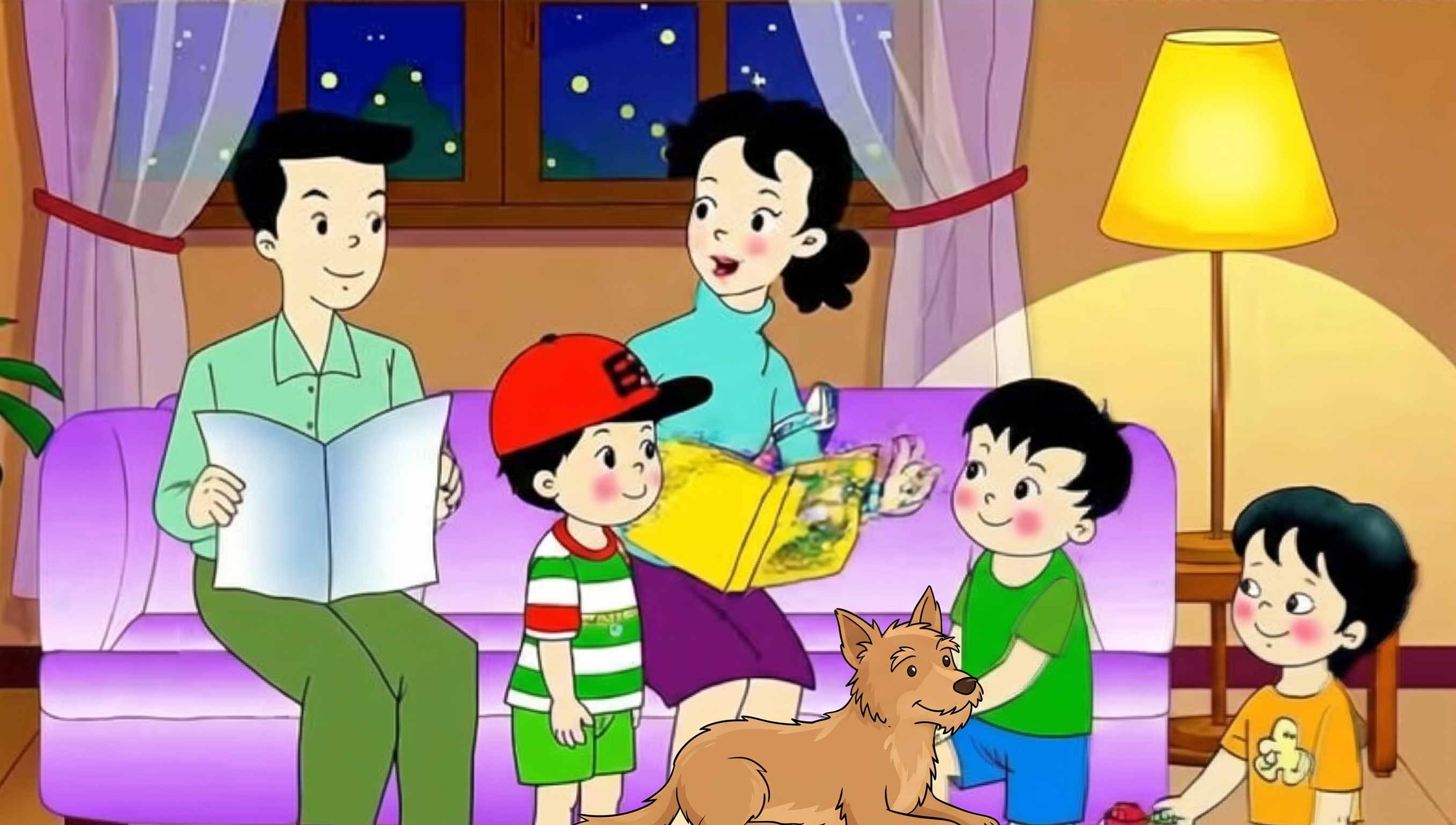
宝宝一家/La familia de Baobao/Baobao's family
爸爸/Papá, padre/Dad, father
妈妈/Mamá, madre/Mum, mother
宝宝/Baobao/Baobao
婷婷/Tíngting/Tíngting
嘟嘟/Dudú/Dudú
洛基/Rocky/Rocky
** 对话/Duìhuà/Diálogo/Dialogue **
--------------------------------------------------------------------------------
爸爸孩子们,你们看,那棵树上有一个鸟窝。/Papá: Niños, mirad, en ese árbol hay un nido./Dad: Kids, look, there's a nest in that tree.
婷婷鸟窝里有一只喜鹊!它在叽叽喳喳地叫呢。/Tíngting: ¡En el nido hay una urraca! Está parloteando./Tíngting: There's a magpie in the nest! It's chattering.
嘟嘟这里只有一棵树,喜鹊会不会很孤单?/Dudú: Aquí solo hay un árbol, ¿se sentirá muy sola la urraca?/Dudú: There's only one tree here. Will the magpie be very lonely?
妈妈你们往前看,那边有好多好多树。/Mamá: Mirad hacia delante, allí hay muchísimos árboles./Mum: Look ahead, there are lots and lots of trees over there.
宝宝每棵树上都有鸟窝!喜鹊们有邻居了。/Baobao: ¡En cada árbol hay un nido! Las urracas tienen vecinos./Baobao: Every tree has a nest! The magpies have neighbours.
洛基汪汪!汪汪!/Rocky: ¡Guau, guau!/Rocky: Woof, woof!
婷婷洛基,安静一点!别把喜鹊吓跑了。/Tíngting: ¡Rocky, estate quieto! No espantes a las urracas./Tíngting: Rocky, be quiet! Don't scare the magpies away.
嘟嘟洛基在跟喜鹊打招呼呢!/Dudú: ¡Rocky está saludando a las urracas!/Dudú: Rocky is saying hello to the magpies!
爸爸我们家也有邻居。明年春天,我们和邻居一起种树,好不好?/Papá: Nuestra familia también tiene vecinos. La próxima primavera plantaremos árboles con los vecinos, ¿vale?/Dad: Our family has neighbours too. Next spring, let's plant trees with our neighbours, OK?
大家好!我们和喜鹊一样快乐!/Todos: ¡Vale! ¡Somos tan felices como las urracas!/Everyone: OK! We're as happy as the magpies!
▶ 📝 评论 / Comentarios / Comments
树和喜鹊:从孤单到快乐的邻居故事:
1. 字形的直观性: 窝 (wō) 的“穴”字头像一个洞,表示鸟儿住的地方;邻 (lín) 的右耳旁“阝”和人们居住的地方有关;孤 (gū) 的“子”字旁提示和人有关。观察字形,能帮助学生把字形和字义联系起来,而不是死记硬背。
2. 句式的对比: 课文用 只有 (zhǐyǒu) 和 每……都…… (měi……dōu……) 形成鲜明对比:从“只有一棵树”到“每棵树上都有鸟窝”。天一亮 (tiān yí liàng) 和 天一黑 (tiān yì hēi) 则帮助学生按时间顺序讲述一天的生活。
3. 拟人与情感: 课文用 他们 (tāmen) 而不是“它们”来称呼喜鹊,把喜鹊当作人来写。树和喜鹊从 孤单 (gūdān) 变得 快乐 (kuàilè) ,让学生体会有邻居、有朋友的快乐,也可以引导他们思考种树和保护环境的意义。
Comentario Pedagógico: El árbol y las urracas: una historia de vecinos, de la soledad a la alegría:
1. La transparencia de la forma: En 窝 (wō) , el componente superior “穴” parece un agujero y remite al lugar donde viven los pájaros; en 邻 (lín) , el componente “阝” de la derecha está relacionado con los lugares donde vive la gente; en 孤 (gū) , el componente “子” indica que se refiere a personas. Observar la forma ayuda a conectar el carácter con su significado, en vez de memorisarlo a ciegas.
2. El contraste de estructuras: El texto contrapone 只有 (zhǐyǒu) y 每……都…… (měi……dōu……) : de “solo había un árbol” a “en cada árbol había un nido”. Las expresiones 天一亮 (tiān yí liàng) y 天一黑 (tiān yì hēi) ayudan a contar las rutinas del día en orden temporal.
3. Personificación y emociones: El texto se refiere a las urracas con 他们 (tāmen) , el pronombre para personas, en lugar de “它们”, que se usa para animales y cosas. Al pasar de 孤单 (gūdān) a 快乐 (kuàilè) , el árbol y las urracas muestran a los alumnos la alegría de tener vecinos y amigos, y permiten reflexionar sobre el valor de plantar árboles y cuidar el medio ambiente.
Pedagogical Commentary: The Tree and the Magpies: a story of neighbours, from loneliness to happiness:
1. The transparency of form: In 窝 (wō) , the top component “穴” looks like a hole and points to the place where birds live; in 邻 (lín) , the right-hand component “阝” is related to places where people live; in 孤 (gū) , the component “子” shows a connection with people. Observing the form helps connect the character to its meaning, instead of memorising it blindly.
2. Contrasting structures: The text contrasts 只有 (zhǐyǒu) with 每……都…… (měi……dōu……) : from “there was only one tree” to “every tree had a nest”. The expressions 天一亮 (tiān yí liàng) and 天一黑 (tiān yì hēi) help students describe daily routines in time order.
3. Personification and emotions: The text refers to the magpies with 他们 (tāmen) , the pronoun for people, instead of “它们”, used for animals and things. As the tree and the magpies go from 孤单 (gūdān) to 快乐 (kuàilè) , students discover the joy of having neighbours and friends, and can reflect on the value of planting trees and caring for the environment.

主题/Zhǔtí/Tema/Theme

其他/Qítā/Otros/Others.

词汇 Cíhuì/Vocabulario/Vocabulary

PDF与视频/PDF,videos Y Quiz/PDF, Videos and Quiz
