
PRIMARIA_C1_N2_06_T02
** 06_T02_我多想去看看/Wǒ duō xiǎng qù kànkan/¡Cuánto me gustaría ir a verlo!/How I Long to Go and See **
** 额外内容/Contenido adicional/Additional Content **
** 扩大和替换/Kuòdà hé tìhuàn/Ampliar y sustituir/Expand and substitute. **
看看/echar un vistazo/have a look
去看看/ir a verlo/go and see
我想去看看/quiero ir a verlo/I want to go and see
我多想去看看天安门!/¡Cuánto me gustaría ir a ver Tiananmen!/How I long to go and see Tiananmen!
弯弯/serpenteante/winding
弯弯的小路/el sendero serpenteante/the winding path
沿着弯弯的小路,就会走出天山。/Siguiendo el sendero serpenteante, se sale de los montes Tianshan./If you follow the winding path, you'll come out of the Tianshan Mountains.
--------------------------------------------------------------------------------
我多想去看看,我多想去看看!/¡Cuánto me gustaría ir a verlo, cuánto me gustaría ir a verlo!/How I long to go and see it, how I long to go and see it!
--------------------------------------------------------------------------------
小路/sendero/path
· 弯弯的/serpenteante./winding.
公路/carretera/road
· 宽宽的/ancha./wide.
天山/montes Tianshan/Tianshan Mountains
· 美丽的/hermosos./beautiful.
雪莲/loto de nieve/snow lotus
· 洁白的/blanquísimo./pure white.
天安门/Tiananmen/Tiananmen
· 雄伟的/majestuosa./magnificent.
升旗仪式/ceremonia de izado/flag-raising ceremony
· 壮观的/espectacular./spectacular.
** 想一想, 说一说/Xiǎng yi xiǎng, shuō yi shuō/Piensa y responde/Think and answer the following questions **
--------------------------------------------------------------------------------
妈妈说北京有什么?爸爸说新疆有什么?/¿Qué dice mamá que hay en Pekín? ¿Y qué dice papá que hay en Xinjiang?/What does Mum say there is in Beijing? And what does Dad say there is in Xinjiang?
用我多想说一句话。/Di una frase que empiece por «我多想…» («¡Cuánto me gustaría…!»)./Say a sentence beginning with “我多想…” (“How I long to…”).
** 家庭/Jiātíng/FAMILIA/FAMILY **
--------------------------------------------------------------------------------
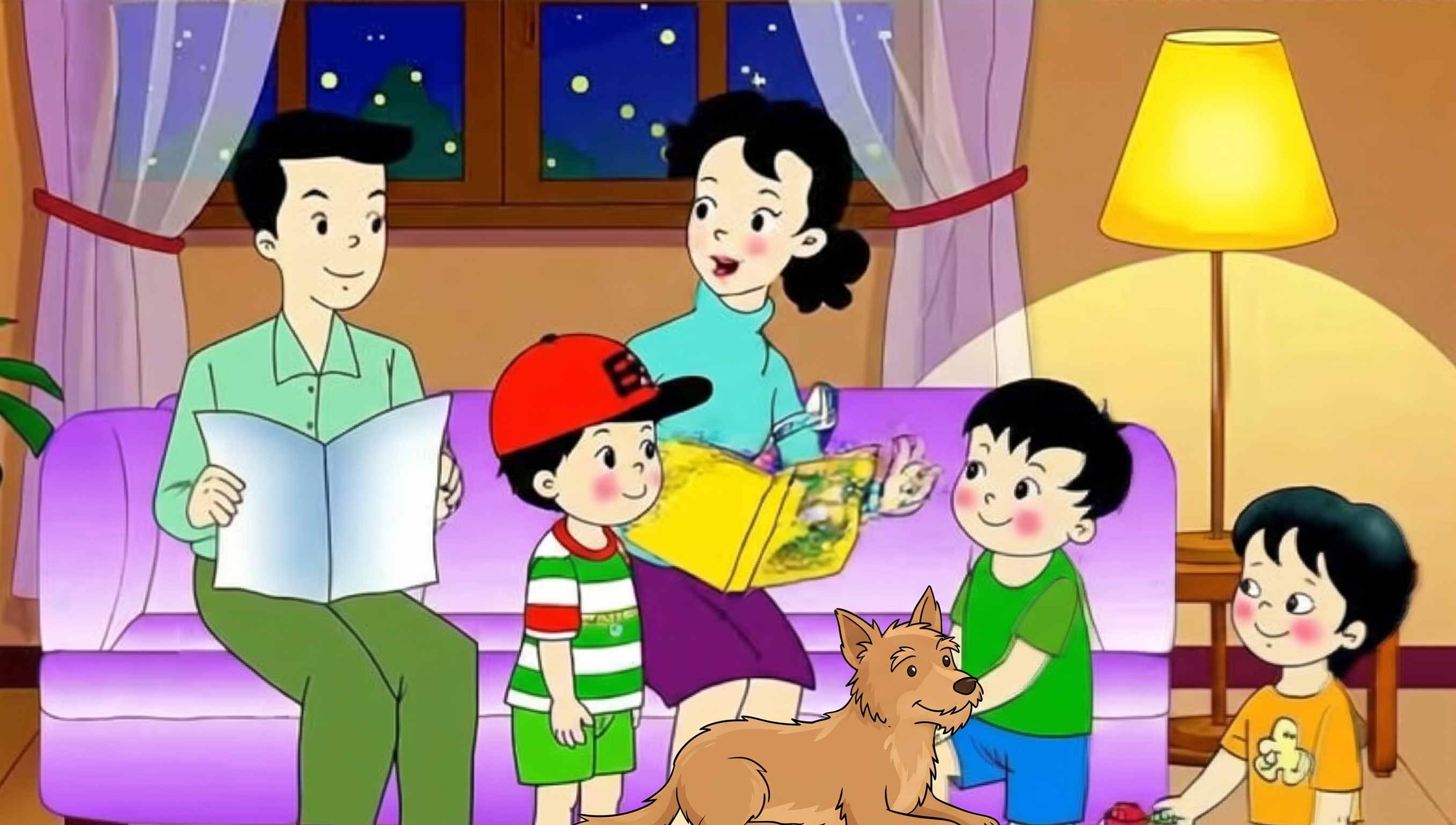
宝宝一家/La familia de Baobao/Baobao's family
爸爸/Papá, padre/Dad, father
妈妈/Mamá, madre/Mum, mother
宝宝/Baobao/Baobao
婷婷/Tíngting/Tíngting
嘟嘟/Dudú/Dudú
洛基/Rocky/Rocky
** 对话/Duìhuà/Diálogo/Dialogue **
--------------------------------------------------------------------------------
婷婷爸爸,北京有什么好玩的?/Tíngting: Papá, ¿qué cosas bonitas hay en Pekín?/Tíngting: Dad, what fun things are there in Beijing?
爸爸北京有雄伟的天安门,广场上的升旗仪式非常壮观。/Papá: En Pekín está la majestuosa puerta de Tiananmen, y la ceremonia de izado de la bandera en la plaza es espectacular./Dad: Beijing has the magnificent Tiananmen, and the flag-raising ceremony in the square is spectacular.
宝宝我多想去看看!/Baobao: ¡Cuánto me gustaría ir a verlo!/Baobao: How I long to go and see it!
妈妈新疆也很美。那儿有天山,雪山上开着洁白的雪莲。/Mamá: Xinjiang también es muy bonito. Allí están los montes Tianshan, y en las cumbres nevadas florecen blanquísimos lotos de nieve./Mum: Xinjiang is beautiful too. There are the Tianshan Mountains, and pure white snow lotuses bloom on the snowy peaks.
嘟嘟我多想去新疆看看雪莲!/Dudú: ¡Cuánto me gustaría ir a Xinjiang a ver los lotos de nieve!/Dudú: How I long to go to Xinjiang and see the snow lotuses!
婷婷我多想去长城走走!/Tíngting: ¡Cuánto me gustaría ir a pasear por la Gran Muralla!/Tíngting: How I long to go for a walk on the Great Wall!
爸爸放假的时候,我们一起去吧!/Papá: ¡En las vacaciones iremos todos juntos!/Dad: Let's all go together in the holidays!
洛基汪汪!/Rocky: ¡Guau!/Rocky: Woof!
宝宝洛基也想去看看!/Baobao: ¡Rocky también quiere ir a verlo!/Baobao: Rocky wants to go and see too!
▶ 📝 评论 / Comentarios / Comments
我多想去看看:对远方的向往:
1. 生字成词: 本课不少生字可以两两组成词语:告 (gào) + 诉 (sù) → 告诉,非 (fēi) + 常 (cháng) → 非常,壮 (zhuàng) + 观 (guān) → 壮观。把生字放进词语里学习,更容易理解和记忆。
2. 叠词与修饰: 弯弯 (wānwān) 的小路、宽宽 (kuānkuān) 的公路,“读一读,记一记”里还有“美丽的天山”“洁白的雪莲”“雄伟的天安门”。学生可以学习用“……的+名词”来描写事物。
3. 感叹句与愿望: 我多想去看看! (Wǒ duō xiǎng qù kànkan!) 要读出向往的感情。课文通过一个新疆孩子和一个北京孩子的愿望,介绍了北京的天安门和新疆的天山。可以让学生以“我多想……”开头,说说自己的愿望。
Comentario Pedagógico: ¡Cuánto me gustaría ir a verlo!: el deseo de conocer lugares lejanos:
1. Caracteres que forman palabras: Muchos caracteres nuevos de esta lección se combinan de dos en dos: 告 (gào) + 诉 (sù) → 告诉, 非 (fēi) + 常 (cháng) → 非常, 壮 (zhuàng) + 观 (guān) → 壮观. Aprenderlos dentro de una palabra facilita entenderlos y recordarlos.
2. Duplicación y descripción: 弯弯 (wānwān) 的小路, 宽宽 (kuānkuān) 的公路, y en “读一读,记一记” también 美丽的天山, 洁白的雪莲 o 雄伟的天安门. Los alumnos aprenden a describir con la estructura “… 的 + sustantivo”.
3. Exclamación y deseos: 我多想去看看! (Wǒ duō xiǎng qù kànkan!) debe leerse transmitiendo ilusión. A través de los deseos de un niño de Xinjiang y otro de Pekín, el texto presenta Tiananmen y los montes Tianshan. Los alumnos pueden expresar sus propios deseos empezando por “我多想……”.
Pedagogical Commentary: How I Long to Go and See: longing for faraway places:
1. Characters that form words: Many new characters in this lesson pair up into words: 告 (gào) + 诉 (sù) → 告诉, 非 (fēi) + 常 (cháng) → 非常, 壮 (zhuàng) + 观 (guān) → 壮观. Learning them inside a word makes them easier to understand and remember.
2. Reduplication and description: 弯弯 (wānwān) 的小路, 宽宽 (kuānkuān) 的公路, and in “读一读,记一记” also 美丽的天山, 洁白的雪莲 and 雄伟的天安门. Students learn to describe things with the pattern “… 的 + noun”.
3. Exclamations and wishes: 我多想去看看! (Wǒ duō xiǎng qù kànkan!) should be read with a sense of longing. Through the wishes of a child from Xinjiang and a child from Beijing, the text introduces Tiananmen and the Tianshan Mountains. Students can express their own wishes starting with “我多想……”.

主题/Zhǔtí/Tema/Theme

其他/Qítā/Otros/Others.

词汇 Cíhuì/Vocabulario/Vocabulary

PDF与视频/PDF,videos Y Quiz/PDF, Videos and Quiz
