
PRIMARIA_C1_N2_01_L01
** 01_L01_春夏秋冬/Chūn xià qiū dōng/Primavera, verano, otoño e invierno/Spring, Summer, Autumn and Winter **
** 额外内容/Contenido adicional/Additional Content **
** 扩大和替换/Kuòdà hé tìhuàn/Ampliar y sustituir/Expand and substitute. **
风/viento/wind
春风/viento de primavera/spring wind
春风吹/sopla el viento de primavera/the spring wind blows
春风吹,柳树绿了。/Sopla el viento de primavera y los sauces se ponen verdes./The spring wind blows, and the willows turn green.
花/flor/flower
山花红/las flores del monte están rojas/the mountain flowers are red
春天,山花红了。/En primavera, las flores del monte se ponen rojas./In spring, the mountain flowers turn red.
--------------------------------------------------------------------------------
池草青,山花红,鱼出水,鸟入林。/La hierba del estanque está verde, las flores del monte están rojas, los peces saltan del agua y los pájaros entran en el bosque./The pond grass is green, the mountain flowers are red, the fish leap out of the water and the birds fly into the woods.
--------------------------------------------------------------------------------
春天/En primavera/In spring
· 春风/viento de primavera./spring wind.
· 吹/soplar./blow.
夏天/En verano/In summer
· 夏雨/lluvia de verano./summer rain.
· 落/caer./fall.
秋天/En otoño/In autumn
· 秋霜/escarcha de otoño./autumn frost.
· 降/descender./settle.
冬天/En invierno/In winter
· 冬雪/nieve de invierno./winter snow.
· 飘/revolotear./drift.
** 想一想, 说一说/Xiǎng yi xiǎng, shuō yi shuō/Piensa y responde/Think and answer the following questions **
--------------------------------------------------------------------------------
一年有哪四个季节?/¿Cuáles son las cuatro estaciones del año?/What are the four seasons of the year?
你最喜欢哪个季节?为什么?/¿Qué estación te gusta más? ¿Por qué?/Which season do you like best? Why?
** 家庭/Jiātíng/FAMILIA/FAMILY **
--------------------------------------------------------------------------------
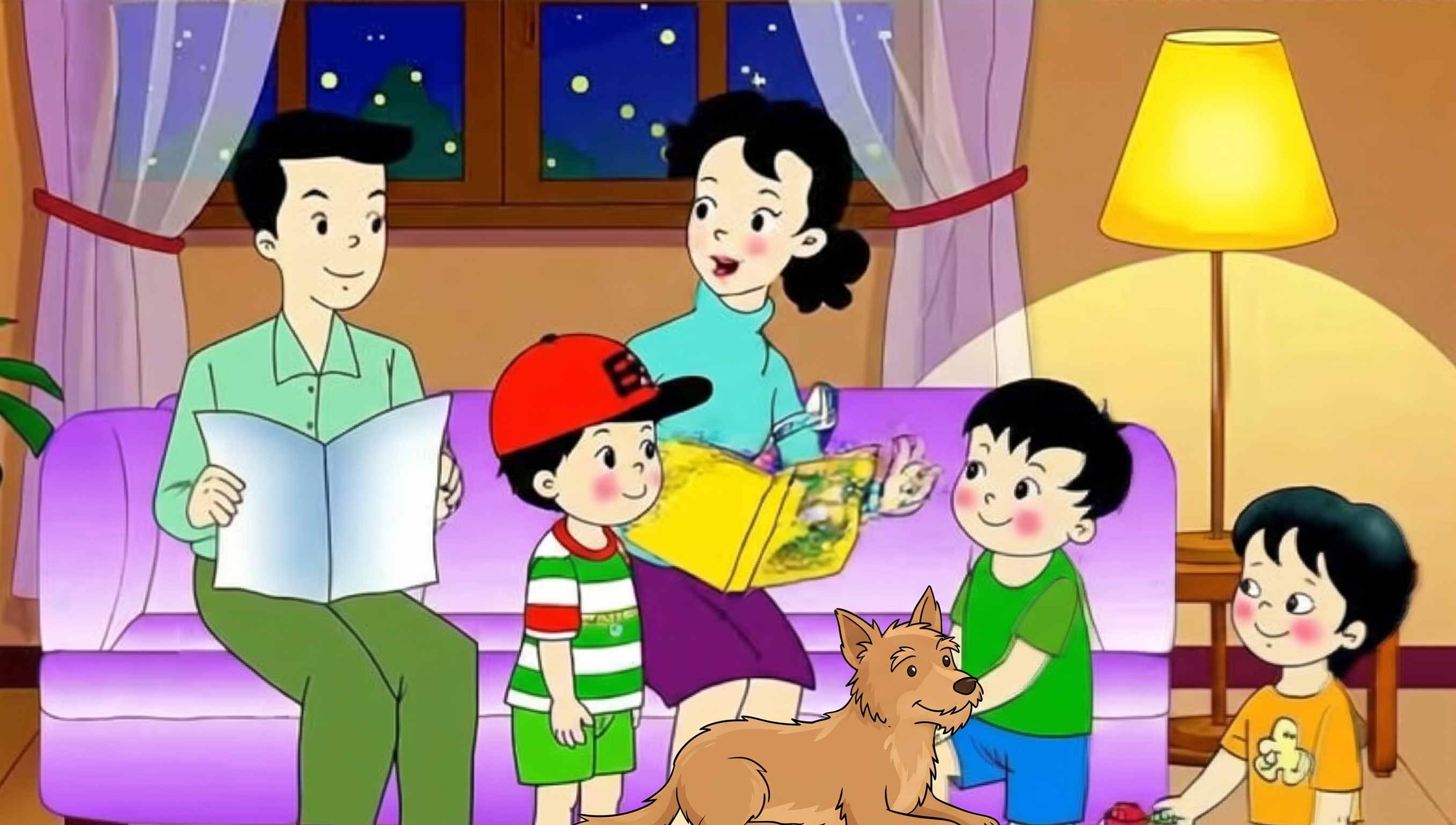
宝宝一家/La familia de Baobao/Baobao's family
爸爸/Papá, padre/Dad, father
妈妈/Mamá, madre/Mum, mother
宝宝/Baobao/Baobao
婷婷/Tíngting/Tíngting
嘟嘟/Dudú/Dudú
洛基/Rocky/Rocky
** 对话/Duìhuà/Diálogo/Dialogue **
--------------------------------------------------------------------------------
爸爸春天来了,我们去公园玩吧!/Papá: ¡Ha llegado la primavera, vamos al parque!/Dad: Spring is here, let's go to the park!
婷婷你们看,池边的草青了!/Tíngting: ¡Mirad, la hierba junto al estanque está verde!/Tíngting: Look, the grass by the pond is green!
宝宝山上的花也红了。/Baobao: Las flores del monte también se han puesto rojas./Baobao: The flowers on the hill have turned red too.
嘟嘟鱼出水了!一条小鱼跳起来了!/Dudú: ¡Un pez ha salido del agua! ¡Un pececillo ha dado un salto!/Dudú: A fish came out of the water! A little fish leapt up!
洛基汪汪!/Rocky: ¡Guau!/Rocky: Woof!
妈妈洛基把小鸟吓飞了,小鸟飞进树林里了。/Mamá: Rocky ha asustado a los pajaritos y se han ido volando al bosque./Mum: Rocky scared the little birds, and they flew into the woods.
宝宝这就是鸟入林!/Baobao: ¡Esto es «el pájaro entra en el bosque»!/Baobao: This is “the bird flies into the woods”!
婷婷我喜欢春天,春风吹在脸上很舒服。/Tíngting: Me gusta la primavera; el viento de primavera en la cara es muy agradable./Tíngting: I like spring; the spring breeze on my face feels very nice.
嘟嘟我喜欢冬天,冬天可以堆雪人!/Dudú: A mí me gusta el invierno, ¡en invierno se pueden hacer muñecos de nieve!/Dudú: I like winter, you can build snowmen in winter!
爸爸春夏秋冬,每个季节都很美。/Papá: Primavera, verano, otoño e invierno: cada estación es bonita./Dad: Spring, summer, autumn and winter: every season is beautiful.
▶ 📝 评论 / Comentarios / Comments
春夏秋冬:四季与自然的词语:
1. 字形的直观性: 雪 (xuě) 和 霜 (shuāng) 都有“雨”字头,和天气有关;游 (yóu) 和 池 (chí) 都有三点水,和水有关。引导学生通过偏旁给生字归类,而不是死记硬背。
2. 从词语到短语: 课文从两个字的词语(春风 (chūnfēng) 、青草 (qīngcǎo) )扩展到三个字的短语(春风吹 (chūnfēng chuī) 、池草青 (chí cǎo qīng) ),让学生体会“名词+动词/形容词”的简单结构。
3. 韵律与观察: 课文短小、节奏整齐,适合朗读和背诵。可以结合插图,让学生说说每个季节的特点,把认字和观察大自然结合起来。
1. 字形的直观性: 雪 (xuě) 和 霜 (shuāng) 都有“雨”字头,和天气有关;游 (yóu) 和 池 (chí) 都有三点水,和水有关。引导学生通过偏旁给生字归类,而不是死记硬背。
2. 从词语到短语: 课文从两个字的词语(春风 (chūnfēng) 、青草 (qīngcǎo) )扩展到三个字的短语(春风吹 (chūnfēng chuī) 、池草青 (chí cǎo qīng) ),让学生体会“名词+动词/形容词”的简单结构。
3. 韵律与观察: 课文短小、节奏整齐,适合朗读和背诵。可以结合插图,让学生说说每个季节的特点,把认字和观察大自然结合起来。
Comentario Pedagógico: Primavera, verano, otoño e invierno: palabras de las estaciones y la naturaleza:
1. La transparencia de la forma: 雪 (xuě) y 霜 (shuāng) llevan arriba el componente “雨” (lluvia), relacionado con el tiempo atmosférico; 游 (yóu) y 池 (chí) llevan los tres puntos del agua. Agrupar los caracteres por su componente ayuda a recordarlos sin memorizarlos a ciegas.
2. De la palabra a la frase: El texto pasa de palabras de dos caracteres (春风 (chūnfēng) , 青草 (qīngcǎo) ) a frases de tres (春风吹 (chūnfēng chuī) , 池草青 (chí cǎo qīng) ), y así los alumnos descubren la estructura sencilla “sustantivo + verbo/adjetivo”.
3. Ritmo y observación: El texto es breve y rítmico, ideal para leer en voz alta y aprender de memoria. Con ayuda de las ilustraciones, los alumnos pueden describir cada estación y unir el aprendizaje de caracteres con la observación de la naturaleza.
Pedagogical Commentary: Spring, Summer, Autumn and Winter: words for the seasons and nature:
1. The transparency of form: 雪 (xuě) and 霜 (shuāng) both carry the “雨” (rain) component on top, linked to the weather; 游 (yóu) and 池 (chí) both have the three water dots. Grouping characters by component helps students remember them instead of memorising blindly.
2. From words to phrases: The text moves from two-character words (春风 (chūnfēng) , 青草 (qīngcǎo) ) to three-character phrases (春风吹 (chūnfēng chuī) , 池草青 (chí cǎo qīng) ), showing the simple “noun + verb/adjective” structure.
3. Rhythm and observation: The text is short and rhythmic, ideal for reading aloud and reciting. Using the illustrations, students can describe each season, linking character learning with observing nature.

主题/Zhǔtí/Tema/Theme

其他/Qítā/Otros/Others.

词汇 Cíhuì/Vocabulario/Vocabulary

PDF与视频/PDF,videos Y Quiz/PDF, Videos and Quiz
