Saltar al contenido
Home » Baobao_L1_06_他是谁 » Página 4

Baobao_L1_06_他是谁

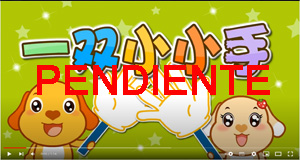
** 歌曲/gē qǔ/Canción/song **

无拼音/Sin pinyin/Without pinyin

中文歌曲/Canción en chino/Chinese song

有拼音/Con pinyin/With pinyin

** 小手的话/Xiǎoshǒu de huà/Las palabras de las manitas/Words from the little hands **

小手Xiǎoshǒuhuì说话shuōhuà/Las manitas pueden hablar,/Little hands can talk,

Yǒuwènyǒu/Si hay una pregunta, habrá una respuesta./If there's a question, there will be an answer.

yi‘Nǐhǎoa!’/Un apretón de manos dice: ‘¡Hola!’/A handshake says: ‘Hello!’

Bǎiyibǎi————’再见‘Zàijiànla!’/Un movimiento de mano dice: ‘¡Adiós!’/A wave says: ‘Goodbye!’

• 动词重叠中的“一”:正如我们在前面课程中学过的“读一读”(dú yi dú)等词一样,当“一”(yī)位于两个重叠的动词之间时,例如“握一握”(wò yi wò)和“摆一摆”(bǎi yi bǎi),它会失去原调,读作轻快短促的轻声。

• 句末语气词(啊 和 啦):在句子末尾的感叹语气词,如“啊”(a)和“啦”(la),在这类儿歌中通常读轻声,使其听起来更加欢快自然。

• 中文标点符号:在最后一句话中出现了正确的中文破折号(——),它占据两个汉字的空间,常用于引出对话或解释。

• El ‘一’ entre verbos repetidos: Al igual que vimos en lecciones anteriores con verbos como 读一读 (dú yi dú), cuando el ‘一’ (yī) se encuentra en medio de dos verbos repetidos, como en 握一握 (wò yi wò) y 摆一摆 (bǎi yi bǎi), pierde su tono y se pronuncia de forma rápida y ligera (tono neutro).

• Partículas finales (啊 y 啦): Las partículas exclamativas al final de las frases, como ‘啊’ (a) y ‘啦’ (la), suelen pronunciarse en tono neutro en este tipo de rimas infantiles, dándoles una entonación alegre y natural.

• Puntuación china: En la última frase aparece la raya larga china correcta (——), que ocupa el espacio de dos caracteres y se usa a menudo para introducir un diálogo o una explicación.

• The '一' between repeated verbs: Just as we saw in previous lessons with verbs like 读一读 (dú yi dú), when '一' (yī) is placed between two repeated verbs, such as in 握一握 (wò yi wò) and 摆一摆 (bǎi yi bǎi), it loses its tone and is pronounced quickly and lightly (neutral tone).

• Final particles (啊 and 啦): Exclamatory particles at the end of sentences, such as '啊' (a) and '啦' (la), are usually pronounced in a neutral tone in these types of nursery rhymes, giving them a cheerful and natural intonation.

• Chinese punctuation: In the last sentence, the correct Chinese long dash / em dash (——) appears, which occupies the space of two characters and is often used to introduce a dialogue or an explanation.


** 目录/mù lù/Indice de la página/Table of contents **
PDF Y VIDEOS

APRENDA JUGANDO

DIALOGOS

CANCION

VOCABULARIO

MATERIAL ADICCIONAL

Loading

Páginas: 1 2 3 4 5 6