** 06_他是谁/tā shì shéi/¿Quién es él?/Who is he? **
** 额外内容/Contenido adicional/Additional Content **
** 歌曲/gē qǔ/Canción/song **

无拼音/Sin pinyin/Without pinyin
中文歌曲/Canción en chino/Chinese song
有拼音/Con pinyin/With pinyin
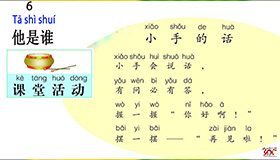
** 小手的话/Xiǎoshǒu de huà/Las palabras de las manitas/Words from the little hands **
小手Xiǎoshǒu会huì说话shuōhuà,/Las manitas pueden hablar,/Little hands can talk,
有Yǒu问wèn必bì有yǒu答dá,/Si hay una pregunta, habrá una respuesta./If there's a question, there will be an answer.
握Wò一yi握wò,’你‘Nǐ好hǎo啊a!’!’/Un apretón de manos dice: ‘¡Hola!’/A handshake says: ‘Hello!’
摆Bǎi一yi摆bǎi————’再见‘Zàijiàn啦la!’!’/Un movimiento de mano dice: ‘¡Adiós!’/A wave says: ‘Goodbye!’
▶ 📝 评论 / Comentarios / Comments
2. 句末语气词 (啊 和 啦):在句子末尾的感叹语气词,如 “啊” (a) 和 “啦” (la),在这类儿歌中通常读轻声,使其听起来更加欢快自然。
3. 中文标点符号:在最后一句话中出现了正确的中文破折号 (——),它占据两个汉字的空间,常用于引出对话或解释。
2. Partículas finales (啊 y 啦): Las partículas exclamativas al final de las frases, como ‘啊’ (a) y ‘啦’ (la), suelen pronunciarse en tono neutro en este tipo de rimas infantiles, dándoles una entonación alegre y natural.
3. Puntuación china: En la última frase aparece la raya larga china correcta (——), que ocupa el espacio de dos caracteres y se usa a menudo para introducir un diálogo o una explicación.
2. Final particles (啊 and 啦): Exclamatory particles at the end of sentences, such as ‘啊’ (a) and ‘啦’ (la), are usually pronounced in a neutral tone in these types of nursery rhymes, giving them a cheerful and natural intonation.
3. Chinese punctuation: In the last sentence, the correct Chinese long dash / em dash (——) appears, which occupies the space of two characters and is often used to introduce a dialogue or an explanation.
** 历史/Lìshǐ/La historia/history **
** 他是谁/tā shì shéi/¿Quién es él?/Who is he? **
AVI: 中文/En chino /En Chinese
中文/Chino/Chinese

AVI: 西班牙语/En español/En Spanish
西班牙语/Español/Spanish

AVI: 英语/En inglés /En English
英语/inglés/English
中文/Chino/Chinese
西班牙语/Español/Spanish
英语/inglés/English
Escena 1.
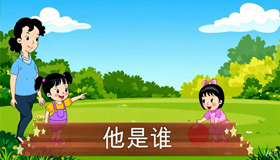
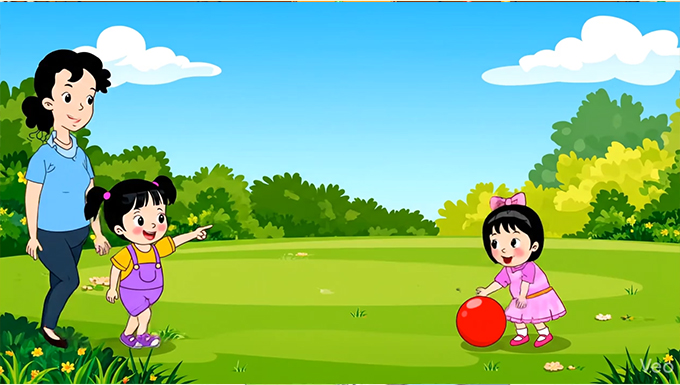
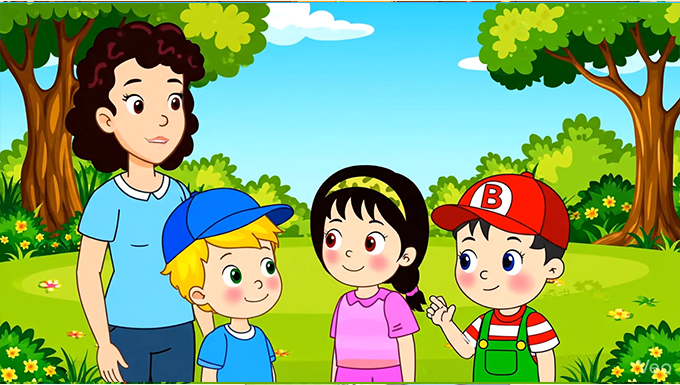
在公园散步时, (Tíngting) 指着一个正在玩闪亮球的小女孩问:’ (¿Quién es ella?/Who is she?) ?’
(Mamá/Mom) 笑着说:’她是 (Lili) ,我们的新邻居。’
While walking through the park, (婷婷Tíngtíng) pointed at a girl playing with a shiny ball and asked, ‘ (她tā是shì谁shéi) ’
(妈妈Māmā) smiled and said, ‘She is (丽丽Lìlì) , our new neighbor.’
中文/Chino/Chinese
西班牙语/Español/Spanish
英语/inglés/English
Escena 2.
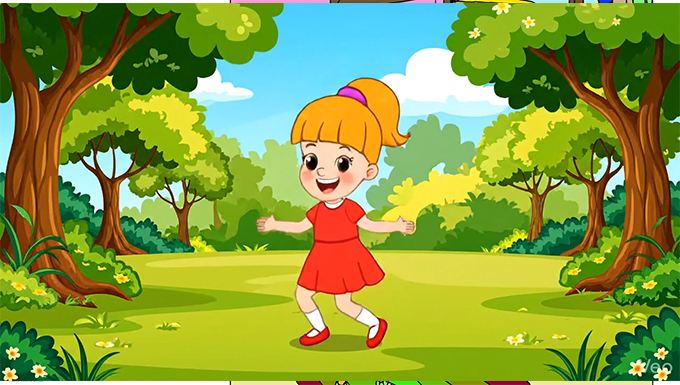
突然,一个戴着蓝色帽子的男孩走到 (Lili) 身边。 (Baobao) 好奇地问:’那 (¿Quién es él?/Who is he?) ?’
(Mamá/Mom) 解释道:’他是 (Tom) 姆,她的哥哥。’
中文/Chino/Chinese
西班牙语/Español/Spanish
英语/inglés/English
Escena 3.
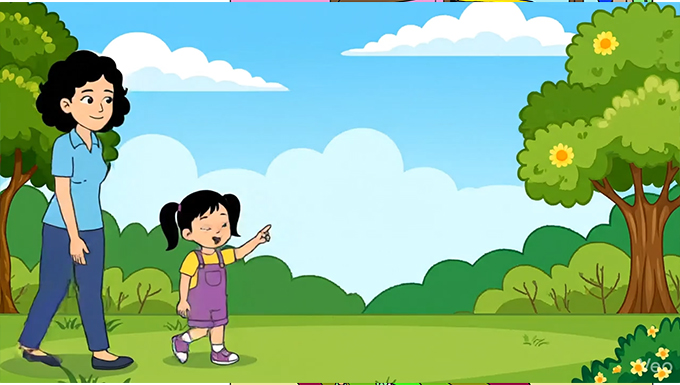
这时,又出现了一个正在跳跃的女孩——他们的表妹 (Lida) ,穿着红色的裙子,笑容十分灿烂。
En eso, apareció otra niña saltando: (丽达Lìdá) , la prima de ambos, con un vestido rojo y una sonrisa contagiosa.
Then another girl appeared, jumping happily: (丽达Lìdá) , their cousin, wearing a red dress and a contagious smile.
中文/Chino/Chinese
西班牙语/Español/Spanish
英语/inglés/English
Escena 4.
(Lili) 和姆姆的 (Mamá/Mom) (Jingzi) 女士走过来打招呼。 (Tíngting) 小声问:’ (¿Quién es ella?/Who is she?) ?’
(Mamá/Mom) 向大家介绍说: ‘她是 (Jingzi) ,我们的新朋友。’
Mrs. (静子Jìngzi) , (丽丽Lìlì) and (汤姆Tāngmǔ) ’s mother, came over to say hello. (婷婷Tíngtíng) whispered, ‘ (她tā是shì谁shéi) ’
(妈妈Māmā) introduced her to everyone: ‘She is (静子Jìngzi) , our new friend.’

中文/Chino/Chinese
西班牙语/Español/Spanish
英语/inglés/English
Escena 5.
很快,孩子们一起玩了起来: (Lili) 、 (Tom) 、 (Lida) 、 (Baobao) 和 (Tíngting) 一起奔跑、大笑,开心极了。
Pronto, los niños jugaron juntos: (丽丽Lìlì) , (汤姆Tāngmǔ) , (丽达Lìdá) , (宝宝Bǎobǎo) y (婷婷Tíngtíng) corrieron y rieron sin parar.
Soon, the children played together: (丽丽Lìli) , (汤姆Tāngmǔ) , (丽达Lìdá) , (宝宝Bǎobǎo) , and Tínting ran and laughed nonstop.

中文/Chino/Chinese
西班牙语/Español/Spanish
英语/inglés/English
Escena 6.
** 未替换/wèi tìhuàn/No sustituidas/Not substituted **
** 词汇/cí huì/Vocabulario/Vocabulary **

AVI: 词汇/Vocabulario/Vocabulary
中文/Chino/Chinese
西班牙语/Español/Spanish
英语/inglés/English

AVI: 听与重复/Escucha y repite/Listen and repeat



▶ 📝 评论 / Comentarios / Comments
2. 笔画 提 (tí):拼音中已添加了必不可少的第二声(阳平)。
2. El trazo 提 (tí): Se ha añadido el segundo tono en el pinyin, que es obligatorio.
2. The stroke 提 (tí): The second tone has been added to the pinyin, which is mandatory.
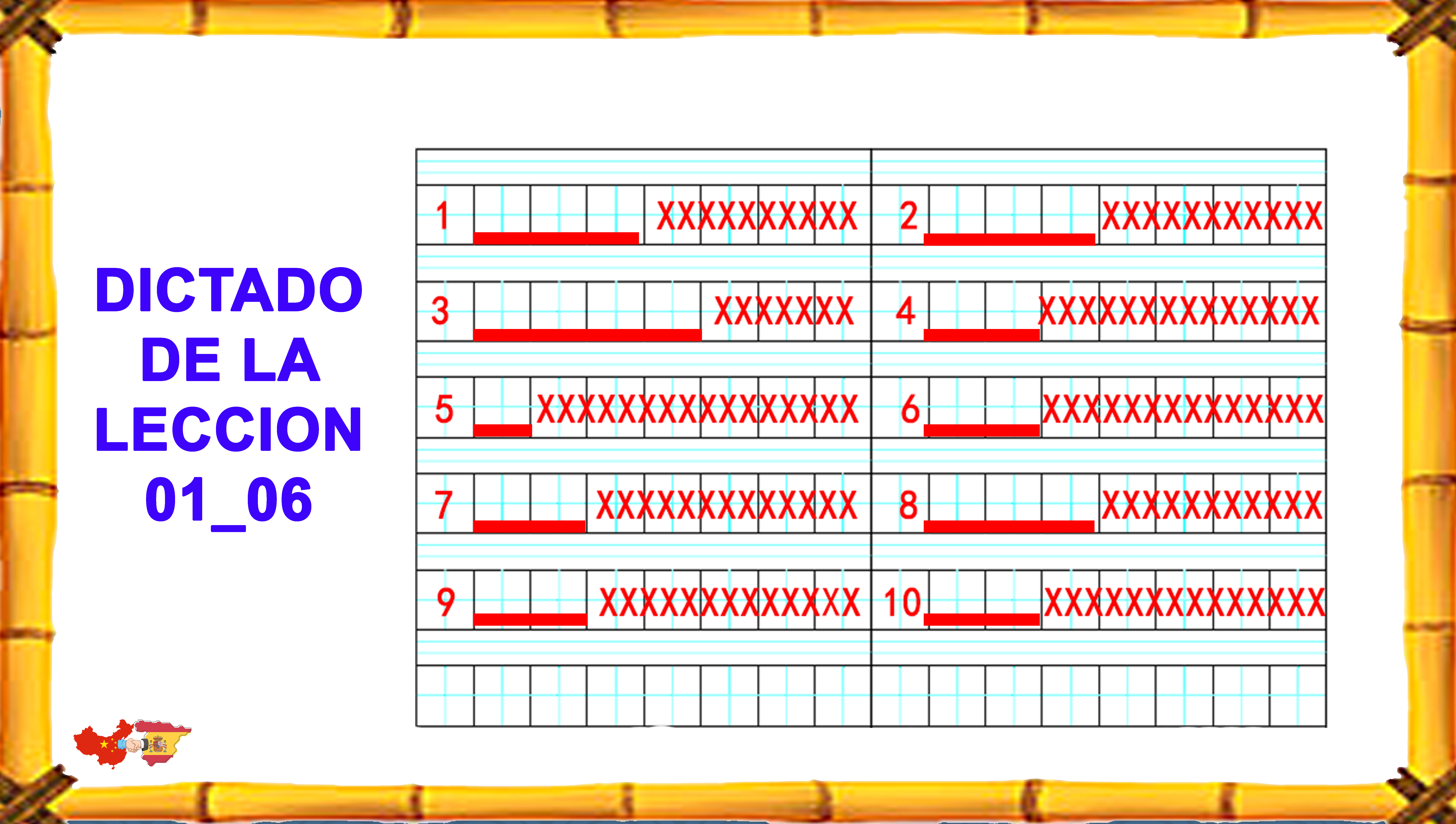
** 听写/Tīngxiě/Dictado/Dictation **
点击放大/clic para ampliar/click to enlarge
听写音频/Audio del dictado/Dictation audio

AVI: 听写/Dictado/Dictation

DICTADO VOCABULARIO
** 目录/mù lù/Indice de la página/Table of contents **
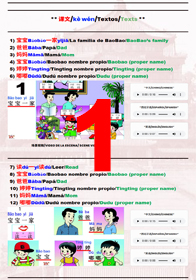
课文/Textos/Texts
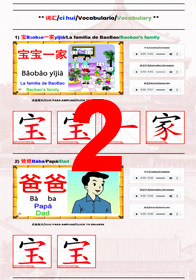
词汇/Vocabulario/Vocabulary
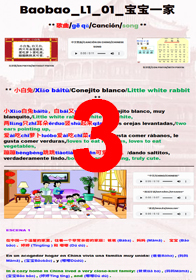
补充材料/Materiales adicionales/Additional Materials

PDF与视频/PDF y videos/PDF and Videos
边玩边学/Aprenda jugando/Learn by Playing
学习西班牙语/Aprenda Español/Learn Spanish
