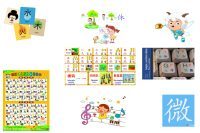
** 06_他是谁/tā shì shéi/¿Quién es él?/Who is he? **
** 跟宝宝学西班牙语/Gēn bǎobǎo xué xībānyá yǔ/Aprenda Español con Baobao/Learn Spanish with Baobao **
BaoBao 的材料使用 3种语言 ( 中文/西班牙语/英语) 编写,专为让西班牙和英国的儿童以轻松有趣的方式学习中文而设计。但它也适合年龄较大的中国孩子 ( 成人) 学习英语,特别是西班牙语,为此我们将在这个 子页面 中提供 专属材料。
El material de BaoBao está escrito en 3 idiomas ( chino/español/inglés) , pensado especialmente para que los niños españoles e ingleses aprendan chino de forma amena y divertida. Pero también sirve para que niños mayores ( adultos) de nacionalidad china aprendan inglés y, especialmente, español, para lo cual en esta subpágina pondremos materiales específicos para ello.
The BaoBao material is written in 3 languages ( Chinese/Spanish/English) , specially designed for Spanish and English children to learn Chinese in a fun and enjoyable way. But it is also useful for older Chinese children ( adults) to learn English and, especially, Spanish, for which we will include specific materials on this subpage.
Lección 05 / 第5课
La letra T
字母 T · 第一课¡Atención! La T española NUNCA suelta aire.|Suena igual que la letra D del pinyin (如: 打 dǎ).
注意!西班牙语中的 T 发音时绝不会送气。|它的发音与拼音字母 D 相同(如:打 dǎ)。
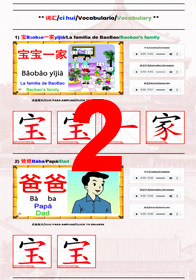
** 词汇/cíhuì/Vocabulario/Vocabulary **
** 书法/shūfǎ/Caligrafía/Calligraphy **
Trazos para la t
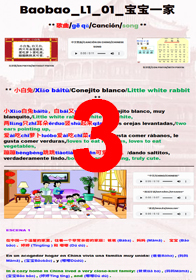
** 歌曲/gēqǔ/Canción/Song **
** 发音/fāyīn/Pronunciación/Pronunciation **
** 测验/cèyàn/Quiz/Quiz **
** 城市/chéngshì/Ciudades/cities **




Lección 6 / 第6课
La letra 他是谁
字母 他是谁 · 第一课Aprenda también Español con Baobao/也和宝宝一起学习西班牙语吧!
他tā是shì谁shéi/¿Quién es él?/Who is he?
** 词汇/cíhuì/Vocabulario/Vocabulary **
** 歌曲/gēqǔ/Canción/Song **
** 测验/cèyàn/Quiz/Quiz **
** 书法/shūfǎ/Caligrafía/Calligraphy **
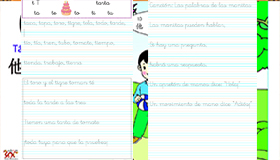
PDF: 书法练习/Caligrafia/Handwriting practice
▶ 📝 评论 / Comentarios / Comments
不送气’T’的挑战:与 P 类似,西班牙语中的 T 也是一个发音时不应该送气的音。这对母语者来说可能有些违背直觉,但对中国学生来说却很关键。必须提醒学生们,他们应该联想拼音中的辅音 D(如在’打,dǎ’中),以获得纯正的发音。将舌尖紧紧抵在上排牙齿后面 (齿背) ,能确保我们在说 toro 或 tela 时,发出那种干脆、干净的声音。
音乐绕口令:喝 té 的 tigre 和 toro 的这首歌曲,就像是一个伪装成游戏的出色语音练习。通过在充满趣味的语境中,用诸如 tomate 或 tarde 这样的词不断重复字母 T,学生们能锻炼舌头的灵活性,并在没有挫败感的情况下自动掌握正确的发音。
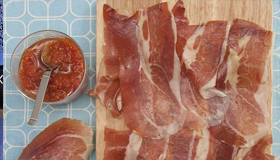
字母’T’的文化之旅:我们继续我们的地理和美食之旅,证明学习一门语言也是拥抱其文化。了解 Tarragona 及其罗马遗产,或是历史名城 Toledo 及其甜美的 mazapán,极大地丰富了这节课。此外,介绍著名的 Teruel 火腿,让学生能够将字母与真实的美味和西班牙迷人的地方联系起来。
第六课评论 (他是谁 / 歌曲:小手的话)
身份与基本问题:学会问 ¿Quién es él? (他是谁) 代表着一个重要的沟通里程碑。这个简单的结构为孩子们提供了必要的工具,让他们开始与周围的环境互动,对他人表现出好奇心,并认识新角色,从而为建立真实的对话奠定基础。
会说话的手与 TPR:小手的话 这首歌是用于全身反应法 (TPR) 的绝佳教学工具。利用自己的身体来表达基本的沟通概念,例如通过握手说 ¡Hola! (你好啊) 或通过挥手说 ¡Adiós! (再见啦) ,可以强化多感官学习。将口语与肢体动作结合起来,能让礼貌用语以一种自然、亲切且持久的方式被内化。
El reto de la ‘T’ inaspirada: Al igual que ocurre con la P, la T en español es un sonido que no debe expulsar aire, lo cual va en contra de la intuición de un hispanohablante nativo pero es clave para los estudiantes chinos. Es vital recordar a los alumnos que deben pensar en la consonante D del pinyin (como en 打, dǎ) para lograr una pronunciación auténtica. Apoyar la lengua firmemente detrás de los dientes (齿背) asegura ese sonido seco y limpio que buscamos al decir toro o tela.
Un trabalenguas musical: La canción del tigre y el toro que toman té funciona como un excelente ejercicio fonético camuflado de juego. Al repetir la letra T constantemente en un contexto lúdico con palabras como tomate o tarde, los alumnos entrenan la agilidad de la lengua y automatizan la pronunciación correcta sin frustraciones.
Ruta cultural por la ‘T’: Continuamos nuestro recorrido geográfico y gastronómico, demostrando que aprender un idioma es también abrazar su cultura. Conocer Tarragona y su herencia romana o la histórica ciudad de Toledo con su dulce mazapán enriquece enormemente la lección. Además, introducir el famoso jamón de Teruel permite que los alumnos asocien las letras con sabores reales y lugares fascinantes de España.
Comentario de la Lección 06 (他是谁 / Canción: 小手的话)
Identidad y preguntas básicas: Aprender a preguntar ¿Quién es él? (他是谁) representa un hito comunicativo fundamental. Esta estructura sencilla proporciona a los niños las herramientas necesarias para empezar a interactuar con su entorno, mostrar curiosidad por los demás y reconocer a nuevos personajes, estableciendo las bases para la construcción de diálogos reales.
Las manos que hablan y el TPR: La canción de las manitas 小手的话 es una herramienta pedagógica maravillosa para la Respuesta Física Total (TPR). Utilizar el propio cuerpo para expresar conceptos comunicativos básicos, como decir ¡Hola! (你好啊) mediante un apretón de manos o ¡Adiós! (再见啦) al agitarla, refuerza el aprendizaje multisensorial. Vincular el lenguaje hablado con la acción física hace que las expresiones de cortesía se interioricen de forma natural, afectuosa y duradera.
The challenge of the unaspirated ‘T’: Just like with the P, the T in Spanish is a sound that should not expel air, which goes against a native speaker's intuition but is key for Chinese students. It is vital to remind students that they should think of the pinyin consonant D (as in 打, dǎ) to achieve an authentic pronunciation. Pressing the tongue firmly behind the teeth (齿背) ensures that dry and clean sound we look for when saying toro or tela.
A musical tongue twister: The song about the tigre and the toro drinking té works as an excellent phonetic exercise camouflaged as a game. By constantly repeating the letter T in a playful context with words like tomate or tarde, students train their tongue agility and automate the correct pronunciation without frustration.
Cultural route through the ‘T’: We continue our geographical and gastronomic journey, proving that learning a language is also embracing its culture. Getting to know Tarragona and its Roman heritage or the historic city of Toledo with its sweet mazapán greatly enriches the lesson. Furthermore, introducing the famous ham from Teruel allows students to associate letters with real flavors and fascinating places in Spain.
Commentary for Lesson 06 (他是谁 / Song: 小手的话)
Identity and basic questions: Learning to ask ¿Quién es él? (他是谁) represents a fundamental communicative milestone. This simple structure provides children with the necessary tools to start interacting with their environment, show curiosity about others, and recognize new characters, establishing the foundation for building real dialogues.
Talking hands and TPR: The little hands song 小手的话 is a wonderful pedagogical tool for Total Physical Response (TPR). Using one's own body to express basic communicative concepts, such as saying ¡Hola! (你好啊) with a handshake or ¡Adiós! (再见啦) by waving, reinforces multisensory learning. Linking spoken language with physical action makes polite expressions internalized in a natural, affectionate, and lasting way.
** 目录/mù lù/Indice de la página/Table of contents **
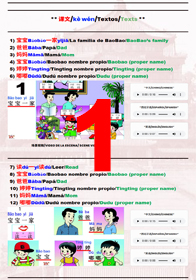
课文/Textos/Texts
词汇/Vocabulario/Vocabulary
补充材料/Materiales adicionales/Additional Materials

PDF与视频/PDF y videos/PDF and Videos
边玩边学/Aprenda jugando/Learn by Playing
学习西班牙语/Aprenda Español/Learn Spanish
