** 12_那是什么/Nà shì shénme?/¿Qué es eso?/What is that? **

课程视频/VIDEO DE LA LECCION/Lesson video
** 课文/kè wén/Textos/Texts **
1) 那Nà是shì什么shénme/¿Qué es eso?/What is that?
2) 那Nà是shì什么shénme?/¿Qué es eso?/What is that?
3) 那Nà是shì熊猫xióngmāo/Eso es un panda/That is a panda

场景视频/Video de la escena/ Scene video
中文/Chino/Chinese
西班牙语/Español/Spanish
英语/inglés/English
4) 读Dú一yi读dú/Lee/Read
5) 那Nà是shì熊猫xióngmāo/Eso es un panda/That is a panda
6) 大象Dàxiàng/Elefante/Elephant
7) 猴子Hóuzi/Mono/Monkey
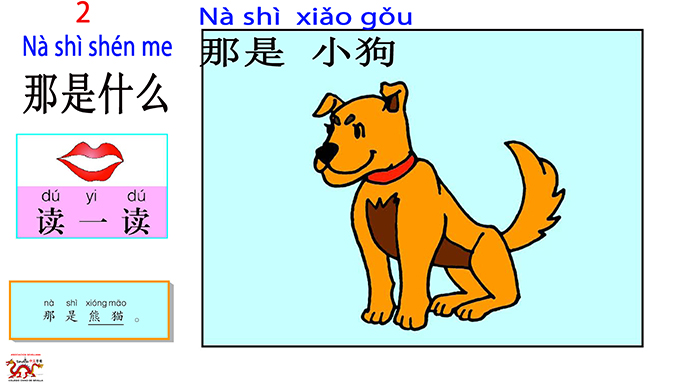
8) 小狗Xiǎogǒu/Cachorro/Puppy
9) 兔子Tùzi/Conejo/Rabbit

中文/Chino/Chinese
西班牙语/Español/Spanish
英语/inglés/English
10) 那Nà是shì大象dàxiàng/Eso es un elefante/That is an elephant

中文/Chino/Chinese
西班牙语/Español/Spanish
英语/inglés/English
11) 那Nà是shì猴子hóuzi/Eso es un mono/That is a monkey

中文/Chino/Chinese
西班牙语/Español/Spanish
英语/inglés/English
12) 那Nà是shì小狗xiǎogǒu/Eso es un cachorro/That is a puppy
中文/Chino/Chinese
西班牙语/Español/Spanish
英语/inglés/English
13) 那Nà是shì兔子tùzi/Eso es un conejo/That is a rabbit

中文/Chino/Chinese
西班牙语/Español/Spanish
英语/inglés/English
14) 那Nà是shì熊猫xióngmāo/Eso es un panda/That is a panda

中文/Chino/Chinese
西班牙语/Español/Spanish
英语/inglés/English
15) 说Shuō一yi说shuō/Habla/Speak
16) A:那Nà是shì什么shénme?/¿Qué es eso?/What is that?
17) B:那Nà是shì熊猫xióngmāo/Eso es un panda/That is a panda

中文/Chino/Chinese
西班牙语/Español/Spanish
英语/inglés/English
18) A:那Nà是shì什么shénme?/¿Qué es eso?/What is that?
19) B:那Nà是shì猴子hóuzi/Eso es un mono/That is a monkey

中文/Chino/Chinese
西班牙语/Español/Spanish
英语/inglés/English
20) A:那Nà是shì什么shénme?/¿Qué es eso?/What is that?
21) B:那Nà是shì大象dàxiàng/Eso es un elefante/That is an elephant

中文/Chino/Chinese
西班牙语/Español/Spanish
英语/inglés/English
22) A:那Nà是shì什么shénme?/¿Qué es eso?/What is that?
23) B:那Nà是shì兔子tùzi/Eso es un conejo/That is a rabbit

中文/Chino/Chinese
西班牙语/Español/Spanish
英语/inglés/English
24) A:那Nà是shì什么shénme?/¿Qué es eso?/What is that?
25) B:那Nà是shì小狗xiǎogǒu/Eso es un cachorro/That is a puppy

中文/Chino/Chinese
西班牙语/Español/Spanish
英语/inglés/English
26) 写Xiě一yi写xiě/Escribe/Write
27) 山Shān/Montaña/Mountain

中文/Chino/Chinese
西班牙语/Español/Spanish
英语/inglés/English
28) 课堂Kètáng活动huódòng/Actividades en clase/Class activities
29) 那Nà是shì什么shénme?/¿Qué es eso?/What is that?

中文/Chino/Chinese
西班牙语/Español/Spanish
英语/inglés/English
30) 儿歌Érgē/Canción infantil/Nursery rhyme
31) 大熊猫Dàxióngmāo/Panda gigante/Giant panda

中文/Chino/Chinese
西班牙语/Español/Spanish
英语/inglés/English
** 超级汉字/chāojí hànzì/Super Carácter/super character **
中文/Chino/Chinese
西班牙语/Español/Spanish
英语/inglés/English
山
中文/Chino/Chinese
西班牙语/Español/Spanish
英语/inglés/English
▶ 📝 评论 / Comentarios / Comments
2. 笔顺规则(先写主峰): 尽管一般规则是从左往右写,但这个字的正确笔顺是:1)先写中间的竖画,2)接着写左边向下并向右折的复合笔画 (竖折 - shùzhé) ,3)最后写右边的短竖。
3. 作为偏旁部首(岩石与自然): 当 ‘山’ 作为偏旁 (山字旁) 时,它赋予了汉字山脉、岩石或自然地貌的含义。你会在 峰 (山峰) 、岩 (岩石) 或 岛 (岛屿) 等常见字中看到它。
4. 空间上的‘避让’原则: 当 ‘山’ 作为偏旁出现在汉字的左侧时 (如在 峰 中),它会变得更窄更长。这样做是为了给右侧的部件留出空间,体现了汉字书法中讲究的空间平衡与优雅。
2. Regla del orden de los trazos (El pico central primero): Aunque la regla general es escribir de izquierda a derecha, la forma correcta de escribir este carácter es: 1) primero el trazo vertical central, 2) luego el trazo izquierdo que baja y forma la base (un trazo compuesto llamado shùzhé), y 3) por último el trazo vertical de la derecha.
3. Como radical (La naturaleza rocosa: Cuando ‘山’ funciona como radical (山字旁) , aporta el significado de montaña, roca o relieve natural. Lo verás en caracteres muy comunes como 峰 (cima) , 岩 (roca) o 岛 (isla) .
4. El principio de ‘cortesía’ espacial: Al colocarse como radical en el lado izquierdo de un carácter (como en 峰) , el ‘山’ se vuelve más estrecho y alargado. Esto se hace para dejar espacio a los demás componentes, demostrando el equilibrio y la elegancia del espacio en la caligrafía china.
2. Stroke order rule (Center peak first): Although the general rule is to write from left to right, the correct way to write this character is: 1) first the central vertical stroke, 2) then the left stroke that goes down and forms the base (a compound stroke called shùzhé) , and 3) finally the vertical stroke on the right.
3. As a radical (Rocky nature): When ‘山’ acts as a radical (山字旁) , it adds the meaning of a mountain, rock, or natural terrain. You will see it in very common characters like 峰 (peak) , 岩 (rock) , or 岛 (island) .
4. The principle of spatial ‘courtesy’: When ‘山’ is placed as a radical on the left side of a character (as in 峰) , it becomes narrower and taller. This is done to leave room for the other components, demonstrating the spatial balance and elegance of Chinese calligraphy.
** 字符/zìfú/caracteres/characters **

AVI: 书写汉字/Escribir caracteres/ Writing Chinese characters
▶ 📝 评论 / Comentarios / Comments
2. 通过反义词学习: 注意 大象 (dàxiàng) 里的 大 (dà) 字,以及 小狗 (xiǎogǒu) 里的 小 (xiǎo) 字。
3. 后缀’子’ (zi): 你会发现 猴子 (hóuzi) 和 兔子 (tùzi) 都以 子 结尾。古时常使用单音节词,但现在习惯用双音节词,听起来更和谐。这里的 子 没有实际意义,只是一个词缀!
4. 形象的图画: 观察 山 (shān) 这个字。它看起来是不是像一幅画着三座山峰的简笔画?这类汉字被称为 象形文字,因为它们是现实事物的简化图像。
2. Aprender por opuestos: Fíjate en la palabra ‘grande’ (大 - dà) para el elefante (大象 - dàxiàng) y la palabra ‘pequeño’ (小 - xiǎo) para un cachorro o perrito (小狗 - xiǎogǒu) .
3. El sufijo ‘zi’ (子) : Verás que mono (猴子 - hóuzi) y conejo (兔子 - tùzi) terminan en ‘zi’. Antiguamente se usaban palabras de una sola sílaba, pero ahora se usan dos sílabas para que suenen mejor. ¡Ese ‘zi’ no significa nada, es solo un acompañante!
4. Un dibujo literal: Observa el carácter de montaña (山 - shān) . ¿No te parece estar viendo el dibujo de una montaña con sus tres picos? A este tipo de caracteres se les llama pictogramas, porque son dibujos simplificados de la realidad.
2. Learning through opposites: Notice the word ‘big’ (大 - dà) for the elephant (大象 - dàxiàng) and the word ‘small’ (小 - xiǎo) for a puppy or little dog (小狗 - xiǎogǒu) .
3. The suffix ‘zi’ (子) : You will see that monkey (猴子 - hóuzi) and rabbit (兔子 - tùzi) end in ‘zi’. In the past, single-syllable words were used, but now two syllables are used to make them sound better. That ‘zi’ doesn't mean anything here, it's just a companion!
4. A literal drawing: Look at the character for mountain (山 - shān) . Doesn't it look like a drawing of a mountain with its three peaks? These types of characters are called pictograms because they are simplified drawings of reality.
** 词汇/cí huì/Vocabulario/Vocabulary **

AVI: 词汇/Vocabulario/Vocabulary
中文/Chino/Chinese
西班牙语/Español/Spanish
英语/inglés/English

AVI: 听与重复/Escucha y repite/Listen and repeat
▶ 📝 评论 / Comentarios / Comments
2. 熊猫还是大熊猫?: 列表中同时出现了 熊猫 和 大熊猫。在前面加上 大 (dà) 字,特指标志性的黑白大熊猫。这样做是为了将它与其他动物区分开来,比如可爱的小熊猫 小熊猫 (xiǎoxióngmāo) 。
2. ¿Panda o Panda Gigante?: En la lista aparecen tanto 熊猫 (Panda) como 大熊猫 (Panda gigante) . Al añadir el carácter 大 (dà - grande) al principio, nos referimos específicamente al icónico oso panda. Esto se hace para diferenciarlo de otros animales, como el simpático panda rojo 小熊猫 – xiǎoxióngmāo, literalmente ‘panda pequeño’.
2. Panda or Giant Panda?: Both 熊猫 (Panda) and 大熊猫 (Giant panda) appear on the list. By adding the character 大 (dà - big) at the beginning, we specifically refer to the iconic giant panda. This is done to distinguish it from other animals, such as the cute red panda 小熊猫 - xiǎoxióngmāo, literally ‘little panda’.
** 目录/mù lù/Indice de la página/Table of contents **
课文/Textos/Texts
词汇/Vocabulario/Vocabulary
补充材料/Materiales adicionales/Additional Materials

PDF与视频/PDF y videos/PDF and Videos
边玩边学/Aprenda jugando/Learn by Playing
学习西班牙语/Aprenda Español/Learn Spanish
