Saltar al contenido
Home » Baobao_L1_10_数一数

Baobao_L1_10_数一数

** 10_数一数/shǔ yi shǔ/Contar/Count **


课程视频/VIDEO DE LA LECCION/Lesson video


** 课文/kè wén/Textos/Texts **


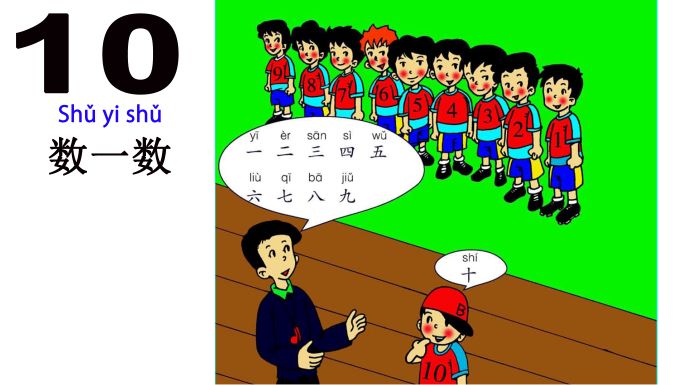
1) shǔyishǔ/Contar/Count

2) èrsānliùjiǔ/Uno, dos, tres, cuatro, cinco, seis, siete, ocho, nueve/One, two, three, four, five, six, seven, eight, nine

3) shí/Diez/Ten

场景视频/Video de la escena/ Scene video

“中文/Chino/Chinese”

“西班牙语/Español/Spanish”

“英语/inglés/English”


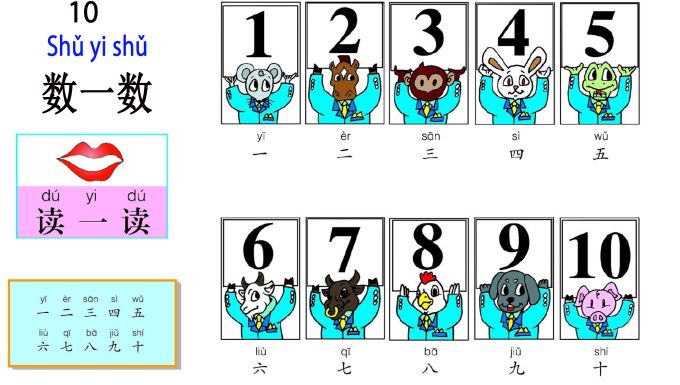
4) 读一读/Dú yi dú/Lee/Read

5) èrsānliùjiǔshí/Uno, dos, tres, cuatro, cinco, seis, siete, ocho, nueve, diez/One, two, three, four, five, six, seven, eight, nine, ten

6) èrsānliùjiǔshí/Uno, dos, tres, cuatro, cinco, seis, siete, ocho, nueve, diez/One, two, three, four, five, six, seven, eight, nine, ten

“中文/Chino/Chinese”

“西班牙语/Español/Spanish”

“英语/inglés/English”


7) /Uno/One

8) èr/Dos/Two

9) sān/Tres/Three

10) /Cuatro/Four

11) /Cinco/Five

12) liù/Seis/Six

13) /Siete/Seven

14) /Ocho/Eight

15) jiǔ/Nueve/Nine

16) shí/Diez/Ten

“中文/Chino/Chinese”

“西班牙语/Español/Spanish”

“英语/inglés/English”


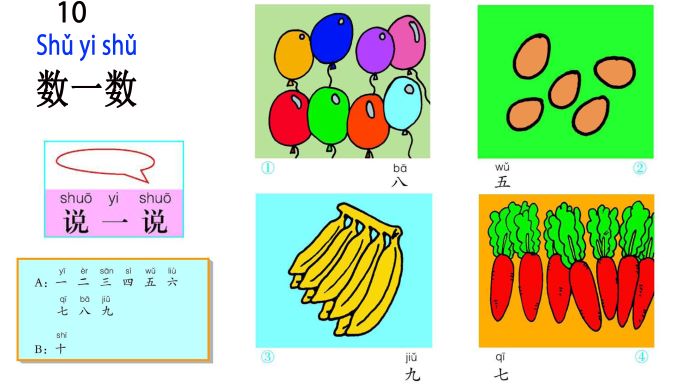
17) shuōyishuō/Habla/Speak

18) A:èrsānliùjiǔ/Uno, dos, tres, cuatro, cinco, seis, siete, ocho, nueve/One, two, three, four, five, six, seven, eight, nine

19) B:shí/Diez/Ten

20) /Ocho/Eight

21) /Cinco/Five

22) jiǔ/Nueve/Nine

23) /Siete/Seven

“中文/Chino/Chinese”

“西班牙语/Español/Spanish”

“英语/inglés/English”


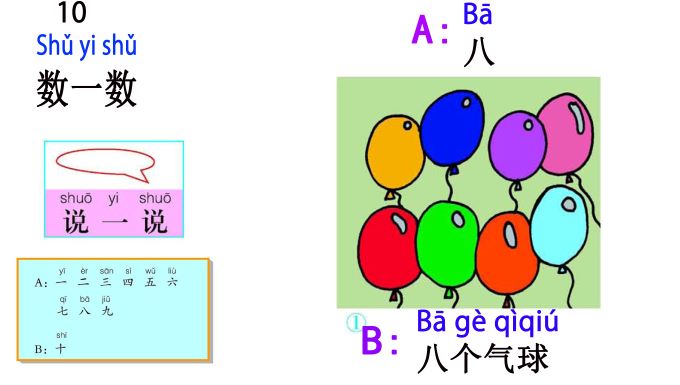
24) A:/Ocho/Eight

25) B:气球qìqiú/Ocho globos/Eight balloons

“中文/Chino/Chinese”

“西班牙语/Español/Spanish”

“英语/inglés/English”


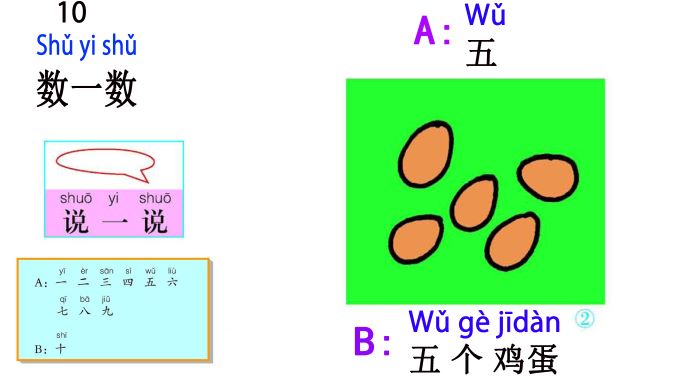
26) A:/Cinco/Five

27) B:鸡蛋jīdàn/Cinco huevos/Five eggs

“中文/Chino/Chinese”

“西班牙语/Español/Spanish”

“英语/inglés/English”


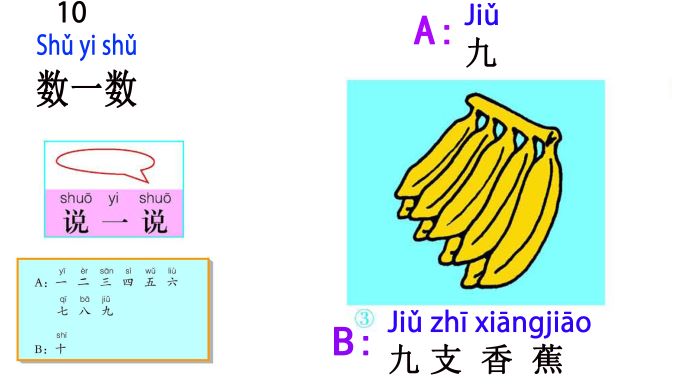
28) A:jiǔ/Nueve/Nine

29) B:jiǔzhī香蕉xiāngjiāo/Nueve plátanos/Nine bananas

“中文/Chino/Chinese”

“西班牙语/Español/Spanish”

“英语/inglés/English”


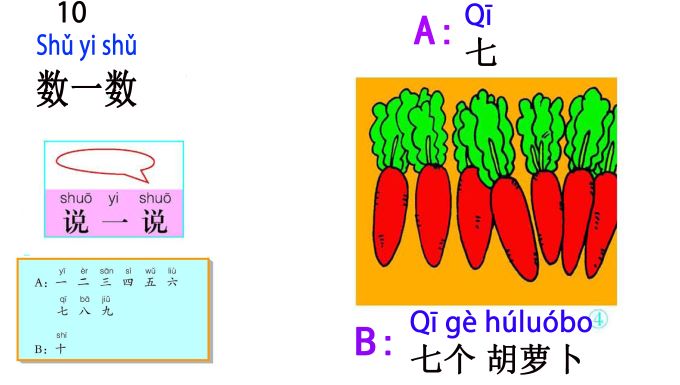
30) A:/Siete/Seven

31) B:胡萝卜húluóbo/Siete zanahorias/Seven carrots

“中文/Chino/Chinese”

“西班牙语/Español/Spanish”

“英语/inglés/English”


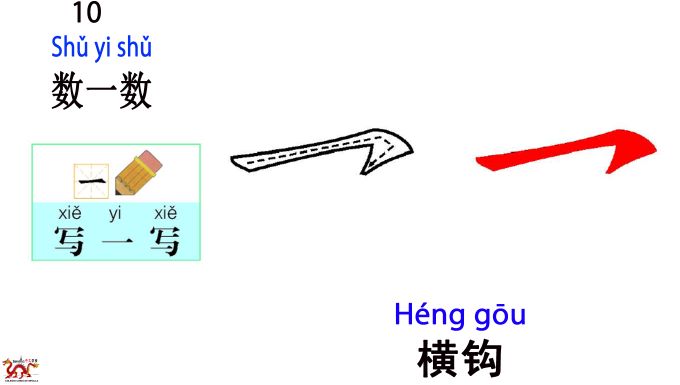
32) xiěyixiě/Escribe/Write

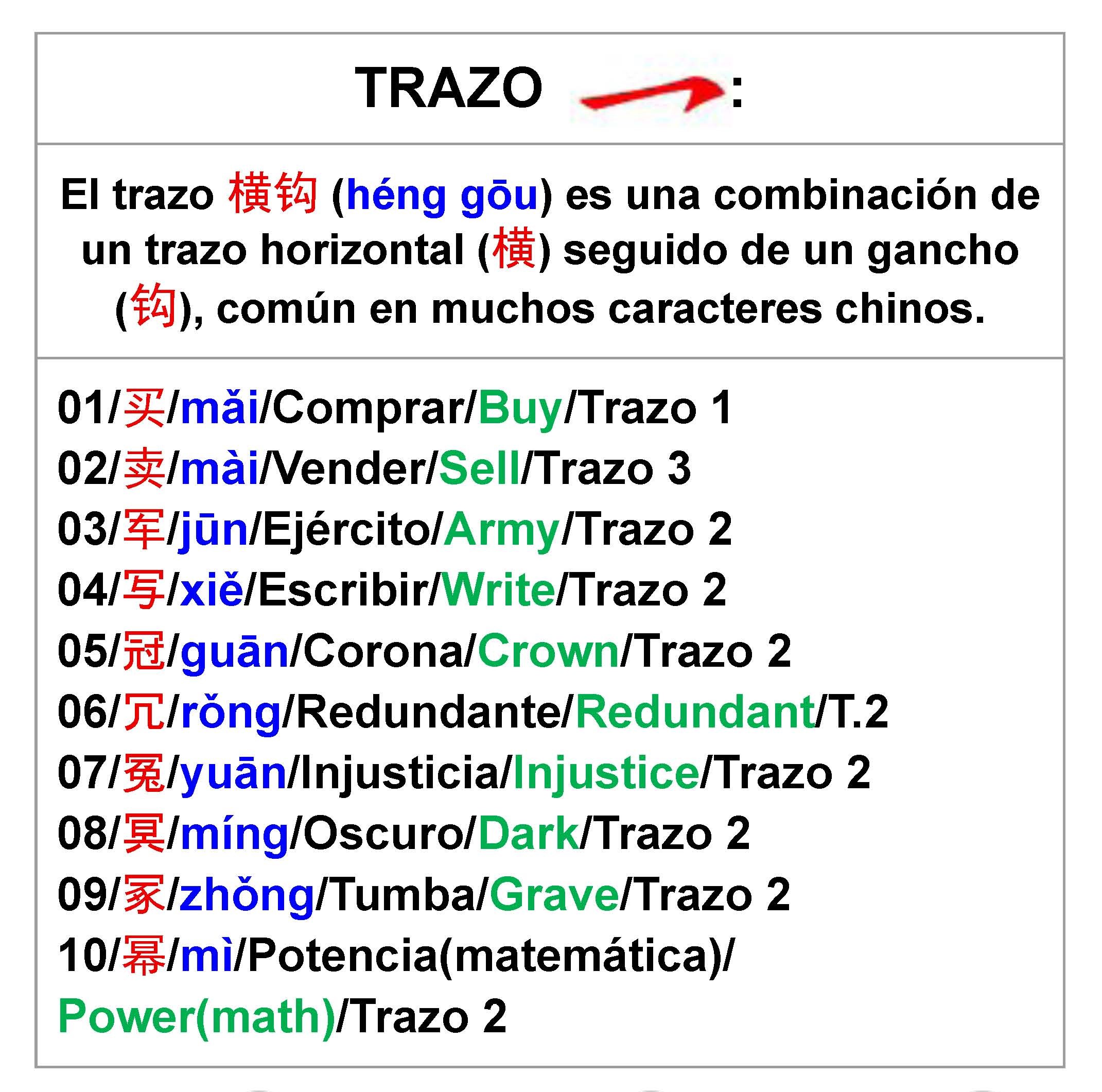
33) 横钩hénggōu/Trazo horizontal con gancho/Horizontal hook stroke

“中文/Chino/Chinese”

“西班牙语/Español/Spanish”

“英语/inglés/English”


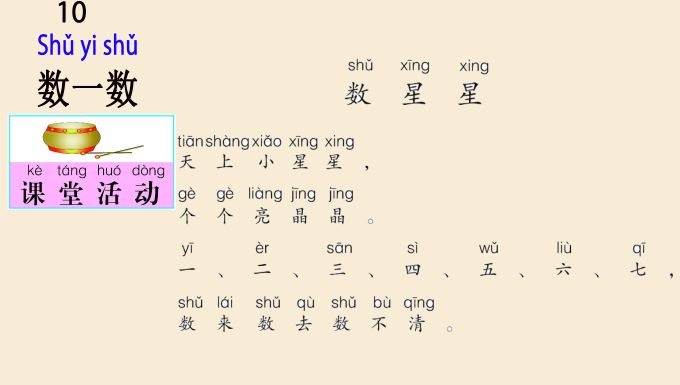
34) 课堂kètáng活动huódòng/Actividades en clase/Classroom activities

35) pái排队páiduì/Hacer fila/Line up

“中文/Chino/Chinese”

“西班牙语/Español/Spanish”

“英语/inglés/English”


36) 儿歌érgē/Canción infantil/Nursery rhyme

37) shù星星xīngxīng/Contar estrellas/Count the stars

“中文/Chino/Chinese”

“西班牙语/Español/Spanish”

“英语/inglés/English”


** 部首/bù shǒu/Radical/Radical **

点击放大/clic para ampliar/click to enlarge

中文

Español

English

1. 动作与技巧: “横钩” (héng gōu) 一笔连写而成。先从左向右写横,到达末端时稍作停顿,然后向左下方快速、短促地出锋形成钩。整个过程 绝不能抬笔

2. 汉字的“屋顶”: 这个笔画经常出现在汉字的顶部,就像一个盖子或屋顶,保护着下面的部件。它是“秃宝盖” (冖) 和“宝盖头” (宀) 等偏旁部首的关键元素。

3. 钩的方向: 与之前学的竖钩不同,这里的钩指向左下方,仿佛想要“拥抱”或包住它下方的元素(正如我们在 “写”“买” 这两个字中看到的)。

4. 笔顺规则(从上到下): 因为它通常位于顶部,根据 “从上到下” (cóng shàng dào xià) 的普遍书法规则,这个笔画通常在汉字书写的最早几个步骤中完成。

1. Movimiento y técnica: El ‘横钩’ (héng gōu) se traza de izquierda a derecha en un solo movimiento fluido. Al llegar al final de la línea horizontal, se hace una pequeña pausa y se realiza un gancho corto y rápido hacia abajo y a la izquierda. Todo esto sin levantar el lápiz.

2. El ‘tejado’ de los caracteres: Este trazo se encuentra muy a menudo en la parte superior de los caracteres, funcionando como una tapa o un techo que protege a los componentes inferiores. Es el elemento clave en radicales como el ‘techo’ (冖) o el ‘techo con chimenea’ (宀) .

3. Dirección del gancho: A diferencia del gancho vertical que vimos antes, aquí el gancho apunta hacia abajo y a la izquierda, como si quisiera ‘abrazar’ o contener los elementos que están debajo de él (como vemos en los caracteres 写 - escribir o 买 - comprar ).

4. Regla del orden (de arriba hacia abajo): Como este trazo suele colocarse en la parte superior, por la regla general de caligrafía de ‘de arriba hacia abajo’ (从上到下 - cóng shàng dào xià) , se escribe casi siempre en los primeros pasos de la formación del carácter.

1. Movement and technique: The ‘横钩’ (héng gōu) is drawn from left to right in one continuous motion. At the end of the horizontal line, you make a slight pause and execute a short, quick hook downwards and to the left. All of this is done without lifting the pen.

2. The ‘roof’ of characters: This stroke is very often found at the top of characters, acting as a lid or a roof that protects the components below. It is the key element in radicals like the ‘roof’ (冖) or the ‘roof with a chimney’ (宀) .

3. Direction of the hook: Unlike the vertical hook we saw earlier, here the hook points down and to the left, as if wanting to ‘hug’ or contain the elements below it (as seen in characters like 写 - to write or 买 - to buy ).

4. Stroke order rule (top to bottom): Because this stroke is usually placed at the top, following the general calligraphy rule of ‘top to bottom’ (从上到下 - cóng shàng dào xià) , it is almost always written in the first few steps of forming the character.


**字符/zìfú/caracteres/characters **

AVI: 书写汉字/Escribir caracteres/ Writing Chinese characters

1) shù/número, contar/number, count/HSK 2 (shù (o shǔ))
数学shùxué/matemáticas/mathematics/HSK 3
数量shùliàng/cantidad/quantity/HSK 4
shǔyishǔ/contar/count/HSK 2
宝宝Bǎobaozàishǔyishǔ/Baobao está contando./Baobao is counting./HSK 2
2) /cuatro/four/HSK 1
ge/cuatro (cantidad)/four (amount)/HSK 1
四月sìyuè/abril/April/HSK 2
/cuarto (orden)/fourth/HSK 2
这里Zhèlǐyǒuge苹果píngguǒ/Aquí hay cuatro manzanas./Here are four apples./HSK 1
3) /cinco/five/HSK 1
ge/cinco (cantidad)/five (amount)/HSK 1
五月wǔyuè/mayo/May/HSK 2
星期五xīngqīwǔ/viernes/Friday/HSK 1
嘟嘟Dūdūyǒuběnshū/Dudu tiene cinco libros./Dudu has five books./HSK 1
4) liù/seis/six/HSK 1
liùge/seis (cantidad)/six (amount)/HSK 1
六月liùyuè/junio/June/HSK 2
星期六xīngqīliù/sábado/Saturday/HSK 1
洛基Luòjīyǒuliùge玩具wánjù/Rocky tiene seis juguetes./Rocky has six toys./HSK 2
5) /siete/seven/HSK 1
ge/siete (cantidad)/seven (amount)/HSK 1
七月qīyuè/julio/July/HSK 2
tiān/siete días/seven days/HSK 1
婷婷Tíngting喜欢xǐhuan数字shùzì/A Tingting le gusta el número siete./Tingting likes the number seven./HSK 3
6) /ocho/eight/HSK 1
ge/ocho (cantidad)/eight (amount)/HSK 1
八月bāyuè/agosto/August/HSK 2
diǎn/las ocho (hora)/eight o'clock/HSK 1
现在Xiànzàishìdiǎn/Ahora son las ocho./It is eight o'clock now./HSK 1
7) jiǔ/nueve/nine/HSK 1
九月jiǔyuè/septiembre/September/HSK 2
九十jiǔshí/noventa/ninety/HSK 1
十九shíjiǔ/diecinueve/nineteen/HSK 1
曾祖母Zēngzǔmǔ今年jīnnián九十jiǔshísuì/La bisabuela tiene noventa años este año./Great-grandmother is ninety years old this year./HSK 1
8) shí/diez/ten/HSK 1
shíge/diez (cantidad)/ten (amount)/HSK 1
十月shíyuè/octubre/October/HSK 2
十一shíyī/once/eleven/HSK 1
这里Zhèlǐyǒushízhī小兔子xiǎotùzi/Aquí hay diez conejitos./Here are ten little rabbits./HSK 4
9) /(clasificador genérico)/(generic classifier)/HSK 1
ge/uno/one/HSK 1
这个zhège/este/this one/HSK 1
那个nàge/ese/that one/HSK 1
汤姆Tāngmǔchīlege苹果píngguǒ/Tom se comió una manzana./Tom ate an apple./HSK 1
10) /gallina, pollo/hen, chicken/HSK 1
鸡蛋jīdàn/huevo de gallina/chicken egg/HSK 2
小鸡xiǎojī/pollito/chick/HSK 2
鸡肉jīròu/carne de pollo/chicken meat/HSK 4
洛基Luòjīzàikàn小鸡xiǎojī/Rocky está mirando al pollito./Rocky is looking at the chick./HSK 2
11) dàn/huevo/egg/HSK 2
鸡蛋jīdàn/huevo (de gallina)/egg/HSK 2
蛋糕dàngāo/pastel, tarta/cake/HSK 3
坏蛋huàidàn/chico malo, granuja/bad guy/HSK 5
妈妈Māmazàizuò蛋糕dàngāo/Mamá está haciendo un pastel./Mom is making a cake./HSK 3
12) zhī/(clasificador para objetos alargados)/(classifier for long objects)/HSK 2
zhī/un bolígrafo/a pen/HSK 2
支持zhīchí/apoyar/to support/HSK 4
支付zhīfù/pagar/to pay/HSK 5
婷婷Tíngtingyǒuzhī铅笔qiānbǐ/Tingting tiene un lápiz./Tingting has a pencil./HSK 3
13) xiāng/fragante, aromático/fragrant, aromatic/HSK 3
香蕉xiāngjiāo/plátano/banana/HSK 3
香水xiāngshuǐ/perfume/perfume/HSK 5
hěnxiāng/oler muy bien/to smell very good/HSK 3
这个Zhège蛋糕dàngāohěnxiāng/Este pastel huele muy bien./This cake smells very good./HSK 3
14) jiāo/plátano, banana/banana/HSK 3
香蕉xiāngjiāo/plátano/banana/HSK 3
芭蕉bājiāo/plátano chino, banano/plantain/
蕉叶jiāoyè/hoja de plátano/banana leaf/
猴子Hóuzi喜欢xǐhuanchī香蕉xiāngjiāo/A los monos les gusta comer plátanos./Monkeys like to eat bananas./HSK 3
15) /(partícula para palabras extranjeras)/(particle for foreign words)/HSK 4
胡萝卜húluóbo/zanahoria/carrot/HSK 4
胡说húshuō/decir tonterías/talk nonsense/HSK 5
胡须húxū/barba, bigote/beard, mustache/HSK 6
兔子Tùzi喜欢xǐhuanchī胡萝卜húluóbo/A los conejos les gusta comer zanahorias./Rabbits like to eat carrots./HSK 4
16) luó/rábano/radish/HSK 4
胡萝卜húluóbo/zanahoria/carrot/HSK 4
萝卜luóbo/rábano/radish/HSK 4
菠萝bōluó/piña/pineapple/HSK 4
宝宝Bǎobaochīlege胡萝卜húluóbo/Baobao se comió una zanahoria./Baobao ate a carrot./HSK 4
17) bo/rábano/radish/HSK 4
萝卜luóbo/rábano/radish/HSK 4
胡萝卜húluóbo/zanahoria/carrot/HSK 4
占卜zhānbǔ/adivinar el futuro/divination/
Zhèshìge萝卜luóbo/Este es un rábano grande./This is a big radish./HSK 4
18) pái/ordenar, fila/to arrange, row/HSK 4
排队páiduì/hacer cola/to line up/HSK 4
排球páiqiú/voleibol/volleyball/HSK 4
横排héngpái/fila horizontal/horizontal row/
小朋友们Xiǎopéngyǒumenzài排队páiduì/Los niños están haciendo cola./The children are lining up./HSK 4
19) duì/equipo, fila/team, row/HSK 4
排队páiduì/hacer cola/to line up/HSK 4
队长duìzhǎng/capitán/captain/HSK 4
团队tuánduì/equipo/team/HSK 5
小朋友们Xiǎopéngyǒumenzài排队páiduì/Los niños están haciendo cola./The children are lining up./HSK 4
20) xīng/estrella/star/HSK 1
星期xīngqī/semana/week/HSK 1
星星xīngxing/estrella/star/HSK 3
卫星wèixīng/satélite/satellite/HSK 5
天上Tiānshàngyǒuhěnduō星星xīngxing/Hay muchas estrellas en el cielo./There are many stars in the sky./HSK 3
21) èr/dos/two/HSK 1
第二dì'èr/segundo/second/HSK 2
二十èrshí/veinte/twenty/HSK 1
星期二xīngqī'èr/martes/Tuesday/HSK 1
星期二Xīngqī'èr宝宝Bǎobaoyǒu/El martes Baobao tiene clase./Baobao has class on Tuesday./HSK 1
22) sān/tres/three/HSK 1
sānge/tres/three/HSK 1
sān/tercero/third/HSK 2
星期三xīngqīsān/miércoles/Wednesday/HSK 1
这里Zhèlǐyǒusānge小朋友xiǎopéngyǒu/Aquí hay tres niños./Here are three children./HSK 2
23) /Aire, gas, enfado/Air, gas, anger/HSK 3
天气tiānqì/tiempo, clima/weather/HSK 1
生气shēngqì/enfadarse/to get angry/HSK 3
空气kōngqì/aire/air/HSK 4
今天Jīntiān天气tiānqìhěnhǎo/El tiempo es muy bueno hoy./The weather is very good today./HSK 1
24) qiú/Pelota, esfera/Ball, sphere/HSK 2
皮球píqiú/pelota (de goma)/rubber ball/
足球zúqiú/fútbol/soccer/HSK 2
地球dìqiú/Tierra (planeta)/Earth/HSK 4
洛基Luòjī喜欢xǐhuanwán皮球píqiú/A Rocky le gusta jugar con la pelota./Rocky likes playing with the ball./HSK 2
25) héng/horizontal/horizontal/HSK 4
26) gōu/gancho, enganchar/hook, to hook/HSK 5
27) /uno/one/HSK 1

1. 关于量词的说明: 量词 “个” (gè) “支” (zhī) 出现在 HSK 4 的词汇中,尽管 “个” 是在 HSK 1 中最先学到的量词之一。

2. 鸡蛋 (jīdàn):“鸡” (鸡/家禽) + “蛋” (卵/蛋) 组成。也就是鸡下的蛋!

3. 香蕉 (xiāngjiāo):“香” (芳香) + “蕉” (芭蕉类植物) 组成。

4. 胡萝卜 (húluóbo): 这是一个非常有趣的组合。“胡” (hú) 古代用来指代外来的东西 (或游牧民族),而 “萝卜” (luóbo) 的意思是萝卜。因此,胡萝卜字面意思是 “外来的萝卜”

1. Aclaración sobre los clasificadores: Los clasificadores ‘个’ (gè) y ‘支’ (zhī) aparecen en el vocabulario del HSK 4, aunque ‘个’ es uno de los primeros que se aprenden en HSK 1.

2. 鸡蛋 (jīdàn): Se forma uniendo ‘gallina/pollo’ (鸡) + ‘huevo’ (蛋) . ¡Huevo de gallina!

3. 香蕉 (xiāngjiāo): Se forma uniendo ‘fragante/aromático’ (香) + ‘plátano/banana’ (蕉) .

4. 胡萝卜 (húluóbo): Una combinación muy curiosa. ‘胡’ (hú) se usaba antiguamente para referirse a cosas que venían del extranjero (o de tribus nómadas), y ‘萝卜’ (luóbo) significa rábano. Por lo tanto, la zanahoria es literalmente el ‘rábano extranjero’ .

1. Clarification on measure words: The measure words ‘个’ (gè) and ‘支’ (zhī) appear in the HSK 4 vocabulary, although ‘个’ is one of the first ones learned in HSK 1.

2. 鸡蛋 (jīdàn): It is formed by combining ‘hen/chicken’ (鸡) + ‘egg’ (蛋) . Chicken egg!

3. 香蕉 (xiāngjiāo): It is formed by combining ‘fragrant/aromatic’ (香) + ‘banana’ (蕉) .

4. 胡萝卜 (húluóbo): A very curious combination. ‘胡’ (hú) was historically used to refer to foreign things (or nomadic tribes), and ‘萝卜’ (luóbo) means radish. Therefore, a carrot is literally a ‘foreign radish’ .


** 词汇/cí huì/Vocabulario/Vocabulary **

AVI: 词汇/Vocabulario/Vocabulary

中文/Chino/Chinese

西班牙语/Español/Spanish

英语/inglés/English

AVI: 听与重复/Escucha y repite/Listen and repeat

1) shǔyishǔ/Contar/Count

2) /Uno/One

3) èr/Dos/Two

4) sān/Tres/Three

5) /Cuatro/Four

6) /Cinco/Five

7) liù/Seis/Six

8) /Siete/Seven

9) /Ocho/Eight

10) jiǔ/Nueve/Nine

11) shí/Diez/Ten

12) 气球qìqiú/Globo(s)/Balloon(s)

13) 鸡蛋jīdàn/Huevo(s)/Egg(s)

14) 香蕉xiāngjiāo/Plátano(s), Banana(s)/Banana(s)

15) 胡萝卜húluóbo/Zanahoria(s)/Carrot(s)

16) 横钩hénggōu/Trazo horizontal con gancho/Horizontal hook stroke

17) pái排队páiduì/Hacer fila/Line up

18) shù星星xīngxīng/Contar estrellas/Count the stars

名词的单复数: 汉语中的名词 (如“气球”、“鸡蛋”等 ) 本身没有复数形式。为了在西班牙语和英语的翻译中准确地体现这一点,我们添加了括号内的复数选项。

Singular y plural en los sustantivos: Los sustantivos en chino (como ‘气球’, ‘鸡蛋’, etc.) no tienen forma plural por sí mismos. Para reflejar esto de manera precisa en la traducción al español e inglés, se han añadido las opciones de plural entre paréntesis.

Singular and plural nouns: Nouns in Chinese (like ‘气球’, ‘鸡蛋’, etc.) do not have a plural form on their own. To accurately reflect this in the Spanish and English translations, plural options in parentheses have been added.


** 目录/mù lù/Indice de la página/Table of contents **
课文/Textos/Texts

词汇/Vocabulario/Vocabulary

补充材料/Materiales adicionales/Additional Materials

PDF与视频/PDF y videos/PDF and Videos

边玩边学/Aprenda jugando/Learn by Playing

学习西班牙语/Aprenda Español/Learn Spanish

Loading

Páginas: 1 2 3 4 5 6