** 14_我喝牛奶/Wǒ hē niúnǎi/Yo bebo leche/I drink milk **
** 跟宝宝学西班牙语/Gēn bǎobǎo xué xībānyá yǔ/Aprenda Español con Baobao/Learn Spanish with Baobao **
BaoBao 的材料使用 3种语言 ( 中文/西班牙语/英语) 编写,专为让西班牙和英国的儿童以轻松有趣的方式学习中文而设计。但它也适合年龄较大的中国孩子 ( 成人) 学习英语,特别是西班牙语,为此我们将在这个 子页面 中提供 专属材料。
El material de BaoBao está escrito en 3 idiomas ( chino/español/inglés) , pensado especialmente para que los niños españoles e ingleses aprendan chino de forma amena y divertida. Pero también sirve para que niños mayores ( adultos) de nacionalidad china aprendan inglés y, especialmente, español, para lo cual en esta subpágina pondremos materiales específicos para ello.
The BaoBao material is written in 3 languages ( Chinese/Spanish/English) , specially designed for Spanish and English children to learn Chinese in a fun and enjoyable way. But it is also useful for older Chinese children ( adults) to learn English and, especially, Spanish, for which we will include specific materials on this subpage.
Lección 13/第13课
La letra U
字母 U · 第一课** 词汇/cíhuì/Vocabulario/Vocabulary **
** 书法/shūfǎ/Caligrafía/Calligraphy **
Trazos para la u
** 歌曲/gēqǔ/Canción/Song **
** 发音/fāyīn/Pronunciación/Pronunciation **
** 测验/cèyàn/Quiz/Quiz **
** 城市/chéngshì/Ciudades/cities **
Lección 14 / 第14课
La letra 我喝牛奶
字母 我喝牛奶 · 第一课Aprenda también Español con Baobao/也和宝宝一起学习西班牙语。
我喝牛奶/Wǒ hē niúnǎi/Yo bebo leche/I drink milk
** 词汇/cíhuì/Vocabulario/Vocabulary **
** 歌曲/gēqǔ/Canción/Song **
** 测验/cèyàn/Quiz/Quiz **
** 书法/shūfǎ/Caligrafía/Calligraphy **

PDF: 书法练习/Caligrafia/Handwriting practice
▶ 📝 评论 / Comentarios / Comments
2. 圆润的双唇与深沉的发音: 在语音层面,西班牙语的 u 是一个纯粹的闭元音,需要非常特定的面部姿势:将双唇向前突出,形成一个小圆圈。对于中国学生来说,将这个发音与’乌 (wū)’的首音进行比较会有很大的帮助,但要强调西班牙语的元音更短促、有力且干脆。使用元音对比对(如 muro/moro 或 cuna/cana)进行练习至关重要,这样学生才能学会区分并正确掌握张口的程度。
3. 像小茶杯一样的元音: 从书法的角度来看,如果使用视觉比喻,小写 u 的笔画是最容易教授的之一。将其形状解释为一个下降又上升的’开口圆’,紧接着是一条竖线,当孩子们把它想象成’一个小茶杯’时,这一切就完全说得通了。这个画面不仅让学习变得有趣,还能帮助他们直观地记住运笔的方向和连贯性。
4. 练习的旋律语境: 引入像 ‘Un uno, una uva y un huevo...’ 这样连串的押韵词,提供了一个极佳的节奏语境。这种简短的儿歌让学生能够以重复却充满活力的方式练习 U 的发音,将其与具有挑战性的双元音(如在 puerta 或 puente 中)结合起来,并通过听觉记忆巩固词汇。
5. 课程指南:我喝牛奶 / 歌曲:好妈妈
6. 日常惯例与自主性的语言: 掌握 你喝什么? (¿Qué bebes?) 这个提问以及 我喝牛奶 (Yo bebo leche) 这个回答,能立即给孩子们提供一个日常交流的工具。通过学习说出他们日常饮品的名称(果汁、水、牛奶、茶),鼓励他们在家庭环境中积极自然地使用新语言,赋予他们自主权,让他们在用餐或吃点心时表达自己的需求和喜好。
7. 同理心与孝心感恩: 融入儿歌 《好妈妈》 (Buena mamá) 为这节课增添了极其美好的情感价值。通过讲述一位母亲下班后疲惫地回到家 (下班回到家),迎接她的是一杯令人舒心的茶 (喝杯茶) 和一个吻 (亲亲你),传递了同理心、互相关爱和家庭温暖等普世价值。这种深刻的情感连结向学生证明了,语言不仅是一堆词汇的组合,更是向我们所爱之人表达感情的最美载体。
2. La vocal de la tacita de té: Desde la perspectiva caligráfica, el trazo de la u minúscula es uno de los más agradecidos de enseñar si se utilizan metáforas visuales. Explicar su forma como un ‘círculo abierto’ que baja y sube, seguido de una línea vertical, cobra todo el sentido para los niños cuando lo visualizan como ‘una tacita de té’. Esta imagen no solo hace que el aprendizaje sea lúdico, sino que ayuda a recordar la direccionalidad y continuidad del trazo de forma intuitiva.
3. Un entorno melódico para practicar: La incorporación de rimas encadenadas como ‘Un uno, una uva y un huevo...’ proporciona un contexto rítmico excelente. Este tipo de canciones breves permite a los estudiantes practicar el sonido de la U de manera repetitiva pero dinámica, combinándolo con diptongos desafiantes (como en puerta o puente) y afianzando el vocabulario a través de la memoria auditiva.
4. Comentario de la Lección: 我喝牛奶 / Canción: 好妈妈
5. El lenguaje de la rutina y la autonomía: Dominar la pregunta 你喝什么? (¿Qué bebes?) y la respuesta 我喝牛奶 (Yo bebo leche) otorga a los niños una herramienta comunicativa inmediata para su día a día. Al aprender a nombrar sus bebidas cotidianas (zumo, agua, leche, té), se fomenta que utilicen el nuevo idioma de manera activa y natural en el entorno familiar, dándoles autonomía para expresar sus necesidades y preferencias durante las comidas o las meriendas.
6. Empatía y gratitud filial: La integración de la canción infantil 《好妈妈》 (Buena mamá) aporta un valor emocional bellísimo a esta lección. Al narrar la escena de una madre que llega a casa cansada después de trabajar (下班回到家) y es recibida con una reconfortante taza de té (喝杯茶) y un beso (亲亲你), se transmiten valores universales de empatía, cuidado mutuo y amor familiar. Esta conexión emocional profunda demuestra a los estudiantes que el idioma no es solo un conjunto de palabras, sino el vehículo más hermoso para demostrar cariño a nuestros seres queridos.
2. Round lips and a deep sound: At a phonetic level, the Spanish u is a pure, close vowel that requires a very specific facial posture: projecting the lips forward to form a small circle. For Chinese students, it is highly helpful to anchor this sound by comparing it to the initial sound of 乌 (wū), while emphasizing that the Spanish vowel is shorter, firmer, and crisper. Working with vowel contrast pairs (such as muro/moro or cuna/cana) is fundamental so that students learn to distinguish and correctly execute the degree of mouth opening.
3. The teacup vowel: From a calligraphic perspective, the stroke of the lowercase u is one of the most rewarding to teach if visual metaphors are used. Explaining its shape as an ‘open circle’ that goes down and up, followed by a vertical line, makes perfect sense to children when they visualize it as ‘a little teacup.’ This image not only makes learning playful but also helps them intuitively remember the directionality and continuity of the stroke.
4. A melodic setting for practice: The incorporation of linked rhymes like ‘Un uno, una uva y un huevo...’ provides an excellent rhythmic context. These types of short songs allow students to practice the U sound in a repetitive yet dynamic way, combining it with challenging diphthongs (as in puerta or puente) and reinforcing vocabulary through auditory memory.
5. Lesson Commentary: 我喝牛奶 / Song: 好妈妈
6. The language of routine and autonomy: Mastering the question 你喝什么? (What do you drink?) and the answer 我喝牛奶 (I drink milk) gives children an immediate communicative tool for their daily lives. By learning to name their everyday drinks (juice, water, milk, tea), they are encouraged to use the new language actively and naturally in their family environment, giving them the autonomy to express their needs and preferences during meals or snacks.
7. Empathy and filial gratitude: The integration of the children's song 《好妈妈》 (Good Mom) brings beautiful emotional value to this lesson. By narrating the scene of a mother coming home tired after work (下班回到家) and being welcomed with a comforting cup of tea (喝杯茶) and a kiss (亲亲你), universal values of empathy, mutual care, and family love are conveyed. This deep emotional connection proves to students that language is not just a set of words, but the most beautiful vehicle to show affection to our loved ones.
** 目录/mù lù/Indice de la página/Table of contents **
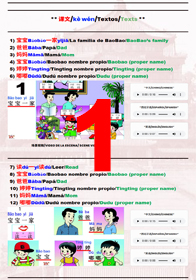
课文/Textos/Texts
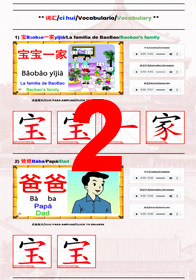
词汇/Vocabulario/Vocabulary
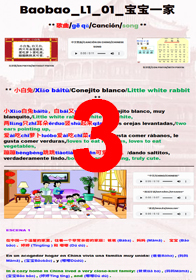
补充材料/Materiales adicionales/Additional Materials

PDF与视频/PDF y videos/PDF and Videos
边玩边学/Aprenda jugando/Learn by Playing
学习西班牙语/Aprenda Español/Learn Spanish
