** 13_你吃什么?/Nǐ chī shénme?/¿Qué comes?/What do you eat? **
课程视频/VIDEO DE LA LECCION/Lesson video
** 课文/kè wén/Textos/Texts **
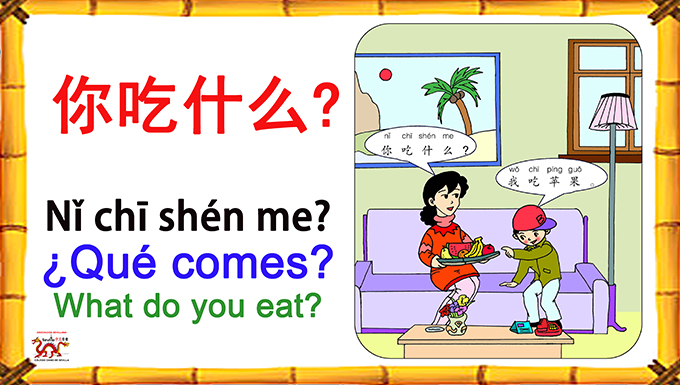
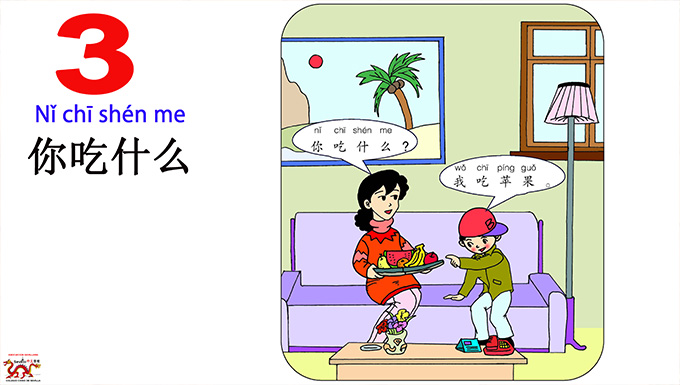
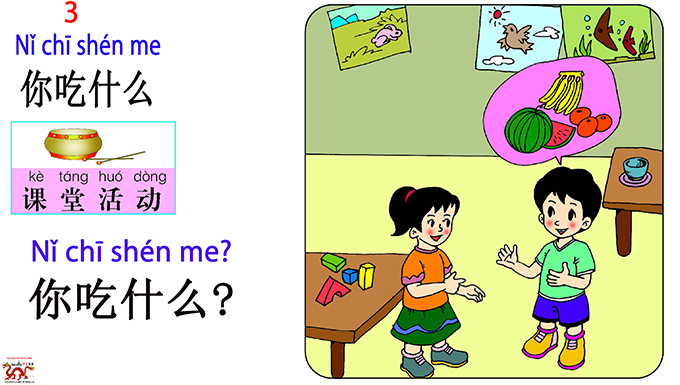
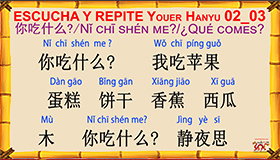
1) 你Nǐ吃chī什么shénme?/¿Qué comes?/What do you eat?
2) 你Nǐ吃chī什么shénme?/¿Qué comes?/What do you eat?
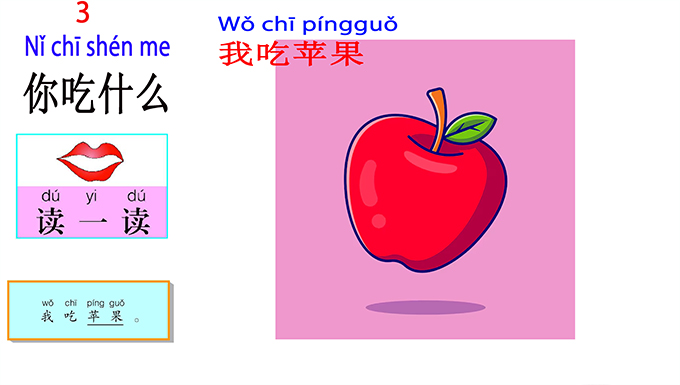
3) 我Wǒ吃chī苹果píngguǒ/Yo como manzanas/I eat apples
场景视频/Video de la escena/ Scene video
中文/Chino/Chinese
西班牙语/Español/Spanish
英语/inglés/English
4) 读Dú一yi读dú/Lee/Read
5) 我Wǒ吃chī苹果píngguǒ/Yo como manzanas/I eat apples
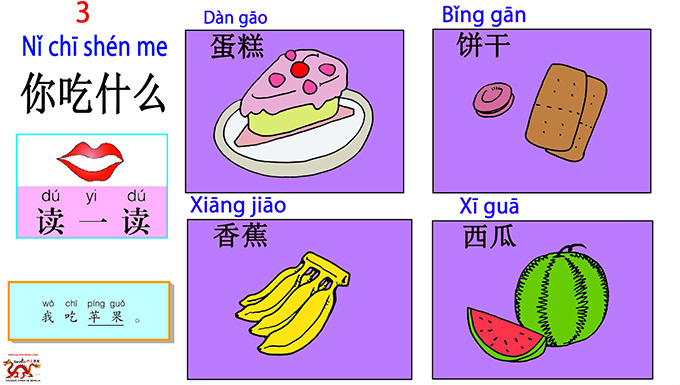
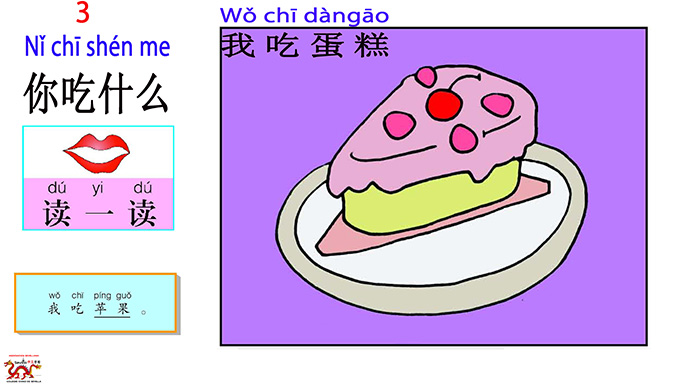
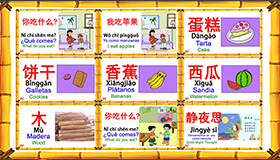
6) 蛋糕Dàngāo/Tarta (o pastel)/Cake
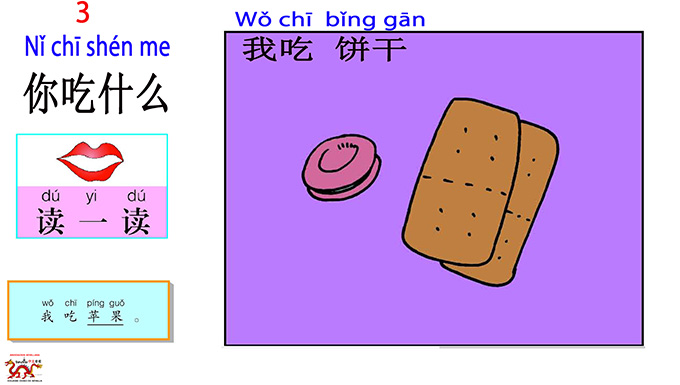
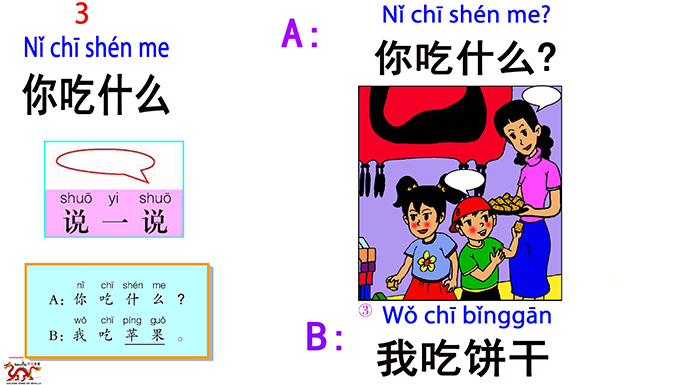
7) 饼干Bǐnggān/Galletas/Cookies
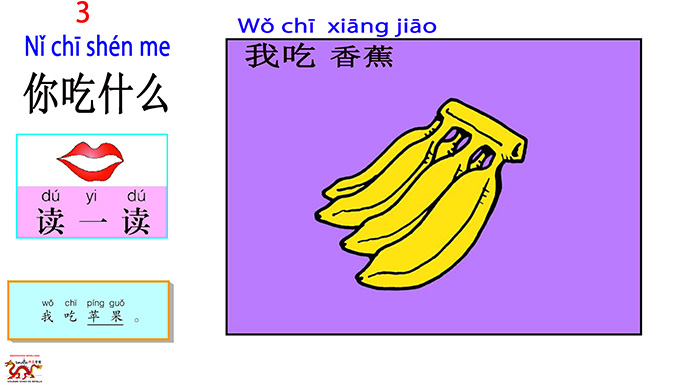
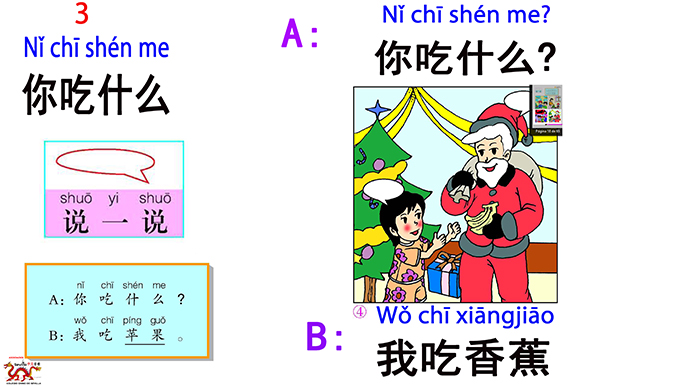
8) 香蕉Xiāngjiāo/Plátanos/Bananas
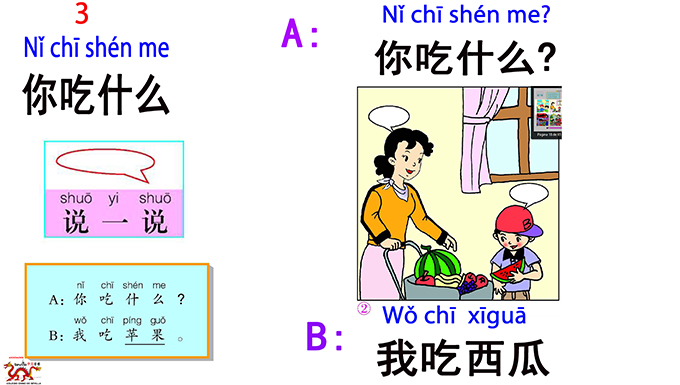
9) 西瓜Xīguā/Sandía/Watermelon
中文/Chino/Chinese
西班牙语/Español/Spanish
英语/inglés/English
10) 我Wǒ吃chī蛋糕dàngāo/Yo como pastel/I eat cake
中文/Chino/Chinese
西班牙语/Español/Spanish
英语/inglés/English
11) 我Wǒ吃chī饼干bǐnggān/Yo como galletas/I eat cookies
中文/Chino/Chinese
西班牙语/Español/Spanish
英语/inglés/English
12) 我Wǒ吃chī香蕉xiāngjiāo/Yo como plátanos/I eat bananas
中文/Chino/Chinese
西班牙语/Español/Spanish
英语/inglés/English
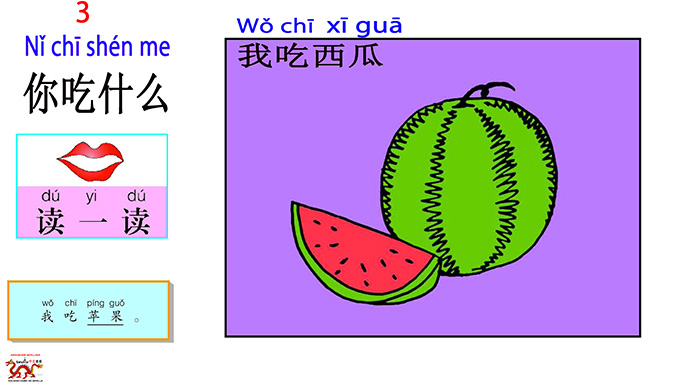
13) 我Wǒ吃chī西瓜xīguā/Yo como sandía/I eat watermelon
中文/Chino/Chinese
西班牙语/Español/Spanish
英语/inglés/English
14) 我Wǒ吃chī苹果píngguǒ/Yo como manzanas/I eat apples
中文/Chino/Chinese
西班牙语/Español/Spanish
英语/inglés/English
15) 说Shuō一yi说shuō/Habla/Speak
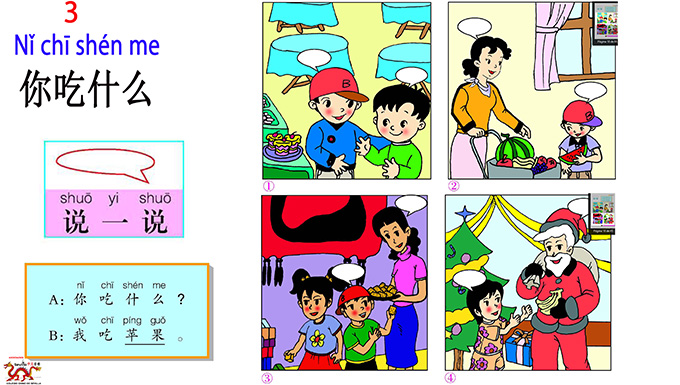
16) A: 你Nǐ吃chī什么shénme?/¿Qué comes?/What do you eat?
17) B: 我Wǒ吃chī苹果píngguǒ/Yo como manzanas/I eat apples
中文/Chino/Chinese
西班牙语/Español/Spanish
英语/inglés/English
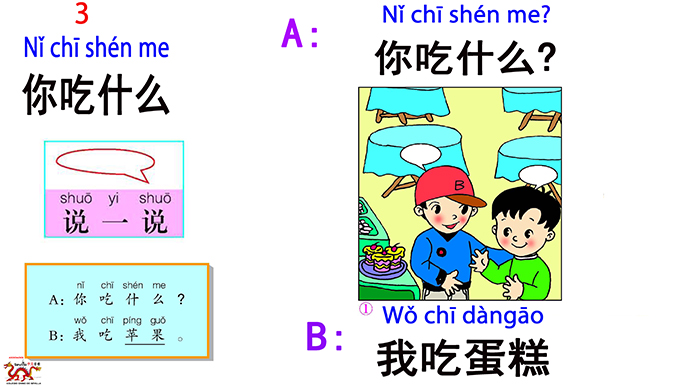
18) A: 你Nǐ吃chī什么shénme?/¿Qué comes?/What do you eat?
19) B: 我Wǒ吃chī蛋糕dàngāo/Yo como pastel/I eat cake
中文/Chino/Chinese
西班牙语/Español/Spanish
英语/inglés/English
20) A: 你Nǐ吃chī什么shénme?/¿Qué comes?/What do you eat?
21) B: 我Wǒ吃chī西瓜xīguā/Yo como sandía/I eat watermelon
中文/Chino/Chinese
西班牙语/Español/Spanish
英语/inglés/English
22) A: 你Nǐ吃chī什么shénme?/¿Qué comes?/What do you eat?
23) B: 我Wǒ吃chī饼干bǐnggān/Yo como galletas/I eat cookies
中文/Chino/Chinese
西班牙语/Español/Spanish
英语/inglés/English
24) A: 你Nǐ吃chī什么shénme?/¿Qué comes?/What do you eat?
25) B: 我Wǒ吃chī香蕉xiāngjiāo/Yo como plátanos/I eat bananas
中文/Chino/Chinese
西班牙语/Español/Spanish
英语/inglés/English
26) 写Xiě一yi写xiě/Escribe/Write
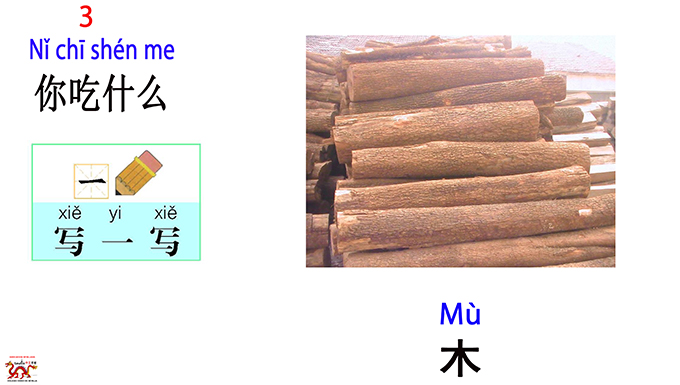
27) 木Mù/Madera/Wood
中文/Chino/Chinese
西班牙语/Español/Spanish
英语/inglés/English
28) 课堂Kètáng活动huódòng/Actividades en clase/Classroom activities
29) 你Nǐ吃chī什么shénme?/¿Qué comes?/What do you eat?
中文/Chino/Chinese
西班牙语/Español/Spanish
英语/inglés/English
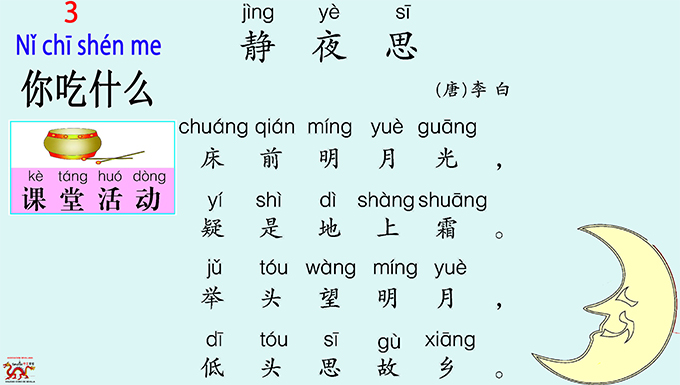
30) 儿歌Érgē/Canción infantil/Nursery rhyme
31) 静夜Jìngyè思sī/Pensamientos en una noche tranquila/Quiet Night Thought
中文/Chino/Chinese
西班牙语/Español/Spanish
英语/inglés/English
** 超级汉字/chāojí hànzì/Super Carácter/super character **
中文/Chino/Chinese
西班牙语/Español/Spanish
英语/inglés/English
木
中文/Chino/Chinese
西班牙语/Español/Spanish
英语/inglés/English
1) 木头/Mùtou/Madera (tronco)/Wood (log)
• 院子里有很多木头/yuànzi lǐ yǒu hěn duō mùtou。/Hay mucha madera en el patio./There is a lot of wood in the yard.
2) 树木/Shùmù/Árboles/Trees
• 公园里有很多高大的树木/gōngyuán lǐ yǒu hěn duō gāodà de shùmù。/Hay muchos árboles altos en el parque./There are many tall trees in the park.
3) 木瓜/Mùguā/Papaya/Papaya
• 妈妈在超市买了一个木瓜/māma zài chāoshì mǎi le yí gè mùguā。/Mamá compró una papaya en el supermercado./Mom bought a papaya at the supermarket.
4) 木板/Mùbǎn/Tabla de madera/Wooden board
• 爸爸用木板做了一个盒子/bàba yòng mùbǎn zuò le yí gè hézi。/Papá hizo una caja con tablas de madera./Dad made a box with wooden boards.
5) 木门/Mùmén/Puerta de madera/Wooden door
• 这是一扇旧木门/zhè shì yí shàn jiù mùmén。/Esta es una vieja puerta de madera./This is an old wooden door.
6) 木工/Mùgōng/Carpintería (o carpintero)/Carpentry (or carpenter)
• 爷爷喜欢做木工/yéye xǐhuan zuò mùgōng。/Al abuelo le gusta hacer trabajos de carpintería./Grandpa likes doing carpentry.
7) 木马/Mùmǎ/Caballo de madera (carrusel o juguete)/Wooden horse
• 宝宝在游乐园骑木马/bǎobao zài yóulèyuán qí mùmǎ。/El bebé monta en el caballo de madera en el parque de atracciones./The baby rides the wooden horse at the amusement park.
8) 积木/Jīmù/Bloques de construcción (juguete)/Building blocks
• 嘟嘟坐在地上玩积木/Dūdū zuò zài dìshang wán jīmù。/Dudu está sentado en el suelo jugando con bloques de construcción./Dudu is sitting on the floor playing with building blocks.
9) 木耳/Mù'ěr/Hongo negro (lit. ‘oreja de madera’)/Wood ear mushroom
• 晚饭我们吃炒木耳/wǎnfàn wǒmen chī chǎo mù'ěr。/Para la cena comemos hongo negro salteado./For dinner we are eating stir-fried wood ear mushrooms.
10) 木星/Mùxīng/Júpiter (planeta)/Jupiter
• 晚上我们在天上看到了木星/wǎnshang wǒmen zài tiānshàng kàn dào le mùxīng。/Por la noche vimos Júpiter en el cielo./At night we saw Jupiter in the sky.
11) 草木Cǎomù/Vegetación (plantas y árboles)/Vegetation
• 春天chūntiān来lái了le草木cǎomù变biàn绿lǜ了le/Ha llegado la primavera, la vegetación se ha vuelto verde./Spring has come, the vegetation has turned green.
12) 伐木Fámù/Talar árboles/Logging (to cut down trees)
• 工人们gōngrénmen在zài森林sēnlín里lǐ伐木fámù/Los trabajadores están talando árboles en el bosque./The workers are logging in the forest.
13) 木匠Mùjiàng/Carpintero/Carpenter
• 那个nàge木匠mùjiàng做zuò了le一yì张zhāng大dà桌子zhuōzi/Ese carpintero hizo una mesa grande./That carpenter made a large table.
14) 麻木Mámù/Entumecido (o insensible)/Numb
• 天气tiānqì太tài冷lěng我wǒ的de手shǒu都dōu麻木mámù了le/Hace demasiado frío, mis manos están entumecidas./The weather is too cold, my hands are all numb.
15) 橡木Xiàngmù/Roble/Oak
• 这个zhège柜子guìzi是shì用yòng橡木xiàngmù做zuò的de/Este armario está hecho de roble./This cabinet is made of oak.
16) 灌木Guànmù/Arbusto/Bush (shrub)
• 小狗xiǎogǒu洛基Luòjī躲duǒ在zài灌木guànmù后面hòumiàn/El perrito Loki se esconde detrás del arbusto./The little dog Loki is hiding behind the bush.
17) 苗木Miáomù/Retoño (plantón)/Sapling
• 花园huāyuán里lǐ种zhòng了le一些yìxiē新xīn苗木miáomù/En el jardín se plantaron algunos retoños nuevos./Some new saplings were planted in the garden.
18) 木琴Mùqín/Xilófono/Xylophone
• 婷婷Tíngtíng在zài学校xuéxiào学习xuéxí敲qiāo木琴mùqín/Tingting aprende a tocar el xilófono en la escuela./Tingting is learning to play the xylophone at school.
19) 木偶Mù'ǒu/Marioneta (o títere)/Puppet
• 孩子们háizimen非常fēicháng喜欢xǐhuan看kàn木偶戏mù'ǒuxì/A los niños les gusta mucho ver el espectáculo de marionetas./The children like watching puppet shows very much.
20) 木柴Mùchái/Leña/Firewood
• 爸爸bàba去qù外面wàimiàn找zhǎo了le一些yìxiē木柴mùchái/Papá fue afuera a buscar algo de leña./Dad went outside to find some firewood.
1. Origen pictográfico (El árbol): El carácter ‘木’ (mù) es un pictograma que representa un árbol. La línea horizontal simboliza las ramas, la línea vertical central es el tronco, y los dos trazos diagonales inferiores (el piě y el nà) representan las raíces que se anclan en la tierra. 2. Regla del orden de los trazos (Simetría): Su escritura sigue dos reglas clásicas de oro: ‘primero el horizontal, luego el vertical’ (先横后竖 - xiān héng hòu shù) , y para las raíces, ‘primero a la izquierda, luego a la derecha’ (先撇后捺 - xiān piě hòu nà) . 3. Como radical (La madera y los bosques): Es uno de los radicales más prolíficos del chino (木字旁) . Lo encontrarás en cientos de caracteres relacionados con árboles, madera, naturaleza o muebles, como 林 (bosque) , 树 (árbol) o 桌 (mesa) . 4. El cambio de forma (La regla de cortesía): Cuando ‘木’ actúa como radical en el lado izquierdo de un carácter (como en 林) , su último trazo (el nà que se extiende hacia la derecha) se acorta y se convierte en un pequeño punto (‘点’ - diǎn) . Esto se hace por cortesía espacial, para no ‘chocar’ con el componente que va a su derecha.
1. Pictographic origin (The tree): The carácter ‘木’ (mù) is a pictograph representing a tree. The horizontal line symbolizes the branches, the central vertical line is the trunk, and the two bottom diagonal strokes (the piě and nà) represent the roots anchored in the earth. 2. Stroke order rule (Symmetry): Its writing follows two classic golden rules: ‘horizontal first, then vertical’ (先横后竖 - xiān héng hòu shù) , and for the roots, ‘left first, then right’ (先撇后捺 - xiān piě hòu nà) . 3. As a radical (Wood and forests): It is one of the most prolific radicals in Chinese (木字旁) . You will find it in hundreds of characters related to trees, wood, nature, or furniture, such as 林 (woods/forest) , 树 (tree) , or 桌 (table) . 4. Shape change (The courtesy rule): When ‘木’ acts as a radical on the left side of a character (as in 林) , its last stroke (the nà that extends to the right) is shortened and turns into a small dot (‘点’ - diǎn) . This is done for spatial courtesy, to avoid ‘crashing’ into the component on its right.
** 字符/zìfú/caracteres/characters **
🚧 En proyecto
AVI: 书写汉字/Escribir caracteres/ Writing Chinese characters
1) 你Nǐ/Tú/You/HSK 1
• 你们nǐmen/vosotros/you (plural)/HSK 1
• 你的nǐde/tu, tuyo/your, yours/HSK 1
• 你好nǐhǎo/hola/hello/HSK 1
• 你Nǐ好hǎo吗ma/¿Cómo estás?/How are you?/HSK 1
2) 吃Chī/Comer/Eat/HSK 1
• 吃饭chīfàn/comer (comida)/eat a meal/HSK 1
• 好吃hǎochī/delicioso/delicious/HSK 2
• 小吃xiǎochī/bocadillo/snack/HSK 3
• 你Nǐ想xiǎng吃chī什shén么me/¿Qué quieres comer?/What do you want to eat?/HSK 1
3) 我Wǒ/Yo/I/HSK 1
• 我们wǒmen/nosotros/we, us/HSK 1
• 我的wǒde/mi, mío/my, mine/HSK 1
• 自我zìwǒ/yo mismo, ego/self/HSK 5
• 我Wǒ爱ài你nǐ/Te amo./I love you./HSK 1
4) 苹Píng/Manzana (parte de)/Apple (part of)/HSK 1
• 苹果píngguǒ/manzana/apple/HSK 1
• 苹果树píngguǒshù/manzano/apple tree/HSK 2
• 青苹果qīngpíngguǒ/manzana verde/green apple/HSK 3
• 我Wǒ喜xǐ欢huān吃chī苹píng果guǒ/Me gusta comer manzanas./I like eating apples./HSK 1
5) 果Guǒ/Fruta/Fruit/HSK 1
• 水果shuǐguǒ/fruta/fruit/HSK 1
• 果汁guǒzhī/jugo, zumo/juice/HSK 3
• 结果jiéguǒ/resultado/result/HSK 3
• 桌zhuō子zi上shàng有yǒu水shuǐ果guǒ/Hay fruta en la mesa./There is fruit on the table./HSK 1
6) 蛋Dàn/Huevo/Egg/HSK 2
• 鸡蛋jīdàn/huevo/chicken egg/HSK 2
• 蛋糕dàngāo/pastel/cake/HSK 3
• 坏蛋huàidàn/malo, sinvergüenza/bad guy/HSK 5
• 我Wǒ每měi天tiān吃chī一yí个gè鸡jī蛋dàn/Como un huevo todos los días./I eat an egg every day./HSK 2
7) 糕Gāo/Pastel/Cake/HSK 3
• 蛋糕dàngāo/pastel, tarta/cake/HSK 3
• 糕点gāodiǎn/repostería, pastelería/pastry/HSK 5
• 糟糕zāogāo/terrible, fatal/terrible, bad/HSK 4
• 这Zhè是shì你nǐ的de蛋dàn糕gāo/Este es tu pastel./This is your cake./HSK 3
8) 饼Bǐng/Torta (o galleta redonda)/Biscuit (or round flat cake)/HSK 4
• 饼干bǐnggān/galleta/biscuit, cookie/HSK 4
• 月饼yuèbǐng/pastel de luna/mooncake/HSK 5
• 煎饼jiānbǐng/crepe chino/pancake/HSK 5
• 这zhè些xiē饼bǐng干gān很hěn好hǎo吃chī/Estas galletas están deliciosas./These cookies are delicious./HSK 4
9) 干Gān/Seco/Dry/HSK 3
• 干净gānjìng/limpio/clean/HSK 3
• 饼干bǐnggān/galleta/biscuit/HSK 4
• 干燥gānzào/seco/dry/HSK 4
• 房fáng间jiān很hěn干gān净jìng/La habitación está muy limpia./The room is very clean./HSK 3
1. Muchos de ellos utilizan ‘radicales’ que nos dan pistas directas sobre su significado. Por ejemplo, el verbo comer (吃) incluye el radical de ‘boca’ (口) , mientras que los caracteres relacionados con frutas y vegetación, como manzana (苹) o plátano (蕉) , llevan el radical de ‘hierba’ (艹) en la parte superior. 2. El vocabulario chino se construye uniendo conceptos simples para formar nuevas palabras: una galleta (饼干) es literalmente una ‘torta seca’, un plátano (香蕉) es una ‘planta fragante’, y la sandía (西瓜) es conocida como el ‘melón del oeste’ debido a su origen geográfico. 3. Resulta muy poético analizar caracteres como el de pensar (思) , que se apoya sobre el radical de ‘corazón’ (心) , reflejando la antigua creencia cultural de que la mente, los pensamientos y las emociones residían en el corazón.
1. Many of them use ‘radicals’ that give us direct clues about their meaning. For example, the verb to eat (吃) includes the ‘mouth’ (口) radical, while characters related to fruits and vegetation, such as apple (苹) or banana (蕉) , have the ‘grass’ (艹) radical at the top. 2. Chinese vocabulary is built by joining simple concepts to form new words: a cookie (饼干) is literally a ‘dry biscuit’ , a banana (香蕉) is a ‘fragrant plant’, and the watermelon (西瓜) is known as the ‘western melon’ due to its geographical origin. 3. It is very poetic to analyze characters like the one for thinking (思) , which rests on the ‘heart’ (心) radical, reflecting the ancient cultural belief that the mind, thoughts, and emotions resided in the heart.
** 词汇/cí huì/Vocabulario/Vocabulary **
AVI: 词汇/Vocabulario/Vocabulary
中文/Chino/Chinese
西班牙语/Español/Spanish
英语/inglés/English
AVI: 听与重复/Escucha y repite/Listen and repeat
1) 你Nǐ吃chī什么shénme?/¿Qué comes?/What do you eat?
2) 我Wǒ吃chī苹果píngguǒ/Yo como manzanas/I eat apples
3) 蛋糕Dàngāo/Tarta (o pastel)/Cake
4) 饼干Bǐnggān/Galletas/Cookies
5) 香蕉Xiāngjiāo/Plátanos/Bananas
6) 西瓜Xīguā/Sandía/Watermelon
7) 木Mù/Madera/Wood
8) 静夜Jìngyè思sī/Pensamientos en una noche tranquila/Quiet Night Thought
1. En esta lección tenemos un toque cultural muy especial. Por un lado aprendemos palabras del día a día para expresar lo que nos gusta (frutas y dulces), girando todo en torno a una de las preguntas más útiles que podemos aprender: ¿Qué comes? (你吃什么?) . 2. La lección nos da una hermosa pincelada de la cultura tradicional china introduciendo el carácter 木 (madera) , que es uno de los cinco elementos fundamentales de la naturaleza en su filosofía.
1. In this lesson, we have a very special cultural touch. On the one hand, we learn everyday words to express what we like (fruits and sweets), revolving entirely around one of the most useful questions we can learn: What do you eat? (你吃什么?) . 2. The lesson gives us a beautiful brushstroke of traditional Chinese culture by introducing the character 木 (wood) , which is one of the five fundamental elements of nature in its philosophy.
** 目录/mù lù/Indice de la página/Table of contents **