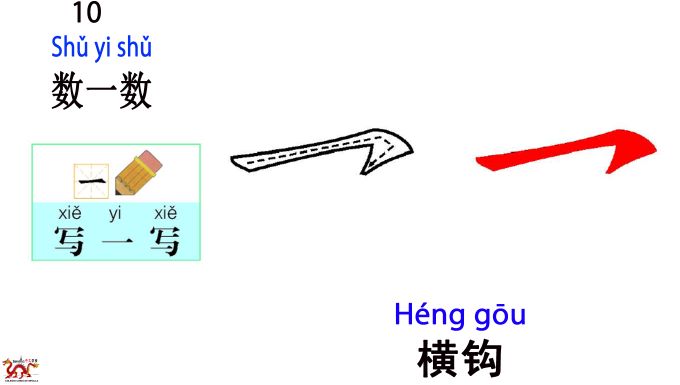
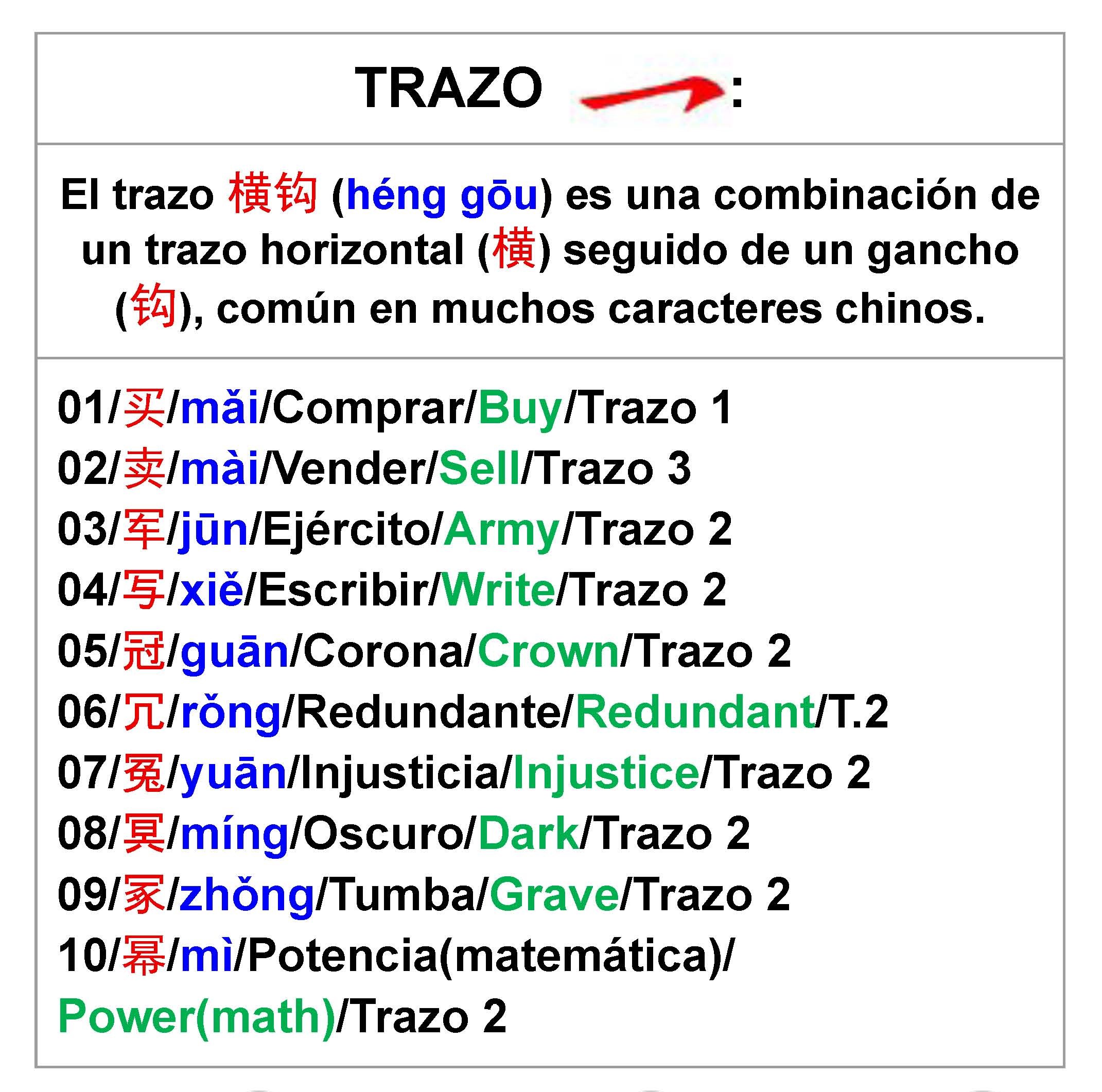
1. Movimiento y técnica: El ‘横钩’ (héng gōu) se traza de izquierda a derecha en un solo movimiento fluido. Al llegar al final de la línea horizontal, se hace una pequeña pausa y se realiza un gancho corto y rápido hacia abajo y a la izquierda. Todo esto sin levantar el lápiz. 2. El ‘tejado’ de los caracteres: Este trazo se encuentra muy a menudo en la parte superior de los caracteres, funcionando como una tapa o un techo que protege a los componentes inferiores. Es el elemento clave en radicales como el ‘techo’ (冖) o el ‘techo con chimenea’ (宀) . 3. Dirección del gancho: A diferencia del gancho vertical que vimos antes, aquí el gancho apunta hacia abajo y a la izquierda, como si quisiera ‘abrazar’ o contener los elementos que están debajo de él (como vemos en los caracteres 写 - escribir o 买 - comprar ). 4. Regla del orden (de arriba hacia abajo): Como este trazo suele colocarse en la parte superior, por la regla general de caligrafía de ‘de arriba hacia abajo’ (从上到下 - cóng shàng dào xià), se escribe casi siempre en los primeros pasos de la formación del carácter.
1. Movement and technique: The ‘横钩’ (héng gōu) is drawn from left to right in one continuous motion. At the end of the horizontal line, you make a slight pause and execute a short, quick hook downwards and to the left. All of this is done without lifting the pen. 2. The ‘roof’ of characters: This stroke is very often found at the top of characters, acting as a lid or a roof that protects the components below. It is the key element in radicals like the ‘roof’ (冖) or the ‘roof with a chimney’ (宀) . 3. Direction of the hook: Unlike the vertical hook we saw earlier, here the hook points down and to the left, as if wanting to ‘hug’ or contain the elements below it (as seen in characters like 写 - to write or 买 - to buy ). 4. Stroke order rule (top to bottom): Because this stroke is usually placed at the top, following the general calligraphy rule of ‘top to bottom’ (从上到下 - cóng shàng dào xià), it is almost always written in the first few steps of forming the character.
** 字符/zìfú/caracteres/characters **
AVI: 书写汉字/Escribir caracteres/ Writing Chinese characters
1) 数shù/número, contar/number, count/HSK 2 (shù (o shǔ))
• 数学shùxué/matemáticas/mathematics/HSK 3
• 数量shùliàng/cantidad/quantity/HSK 4
• 数shǔ一yi数shǔ/contar/count/HSK 2
• 宝宝Bǎobao在zài数shǔ一yi数shǔ。/Baobao está contando./Baobao is counting./HSK 2
2) 四sì/cuatro/four/HSK 1
• 四sì个ge/cuatro (cantidad)/four (amount)/HSK 1
• 四月sìyuè/abril/April/HSK 2
• 第dì四sì/cuarto (orden)/fourth/HSK 2
• 这里Zhèlǐ有yǒu四sì个ge苹果píngguǒ。/Aquí hay cuatro manzanas./Here are four apples./HSK 1
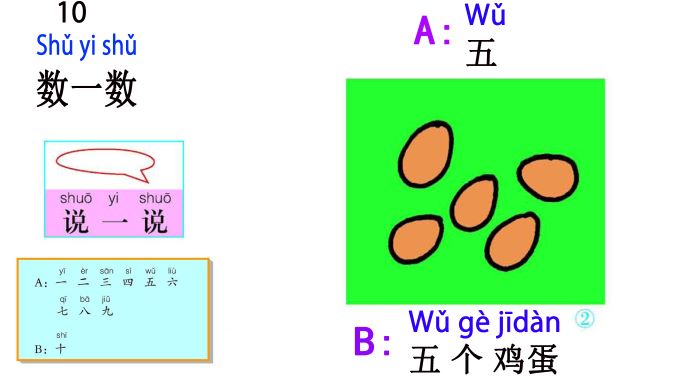
3) 五wǔ/cinco/five/HSK 1
• 五wǔ个ge/cinco (cantidad)/five (amount)/HSK 1
• 五月wǔyuè/mayo/May/HSK 2
• 星期五xīngqīwǔ/viernes/Friday/HSK 1
• 嘟嘟Dūdū有yǒu五wǔ本běn书shū。/Dudu tiene cinco libros./Dudu has five books./HSK 1
4) 六liù/seis/six/HSK 1
• 六liù个ge/seis (cantidad)/six (amount)/HSK 1
• 六月liùyuè/junio/June/HSK 2
• 星期六xīngqīliù/sábado/Saturday/HSK 1
• 洛基Luòjī有yǒu六liù个ge玩具wánjù。/Rocky tiene seis juguetes./Rocky has six toys./HSK 2
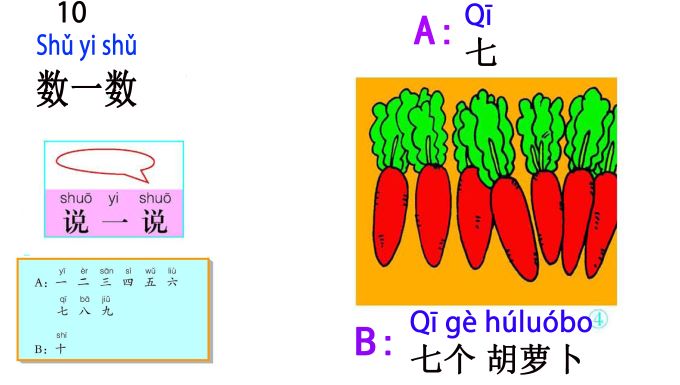
5) 七qī/siete/seven/HSK 1
• 七qī个ge/siete (cantidad)/seven (amount)/HSK 1
• 七月qīyuè/julio/July/HSK 2
• 七qī天tiān/siete días/seven days/HSK 1
• 婷婷Tíngting喜欢xǐhuan数字shùzì七qī。/A Tingting le gusta el número siete./Tingting likes the number seven./HSK 3
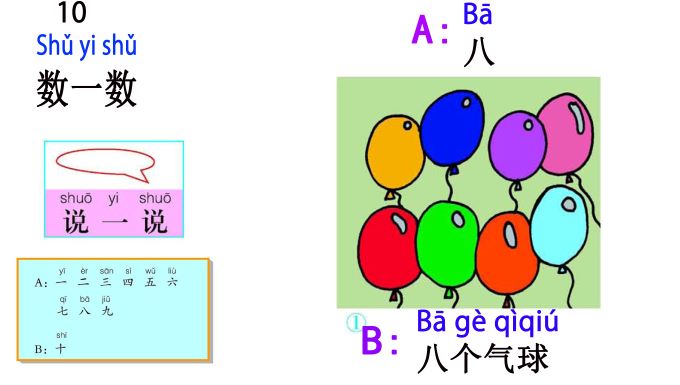
6) 八bā/ocho/eight/HSK 1
• 八bā个ge/ocho (cantidad)/eight (amount)/HSK 1
• 八月bāyuè/agosto/August/HSK 2
• 八bā点diǎn/las ocho (hora)/eight o'clock/HSK 1
• 现在Xiànzài是shì八bā点diǎn。/Ahora son las ocho./It is eight o'clock now./HSK 1
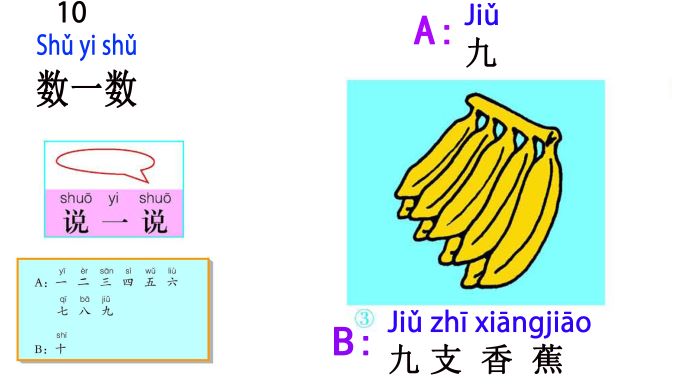
7) 九jiǔ/nueve/nine/HSK 1
• 九月jiǔyuè/septiembre/September/HSK 2
• 九十jiǔshí/noventa/ninety/HSK 1
• 十九shíjiǔ/diecinueve/nineteen/HSK 1
• 曾祖母Zēngzǔmǔ今年jīnnián九十jiǔshí岁suì。/La bisabuela tiene noventa años este año./Great-grandmother is ninety years old this year./HSK 1
8) 十shí/diez/ten/HSK 1
• 十shí个ge/diez (cantidad)/ten (amount)/HSK 1
• 十月shíyuè/octubre/October/HSK 2
• 十一shíyī/once/eleven/HSK 1
• 这里Zhèlǐ有yǒu十shí只zhī小兔子xiǎotùzi。/Aquí hay diez conejitos./Here are ten little rabbits./HSK 4
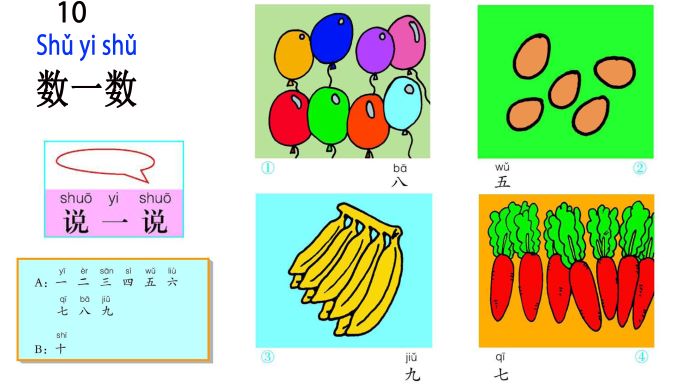
1. Aclaración sobre los clasificadores: Los clasificadores ‘个’ (gè) y ‘支’ (zhī) aparecen en el vocabulario del HSK 4, aunque ‘个’ es uno de los primeros que se aprenden en HSK 1. 2. 鸡蛋 (jīdàn): Se forma uniendo ‘gallina/pollo’ (鸡) + ‘huevo’ (蛋) . ¡Huevo de gallina! 3. 香蕉 (xiāngjiāo): Se forma uniendo ‘fragante/aromático’ (香) + ‘plátano/banana’ (蕉) . 4. 胡萝卜 (húluóbo): Una combinación muy curiosa. ‘胡’ (hú) se usaba antiguamente para referirse a cosas que venían del extranjero (o de tribus nómadas), y ‘萝卜’ (luóbo) significa rábano. Por lo tanto, la zanahoria es literalmente el ‘rábano extranjero’ .
1. Clarification on measure words: The measure words ‘个’ (gè) and ‘支’ (zhī) appear in the HSK 4 vocabulary, although ‘个’ is one of the first ones learned in HSK 1. 2. 鸡蛋 (jīdàn): It is formed by combining ‘hen/chicken’ (鸡) + ‘egg’ (蛋) . Chicken egg! 3. 香蕉 (xiāngjiāo): It is formed by combining ‘fragrant/aromatic’ (香) + ‘banana’ (蕉) . 4. 胡萝卜 (húluóbo): A very curious combination. ‘胡’ (hú) was historically used to refer to foreign things (or nomadic tribes), and ‘萝卜’ (luóbo) means radish. Therefore, a carrot is literally a ‘foreign radish’ .
** 词汇/cí huì/Vocabulario/Vocabulary **
AVI: 词汇/Vocabulario/Vocabulary
中文/Chino/Chinese
西班牙语/Español/Spanish
英语/inglés/English
AVI: 听与重复/Escucha y repite/Listen and repeat
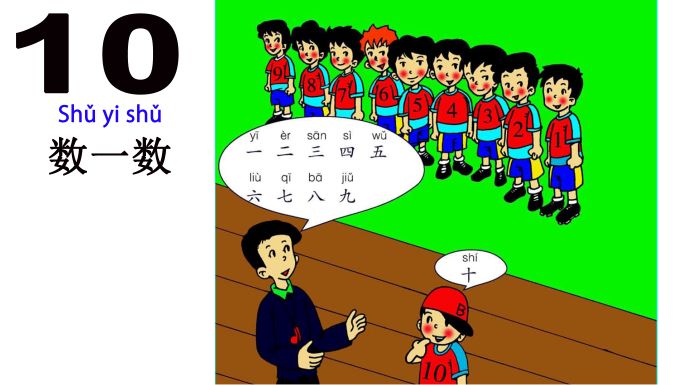
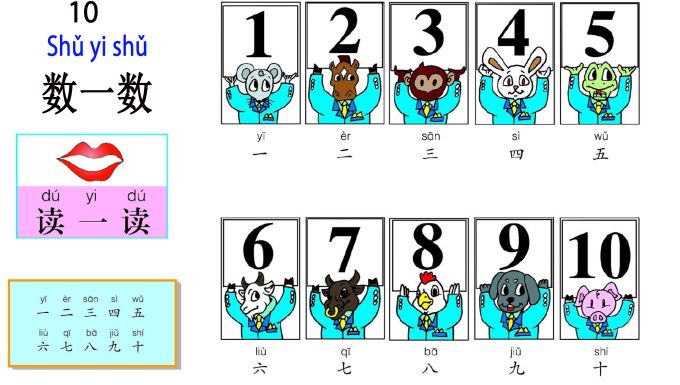
1) 数shǔ一yi数shǔ/Contar/Count
2) 一yī/Uno/One
3) 二èr/Dos/Two
4) 三sān/Tres/Three
5) 四sì/Cuatro/Four
6) 五wǔ/Cinco/Five
7) 六liù/Seis/Six
8) 七qī/Siete/Seven
9) 八bā/Ocho/Eight
10) 九jiǔ/Nueve/Nine
11) 十shí/Diez/Ten
12) 气球qìqiú/Globo(s)/Balloon(s)
13) 鸡蛋jīdàn/Huevo(s)/Egg(s)
14) 香蕉xiāngjiāo/Plátano(s), Banana(s)/Banana(s)
15) 胡萝卜húluóbo/Zanahoria(s)/Carrot(s)
16) 横钩hénggōu/Trazo horizontal con gancho/Horizontal hook stroke
17) 排pái排队páiduì/Hacer fila/Line up
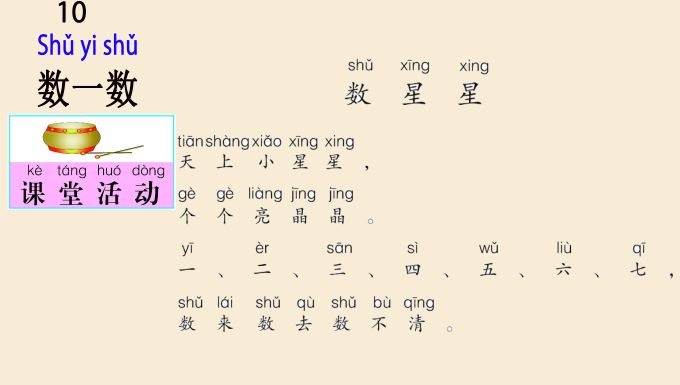
18) 数shù星星xīngxīng/Contar estrellas/Count the stars
** 目录/mù lù/Indice de la página/Table of contents **