** 09_她是医生/tā shì yīshēng/Ella es médica/She is a doctor **
** 跟宝宝学西班牙语/Gēn bǎobǎo xué xībānyá yǔ/Aprenda Español con Baobao/Learn Spanish with Baobao **
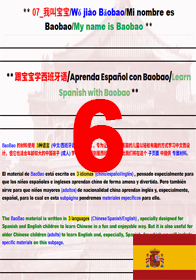
BaoBao 的材料使用 3种语言 (中文/西班牙语/英语) 编写,专为让西班牙和英国的儿童以轻松有趣的方式学习中文而设计。但它也适合年龄较大的中国孩子 (成人) 学习英语,特别是西班牙语,为此我们将在这个 子页面 中提供 专属材料。
El material de BaoBao está escrito en 3 idiomas (chino/español/inglés) , pensado especialmente para que los niños españoles e ingleses aprendan chino de forma amena y divertida. Pero también sirve para que niños mayores (adultos) de nacionalidad china aprendan inglés y, especialmente, español, para lo cual en esta subpágina pondremos materiales específicos para ello.
The BaoBao material is written in 3 languages (Chinese/Spanish/English) , specially designed for Spanish and English children to learn Chinese in a fun and enjoyable way. But it is also useful for older Chinese children (adults) to learn English and, especially, Spanish, for which we will include specific materials on this subpage.
Lección 08 / 第八课
La letra E
字母 E · 第一课** 词汇/cíhuì/Vocabulario/Vocabulary **
** 书法/shūfǎ/Caligrafía/Calligraphy **
Trazos para la e
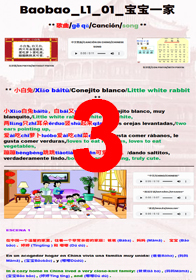
** 歌曲/gēqǔ/Canción/Song **
** 发音/fāyīn/Pronunciación/Pronunciation **
** 测验/cèyàn/Quiz/Quiz **
** 城市/chéngshì/Ciudades/cities **
Lección 9 / 第九课
La letra 是医生
字母 是医生 · 第一课Aprenda también Español con Baobao /也和宝宝一起学习西班牙语吧!
小tā她shì是医生yīshēng/Ella es doctora/She is a doctor
** 词汇/cíhuì/Vocabulario/Vocabulary **
** 歌曲/gēqǔ/Canción/Song **
** 测验/cèyàn/Quiz/Quiz **
** 书法/shūfǎ/Caligrafía/Calligraphy **
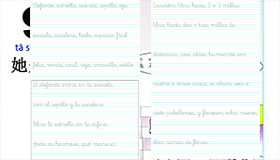
PDF: 书法练习/Caligrafia/Handwriting practice
▶ 📝 评论 / Comentarios / Comments
清晰而纯粹的元音:学习字母 E 至关重要,因为它是西班牙语中第二常见的元音。通过将其与’也 (yě)’的发音进行比较,学生们获得了一个极好的参考点。必须提醒他们保持嘴巴半开,舌头在中间放松,以发出短促清晰的声音,避免拖长音而发成双元音。
2. 笔画与视觉联想:小写字母的书写非常有趣。将笔画的画法描述为画一只小耳朵,极大地促进了孩子们对书写的视觉记忆,让他们觉得既简单又好玩。
3. 充满想象力的记忆法:这节课的歌曲创造了一个令人难忘的心理图像:一头 elefante (大象) 带着一把 escalera (梯子) 走进 escuela (学校) 去看一颗 estrella (星星) 。这个超现实且有趣的场景是一个完美的记忆技巧,可以毫不费力地将这些以 E 开头的新词汇印在脑海中。
4. 第九课评论 (她是医生 / 歌曲:一望二三里)
发现社会角色:在学会介绍家人之后,跳跃到用诸如 Ella es médica (她是医生) 这样的句子来谈论职业,极大地拓展了学生的世界。这让他们能够开始识别社区中的不同角色,并为他们玩角色扮演游戏提供了词汇基础,这是孩子们非常喜欢做的事情。
5. 包裹在古典诗歌中的数字:一望二三里 这首诗绝对是中国古典文学的瑰宝。利用邵雍的这部杰作,通过宁静的风景(村庄、亭台和花朵)来复习从一到十的数字,将语言教学与深厚的审美和文化欣赏结合了起来。这是在西班牙语学习和学生自身的文学遗产之间架起桥梁的美丽方式。
Una vocal clara y pura: Aprender la letra E es fundamental porque es la segunda vocal más común en español. Al compararla con el sonido de ‘yě’ (也), los alumnos obtienen un punto de referencia excelente. Es crucial recordarles que mantengan la boca entreabierta y la lengua relajada en el centro para emitir un sonido corto y nítido, evitando alargarlo hasta crear un diptongo.
2. Trazos y asociación visual: La caligrafía de la letra minúscula es fascinante. Al describir el trazo como el dibujo de una pequeña oreja, facilitamos enormemente la memorización visual para los niños, haciéndolo parecer un juego.
3. Mnemotecnia llena de imaginación: La canción de esta lección crea una imagen mental inolvidable: un elefante entrando a la escuela con una escalera para mirar una estrella. Esta escena surrealista y divertida es una técnica mnemotécnica perfecta para fijar el vocabulario nuevo sin ningún esfuerzo.
4. Comentario de la Lección 09 (她是医生 / Canción: 一望二三里)
Descubriendo roles sociales: Después de aprender a presentar a la familia, dar el salto a las profesiones con frases como Ella es médica (她是医生) amplía significativamente el mundo del estudiante. Esto les permite identificar a las diferentes personas de su comunidad y les da vocabulario para jugar a ser mayores, algo que a los niños les encanta.
5. Números envueltos en poesía clásica: El poema 一望二三里 es una joya absoluta de la literatura clásica china. Utilizar esta obra maestra de Shao Yong para repasar los números del uno al diez a través de un paisaje sereno (aldeas, pabellones y flores) une la enseñanza de idiomas con una profunda apreciación estética y cultural. Es una forma hermosa de tender puentes entre el aprendizaje del español y la herencia literaria de los propios alumnos.
A clear and pure vowel: Learning the letter E is crucial because it is the second most common vowel in Spanish. By comparing it to the sound of ‘yě’ (也), students get an excellent reference point. It is vital to remind them to keep their mouth half-open and their tongue relaxed in the center to emit a short and crisp sound, avoiding stretching it into a diphthong.
2. Strokes and visual association: The calligraphy of the lowercase letter is fascinating. By describing the stroke as drawing a small ear, we greatly facilitate visual memorization for children, making it feel like a game.
3. Imaginative mnemonics: The song in this lesson creates an unforgettable mental image: an elefante (elephant) entering the escuela (school) with an escalera (ladder) to look at an estrella (star) . This surreal and fun scene is a perfect mnemonic technique to lock in new vocabulary effortlessly.
4. Commentary for Lesson 09 (她是医生 / Song: 一望二三里)
Discovering social roles: After learning to introduce family members, making the leap to professions with phrases like Ella es médica (She is a doctor) significantly expands the student's world. This allows them to identify different people in their community and gives them the vocabulary to play pretend, something children absolutely love to do.
5. Numbers wrapped in classical poetry: The poem 一望二三里 is an absolute jewel of classical Chinese literature. Using this masterpiece by Shao Yong to review numbers from one to ten through a serene landscape (villages, pavilions, and flowers) unites language teaching with a deep aesthetic and cultural appreciation. It is a beautiful way to build bridges between learning Spanish and the students' own literary heritage.
** 目录/mù lù/Indice de la página/Table of contents **
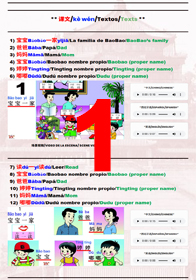
课文/Textos/Texts
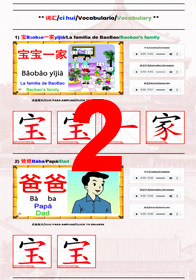
词汇/Vocabulario/Vocabulary
补充材料/Materiales adicionales/Additional Materials

PDF与视频/PDF y videos/PDF and Videos
边玩边学/Aprenda jugando/Learn by Playing
学习西班牙语/Aprenda Español/Learn Spanish
