** 08_她是我妈妈/Tā shì wǒ māmā/Ella es mi madre/She is my mom **
** 跟宝宝学西班牙语/Gēn bǎobǎo xué xībānyá yǔ/Aprenda Español con Baobao/Learn Spanish with Baobao **
BaoBao 的材料使用 3种语言 (中文/西班牙语/英语) 编写,专为让西班牙和英国的儿童以轻松有趣的方式学习中文而设计。但它也适合年龄较大的中国孩子 (成人) 学习英语,特别是西班牙语,为此我们将在这个 子页面 中提供 专属材料。
El material de BaoBao está escrito en 3 idiomas (chino/español/inglés) , pensado especialmente para que los niños españoles e ingleses aprendan chino de forma amena y divertida. Pero también sirve para que niños mayores (adultos) de nacionalidad china aprendan inglés y, especialmente, español, para lo cual en esta subpágina pondremos materiales específicos para ello.
The BaoBao material is written in 3 languages (Chinese/Spanish/English) , specially designed for Spanish and English children to learn Chinese in a fun and enjoyable way. But it is also useful for older Chinese children (adults) to learn English and, especially, Spanish, for which we will include specific materials on this subpage.
Lección 07 / 第7课
La letra L
字母 L · 第一课** 词汇/cíhuì/Vocabulario/Vocabulary **
** 书法/shūfǎ/Caligrafía/Calligraphy **
Trazos para la l
** 歌曲/gēqǔ/Canción/Song **
** 发音/fāyīn/Pronunciación/Pronunciation **
** 测验/cèyàn/Quiz/Quiz **
** 城市/chéngshì/Ciudades/cities **





Lección 8 / 第八课
La letra 妈妈妈
字母 妈妈妈 · 第一课Aprenda también Español con Baobao/也和宝宝一起学习西班牙语吧!
她Tā是shì我wǒ妈妈māma/Ella es mi madre/She is my mom
** 词汇/cíhuì/Vocabulario/Vocabulary **
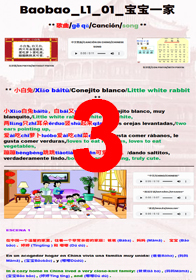
** 歌曲/gēqǔ/Canción/Song **
** 测验/cèyàn/Quiz/Quiz **
** 书法/shūfǎ/Caligrafía/Calligraphy **
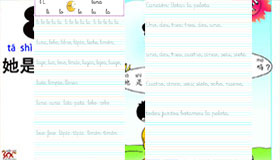
PDF: 书法练习/Caligrafia/Handwriting practice
▶ 📝 评论 / Comentarios / Comments
毫无障碍的通用声音:字母 L 对学习语言的学生来说是一份极好的礼物。它是一个高频率的声音,在西班牙语和中文的拼音中几乎完全相同(就像在’啦,lā’中一样)。这种相似性使得学生能够专注于扩展词汇量,而不用担心复杂的发音挑战,这是一个建立自信的理想时刻。
2. 唱出来的响亮辅音:解释 L 时的一个关键点是它的响亮特性。与爆破音不同,发这个音时声带要振动,产生共鸣。当学生们说出像 luna (月亮) 或 limpio (干净的) 这样的词时,能够感受到这种轻微的震颤。将舌尖紧紧抵住上排牙齿后面,让气流从两侧流出,可以发出清晰而悦耳的声音。
3. 五个城市的字母 L 之旅:本课的地理板块特别丰富。学生们进行了一次令人兴奋的路线游览,从 Las Palmas de Gran Canaria 美味的皱皮土豆,到 Lleida 的蜗牛,经过宏伟的 León 及其炖菜,品尝 Logroño 标志性的里奥哈土豆,最后在被罗马城墙环绕的 Lugo 享用著名的加利西亚章鱼。这是一场不折不扣的美食之旅!
4. 第八课评论 (她是我妈妈 / 歌曲:拍皮球)
介绍家庭成员:学会用 Ella es mi madre (她是我妈妈) 来介绍家庭成员是早期语言学习中的核心社交技能。这一课扩展了孩子们的社交词汇,让他们能够谈论对他们来说最重要的人。这种个性化使学习变得更具情感意义。
5. 通过游戏学习数字与节奏:拍皮球 (Botar la pelota) 这首歌不仅重温了经典的儿歌节奏,而且巧妙地融入了从一到九的数字学习 Uno, dos, tres... (一二三...) 。这种有节奏的背诵,结合想象中拍球的动作(又一次很棒的全身反应法 TPR),让学习数字变得自然且极具活力。
Un sonido universal sin fricciones: La letra L es un excelente regalo para los estudiantes de idiomas. Es un sonido de alta frecuencia que es casi idéntico tanto en español como en el pinyin del chino (como en 啦, lā). Esta similitud permite a los estudiantes centrarse en expandir su vocabulario sin la ansiedad de enfrentar un reto fonético complejo, siendo un momento ideal para afianzar su confianza.
2. Una consonante sonora y cantada: El punto clave al explicar la L es su cualidad sonora. A diferencia de las consonantes oclusivas, aquí las cuerdas vocales vibran y resuenan. Los estudiantes pueden sentir este ligero temblor al decir palabras como luna o limpio. Apoyar firmemente la punta de la lengua detrás de los dientes superiores y dejar que el aire fluya por los lados crea ese sonido claro y agradable.
3. Tour de las 5 ciudades con L: La sección geográfica de esta lección es excepcionalmente rica. Los alumnos emprenden una ruta apasionante que va desde las sabrosas papas arrugadas de Las Palmas de Gran Canaria, pasando por los caracoles en Lleida, el majestuoso León y su cocido, las emblemáticas patatas a la riojana en Logroño, para terminar saboreando el pulpo gallego en Lugo bajo sus murallas romanas. ¡Un viaje gastronómico en toda regla!
4. Comentario de la Lección 08 (她是我妈妈 / Canción: 拍皮球)
Presentando a la familia: Aprender a presentar a los miembros de la familia con la frase Ella es mi madre (她是我妈妈) es una habilidad social central en las primeras etapas del aprendizaje de un idioma. Esta lección expande el vocabulario social de los niños, permitiéndoles hablar de las personas más importantes para ellos. Esta personalización hace que el aprendizaje sea emocionalmente mucho más significativo.
5. Números y ritmo a través del juego: La canción de Botar la pelota (拍皮球) no solo rescata un ritmo clásico de la infancia, sino que integra maravillosamente el aprendizaje de los números del uno al nueve Uno, dos, tres... (一二三...) . Esta recitación rítmica, combinada con la acción física imaginaria de botar la pelota (otra gran oportunidad para aplicar TPR), hace que aprender a contar sea algo natural y muy dinámico.
A frictionless universal sound: The letter L is an excellent gift for language learners. It is a high-frequency sound that is almost identical in both Spanish and Chinese pinyin (as in 啦, lā). This similarity allows students to focus on expanding their vocabulary without the anxiety of facing a complex phonetic challenge, making it an ideal moment to build confidence.
2. A voiced and sung consonant: The key point when explaining the L is its voiced quality. Unlike stop consonants, here the vocal cords vibrate and resonate. Students can feel this slight tremor when saying words like luna (moon) or limpio (clean) . Pressing the tip of the tongue firmly behind the upper teeth and letting the air flow out the sides creates that clear and pleasant sound.
3. Tour of the 5 cities with L: The geographical section of this lesson is exceptionally rich. Students embark on an exciting route that goes from the tasty wrinkled potatoes of Las Palmas de Gran Canaria, to the snails in Lleida, passing through the majestic León and its stew, the emblematic Rioja-style potatoes in Logroño, to finish savoring the Galician octopus in Lugo surrounded by its Roman walls. A full-fledged gastronomic journey!
4. Commentary for Lesson 08 (她是我妈妈 / Song: 拍皮球)
Introducing family members: Learning to introduce family members with the phrase Ella es mi madre (她是我妈妈) is a core social skill in the early stages of language learning. This lesson expands children's social vocabulary, allowing them to talk about the most important people to them. This personalization makes learning emotionally much more meaningful.
5. Numbers and rhythm through play: The song about Botar la pelota (拍皮球) not only rescues a classic childhood rhythm, but beautifully integrates learning numbers from one to nine Uno, dos, tres... (一二三...) . This rhythmic recitation, combined with the imaginary physical action of bouncing a ball (another great opportunity to apply TPR), makes learning to count natural and very dynamic.
** 目录/mù lù/Indice de la página/Table of contents **
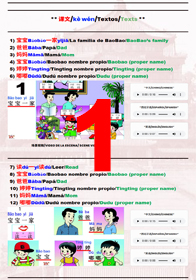
课文/Textos/Texts
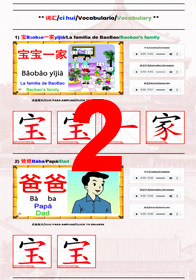
词汇/Vocabulario/Vocabulary
补充材料/Materiales adicionales/Additional Materials

PDF与视频/PDF y videos/PDF and Videos
边玩边学/Aprenda jugando/Learn by Playing
学习西班牙语/Aprenda Español/Learn Spanish
