** 08_她是我妈妈/Tā shì wǒ māmā/Ella es mi madre/She is my mom **
** 边玩边学/biān wán biān xué/Aprenda jugando: **

DE HANZI A PINYIN

DE HANZI A ESPAÑOL
DE ESPAÑOL A PINYIN

DE MANDARINA PINYIN

DE PINYIN A MANDARIN

DE MANDARIN A ESPAÑOL

DE ESPAÑOL A MANDARIN

DE PINYIN A ESPAÑOL

DE ESPAÑOL A PINYIN

🚧 En proyecto
ESCRIBIR TEXTO CANCION

🚧 En proyecto
ESCRIBIR VOCABULARIO

🚧 En proyecto
UNIR HANZI A PINYIN

🚧 En proyecto
UNIR HANZI A ESPAÑOL

🚧 En proyecto
UNIR PINYIN A ESPAÑOL

🚧 En proyecto
ARRASTRAR HANZI Y PINYIN

🚧 En proyecto
ARRASTRAR TRADUCCION ESPAÑOL

🚧 En proyecto
DICTADO VOCABULARIO
¿Cómo se dice '¿Es ella tu madre?' en chino?
'¿Es ella tu madre?' 用中文怎么说?
How do you say '¿Es ella tu madre?' in Chinese?
¡Correcto! '¿Es ella tu madre?' es 她是你妈妈吗? (Tā shì nǐ māma ma?).
¿Cómo se dice 'Botar la pelota' en chino?
'Botar la pelota' 用中文怎么说?
How do you say 'Botar la pelota' in Chinese?
¡Bien! 'Botar la pelota' es 拍皮球 (pāi píqiú).
¿Cómo se dice 'Mi, mío' en chino?
'Mi, mío' 用中文怎么说?
How do you say 'Mi, mío' in Chinese?
¡Genial! 'Mi, mío' es 我的 (wǒ de).
¿Cómo se dice 'Hermano menor' en chino?
'Hermano menor' 用中文怎么说?
How do you say 'Hermano menor' in Chinese?
¡Correcto! 'Hermano menor' es 弟弟 (dìdi).
¿Cómo se dice 'Trazo vertical con gancho' en chino?
'Trazo vertical con gancho' 用中文怎么说?
How do you say 'Trazo vertical con gancho' in Chinese?
¡Muy bien! 'Trazo vertical con gancho' es 竖钩 (shùgōu).
¿Cómo se dice '过家家' en español?
'过家家' 用西班牙语怎么说?
How do you say '过家家' in Spanish?
¡Correcto! 过家家 (guò jiājia) es 'Jugar a la casita'.
¿Cómo se dice '她是我妈妈' en español?
'她是我妈妈' 用西班牙语怎么说?
How do you say '她是我妈妈' in Spanish?
¡Bien! 她是我妈妈 (Tā shì wǒ māma) es 'Ella es mi madre'.
¿Cómo se dice '妹妹' en español?
'妹妹' 用西班牙语怎么说?
How do you say '妹妹' in Spanish?
¡Genial! 妹妹 (mèimei) es 'Hermana menor'.
¿Cómo se dice '你' en español?
'你' 用西班牙语怎么说?
How do you say '你' in Spanish?
¡Correcto! 你 (nǐ) es 'Tú'.
¿Cómo se dice '吗' en español?
'吗' 用西班牙语怎么说?
How do you say '吗' in Spanish?
¡Muy bien! 吗 (ma) es '¿...? (partícula interrogativa)'.
0/10
** 边玩边学/biān wán biān xué/Learn while playing: **

HANZI TO PINYIN

HANZI TO ENGLISH
ENGLISH TO PINYIN

MANDARIN TO PINYIN

PINYIN TO MANDARIN

MANDARIN TO ENGLISH

ENGLISH TO MANDARIN

PINYIN TO ENGLISH

ENGLISH TO PINYIN

🚧 En proyecto
WHITE SONG LYRICS

🚧 En proyecto
WHITE VOCABULARY

🚧 En proyecto
MATCH HANZI TO PINYIN

🚧 En proyecto
MATCH HANZITO ENGLISH

🚧 En proyecto
MATCH PINYIN TO ENGLISH

🚧 En proyecto
DRAG HANZI TO PINYIN

🚧 En proyecto
DRAG ENGLISH TRANSLATION

🚧 En proyecto
VOCABULARY DICTATION
¿Cómo se dice 'Is she your mom?' en chino?
'Is she your mom?' 用中文怎么说?
How do you say 'Is she your mom?' in Chinese?
¡Correcto! 'Is she your mom?' es 她是你妈妈吗? (Tā shì nǐ māma ma?).
¿Cómo se dice 'Vertical hook stroke' en chino?
'Vertical hook stroke' 用中文怎么说?
How do you say 'Vertical hook stroke' in Chinese?
¡Bien! 'Vertical hook stroke' es 竖钩 (shùgōu).
¿Cómo se dice 'House play' en chino?
'House play' 用中文怎么说?
How do you say 'House play' in Chinese?
¡Genial! 'House play' es 过家家 (guò jiājia).
¿Cómo se dice 'Younger sister' en chino?
'Younger sister' 用中文怎么说?
How do you say 'Younger sister' in Chinese?
¡Correcto! 'Younger sister' es 妹妹 (mèimei).
¿Cómo se dice 'Your, yours' en chino?
'Your, yours' 用中文怎么说?
How do you say 'Your, yours' in Chinese?
¡Muy bien! 'Your, yours' es 你的 (nǐ de).
¿Cómo se dice '拍皮球' en inglés?
'拍皮球' 用英语怎么说?
How do you say '拍皮球' in English?
¡Correcto! 拍皮球 (pāi píqiú) es 'Bounce the ball'.
¿Cómo se dice '她是我妈妈' en inglés?
'她是我妈妈' 用英语怎么说?
How do you say '她是我妈妈' in English?
¡Bien! 她是我妈妈 (Tā shì wǒ māma) es 'She is my mom'.
¿Cómo se dice '弟弟' en inglés?
'弟弟' 用英语怎么说?
How do you say '弟弟' in English?
¡Genial! 弟弟 (dìdi) es 'Younger brother'.
¿Cómo se dice '我' en inglés?
'我' 用英语怎么说?
How do you say '我' in English?
¡Correcto! 我 (wǒ) es 'I, me'.
¿Cómo se dice '吗' en inglés?
'吗' 用英语怎么说?
How do you say '吗' in English?
¡Muy bien! 吗 (ma) es 'Question particle'.
0/10
** 目录/mù lù/Indice de la página/Table of contents **
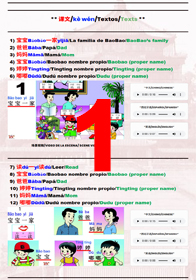
课文/Textos/Texts
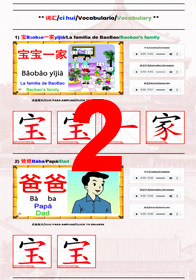
词汇/Vocabulario/Vocabulary
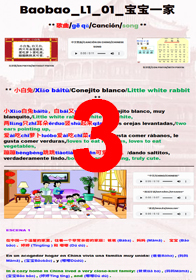
补充材料/Materiales adicionales/Additional Materials

PDF与视频/PDF y videos/PDF and Videos
边玩边学/Aprenda jugando/Learn by Playing
学习西班牙语/Aprenda Español/Learn Spanish