** 04_对不起/duìbuqǐ/Lo siento/Sorry **
** 跟宝宝学西班牙语/Gēn bǎobǎo xué xībānyá yǔ/Aprenda Español con Baobao/Learn Spanish with Baobao **
BaoBao 的材料使用 3种语言 (中文/西班牙语/英语) 编写,专为让西班牙和英国的儿童以轻松有趣的方式学习中文而设计。但它也适合年龄较大的中国孩子 (成人) 学习英语,特别是西班牙语,为此我们将在这个 子页面 中提供 专属材料。
El material de BaoBao está escrito en 3 idiomas (chino/español/inglés) , pensado especialmente para que los niños españoles e ingleses aprendan chino de forma amena y divertida. Pero también sirve para que niños mayores (adultos) de nacionalidad china aprendan inglés y, especialmente, español, para lo cual en esta subpágina pondremos materiales específicos para ello.
The BaoBao material is written in 3 languages (Chinese/Spanish/English) , specially designed for Spanish and English children to learn Chinese in a fun and enjoyable way. But it is also useful for older Chinese children (adults) to learn English and, especially, Spanish, for which we will include specific materials on this subpage.
Lección 03 / 第三课
La letra S
字母 S · 第一课** 词汇/cíhuì/Vocabulario/Vocabulary **
** 书法/shūfǎ/Caligrafía/Calligraphy **
Trazos para la s
** 歌曲/gēqǔ/Canción/Song **
** 发音/fāyīn/Pronunciación/Pronunciation **
** 测验/cèyàn/Quiz/Quiz **
** 城市/chéngshì/Ciudades/cities **


Lección 4 / 第四课
La letra 对不起
字母 对不起 · 第一课Aprenda también Español con Baobao/也和宝宝一起学习西班牙语。
对不起/duìbuqǐ/Lo siento/Sorry
** 词汇/cíhuì/Vocabulario/Vocabulary **
** 歌曲/gēqǔ/Canción/Song **
** 测验/cèyàn/Quiz/Quiz **
** 书法/shūfǎ/Caligrafía/Calligraphy **
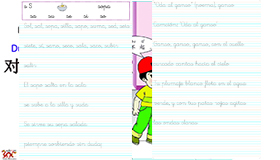
PDF: 书法练习/Caligrafia/Handwriting practice
▶ 📝 评论 / Comentarios / Comments
2. 视觉与运动连接 (Conexión Visual y Motriz): 将书法解释为 ‘蛇形曲线’ (curva de serpiente) 对孩子们来说是一个极好的记忆方法。它将字母的形状、连续的笔画和动物的嘶嘶声 (‘ssss’) 结合成一个容易吸收的概念。
3. 文化沉浸 (Inmersión Cultural): 城市模块 (Salamanca, San Sebastián 等) 是一个绝佳的设计。它不仅巩固了首字母,还描绘了西班牙的地理和美食 (hornazo, pintxos, mojo) ,将课程从简单的读写练习提升为一次完整的文化体验。
4. 文学真实性 (Autenticidad Literaria): 包含骆宾王的经典古诗 ‘咏鹅’ (Yǒng'é) 是一个完美无瑕的教学决定。尽早向孩子们介绍中国传统文学,同时保持童谣的严谨性和真实的措辞,极大地丰富了学习过程。
5. 多语种格式 (Formato Multilingüe): 诗歌的翻译成功捕捉了视觉本质 (白毛、绿水、红掌) ,同时保持了同步学习的格式,这促进了概念的直接联想。
2. Conexión Visual y Motriz: La caligrafía explicada como una ‘curva de serpiente’ es un recurso mnemotécnico excelente para los niños. Une la forma de la letra, el trazo continuo y el siseo del animal (‘ssss’) en un solo concepto asimilable.
3. Inmersión Cultural: El bloque de ciudades (Salamanca, San Sebastián, etc.) es un gran acierto. No solo refuerza la letra inicial, sino que mapea la geografía y gastronomía española (hornazo, pintxos, mojo) , elevando la lección de un simple ejercicio de lectoescritura a una experiencia cultural completa.
4. Autenticidad Literaria: La inclusión del poema clásico ‘咏鹅’ (Yǒng'é) de Luo Binwang es una decisión pedagógica impecable. Introducir a los niños a la literatura tradicional china desde temprano, manteniendo el rigor y la wording auténtica de las rimas infantiles, enriquece enormemente el aprendizaje.
5. Formato Multilingüe: La traducción del poema logra capturar la esencia visual (plumaje blanco, agua verde, patas rojas) manteniendo el formato de aprendizaje simultáneo, lo cual facilita la asociación directa de conceptos.
2. Visual and Motor Connection: Calligraphy explained as a ‘snake curve’ is an excellent mnemonic device for children. It unites the shape of the letter, the continuous stroke, and the animal's hiss (‘ssss’) into a single, assimilable concept.
3. Cultural Immersion: The cities block (Salamanca, San Sebastián, etc.) is a great success. It not only reinforces the initial letter but also maps out Spanish geography and gastronomy (hornazo, pintxos, mojo) , elevating the lesson from a simple reading and writing exercise to a complete cultural experience.
4. Literary Authenticity: The inclusion of Luo Binwang's classic poem ‘咏鹅’ (Yǒng'é) is an impeccable pedagogical decision. Introducing children to traditional Chinese literature early on, maintaining the rigor and authentic wording of nursery rhymes, greatly enriches the learning experience.
5. Multilingual Format: The translation of the poem manages to capture the visual essence (white plumage, green water, red paws) while maintaining the simultaneous learning format, which facilitates the direct association of concepts.
** 目录/mù lù/Indice de la página/Table of contents **
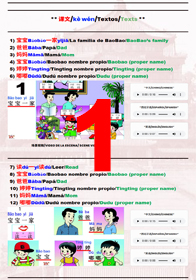
课文/Textos/Texts
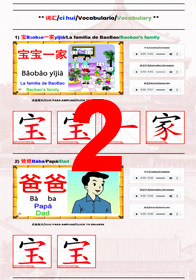
词汇/Vocabulario/Vocabulary
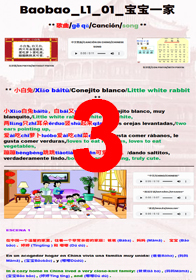
补充材料/Materiales adicionales/Additional Materials
PDF与视频/PDF y videos/PDF and Videos
边玩边学/Aprenda jugando/Learn by Playing
学习西班牙语/Aprenda Español/Learn Spanish
