
** 04_对不起/duìbuqǐ/Lo siento/Sorry **
** 额外内容/Contenido adicional/Additional Content **
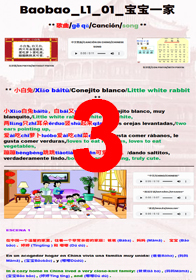
** 歌曲/gē qǔ/Canción/song **

无拼音/Sin pinyin/Without pinyin
中文歌曲/Canción en chino/Chinese song
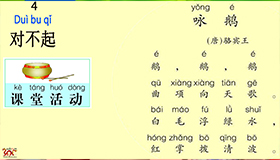
有拼音/Con pinyin/With pinyin
鹅É,鹅é,鹅é,/Ganso, ganso, ganso,/Goose, goose, goose,
曲Qū项xiàng向xiàng天tiān歌gē。/con el cuello curvado cantas hacia el cielo./bending your neck, you sing to the sky.
白Bái毛máo浮fú绿lǜ水shuǐ,/Tu plumaje blanco flota en el agua verde,/Your white feathers float on green water,
红Hóng掌zhǎng拨bō清qīng波bō。/y con tus patas rojas agitas las ondas claras./your red webbed feet stir the clear waves.
▶ 📝 评论 / Comentarios / Comments
• 标题中隔音符号的使用(Yǒng'é): 就像我们在 kě'ài(可爱)中看到的那样,这里必须使用隔音符号将’咏’(yǒng)和 ’鹅’(é)分开。如果不加(yonge),拼音的读法就会混淆,我们就无法知道第二个音节从哪里开始。
• 古诗中的拼音分写: 与现代汉语中将复合词连写不同,中国古诗的朗读节奏感极强且庄重。因此,拼音通常会逐字分开,或者根据诗句的朗读节奏进行分组(在首诗中,主要诗句采用 2-2-1 的节奏)。
• Uso del apóstrofo en el título (Yǒng'é): Al igual que vimos con kě'ài, aquí es obligatorio usar el apóstrofo para separar 咏 (yǒng) de 鹅 (é). Si no lo pusiéramos (yonge), la lectura en pinyin se confundiría y no sabríamos dónde empieza la segunda sílaba.
• Agrupación del pinyin en poesía clásica: A diferencia del chino moderno donde agrupamos las palabras compuestas, los poemas clásicos chinos se leen con un ritmo muy marcado y solemne. Por ello, el pinyin suele dejarse separado carácter por carácter o agrupado respetando el ritmo de lectura de los versos (en este caso, un ritmo de 2-2-1 para los versos principales).
• Use of the apostrophe in the title (Yǒng'é): Just as we saw with kě'ài, it is mandatory here to use the apostrophe to separate 咏 (yǒng) from 鹅 (é). If we didn't use it (yonge), the pinyin reading would be confusing, and we wouldn't know where the second syllable begins.
• Pinyin grouping in classical poetry: Unlike modern Chinese where we group compound words, classical Chinese poems are read with a very pronounced and solemn rhythm. Therefore, the pinyin is usually left separated character by character or grouped respecting the reading rhythm of the verses (in this case, a 2-2-1 rhythm for the main verses).
** 历史/Lìshǐ/La historia/history **
** 对不起/duìbuqǐ/Lo siento/Sorry **
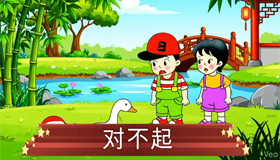
AVI: 中文/En chino /En Chinese
中文/Chino/Chinese
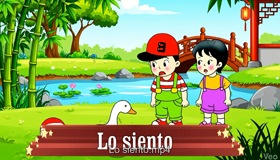
AVI: 西班牙语/En español/En Spanish
西班牙语/Español/Spanish
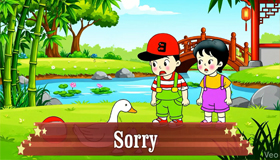
AVI: 英语/En inglés /En English
英语/inglés/English
中文/Chino/Chinese
西班牙语/Español/Spanish
英语/inglés/English
ESCENA 1
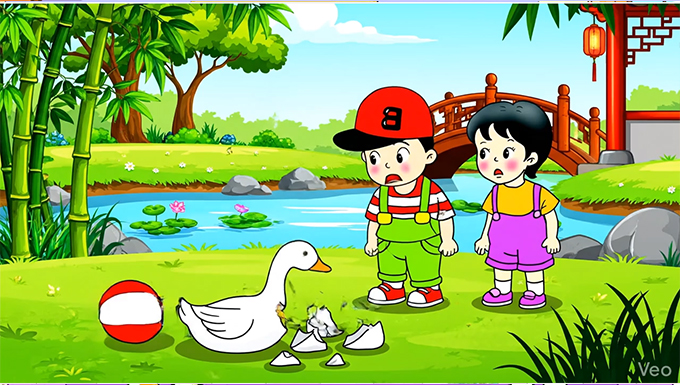
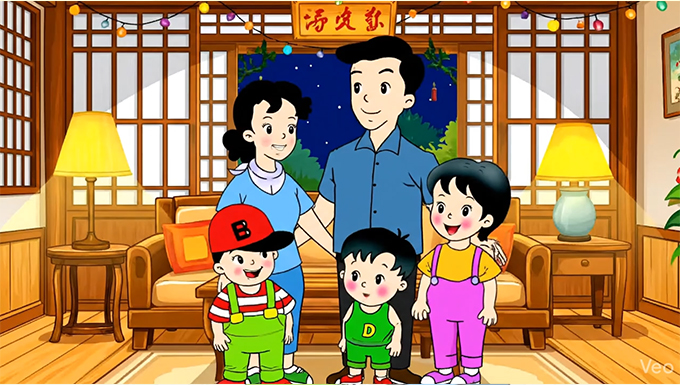
(Baobao) 和 (Tíngting) 在花园里玩耍时,不小心把球扔得太重,打碎了 (Mamá/Mom) 最心爱的陶瓷天 (ganso/Goose) 。
(宝宝Bǎobǎo) y (婷婷Tíngtíng) jugaban en el jardín cuando, sin querer, lanzaron la pelota demasiado fuerte y rompieron el (鹅é) de cerámica favorito de (妈妈Māmā) .
中文/Chino/Chinese
西班牙语/Español/Spanish
英语/inglés/English
ESCENA 2
中文/Chino/Chinese
西班牙语/Español/Spanish
英语/inglés/English
ESCENA 3

中文/Chino/Chinese
西班牙语/Español/Spanish
英语/inglés/English
ESCENA 4
中文/Chino/Chinese
西班牙语/Español/Spanish
英语/inglés/English
ESCENA 5
中文/Chino/Chinese
西班牙语/Español/Spanish
英语/inglés/English
ESCENA 6
** 未替换/wèi tìhuàn/No sustituidas/Not substituted **
** 词汇/cí huì/Vocabulario/Vocabulary **

AVI: 词汇/Vocabulario/Vocabulary
中文/Chino/Chinese
西班牙语/Español/Spanish
英语/inglés/English

AVI: 听与重复/Escucha y repite/Listen and repeat



▶ 📝 评论 / Comentarios / Comments
• 规则的一致性: 继续保持当’一’(yi)位于两个动词之间时读轻声的规则,以及在 Yǒng'é(咏鹅)中强制使用隔音符号的规定。
• Consistencia en las reglas: Se mantiene el tono neutro en el ‘一’ (yi) cuando va entre verbos y el uso obligatorio del apóstrofo en Yǒng'é.
• Consistency in rules: The neutral tone rule for ‘一’ (yi) when placed between verbs is maintained, as well as the mandatory use of the apostrophe in Yǒng'é.
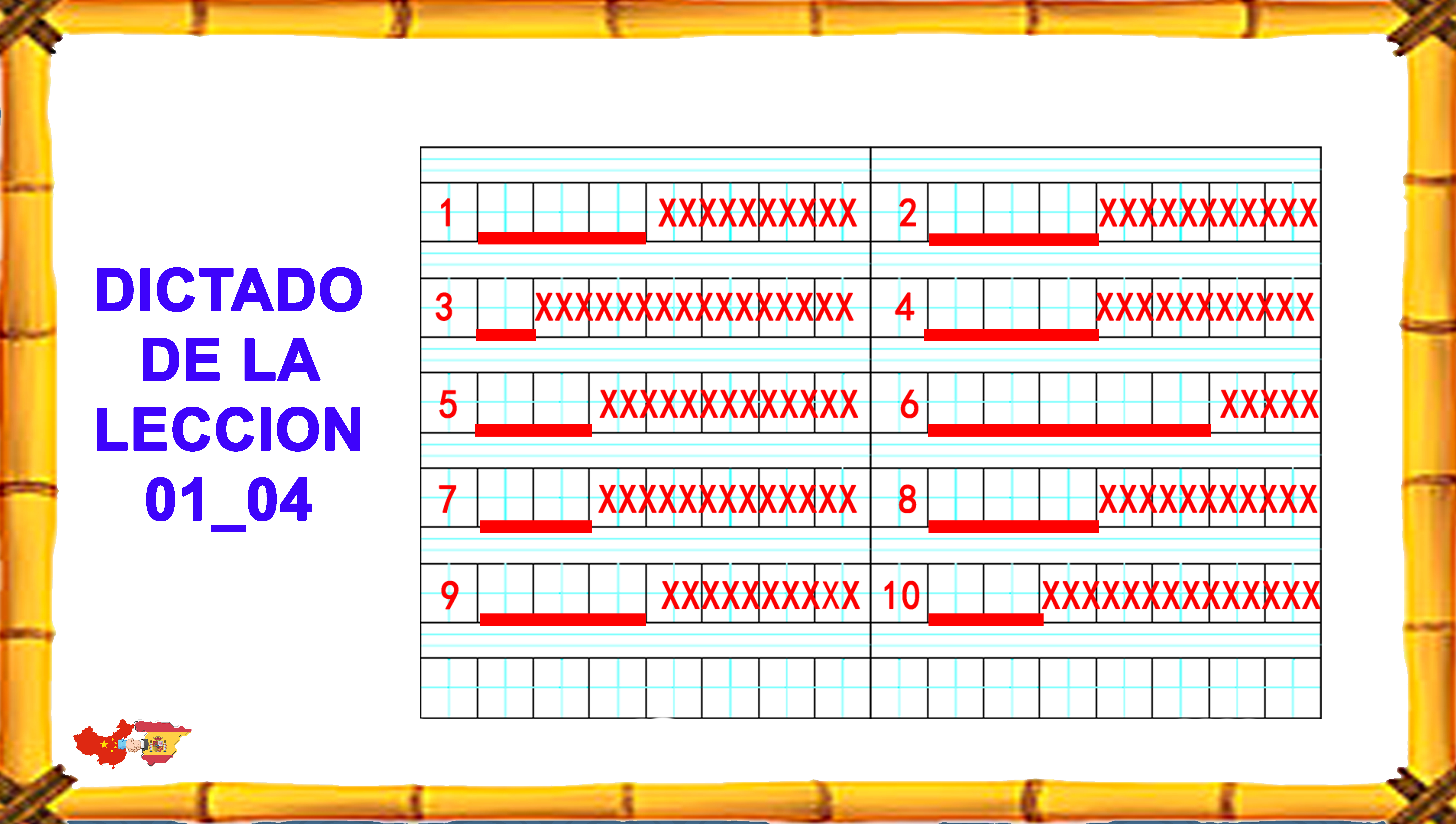
** 听写/Tīngxiě/Dictado/Dictation **
点击放大/clic para ampliar/click to enlarge
听写音频/Audio del dictado/Dictation audio

AVI: 听写/Dictado/Dictation

DICTADO VOCABULARIO
** 目录/mù lù/Indice de la página/Table of contents **
课文/Textos/Texts
词汇/Vocabulario/Vocabulary
补充材料/Materiales adicionales/Additional Materials

PDF与视频/PDF y videos/PDF and Videos
边玩边学/Aprenda jugando/Learn by Playing
学习西班牙语/Aprenda Español/Learn Spanish
