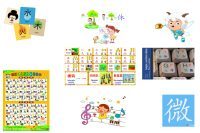
• Forma y dirección: El trazo ‘捺’ (nà) siempre se escribe desde arriba a la izquierda hacia abajo a la derecha. Comienza suave, se presiona gradualmente al bajar y termina liberando el trazo suavemente. • La pareja perfecta del ‘撇’ (piě): En muchísimos caracteres, el ‘捺’ actúa como el contrapeso del trazo descendente a la izquierda (‘撇’ - piě). Juntos forman una base estable, visualmente similar a unas piernas abiertas o al techo de una casa (como vemos en 人, 大, 八 o 天). • La variante plana (平捺 - píng nà): A veces, este trazo se vuelve más horizontal y sirve como una ‘barca’ o base que sostiene otros componentes del carácter. Esto es muy característico del radical de movimiento ‘辶’ (como en 这 o 走). • Regla de oro de la caligrafía: Hay una regla clásica en la escritura china que dice ‘un carácter no debe tener dos nà prominentes’. Para mantener el equilibrio y la elegancia, si un carácter debería tener dos, uno de ellos suele convertirse en un punto largo (‘点’ - diǎn).
• Shape and direction: The ‘捺’ (nà) stroke is always written from top-left to bottom-right. It starts lightly, presses down gradually as it moves, and ends with a smooth release. • The perfect pair for ‘撇’ (piě): In many characters, the ‘捺’ acts as a counterbalance to the left-falling stroke (‘撇’ - piě). Together they form a stable base, visually similar to open legs or the roof of a house (as seen in 人, 大, 八, or 天). • The flat variant (平捺 - píng nà): Sometimes, this stroke becomes more horizontal and serves as a ‘boat’ or base holding other components of the character. This is very characteristic of the movement radical ‘辶’ (as in 这 or 走). • Golden rule of calligraphy: There is a classic rule in Chinese writing that says ‘a character should not have two prominent nà strokes’. To maintain balance and elegance, if a character is supposed to have two, one of them is usually changed into a long dot (‘点’ - diǎn).
** 字符/zìfú/caracteres/characters **
AVI: 书写汉字/Escribir caracteres/ Writing Chinese characters
1) 对duì/Correcto, hacia, para/Correct, to, toward, for/HSK 1
• 对不起duìbuqǐ/lo siento/sorry/HSK 1
• 对话duìhuà/diálogo/dialogue/HSK 3
• 面对miànduì/enfrentar/to face/HSK 5
• 宝宝Bǎobao说shuō对不起duìbuqǐ。/Baobao dice lo siento./Baobao says sorry./HSK 2
2) 起qǐ/Levantarse, empezar/To rise, to get up, to begin/HSK 1
• 对不起duìbuqǐ/lo siento/sorry/HSK 1
• 起床qǐchuáng/levantarse (de la cama)/get up/HSK 2
• 一起yìqǐ/juntos/together/HSK 2
• 我们Wǒmen一起yìqǐ玩wán。/Jugamos juntos./We play together./HSK 2
3) 没méi/No tener, no existir/Not have, there is not/HSK 1
• 没méi关系guānxi/no pasa nada/it's okay/HSK 1
• 没有méiyǒu/no tener/not have/HSK 1
• 没事méishì/no pasa nada/nothing's wrong/HSK 3
• 嘟嘟Dūdū没méi生气shēngqì。/Dudu no está enfadado./Dudu is not angry./HSK 3
4) 关guān/Cerrar, relacionar, apagar/To close, to concern, to turn off/HSK 1
• 没méi关系guānxi/no pasa nada/it's okay/HSK 1
• 关系guānxi/relación/relationship/HSK 3
• 关门guānmén/cerrar la puerta/close the door/HSK 2
• 妈妈Māma说shuō没méi关系guānxi。/Mamá dice que no pasa nada./Mom says it's okay./HSK 2
5) 系xì/Sistema, lazo, departamento/System, to tie, department/HSK 3
• 没méi关系guānxi/no pasa nada/it's okay/HSK 1
• 联系liánxì/contactar/to contact/HSK 4
• 系统xìtǒng/sistema/system/HSK 5
• 他们Tāmen关系guānxi很hěn好hǎo。/Ellos tienen muy buena relación./They have a very good relationship./HSK 3
6) 捺nà/Trazo descendente a la derecha/Right-falling stroke (calligraphy)/-
• 撇捺piěnà/trazos a la izquierda y derecha/left and right falling strokes/—
• 一yí捺nà/un trazo descendente a la derecha/one right-falling stroke/—
• 按捺ànnà/contener/restrain/HSK 6
• 这Zhè是shì一yí个ge捺nà。/Este es un trazo descendente a la derecha./This is a right-falling stroke./HSK 4
7) 看kàn/Ver, mirar, leer/To see, to look, to watch, to read/HSK 1
• 看见kànjiàn/ver/to see/HSK 1
• 看书kànshū/leer un libro/read a book/HSK 1
• 好看hǎokàn/bonito/good-looking/HSK 2
• 婷婷Tíngting在zài看kàn书shū。/Tingting está leyendo un libro./Tingting is reading a book./HSK 1
8) 谁shéi/Quién/Who/HSK 1shéi (o shuí)
• 是shì谁shéi/quién es/who is it/HSK 1
• 谁shéi的de/de quién/whose/HSK 1
• 谁shéi知道zhīdào/quién sabe/who knows/HSK 2
• 那Nà是shì谁shéi?/¿Quién es ese?/Who is that?/HSK 1
9) 有yǒu/Tener, haber/To have, there is/HSK 1
• 没有méiyǒu/no tener/not have/HSK 1
• 有yǒu礼貌lǐmào/educado/polite/HSK 4
• 有趣yǒuqù/interesante/interesting/HSK 3
• 洛基Luòjī有yǒu两liǎng只zhī耳朵ěrduo。/Rocky tiene dos orejas./Rocky has two ears./HSK 2
• 系 (xì): Se pronuncia con su cuarto tono (xì) cuando está aislado. Sin embargo, cuando forma la palabra ‘没关系’ (méiguānxi), pierde su tono y se vuelve neutro. Lo mismo ocurre con otros caracteres cuando se unen para formar palabras de uso cotidiano.
• 系 (xì): It is pronounced with its fourth tone (xì) when isolated. However, when forming the Word ‘没关系’ (méiguānxi), it loses its tone and becomes neutral. The same happens with other characters when they join to form common everyday words. • shéi and shuí: Both are perfectly valid forms meaning ‘who’. Shéi is the most common pronunciation in colloquial speech, while shuí is sometimes used in slightly more formal contexts.
** 词汇/cí huì/Vocabulario/Vocabulary **
AVI: 词汇/Vocabulario/Vocabulary
中文/Chino/Chinese
西班牙语/Español/Spanish
英语/inglés/English
AVI: 听与重复/Escucha y repite/Listen and repeat
1) 对不起duìbuqǐ/Lo siento/Sorry
2) 没关系méiguānxi/No importa/It's okay, no problem
3) 读dú一yi读dú/Lee un poco/Read a bit
4) 说shuō一yi说shuō/Habla un poco/Practice speaking
5) 捺nà/Trazo descendente a la derecha/Right-falling stroke
6) 看kàn谁shéi有yǒu礼貌lǐmào/A ver quién es más educado/Let's see who is more polite
7) 咏鹅Yǒng'é/’Oda al ganso’ (poema)/’Ode to the Goose’ (poem)
• Tonos neutros en cortesía: En las expresiones cotidianas de disculpa y respuesta, (‘对不起’ (duìbuqǐ)) y ‘没关系’ (méiguānxi), las sílabas centrales y finales a menudo se pronuncian en tono neutro para dar fluidez al habla (bu y xi). • Consistencia en las reglas: Se mantiene el tono neutro en el ‘一’ (yi) cuando va entre verbos y el uso obligatorio del apóstrofo en Yǒng'é.
• Neutral tones in courtesy phrases: In everyday expressions of apology and response, ‘对不起’ (duìbuqǐ) and ‘没关系’ (méiguānxi), the middle and final syllables are often pronounced in a neutral tone to make speech more fluent (bu and xi). • Consistency in rules: The neutral tone rule for ‘一’ (yi) when placed between verbs is maintained, as well as the mandatory use of the apostrophe in Yǒng'é.
** 目录/mù lù/Indice de la página/Table of contents **