** 12_那是什么/Nà shì shénme?/¿Qué es eso?/What is that? **
** 跟宝宝学西班牙语/Gēn bǎobǎo xué xībānyá yǔ/Aprenda Español con Baobao/Learn Spanish with Baobao **
BaoBao 的材料使用 3种语言 (中文/西班牙语/英语) 编写,专为让西班牙和英国的儿童以轻松有趣的方式学习中文而设计。但它也适合年龄较大的中国孩子 (成人) 学习英语,特别是西班牙语,为此我们将在这个 子页面 中提供 专属材料。
El material de BaoBao está escrito en 3 idiomas (chino/español/inglés) , pensado especialmente para que los niños españoles e ingleses aprendan chino de forma amena y divertida. Pero también sirve para que niños mayores (adultos) de nacionalidad china aprendan inglés y, especialmente, español, para lo cual en esta subpágina pondremos materiales específicos para ello.
The BaoBao material is written in 3 languages (Chinese/Spanish/English) , specially designed for Spanish and English children to learn Chinese in a fun and enjoyable way. But it is also useful for older Chinese children (adults) to learn English and, especially, Spanish, for which we will include specific materials on this subpage.
Lección 11/第十一课
La letra I
字母 I · 第一课** 词汇/cíhuì/Vocabulario/Vocabulary **
** 书法/shūfǎ/Caligrafía/Calligraphy **
Trazos para la i
** 歌曲/gēqǔ/Canción/Song **
** 发音/fāyīn/Pronunciación/Pronunciation **
** 测验/cèyàn/Quiz/Quiz **
** 城市/chéngshì/Ciudades/cities **
Lección 12 / 第12课
La letra 那是什么
字母 那是什么 · 第一课Aprenda también Español con Baobao/也和宝宝一起学习西班牙语。
那是什么/Nà shì shénme?/¿Qué es eso?/What is that?
** 词汇/cíhuì/Vocabulario/Vocabulary **
** 歌曲/gēqǔ/Canción/Song **
** 测验/cèyàn/Quiz/Quiz **
** 书法/shūfǎ/Caligrafía/Calligraphy **
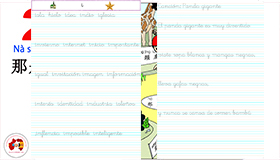
PDF: 书法练习/Caligrafia/Handwriting practice
▶ 📝 评论 / Comentarios / Comments
2. 微笑的元音: 西班牙语中的 I 是一个发音时需要拉伸嘴唇的音,就像在微笑一样 (扁扁的嘴巴) 。对中国学生来说,将它与拼音中的 衣 (yī) 联系起来非常有用,但要提醒他们西班牙语的元音更短促、更干脆。保持舌头抬高 (舌头抬高) 能够确保我们发出那种纯正的尖锐声音。
3. 戴帽子的瘦字母: 在书写方面,小写字母 i 非常有趣。把它比作一个戴着帽子或顶着小圆点的瘦瘦的字符,不仅能帮助孩子们记住它的形状,还能让书写练习(从中线到底部的垂直线)变得更有想象力。
4. 充满想象力的词汇: 包含 isla(岛屿)、idea(想法)和 invierno(冬天)等词汇的歌曲,创造了一个极好的语音环境。这种将不同词汇连接成有趣故事的方法,不仅巩固了发音,还扩大了孩子们的日常词汇量。
5. 第十二课评论 (那是什么 / 歌曲:大熊猫)
6. 探索世界的钥匙: 学会问 那是什么? (¿Qué es eso?) 是孩子们认知发展中的一个关键工具。这个简单的问句鼓励孩子们充满好奇地指向远处的物体或动物,激发他们主动探索周围的环境,并为日常对话开启了无数的可能性。
7. 视觉化的生动儿歌: 关于 大熊猫 (Panda gigante) 的这首歌曲,完美地利用了孩子们的视觉想象力。将大熊猫的黑色斑块比作 黑袖 (mangas negras) 和 黑眼镜 (gafas negras) ,是一种极具创意的联想记忆法。这不仅让孩子们轻松记住大熊猫的特征,还巧妙地融入了关于它爱吃 竹子 (bambú) 的文化常识。
2. La vocal sonriente: La I en español es un sonido que requiere estirar los labios, casi como si estuviéramos sonriendo (boca fina) . Para los estudiantes chinos, es muy útil relacionarlo con el pinyin 衣 (yī) , pero recordando que la vocal española es mucho más corta y seca. Mantener la lengua arriba (lengua alta) asegura que produzcamos ese sonido agudo tan auténtico.
3. La letra delgada con sombrero: En cuanto a la caligrafía, la letra i minúscula es muy divertida de enseñar. Compararla con un personaje delgadito que lleva un sombrero o un puntito en la cabeza ayuda a los niños a recordar su forma y hace que el trazo (esa línea vertical desde el medio hasta la base) sea mucho más imaginativo.
4. Vocabulario lleno de ideas: La canción que incluye palabras como isla, idea o invierno crea un entorno fonético excelente. Esta forma de conectar diferentes palabras en una historia simpática no solo consolida la pronunciación, sino que amplía el vocabulario cotidiano de los más pequeños de forma amena.
5. Comentario de la Lección 12 (那是什么 / Canción: 大熊猫)
6. La llave para explorar el mundo: Aprender a preguntar 那是什么? (¿Qué es eso?) es una herramienta clave en el desarrollo cognitivo de los niños. Esta sencilla pregunta los anima a señalar objetos o animales en la distancia con curiosidad, estimulando su exploración activa del entorno y abriendo infinitas posibilidades para el diálogo diario.
7. Una rima visual y simpática:La canción sobre el 大熊猫 (Panda gigante) utiliza a la perfección la imaginación visual de los niños. Comparar las manchas negras del panda con llevar mangas negras (黑袖) y gafas negras (黑眼镜) es una estrategia mnemotécnica muy creativa. Esto no solo hace que recuerden sus características faciales, sino que también introduce de forma divertida su amor por el bambú (竹子) .
2. The smiling vowel: The I in Spanish is a sound that requires stretching the lips, almost as if we were smiling (thin mouth) . For Chinese students, it is very useful to relate it to the pinyin 衣 (yī) , but reminding them that the Spanish vowel is much shorter and sharper. Keeping the tongue up (high tongue) ensures that we produce that authentic high-pitched sound.
3. The skinny letter with a hat: Regarding calligraphy, the lowercase letter i is very fun to teach. Comparing it to a skinny character wearing a hat or a little dot on its head helps children remember its shape and makes the stroke (that vertical line from the middle to the base) much more imaginative.
4. Vocabulary full of ideas: The song that includes words like isla, idea, or invierno creates an excellent phonetic environment. This way of connecting different words into a cute story not only consolidates pronunciation but also expands the little ones' everyday vocabulary in an enjoyable way.
5. Commentary for Lesson 12 (那是什么 / Song: 大熊猫)
6. The key to exploring the world: Learning to ask 那是什么? (What is that?) is a key tool in children's cognitive development. This simple question encourages them to point at objects or animals in the distance with curiosity, stimulating their active exploration of the environment and opening up endless possibilities for daily dialogue.
7. A visual and cute rhyme: The song about the 大熊猫 (Giant panda) perfectly uses children's visual imagination. Comparing the panda's black spots to wearing black sleeves (黑袖) and black glasses (黑眼镜) is a highly creative mnemonic strategy. This not only makes them easily remember its features but also playfully introduces its love for bamboo (竹子) .
** 目录/mù lù/Indice de la página/Table of contents **
课文/Textos/Texts
词汇/Vocabulario/Vocabulary
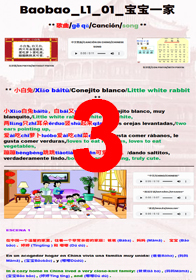
补充材料/Materiales adicionales/Additional Materials

PDF与视频/PDF y videos/PDF and Videos
边玩边学/Aprenda jugando/Learn by Playing
学习西班牙语/Aprenda Español/Learn Spanish
