
** 05_再见/zàijiàn/Adiós/Goodbye **
** 额外内容/Contenido adicional/Additional Content **
** 歌曲/gē qǔ/Canción/song **

无拼音/Sin pinyin/Without pinyin
中文歌曲/Canción en chino/Chinese song
有拼音/Con pinyin/With pinyin
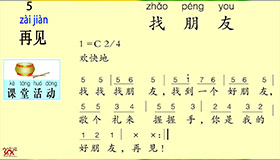
** 找朋友/zhǎo péngyou/Buscar amigos/Looking for friends **
找Zhǎo,找zhǎo,找zhǎo朋友péngyou,/Busco, busco, busco a un amigo,/Looking, looking, looking for a friend,
找到Zhǎodào一yí个ge好hǎo朋友péngyou,/Encuentro a un buen amigo,/Find a good friend,
敬Jìng个ge礼lǐ来lái握握wòwo手shǒu,/Hacemos una reverencia y nos damos la mano,/We bow and shake hands,
你Nǐ是shì我wǒ的de好hǎo朋友péngyou,再见zàijiàn!/Eres mi buen amigo. ¡Adiós!/You are my good friend. Goodbye!
▶ 📝 评论 / Comentarios / Comments
2. 动词重叠 (“握握手”):在中文里,经常通过重叠动词来表示动作短暂、随意或友好。“握手” 的意思是握手;“握握手” (wòwo shǒu) 则传达了一种轻松、友好的“握一握手”的感觉。第二个动词失去原调,变成轻声 (wòwo)。
2. Repetición de verbos (“握握手”): En chino, es muy común repetir un verbo para indicar que la acción es breve, casual o amigable. “握手” es dar la mano; “握握手” (wòwo shǒu) transmite la idea de “darnos un apretoncito de manos”. El segundo verbo pierde su tono y se vuelve neutro (wòwo).
2. Verb reduplication (“握握手”): In Chinese, it is very common to repeat a verb to indicate that the action is brief, casual, or friendly. “握手” means to shake hands; “握握手” (wòwo shǒu) conveys the idea of a “friendly little handshake”. The second verb loses its tone and becomes neutral (wòwo).
** 历史/Lìshǐ/La historia/history **
** 再见/zàijiàn/Adiós/Goodbye **

AVI: 中文/En chino /En Chinese
中文/Chino/Chinese

AVI: 西班牙语/En español/En Spanish
西班牙语/Español/Spanish

AVI: 英语/En inglés /En English
英语/inglés/English
中文/Chino/Chinese
西班牙语/Español/Spanish
英语/inglés/English
Escena 1

中文/Chino/Chinese
西班牙语/Español/Spanish
英语/inglés/English
Escena 2

中文/Chino/Chinese
西班牙语/Español/Spanish
英语/inglés/English
Escena 3
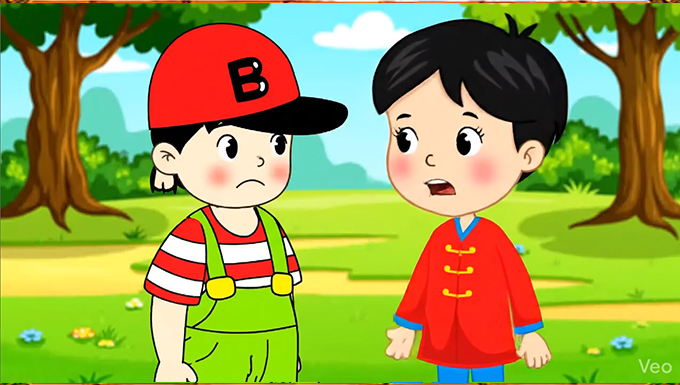
那天下午,他又回到了公园,认识了一个也独自一人的新孩子—— (Beibei) 。
(Baobao) 鼓起勇气走过去说:’你好,你想一起玩吗?我在找一个朋友。 ‘ (Beibei) 笑着答应了。
Esa tarde, volvió al parque y conoció a (贝贝Bèibèi) , un niño nuevo que también estaba solo.
Con valentía, (宝宝Bǎobǎo) se acercó y dijo: ‘Hola, ¿quieres jugar? Estoy buscando un amigo’. (贝贝Bèibèi) sonrió y aceptó.
That afternoon, he went back to the park and met (贝贝Bèibèi) , a new child who was also alone.
With courage, (宝宝Bǎobǎo) walked up to him and said, ‘Hi, do you want to play? I’m looking for a friend. ‘ (贝贝Bèibèi) smiled and agreed.

中文/Chino/Chinese
西班牙语/Español/Spanish
英语/inglés/English
Escena 4
他们一直玩到日落,一边笑一边分享故事。
Jugaron hasta el atardecer, riendo y compartiendo historias.
They played until sunset, laughing and sharing stories.

中文/Chino/Chinese
西班牙语/Español/Spanish
英语/inglés/English
Escena 5

中文/Chino/Chinese
西班牙语/Español/Spanish
英语/inglés/English
Escena 6
(Baobao) 明白了,虽然告别很困难,但这个世界上充满了等待被发现的人。
(宝宝Bǎobǎo) aprendió que, aunque las despedidas son difíciles, el mundo está lleno de personas esperando ser descubiertas.
(宝宝Bǎobǎo) learned that although goodbyes are difficult, the world is full of people waiting to be discovered.
** 未替换/wèi tìhuàn/No sustituidas/Not substituted **
** 词汇/cí huì/Vocabulario/Vocabulary **

AVI: 词汇/Vocabulario/Vocabulary
中文/Chino/Chinese
西班牙语/Español/Spanish
英语/inglés/English

AVI: 听与重复/Escucha y repite/Listen and repeat
▶ 📝 评论 / Comentarios / Comments
2. 找朋友 (zhǎo péngyou):最后一个音节 (you) 读轻声,并且保留 ‘Buscar amigos / Looking for friends’ 作为动词 找 (zhǎo,寻找) 最准确的翻译。
2. 找朋友 (zhǎo péngyou): Se aplica el tono neutro en la última sílaba (you), y se mantiene ‘Buscar amigos / Looking for friends’ como la traducción más precisa para el verbo 找 (zhǎo, buscar).
2. 找朋友 (zhǎo péngyou): The neutral tone is applied to the last syllable (you), and ‘Buscar amigos / Looking for friends’ is maintained as the most accurate translation for the verb 找 (zhǎo, to look for).
** 听写/Tīngxiě/Dictado/Dictation **

点击放大/clic para ampliar/click to enlarge
听写音频/Audio del dictado/Dictation audio

AVI: 听写/Dictado/Dictation

DICTADO VOCABULARIO
** 目录/mù lù/Indice de la página/Table of contents **
课文/Textos/Texts
词汇/Vocabulario/Vocabulary
补充材料/Materiales adicionales/Additional Materials

PDF与视频/PDF y videos/PDF and Videos

边玩边学/Aprenda jugando/Learn by Playing
学习西班牙语/Aprenda Español/Learn Spanish
