** 03_谢谢xièxiè/Gracias/Thank you **
** 额外内容/Contenido adicional/Additional Content **
** 歌曲/gē qǔ/Canción/song **

无拼音/Sin pinyin/Without pinyin
中文歌曲/Canción en chino/Chinese song
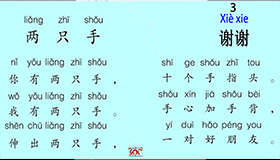
有拼音/Con pinyin/With pinyin
** 两只手/Liǎng zhī shǒu/Dos manos/Two hands **
你Nǐ有yǒu两liǎng只zhī手shǒu,/Tú tienes dos manos,/You have two hands,
我Wǒ有yǒu两liǎng只zhī手shǒu./Yo tengo dos manos./I have two hands.
伸出Shēnchū两liǎng只zhī手shǒu,/Extendemos las dos manos,/Stretch out both hands,
十Shí个ge手指头shǒuzhǐtou./Diez dedos en total./Ten little fingers.
手心Shǒuxīn加jiā手背shǒubèi,/La palma y el dorso,/Palm and back of the hand,
一Yí对duì好hǎo朋友péngyou./Un par de buenos amigos./A pair of good friends.
▶ 📝 评论 / Comentarios / Comments
• 量词’个’(ge): 这个量词在日常口语中通常会失去原调,读作轻声(ge 而不是 gè)。
• 后缀’头’(tou): 在’手指头’ 这个词中,该后缀总是读作轻声:shǒuzhǐtou。
• ‘朋友’(péngyou)一词: 在 ’朋友’ 中,第二个音节也读作轻声:péngyou。
• El clasificador 个 (ge): Este clasificador suele perder su tono en el habla cotidiana y se pronuncia en tono neutro (ge en lugar de gè).
• El sufijo 头 (tou): En la palabra ‘dedos’ (手指头), este sufijo siempre se pronuncia en tono neutro: shǒuzhǐtou.
• La palabra 朋友 (péngyou): En la palabra ‘amigos’, la segunda sílaba también va en tono neutro: péngyou.
• The classifier 个 (ge): This classifier usually loses its tone in everyday speech and is pronounced in a neutral tone (ge instead of gè).
• The suffix 头 (tou): In the word ‘fingers’ (手指头), this suffix is always pronounced in a neutral tone: shǒuzhǐtou.
• The word 朋友 (péngyou): In the word ‘friends’, the second syllable also takes a neutral tone: péngyou.
** 历史/Lìshǐ/La historia/history **
** 谢谢/xièxiè/Gracias/Thank you **
AVI: 中文/En chino /En Chinese
中文/Chino/Chinese
AVI: 西班牙语/En español/En Spanish
西班牙语/Español/Spanish

AVI: 英语/En inglés /En English
英语/inglés/English
中文/Chino/Chinese
西班牙语/Español/Spanish
英语/inglés/English
Escena 1
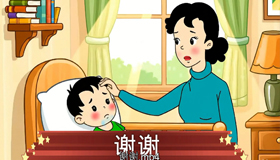
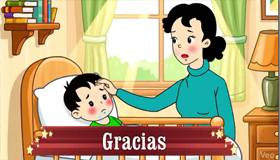
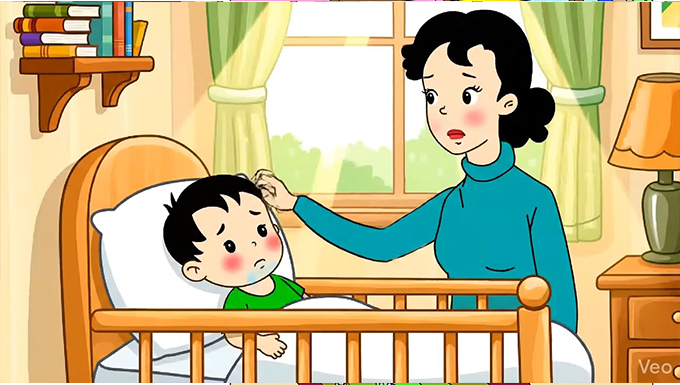
一天早上, (Dudú) 醒来时发烧了。
Una mañana, (嘟嘟Dūdū) amaneció con fiebre.
One morning, (嘟嘟Dūdū) woke up with a fever.
中文/Chino/Chinese
西班牙语/Español/Spanish
英语/inglés/English
Escena 2
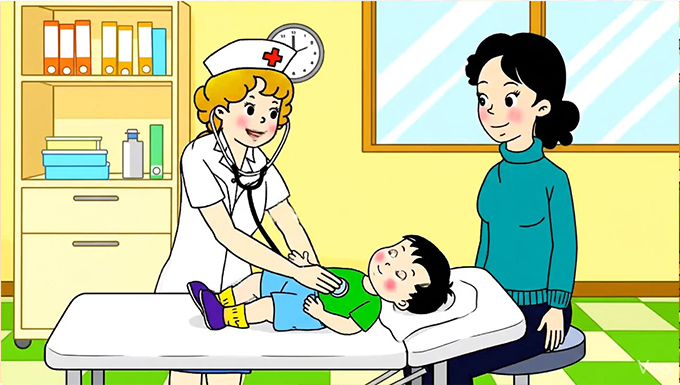
(Mamá/Mom) 很担心,立刻带他去看 (Beibei) (Médico(a) ,doctor(a)/Doctor) 。 (Beibei) (Médico(a) ,doctor(a)/Doctor) 以她的善良和一双能治愈所有人的巧手而闻名。 (Médico(a) ,doctor(a)/Doctor) 仔细地检查了 (Dudú) ,用双手量体温并给他听诊。
Preocupada, (妈妈Māmā) lo llevó de inmediato a ver a la (医生yīshēng) (贝贝Bèibei) , conocida por su amabilidad y sus dos manos expertas que curaban a todos. La (医生yīshēng) revisó a (嘟嘟Dūdū) con cuidado, usando sus dos manos para tomar su temperatura y auscultarlo.
Worried, (妈妈Māmā) immediately took him to see (医生yīshēng) (贝贝Bèibei) , who was known for her kindness and her two expert hands that healed everyone. The (医生yīshēng) carefully examined (嘟嘟Dūdū) , using her two hands to take his temperature and listen to his breathing.

中文/Chino/Chinese
西班牙语/Español/Spanish
英语/inglés/English
Escena 3
中文/Chino/Chinese
西班牙语/Español/Spanish
英语/inglés/English
Escena 4
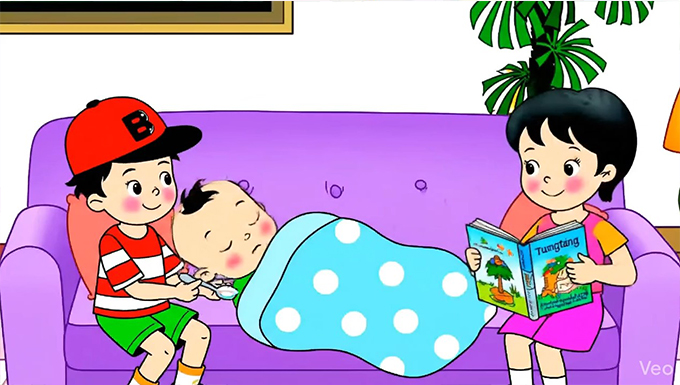
回到家后, (Baobao) 和 (Tíngting) 一起照顾 (Dudú) 。他们给他喂药,给他读故事,还用毯子给他盖好。
En casa, (宝宝Bǎobǎo) y (婷婷Tíngtíng) ayudaron a cuidar a (嘟嘟Dūdū) . Le dieron su medicina, le leyeron cuentos y le arroparon con mantas.
At home, (宝宝Bǎobǎo) and (婷婷Tíngtíng) helped take care of (嘟嘟Dūdū) . They gave him his medicine, read him stories, and covered him with blankets.
中文/Chino/Chinese
西班牙语/Español/Spanish
英语/inglés/English
Escena 5
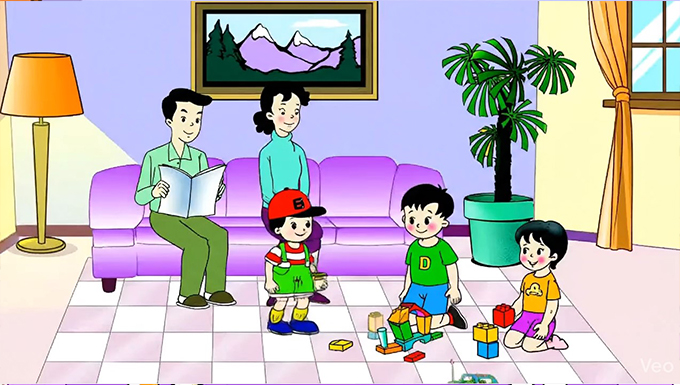
中文/Chino/Chinese
西班牙语/Español/Spanish
英语/inglés/English
Escena 6
** 未替换/wèi tìhuàn/No sustituidas/Not substituted **
** 词汇/cí huì/Vocabulario/Vocabulary **

AVI: 词汇/Vocabulario/Vocabulary
中文/Chino/Chinese
西班牙语/Español/Spanish
英语/inglés/English

AVI: 听与重复/Escucha y repite/Listen and repeat



▶ 📝 评论 / Comentarios / Comments
• 叠音名字(贝贝 - Bèibei): 就像我们之前在家庭称谓(māma, dìdi)中看到的那样,当重复一个汉字来构成昵称或小名时,第二个音节会失去原调,读作轻声。
• ‘不’ (bù) 的变调: ‘不’通常读作第四声(bù)。但是,当它出现在另一个第四声音节(如’客’ - kè)前面时,为了发音方便,会自动变成第二声:bú。因此, ’不客气’ 读作 bú kèqi。
• Nombres repetidos (贝贝 - Bèibei): Al igual que vimos con los miembros de la familia (māma, dìdi), cuando se repite un carácter para formar un nombre cariñoso o apodo, la segunda sílaba pierde su tono y se pronuncia en tono neutro.
• El cambio de tono de 不 (bù): Normalmente, la negación ‘不’ es un cuarto tono (bù). Sin embargo, cuando va delante de otra sílaba que también es un cuarto tono, como ‘客’ (kè), cambia automáticamente al segundo tono para facilitar la pronunciación: bú. Por lo tanto, ‘de nada’ se pronuncia bú kèqi.
• Reduplicated names (贝贝 - Bèibei): Just as we saw with family terms (māma, dìdi), when a character is repeated to form an affectionate name or nickname, the second syllable loses its tone and is pronounced in a neutral tone.
• Tone change of 不 (bù): Normally, the negation ‘不’ is a fourth tone (bù). However, when it precedes another fourth-tone syllable like ‘客’ (kè), it automatically changes to the second tone to make pronunciation easier: bú. Therefore, ‘you're welcome’ is pronounced bú kèqi.
** 这本书的角色/Zhè běn shū de juésè/Personajes de este libro/Characters of this book **
中文/Chino/Chinese
西班牙语/Español/Spanish
英语/inglés/English
▶ 📝 评论 / Comentarios / Comments
1. 叠词小名: 像 “宝宝”、“婷婷”、“嘟嘟”这样的名字,通过重复同一个汉字来表达亲昵和可爱,类似于外语中的爱称。
2. 小白兔 (xiǎo báitù): 在拼写 ’小白兔’(conejito blanco) 的拼音时,正确的结构是将形容词与名词分开:xiǎo báitù(小 + 白兔)。
3. 外文名字音译: 像“汤姆”(Tom) 或“丽达”(Lida) 这样的名字是音译。中文会选择发音相似的汉字来翻译外国名字。
** 听写/Tīngxiě/Dictado/Dictation **
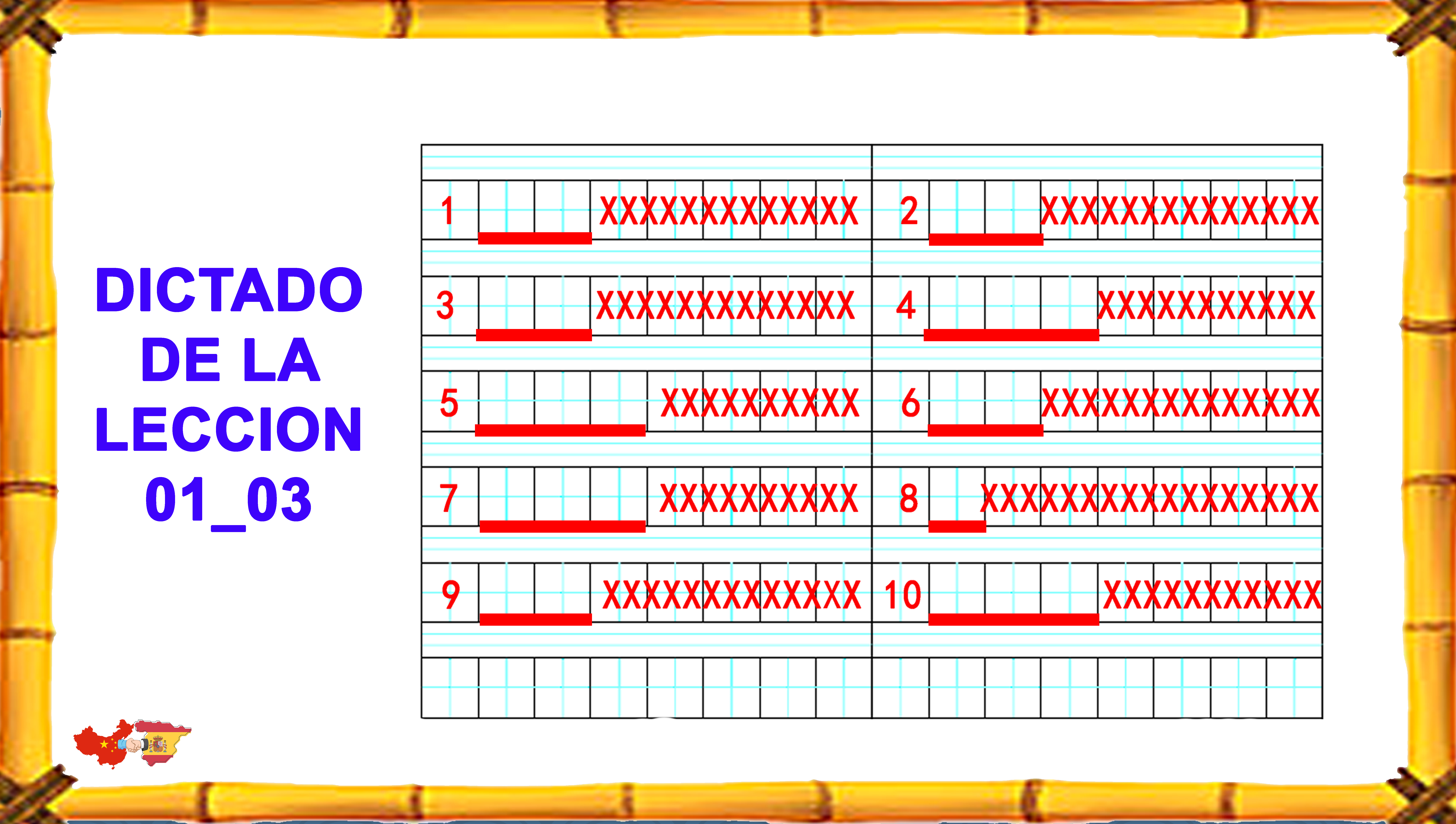
点击放大/clic para ampliar/click to enlarge
听写音频/Audio del dictado/Dictation audio

AVI: 听写/Dictado/Dictation

DICTADO VOCABULARIO
** 目录/mù lù/Indice de la página/Table of contents **
课文/Textos/Texts
词汇/Vocabulario/Vocabulary
补充材料/Materiales adicionales/Additional Materials

PDF与视频/PDF y videos/PDF and Videos

边玩边学/Aprenda jugando/Learn by Playing
学习西班牙语/Aprenda Español/Learn Spanish
