
** 03_谢谢xièxiè/Gracias/Thank you **

点击放大/clic para ampliar/click to enlarge

点击放大/clic para ampliar/click to enlarge

AVI: 词汇/Vocabulario/Vocabulary
** 词汇/cí huì/Vocabulario/Vocabulary **
1) 谢谢xièxiè/gracias/Thank you

点击放大/clic para ampliar/click to enlarge
中文/Chino/Chinese
西班牙语/Español/Spanish
英语/inglés/English
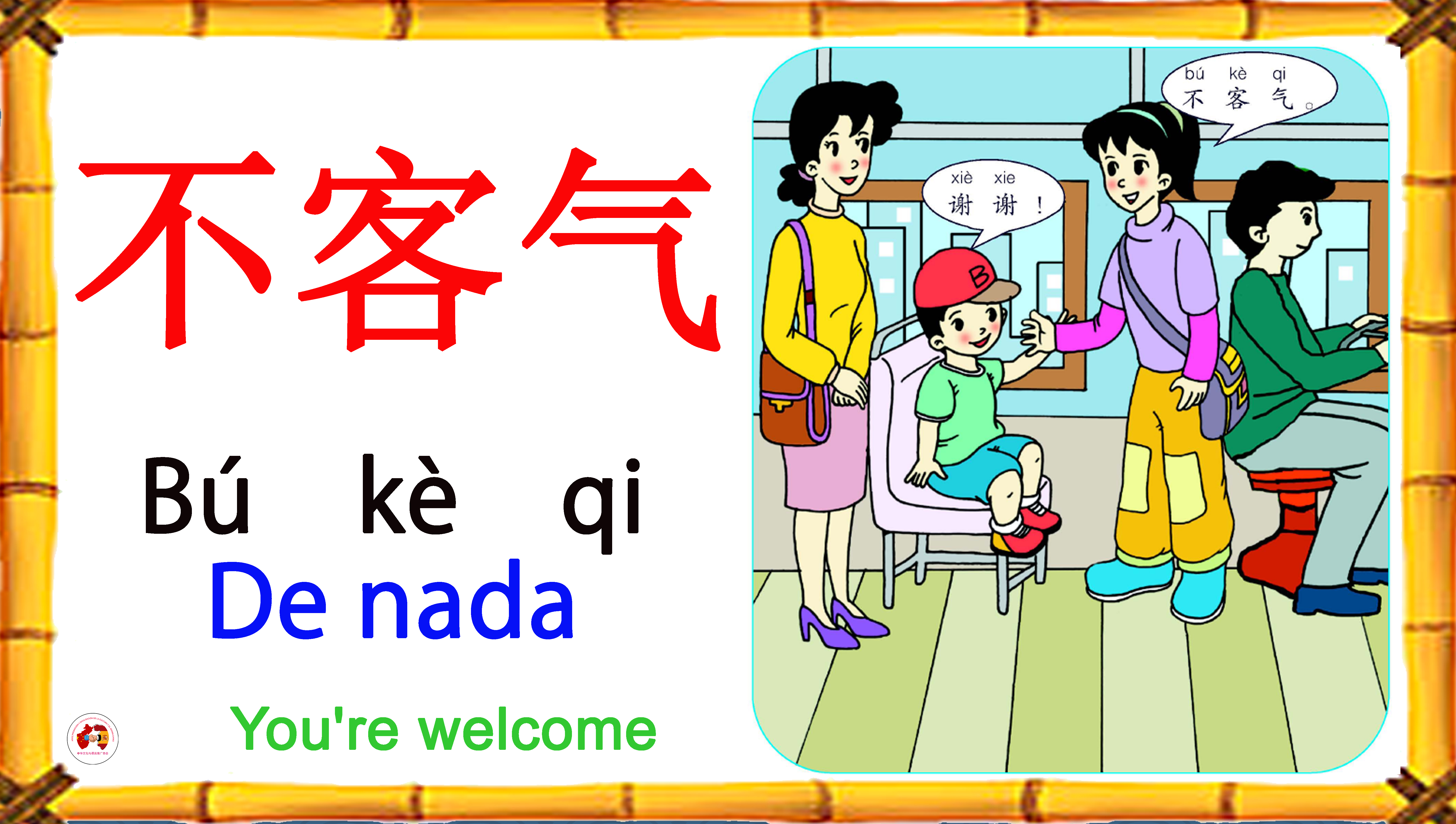
2) 不bù客气kèqì/de nada/You're welcome
点击放大/clic para ampliar/click to enlarge
中文/Chino/Chinese
西班牙语/Español/Spanish
英语/inglés/English
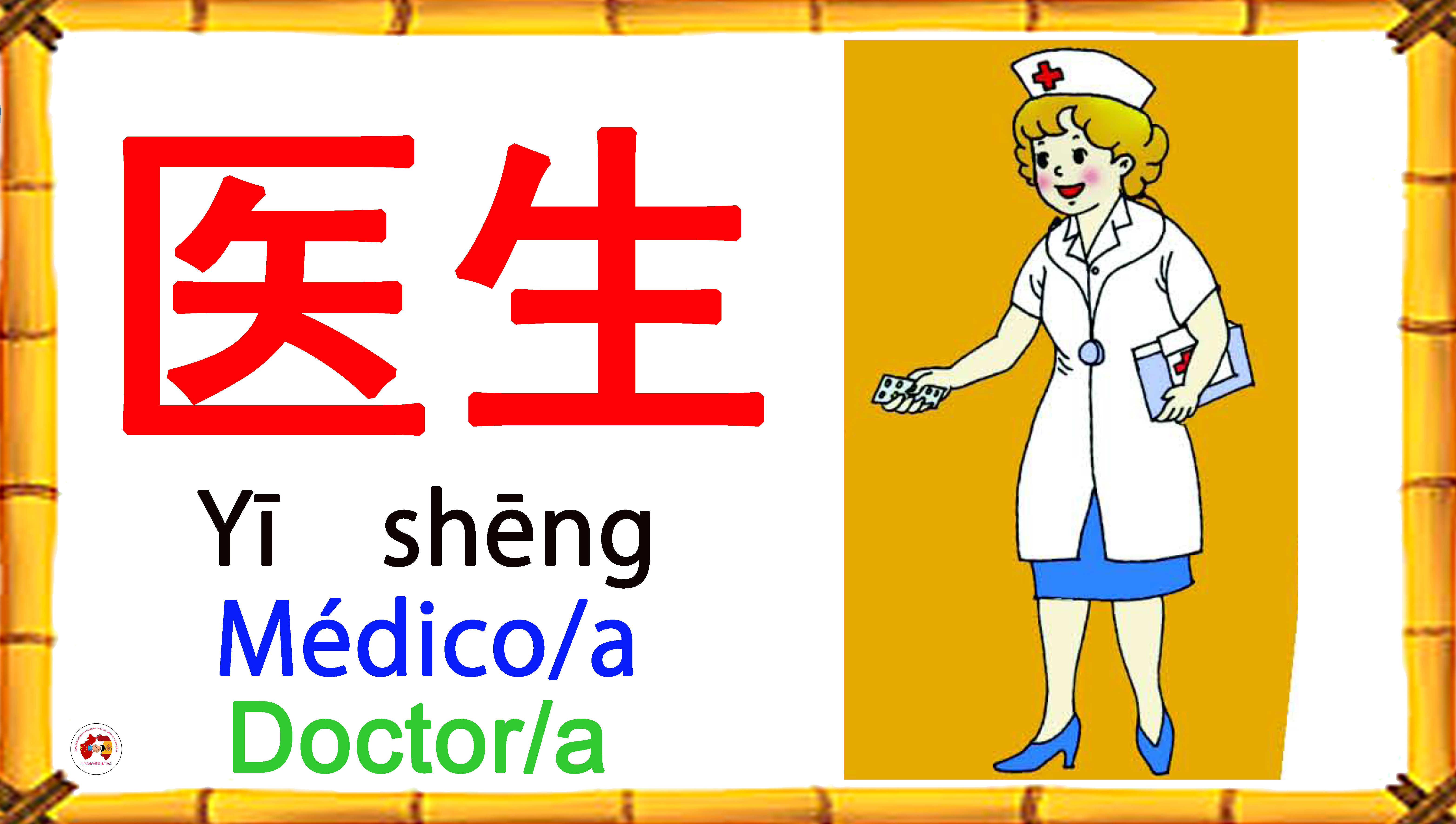
3) 医生yīshēng/Médico, médica/Doctor
点击放大/clic para ampliar/click to enlarge
中文/Chino/Chinese
西班牙语/Español/Spanish
英语/inglés/English
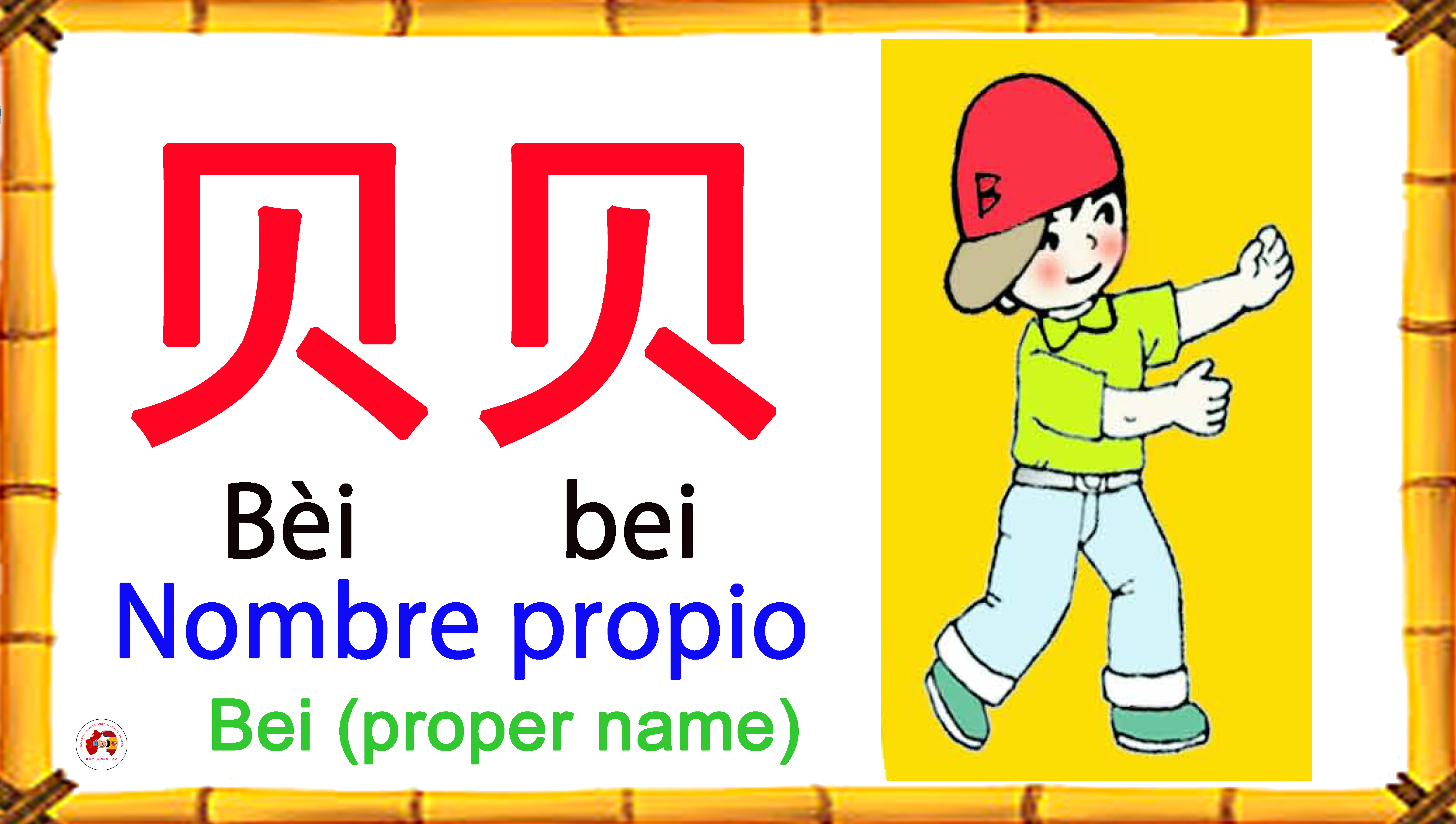
4) 贝贝Bèibèi/Bei Bei (nombre propio)/BeiBei (proper name)
点击放大/clic para ampliar/click to enlarge
中文/Chino/Chinese
西班牙语/Español/Spanish
英语/inglés/English
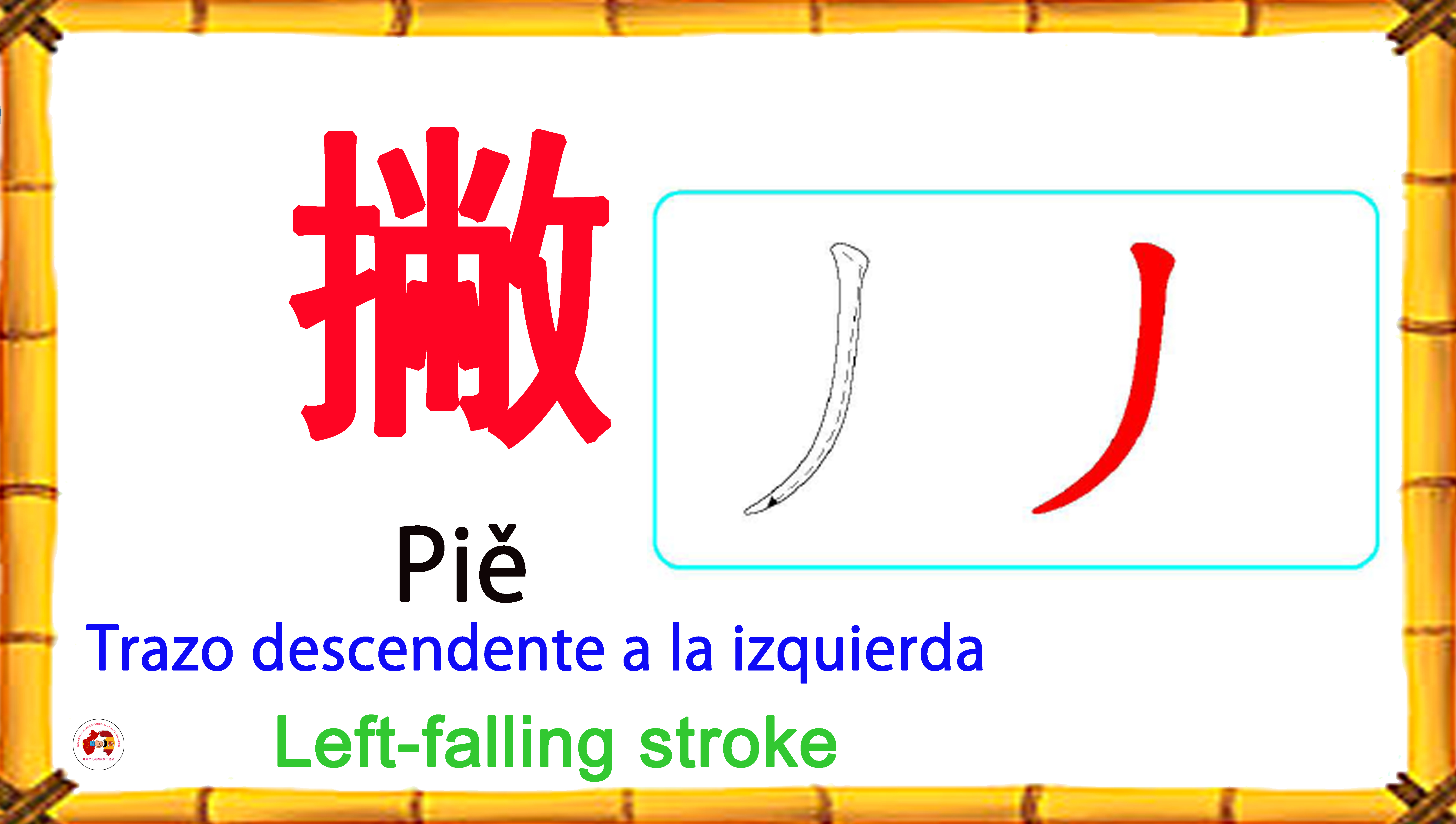
5) 撇Piě/Trazo descendente a la izquierda/Left-falling stroke
点击放大/clic para ampliar/click to enlarge
中文/Chino/Chinese
西班牙语/Español/Spanish
英语/inglés/English
** 部首/bù shǒu/Radical/Radical **
中文
Español
English
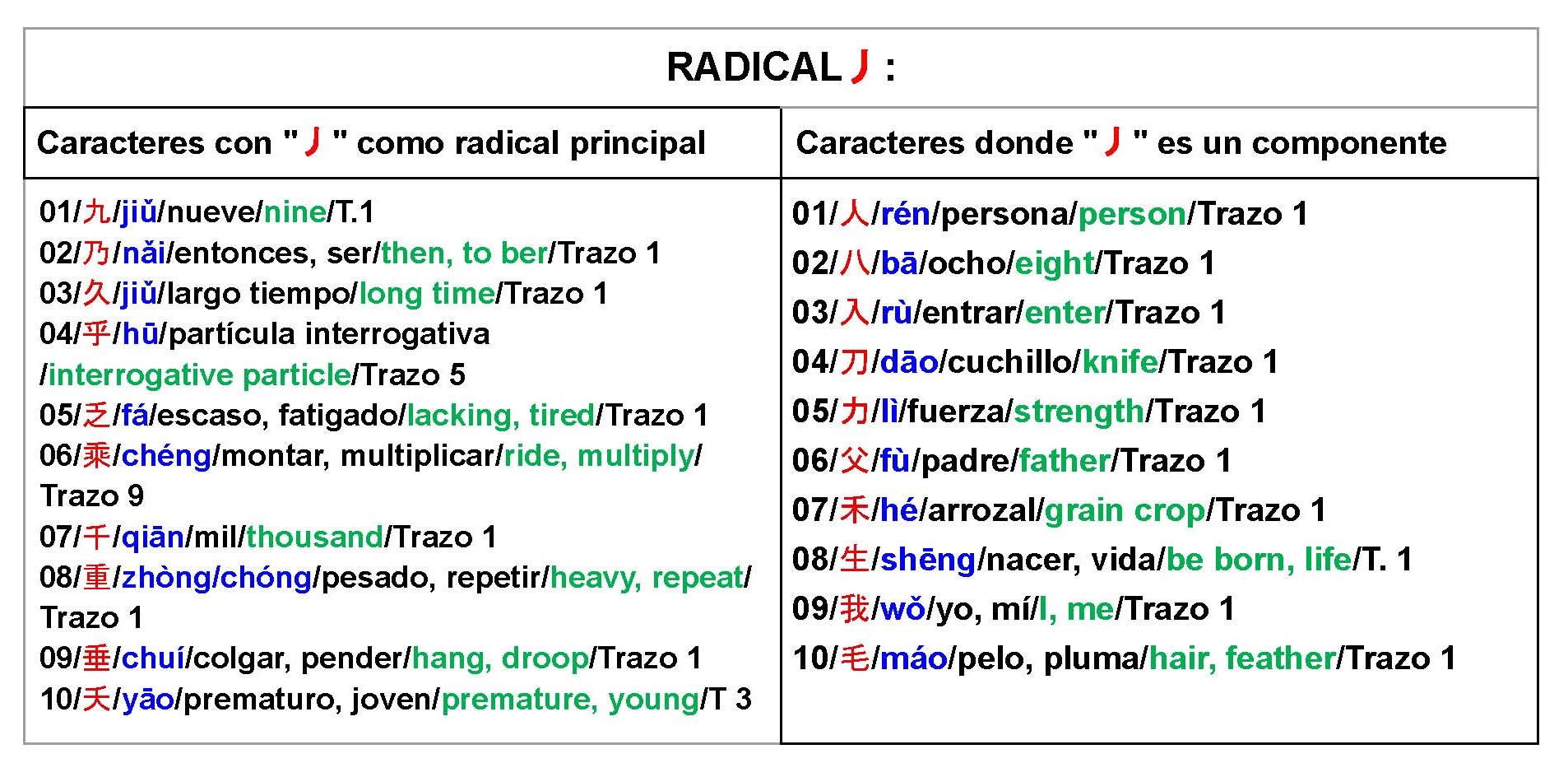
点击放大/clic para ampliar/click to enlarge
中文
Español
English
▶ 📝 评论 / Comentarios / Comments
• 长度的变化: 并非所有的 ’撇’ 都一样。有长撇(如在’人’或’月’中)和短撇(也称 ’平撇’,如在’千’或’牛’的第一笔中)。
• 视觉平衡: 它是’捺’笔的天然拍档。如果说’捺’提供了稳定性,那么’撇’则为汉字增添了动感和流畅度。
• 书写方向: 与向上提的 ’提’ 笔不同,’撇’总是向下走的。为了保持汉字结构的正确,千万不要混淆它们的方向。
• Variaciones de longitud: No todos los piě son iguales. Existe el ‘撇’ largo (como el de 人 o 月) y el ‘撇’ corto o casi horizontal (como el primer trazo de 千 o 牛).
• Equilibrio visual: Es el compañero natural del trazo nà. Mientras que el nà da estabilidad, el piě aporta dinamismo y fluidez al carácter.
• Sentido de escritura: A diferencia del trazo tí (que sube), el piě siempre baja. Es fundamental no confundir sus direcciones para que el carácter mantenga su estructura correcta.
• Variations in length: Not all piě strokes are the same. There is the long ‘撇’ (as in 人 or 月) and the short or almost horizontal ‘撇’ (as seen in the first stroke of 千 or 牛).
• Visual balance: It is the natural partner of the nà stroke. While nà provides stability, piě adds dynamism and fluidity to the character.
• Direction of writing: Unlike the tí stroke (which goes up), the piě always goes down. It is essential not to confuse their directions so that the character maintains its correct structure.
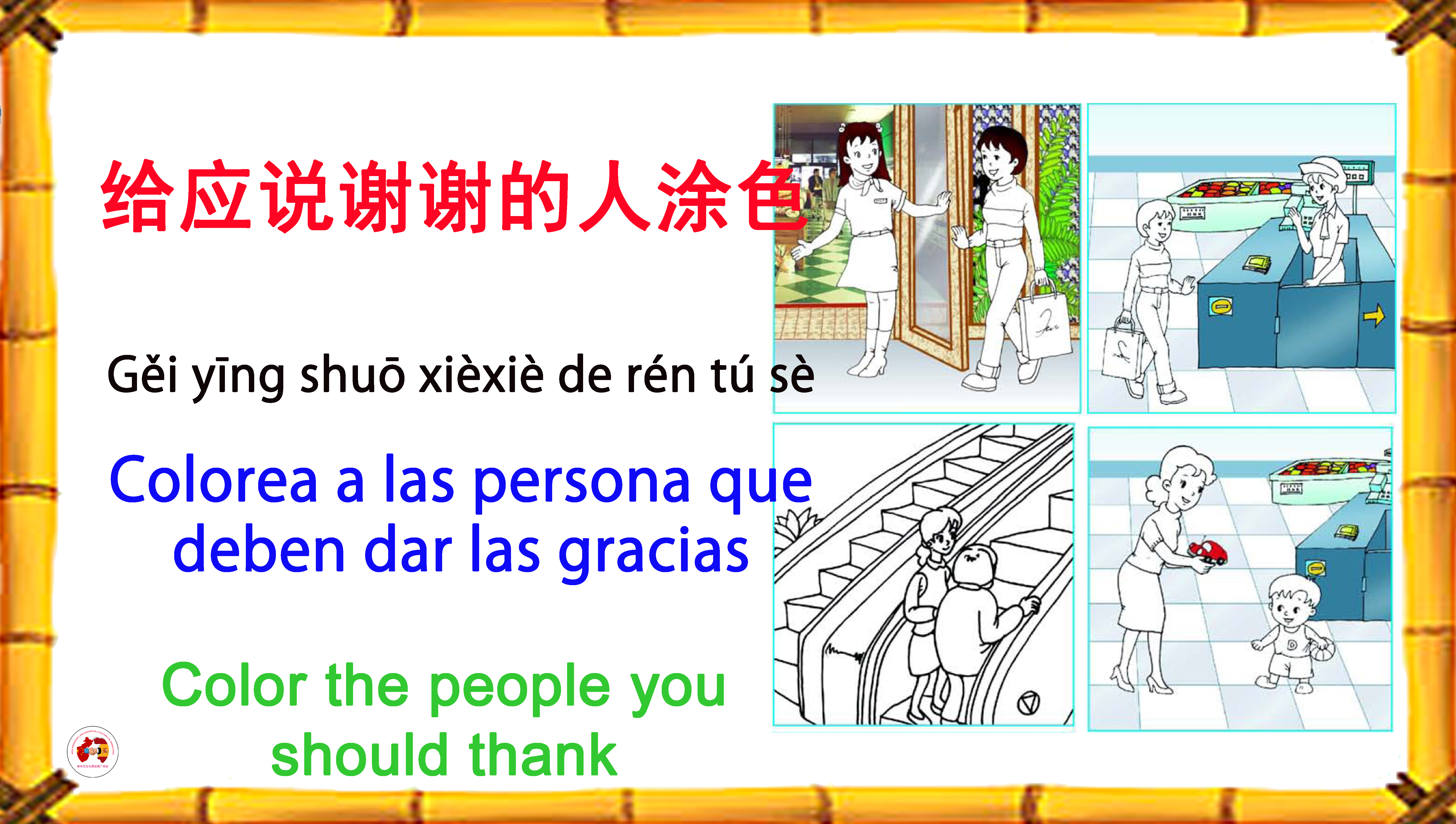
6) 给Gěi应yīng说shuō谢谢xièxiè的de人rén涂色túsè/Colorea a las personas a quienes dar las gracias/Color the people you should thank
点击放大/clic para ampliar/click to enlarge
中文/Chino/Chinese
西班牙语/Español/Spanish
英语/inglés/English
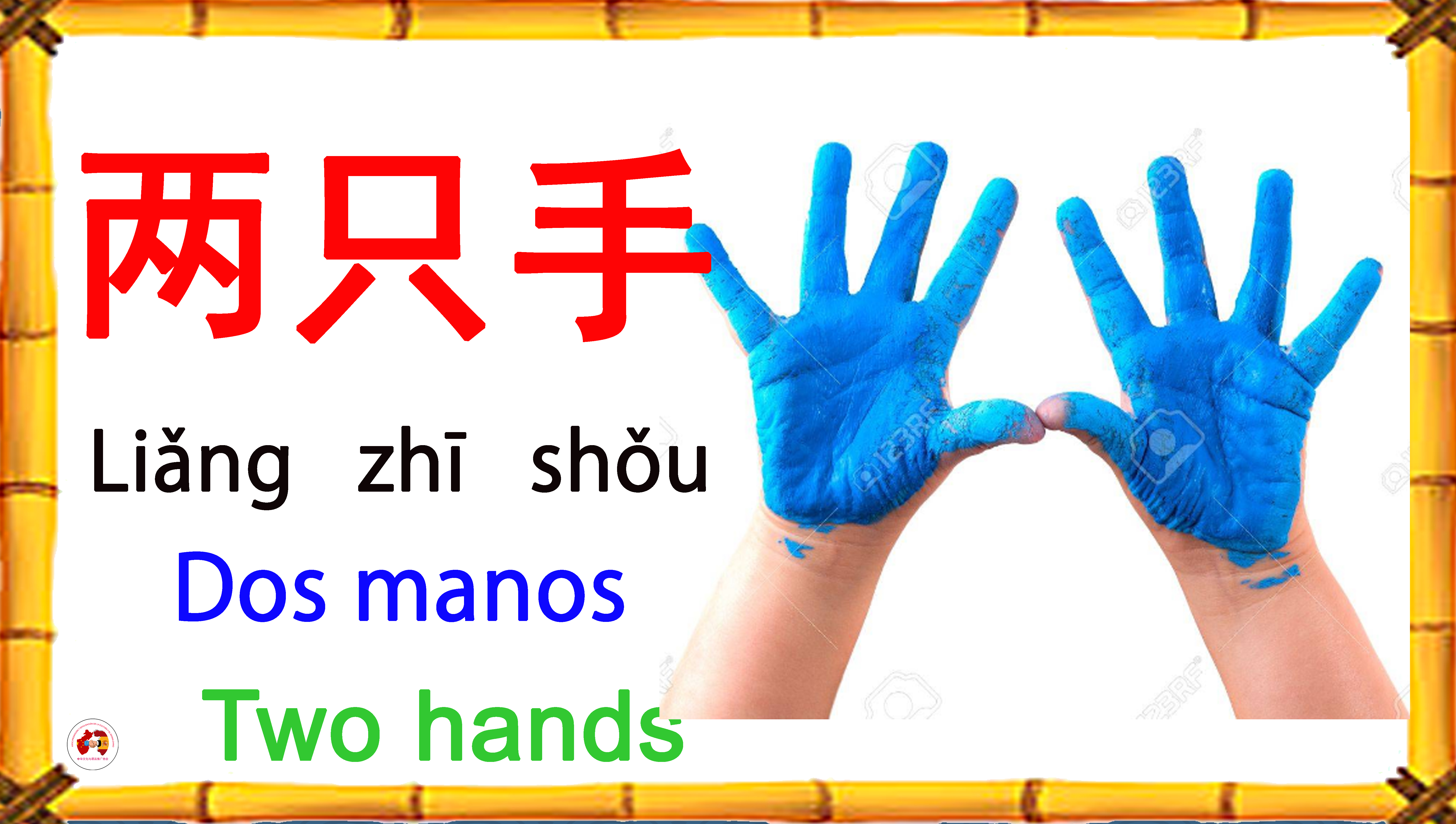
7) 两Liǎng只zhī手shǒu/Dos manos/Two hands
点击放大/clic para ampliar/click to enlarge
中文/Chino/Chinese
西班牙语/Español/Spanish
英语/inglés/English
** 字/zì/Caracteres/Characters **
(次/veces/times:1,2,3,4,5,6,7,8,9)
了解更多信息,请点击汉字。 Para más información clik en el Hanzi. For more information, click on the Hanzi.
汉字的音频/Audio de los Hanzi/Audio of the Hanzi
** 词汇/cí huì/Vocabulario/Vocabulary **
AVI: 词汇/Vocabulario/Vocabulary
中文/Chino/Chinese
西班牙语/Español/Spanish
英语/inglés/English

AVI: 听与重复/Escucha y repite/Listen and repeat
▶ 📝 评论 / Comentarios / Comments
• 叠音名字(贝贝 - Bèibei): 就像我们之前在家庭称谓(māma, dìdi)中看到的那样,当重复一个汉字来构成昵称或小名时,第二个音节会失去原调,读作轻声。
• ‘不’ (bù) 的变调: ‘不’通常读作第四声(bù)。但是,当它出现在另一个第四声音节(如’客’ - kè)前面时,为了发音方便,会自动变成第二声:bú。因此, ’不客气’ 读作 bú kèqi。
• Nombres repetidos (贝贝 - Bèibei): Al igual que vimos con los miembros de la familia (māma, dìdi), cuando se repite un carácter para formar un nombre cariñoso o apodo, la segunda sílaba pierde su tono y se pronuncia en tono neutro.
• El cambio de tono de 不 (bù): Normalmente, la negación ‘不’ es un cuarto tono (bù). Sin embargo, cuando va delante de otra sílaba que también es un cuarto tono, como ‘客’ (kè), cambia automáticamente al segundo tono para facilitar la pronunciación: bú. Por lo tanto, ‘de nada’ se pronuncia bú kèqi.
• Reduplicated names (贝贝 - Bèibei): Just as we saw with family terms (māma, dìdi), when a character is repeated to form an affectionate name or nickname, the second syllable loses its tone and is pronounced in a neutral tone.
• Tone change of 不 (bù): Normally, the negation ‘不’ is a fourth tone (bù). However, when it precedes another fourth-tone syllable like ‘客’ (kè), it automatically changes to the second tone to make pronunciation easier: bú. Therefore, ‘you're welcome’ is pronounced bú kèqi.
** 目录/mù lù/Indice de la página/Table of contents **
课文/Textos/Texts
词汇/Vocabulario/Vocabulary
补充材料/Materiales adicionales/Additional Materials

PDF与视频/PDF y videos/PDF and Videos

边玩边学/Aprenda jugando/Learn by Playing
学习西班牙语/Aprenda Español/Learn Spanish
