** 额外内容/Contenido adicional/Additional Content **
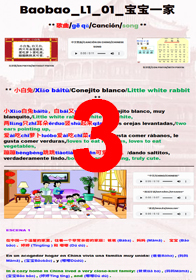
** 歌曲/gē qǔ/Canción/song **

无拼音/Sin pinyin/Without pinyin
中文歌曲/Canción en chino/Chinese song
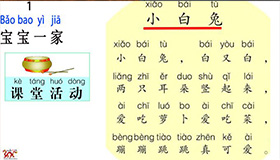
有拼音/Con pinyin/With pinyin
** 小白兔/Xiǎo báitù/Conejito blanco/Little white rabbit **
小Xiǎo白兔báitù,白bái又yòu白bái,/Conejito blanco, muy blanquito,/Little white rabbit, white and white,
两liǎng只zhī耳朵ěrduo竖shù起来qǐlai,/dos orejas levantadas,/two ears pointing up,
爱ài吃chī萝卜luóbo爱ài吃chī菜cài,/le gusta comer rábanos, le gusta comer verduras,/loves to eat radishes, loves to eat vegetables,
蹦蹦bèngbèng跳跳tiàotiào真zhēn可爱kě'ài。/dando saltitos, verdaderamente lindo./bouncing and jumping, truly cute.
▶ 📝 评论 / Comentarios / Comments
• 隔音符号的使用(kě'ài): 在 ’可爱’(kě'ài)一词中,必须使用隔音符号(')将 kě 和 ài 两个音节分开。这能避免它被误读为一个音节,并清楚地标明第二个字的元音从哪里开始。
• AABB 结构(蹦蹦跳跳): 与重复单个动词以弱化动作 (正如我们在 wòwo shǒu )中看到的)不同,两个动作组合的 AABB 结构(蹦 - 跳)在拼音中分组为 bèngbèng tiàotiào。这赋予了句子一种俏皮、生动的节奏感 (’到处蹦蹦跳跳’)。
• 拼音分写(xiǎo báitù): 形容词和名词之间保持正确的分写规则 (xiǎo báitù:小 + 白兔)。
• Uso del apóstrofo (kě'ài): En la palabra ‘lindo’ o ‘adorable’ (可爱 - kě'ài), es obligatorio usar un apóstrofo (') para separar la sílaba kě de ài. Esto evita que se lea como una sola sílaba y marca claramente dónde empieza la vocal de la segunda palabra.
• Estructura AABB (蹦蹦跳跳): A diferencia de la repetición de un solo verbo para suavizar una acción (como vimos en wòwo shǒu), la estructura AABB de dos acciones juntas (蹦 - saltar / 跳 - brincar) se agrupa en pinyin como bèngbèng tiàotiào. Esto le da un ritmo juguetón y vívido a la frase (‘dando saltitos por todas partes’).
• Agrupación en pinyin (xiǎo báitù): Se mantiene la separación correcta entre el adjetivo y el sustantivo (xiǎo báitù).
• Use of the apostrophe (kě'ài): In the word ‘cute’ or ‘adorable’ (可爱 - kě'ài), it is mandatory to use an apostrophe (') to separate the syllable kě from ài. This prevents it from being read as a single syllable and clearly marks where the vowel of the second word begins.
• AABB Structure (蹦蹦跳跳): Unlike the repetition of a single verb to soften an action (as we saw in wòwo shǒu), the AABB structure of two actions put together (蹦 - to jump / 跳 - to bounce) is grouped in pinyin as bèngbèng tiàotiào. This gives a playful and vivid rhythm to the phrase (‘bouncing and jumping all around’).
• Pinyin grouping (xiǎo báitù): The correct separation between the adjective and the noun is maintained (xiǎo báitù).
** 历史/Lìshǐ/La historia/history **
AVI: 中文/En chino /En Chinese
中文/Chino/Chinese
AVI: 西班牙语/En español/En Spanish
西班牙语/Español/Spanish
AVI: 英语/En inglés /En English
英语/inglés/English
中文/Chino/Chinese
西班牙语/Español/Spanish
英语/inglés/English
ESCENA 1
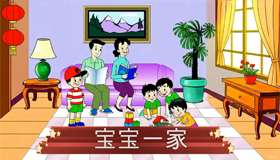
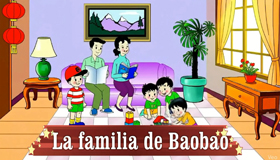
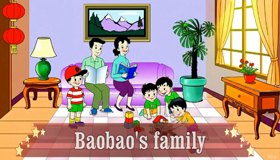
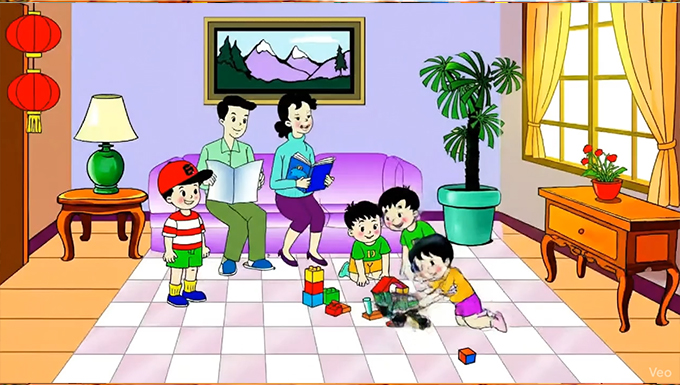
在中国一个温馨的家里,住着一个非常亲密的家庭:爸爸 (Bàba) 、妈妈 (Māmā) 、 宝宝 (Bǎo bǎo) 、婷婷 (Tíngtíng ) 和 嘟嘟 (Dū dū) 。
En un acogedor hogar en China vivía una familia muy unida: (爸爸Bàba) , (妈妈Māmā) , (宝宝Bǎobǎo) , y (嘟嘟Dūdū) .
In a cozy home in China lived a very close-knit family: (爸爸Bà ba) , (妈妈Māmā) , (宝宝Bǎo bǎo) , (婷婷Tíng tíng) , and (嘟嘟Dū dū) .
中文/Chino/Chinese
西班牙语/Español/Spanish
英语/inglés/English
ESCENA 2
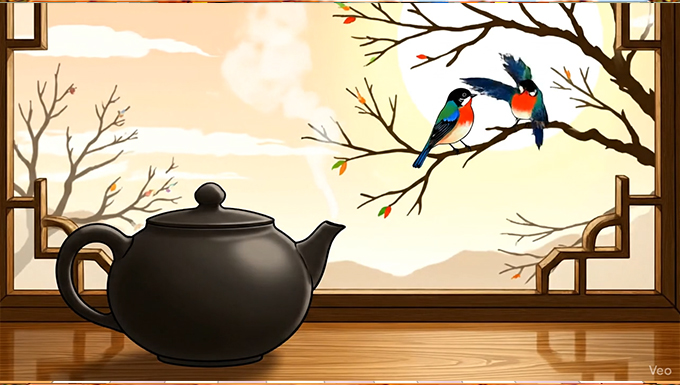
每天都从 妈妈 (Māmā) 泡的茶香气和窗外鸟儿的轻声歌唱开始。
Cada día comenzaba con el aroma del té de (妈妈Māmā) y el suave cantar de los pájaros fuera de la ventana.
Each day began with the aroma of (妈妈 Māmā) tea and the gentle singing of the birds outside the window.
中文/Chino/Chinese
西班牙语/Español/Spanish
英语/inglés/English
ESCENA 3
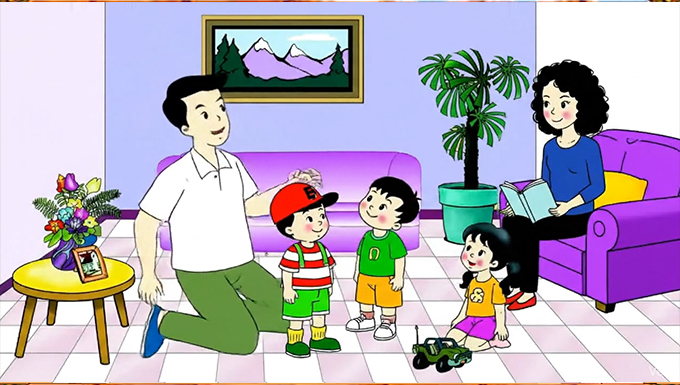
爸爸 (Bàba) 总是细心又勤劳,他早早出门,但从不忘先给 宝宝(Bǎobǎo) 一个拥抱,并亲 婷婷 (Tíng tíng) 和 嘟嘟 (Dū dū) 的额头。
(爸爸Bàba) siempre atento y trabajador, salía temprano, pero nunca sin antes dar un abrazo a (宝宝Bǎo bǎo) y un beso en la frente a (婷婷Tíngtíng) y (嘟嘟Dūdū) .
(爸爸Bà ba) , always attentive and hardworking, left early, but never without first giving (宝宝Bǎobǎo) a hug and (婷婷Tíngtíng) and (嘟嘟Dūdū) a kiss on the forehead.
中文/Chino/Chinese
西班牙语/Español/Spanish
英语/inglés/English
ESCENA 4
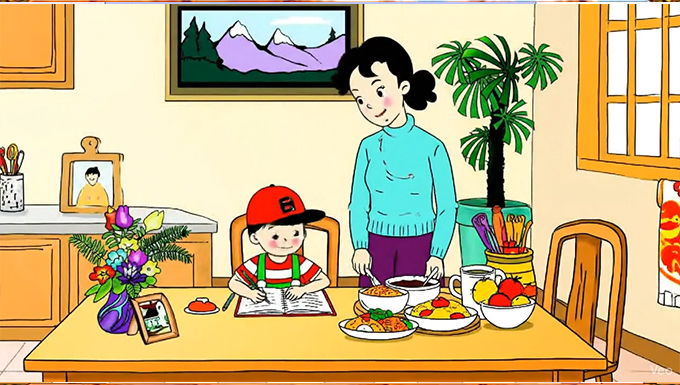
充满活力和创造力的 妈妈 (Māmā) 一边准备早餐,一边帮助 宝宝 (Bǎobǎo) 完成作业。
(妈妈Māmā) , llena de energía y creatividad, preparaba el desayuno mientras ayudaba a (宝宝Bǎobǎo) con sus tareas.
(妈妈Māmā) , full of energy and creativity, prepared breakfast while helping (宝宝Bǎobǎo) with his homework.
中文/Chino/Chinese
西班牙语/Español/Spanish
英语/inglés/English
ESCENA 5
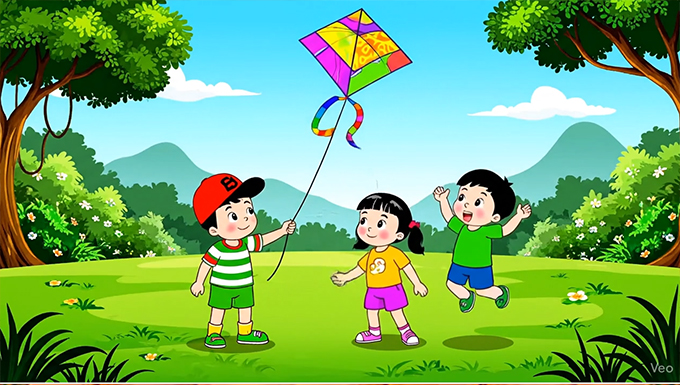
最大的 宝宝 (Bǎo bǎo) 好奇心强,喜欢探索。一天,他决定教 婷婷 (Tíngtíng) 和 嘟嘟 (Dū dū) 在公园放风筝。
(宝宝Bǎobǎo) el mayor, era curioso y le encantaba explorar. Un día, decidió enseñarle a (婷婷Tíngtíng) y a (嘟嘟Dūdū) a volar una cometa en el parque.
(宝宝Bǎobǎo) , the eldest, was curious and loved to explore. One day, he decided to teach (婷婷Tíngtíng) and (嘟嘟Dūdū) how to fly a kite in the park.
中文/Chino/Chinese
西班牙语/Español/Spanish
英语/inglés/English
ESCENA 6
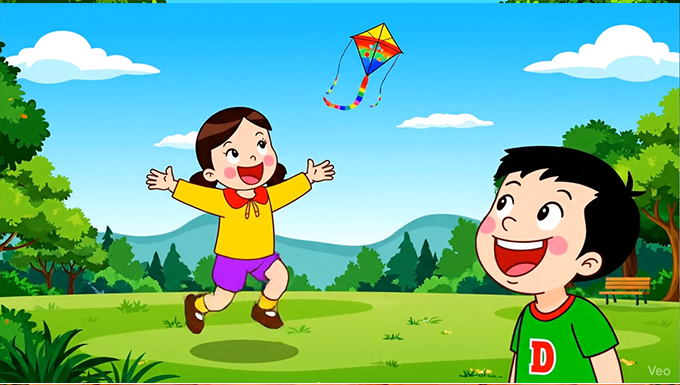
中间的 婷婷 (Tíngtíng) 梦想丰富,快乐地张开双臂奔跑,好像能触碰到云朵。最小的 嘟嘟 (Dū dū) 每当风筝飞得更高时,都兴奋地笑出声。
(婷婷Tíngtíng) , la mediana, soñadora y alegre, corría con los brazos abiertos como si pudiera tocar las nubes. (嘟嘟Dūdū) , el más pequeño, reía con entusiasmo cada vez que la cometa subía más alto.
(婷婷Tíngtíng) , the middle child, dreamy and cheerful, ran with her arms open as if she could touch the clouds. (嘟嘟Dūdū) , the youngest, laughed with excitement every time the kite flew higher.
中文/Chino/Chinese
西班牙语/Español/Spanish
英语/inglés/English
ESCENA 7
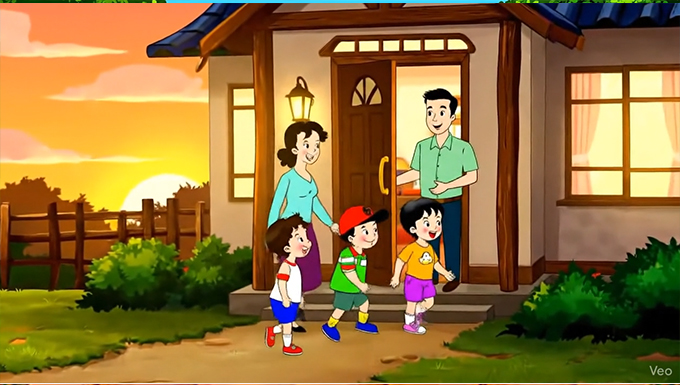
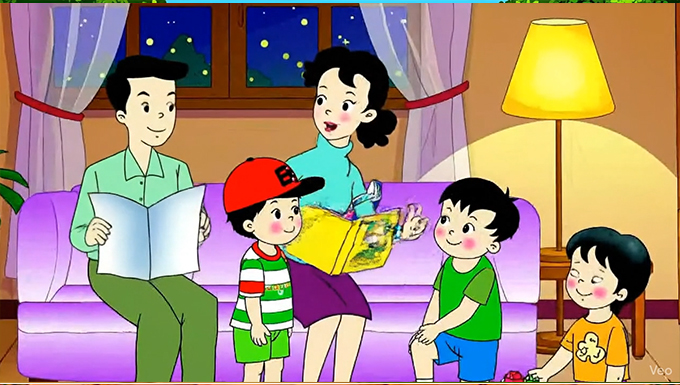
傍晚时分,他们回到家,爸爸 (Bàba) 微笑着迎接他们。
Al caer la tarde, regresaban a casa, donde (爸爸Bàba) los esperaba con una sonrisa.
As evening fell, they returned home, where (爸爸Bàba) was waiting for them with a smile.
中文/Chino/Chinese
西班牙语/Español/Spanish
英语/inglés/English
ESCENA 8
他们一起吃晚餐, 分享一天的冒险。 妈妈 (Mā mā) 在昏黄的灯光下讲故事,而 宝宝 (Bǎo bǎo) 、 婷婷 (Tíng tíng) 和 (嘟嘟Dū dū) 带着被爱和被保护的感觉入睡。
Juntos cenaban y compartían las aventuras del día. (妈妈Māmā) contaba historias bajo la luz tenue de la lámpara, y (宝宝Bǎobǎo) , (婷婷Tíngtíng) y (嘟嘟Dūdū) se dormían sintiéndose queridos y protegidos´.

中文/Chino/Chinese
西班牙语/Español/Spanish
英语/inglés/English
ESCENA 9
就这样,在欢笑、学习和简单的时刻中,宝宝 (Bǎobǎo) 的家人证明了,爱与团结是他们最大的财富。
Así, entre risas, aprendizajes y momentos simples, la familia de (宝宝Bǎobǎo) demostraba que el amor y la unión eran su mayor tesoro.
And so, through laughter, learning, and simple moments, the family of (宝宝Bǎobǎo) showed that love and unity were their greatest treasure.
** 词汇/cí huì/Vocabulario/Vocabulary **

AVI: 词汇/Vocabulario/Vocabulary
中文/Chino/Chinese
西班牙语/Español/Spanish
英语/inglés/English

AVI: 听与重复/Escucha y repite/Listen and repeat



▶ 📝 评论 / Comentarios / Comments
• 动词 + 一 + 动词结构: 在’读一读’(dú yi dú)、’说一说’(shuō yi shuō)和 ’写一写’(xiě yi xiě)等表达中,汉字’一’放在两个相同的动词之间,表示短暂或随意的动作(’读一下’、’写一下’)。在这种结构中,’一’ 总是读作轻声(yi)。
• 拼音连写与分写规则: 对 xiǎo báitù(小白兔:小 + 白兔)应用了分写规则;而 kètáng(课堂) 和 huódòng(活动)作为双音节合成词,拼音则进行连写。
• Estructura Verbo + 一 + Verbo: En expresiones como 读一读 (dú yi dú), 说一说 (shuō yi shuō) y 写一写 (xiě yi xiě), el carácter 一 (yī) se coloca entre dos verbos idénticos para indicar una acción breve o casual (‘leer un poco’, ‘escribir un poco’ ó simplemente: lee, escribe. En esta estructura, el 一 siempre se pronuncia en tono neutro (yi).
• Agrupación en pinyin: Se aplica la regla de separación para xiǎo báitù (pequeño + conejo blanco) y se unen kètáng (clase) y huódòng (actividades) por ser palabras compuestas de dos caracteres.
• Verb + 一 + Verb structure: In expressions like 读一读 (dú yi dú), 说一说 (shuō yi shuō), and 写一写 (xiě yi xiě), the character 一 (yī) is placed between two identical verbs to indicate a brief or casual action (‘read a bit’, ‘write a bit’). In this structure, the 一 is always pronounced in a neutral tone (yi).
• Pinyin grouping: The separation rule is applied for xiǎo báitù (little + white bunny), while kètáng (class) and huódòng (activities) are grouped together as they are two-character compound words.
** 西班牙名字/Xībānyá míngzì/nombres españoles/Spanish names **
中文/Chino/Chinese
西班牙语/Español/Spanish
英语/inglés/English
▶ 📝 评论 / Comentarios / Comments
• 性别:汉字本身没有性别,但在音译时会尽量保留原名的词尾特征。
• Género: Los caracteres chinos no tienen género, pero en la transcripción se intenta mantener la terminación del nombre original.
• Gender: Chinese characters do not have gender, but in transcription, an effort is made to preserve the ending of the original name.
** 英文名字/Yīngwén míngzì/nombres ingleses/English names **
中文/Chino/Chinese
西班牙语/Español/Spanish
英语/inglés/English
▶ 📝 评论 / Comentarios / Comments
• 中文音译:通常情况下,外来名字会根据发音相似性转写为中文。例如,Elizabeth 被译为 Yīlìshābái(伊丽莎白),这是一个经典且广泛认可的译法。
• 汉字含义:虽然音译以发音为主,但所选汉字通常具有积极的含义。例如,Jennifer 中的 珍(zhēn)意为 ’珍贵’,而 Karen 中的 凯(kǎi)意为’胜利’。
• Transcripción china: Como es habitual, los nombres se adaptan al chino buscando la similitud fonética. Por ejemplo, Elizabeth se convierte en Yīlìshābái (伊丽莎白), una transcripción clásica y ampliamente reconocida.
• Caracteres con significado: Aunque la prioridad es la fonética, los caracteres elegidos suelen tener connotaciones positivas. Por ejemplo, 珍 (zhēn) en Jennifer significa ‘precioso’, y 凯 (kǎi) en Karen significa ‘triunfo’.
• Chinese transcription: As is common practice, names are adapted into Chinese by approximating their pronunciation. For example, Elizabeth becomes Yīlìshābái (伊丽莎白), a classic and widely recognized transcription.
• Characters with meaning: Although phonetics is the priority, the chosen characters usually carry positive connotations. For example, 珍 (zhēn) in Jennifer means ‘precious,’ and 凯 (kǎi) in Karen means ‘victory.’
** 听写/Tīngxiě/Dictado/Dictation **
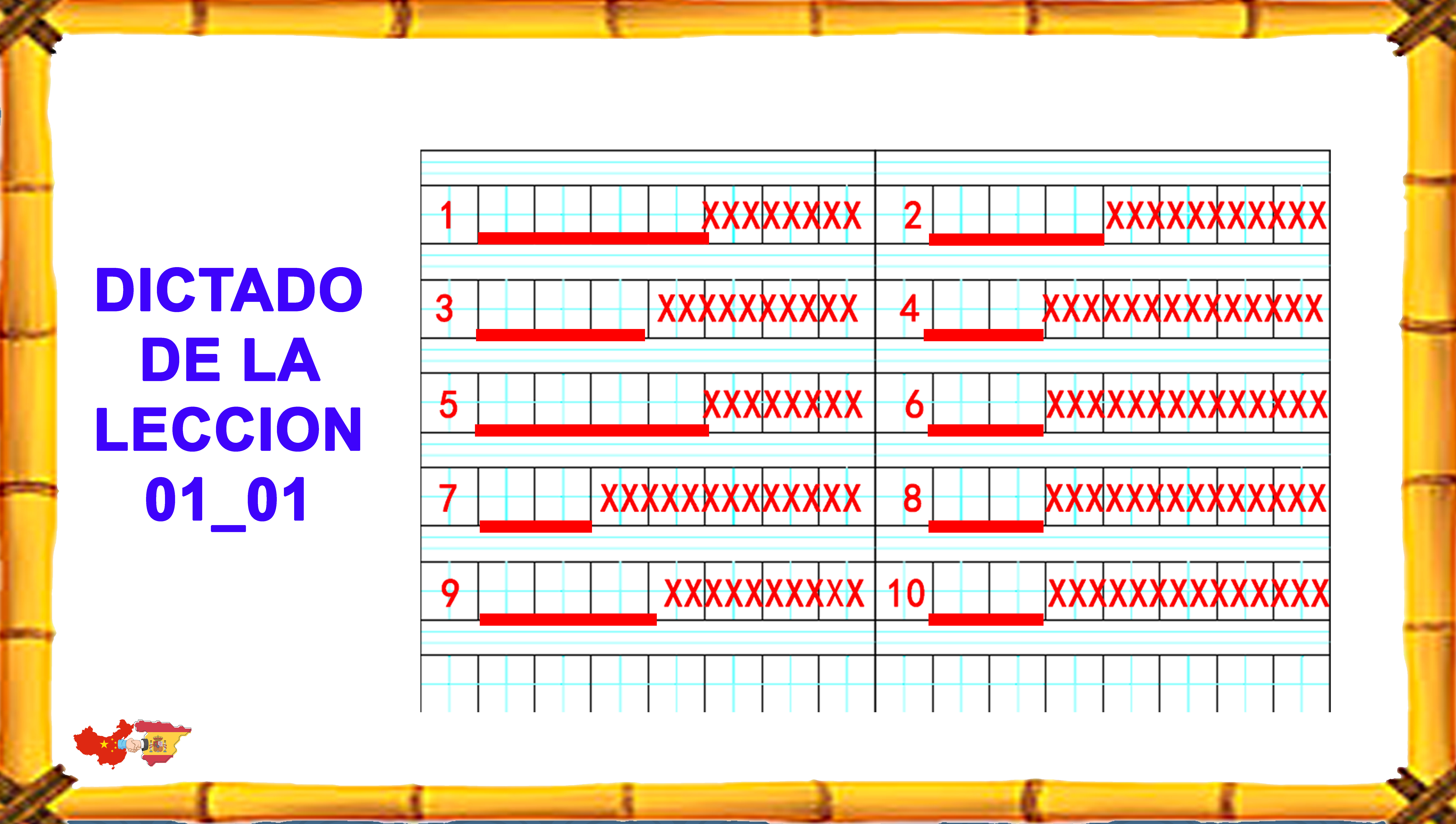
点击放大/clic para ampliar/click to enlarge
听写音频/Audio del dictado/Dictation audio

AVI: 听写/Dictado/Dictation

DICTADO VOCABULARIO
** 目录/mù lù/Indice de la página/Table of contents **
课文/Textos/Texts
词汇/Vocabulario/Vocabulary
补充材料/Materiales adicionales/Additional Materials

PDF与视频/PDF y videos/PDF and Videos
边玩边学/Aprenda jugando/Learn by Playing
学习西班牙语/Aprenda Español/Learn Spanish
