** 07_我叫宝宝/Wǒ jiào Bǎobao/Mi nombre es Baobao/My name is Baobao **

课程视频/VIDEO DE LA LECCION/Lesson video
** 课文/kè wén/Textos/Texts **
1) 我Wǒ叫jiào宝宝Bǎobao/Mi nombre es Baobao/My name is Baobao
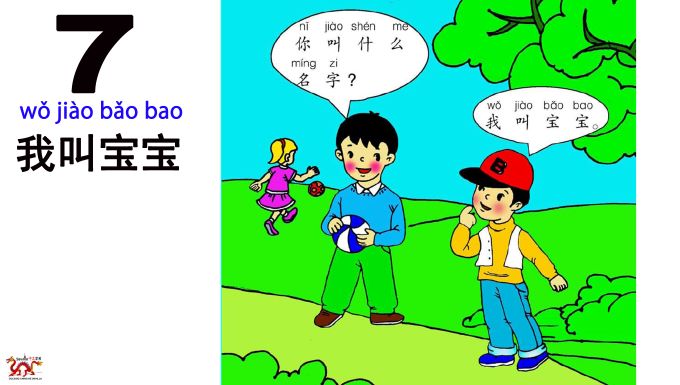
2) 你Nǐ叫jiào什么shénme名字míngzi?/¿Cuál es tu nombre?/What's your name?
3) 我Wǒ叫jiào宝宝Bǎobao/Mi nombre es Baobao/My name is Baobao
场景视频/Video de la escena/ Scene video
中文/Chino/Chinese
西班牙语/Español/Spanish
英语/inglés/English
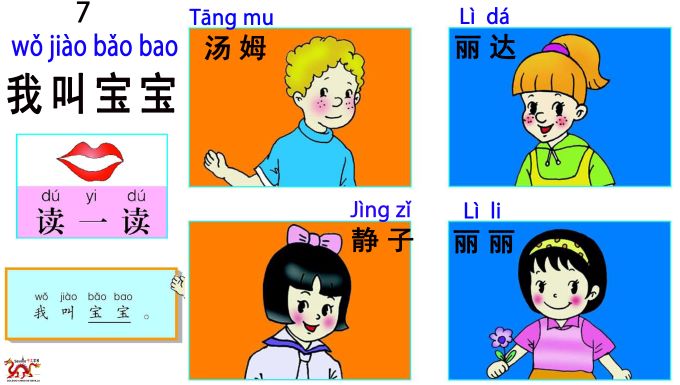
4) 读dú一yi读dú/Lee un poco/Read a bit
5) 我Wǒ叫jiào宝宝Bǎobao/Mi nombre es Baobao/My name is Baobao
6) 汤姆Tāngmǔ/Tom (nombre propio)/Tom (proper name)
7) 丽达Lìdá/Lida (nombre propio)/Lida (proper name)
8) 静子Jìngzi/Jingzi (nombre propio)/Jingzi (proper name)
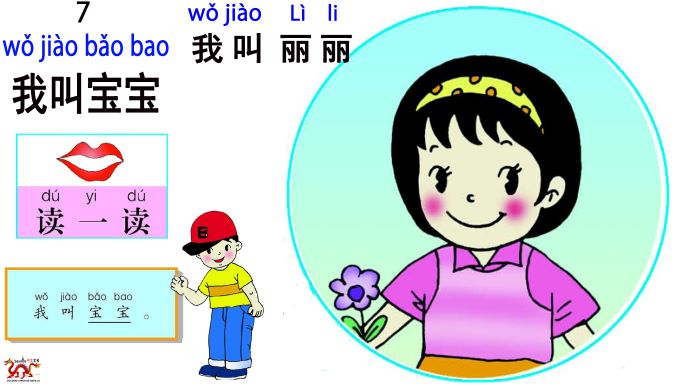
9) 丽丽Lìli/Lily (nombre propio)/Lily (proper name)
中文/Chino/Chinese
西班牙语/Español/Spanish
英语/inglés/English
10) 我Wǒ叫jiào汤姆Tāngmǔ/Mi nombre es Tom/My name is Tom

中文/Chino/Chinese
西班牙语/Español/Spanish
英语/inglés/English
11) 我Wǒ叫jiào丽达Lìdá/Mi nombre es Lida/My name is Lida

中文/Chino/Chinese
西班牙语/Español/Spanish
英语/inglés/English
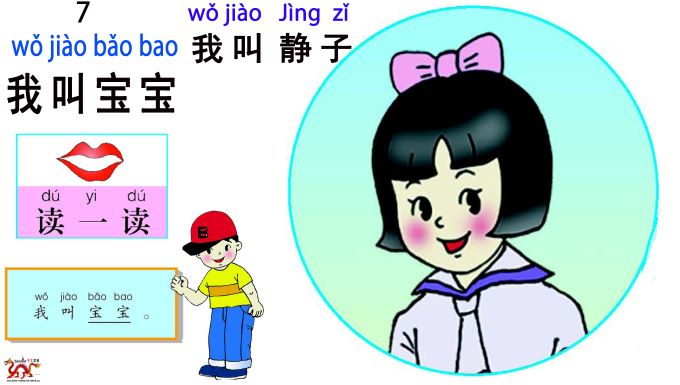
12) 我Wǒ叫jiào静子Jìngzi/Mi nombre es Jingzi/My name is Jingzi
中文/Chino/Chinese
西班牙语/Español/Spanish
英语/inglés/English
13) 我Wǒ叫jiào丽丽Lìli/Mi nombre es Lily/My name is Lily
中文/Chino/Chinese
西班牙语/Español/Spanish
英语/inglés/English
14) 说shuō一yi说shuō/Habla un poco/Practice speaking
15) A:你Nǐ叫jiào什么shénme名字míngzi?/¿Cuál es tu nombre?/What's your name?
16) B:我Wǒ叫jiào宝宝Bǎobao/Mi nombre es Baobao/My name is Baobao

中文/Chino/Chinese
西班牙语/Español/Spanish
英语/inglés/English
17) A:你Nǐ叫jiào什么shénme名字míngzi?/¿Cuál es tu nombre?/What's your name?
18) B:我Wǒ叫jiào丽达Lìdá/Mi nombre es Lida/My name is Lida

中文/Chino/Chinese
西班牙语/Español/Spanish
英语/inglés/English
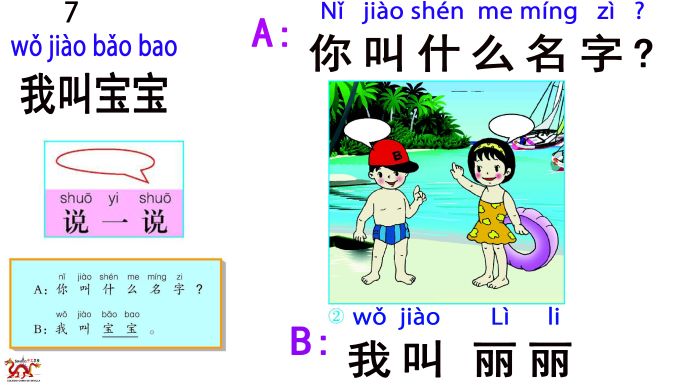
19) A:你Nǐ叫jiào什么shénme名字míngzi?/¿Cuál es tu nombre?/What's your name?
20) B:我Wǒ叫jiào丽丽Lìli/Mi nombre es Lily/My name is Lily
中文/Chino/Chinese
西班牙语/Español/Spanish
英语/inglés/English
21) A:你Nǐ叫jiào什么shénme名字míngzi?/Cuál es tu nombre?/What's your name?
22) B:我Wǒ叫jiào静子Jìngzi/Mi nombre es Jingzi/My name is Jingzi

中文/Chino/Chinese
西班牙语/Español/Spanish
英语/inglés/English
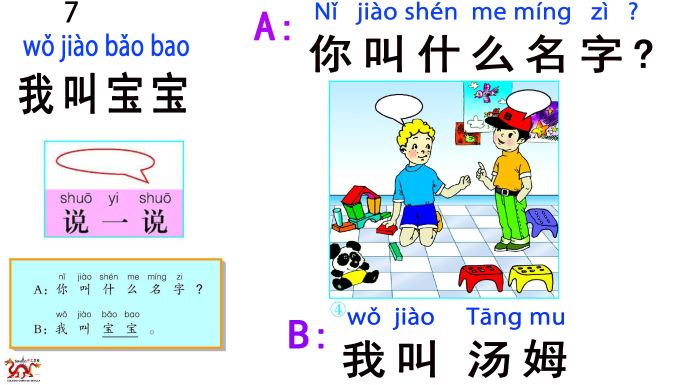
23) A:你Nǐ叫jiào什么shénme名字míngzi?/¿Cuál es tu nombre?/What's your name?
24) B:我Wǒ叫jiào汤姆Tāngmǔ/Mi nombre es Tom/My name is Tom
中文/Chino/Chinese
西班牙语/Español/Spanish
英语/inglés/English
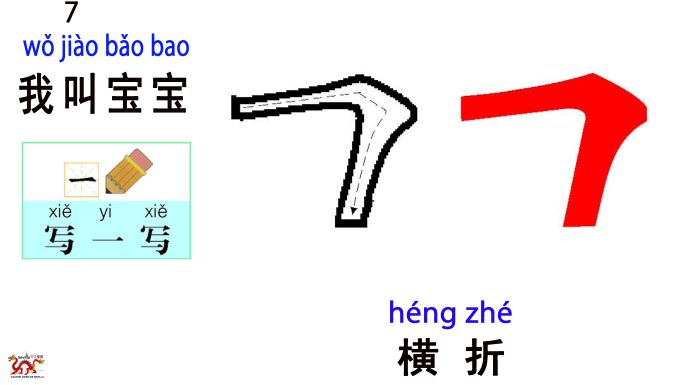
25) 写xiě一yi写xiě/Escribe un poco/Write a bit
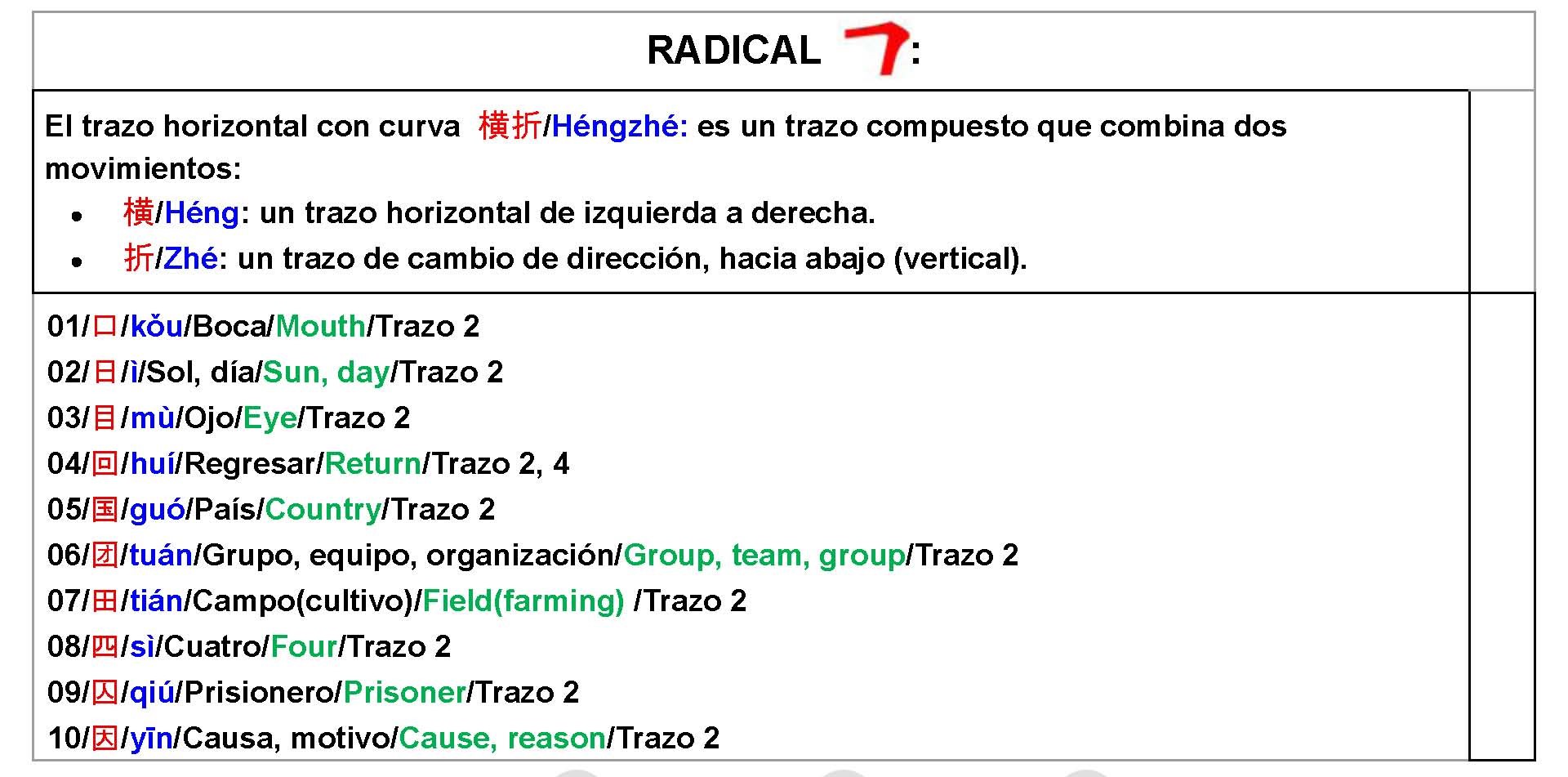
26) 横折héngzhé/Trazo horizontal con quiebre/Horizontal-turn stroke
中文/Chino/Chinese
西班牙语/Español/Spanish
英语/inglés/English
27) 课堂kètáng活动huódòng/Actividades en clase/Classroom activities
28) 介绍jièshào自己zìjǐ/Preséntate/Introduce yourself

中文/Chino/Chinese
西班牙语/Español/Spanish
英语/inglés/English
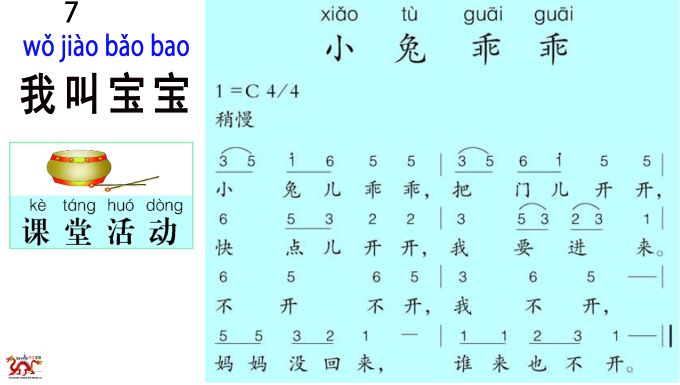
29) 儿歌érgē/Canción infantil/Nursery rhyme
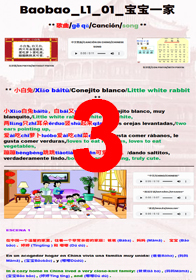
30) 小兔Xiǎotù乖乖guāiguāi/Conejito bueno/Good little bunny
manners.
中文/Chino/Chinese
西班牙语/Español/Spanish
英语/inglés/English
** 部首/bù shǒu/Radical/Radical **
点击放大/clic para ampliar/click to enlarge
中文
Español
English
▶ 📝 评论 / Comentarios / Comments
2. 汉字的’肩膀’: 转角或 折 (zhé) 是最重要的部分。在书写时,转角处会有轻微的停顿再向下走,形成一个像 ‘肩膀’ 一样强健而清晰的棱角。
3. 框型结构的基础: 这个笔画对于构成汉字中的’方框’或包围结构必不可少。它是在 口 (口) 或 日 (太阳/日) 等常见汉字中形成 ‘屋顶和右墙’ 的关键笔画。
4. 包围结构笔顺规则(先里头,后封口): 当你书写包含 横折 (héngzhé) 的方形汉字时,正确的顺序是:先写左边的竖,再写 横折,然后写里面的内容 (如果有的话),最后总是用底部的横线把口封上。
2. El ‘hombro’ del carácter: La esquina o quiebre (zhé) es la parte más importante. Al escribir, se hace una ligera pausa en la esquina antes de bajar, creando un ángulo fuerte y definido que funciona como el ‘hombro’ del carácter.
3. Constructor de cajas: Este trazo es indispensable para formar recintos o estructuras cuadradas en los caracteres. Es el trazo clave que forma el ‘techo y la pared derecha’ en caracteres muy comunes como 口 (boca) o 日 (sol/día) .
4. Regla de las cajas (cerrar la puerta al final): Cuando escribes un carácter cuadrado que contiene el trazo héngzhé, el orden correcto es: primero el trazo vertical izquierdo, luego el héngzhé, después se rellena el interior (si lo hay), y siempre se cierra la base con un trazo horizontal al final.
2. The ‘shoulder’ of the character: The corner or turn (zhé) is the most important part. When writing, a slight pause is made at the corner before going down, creating a strong, defined angle that acts as the ‘shoulder’ of the character.
3. Box builder: This stroke is essential for forming enclosures or square structures in Chinese characters. It is the key stroke that forms the ‘roof and right wall’ in very common characters like 口 (mouth) or 日 (sun/day) .
4. The box rule (close the door last): When you write a square character containing the héngzhé stroke, the correct order is: first the left vertical stroke, then the héngzhé, then fill in the inside (if any), and always close the bottom with a horizontal stroke last.
** 字符/zìfú/caracteres/characters **

AVI: 书写汉字/Escribir caracteres/ Writing Chinese characters
▶ 📝 评论 / Comentarios / Comments
2. 姆 (mǔ):出现在 保姆 (保姆) 一词中,但很少单独使用。在 汤姆 (Tomás / Tom) 中,它只是音译的一部分。
3. 么 (me):发轻声,因为它是一个总是轻读的后缀。
4. 丽 (lì):最常见于 美丽 (měilì,美丽) 一词,属于 HSK 4 级词汇。
5. 兔 (tù):通常在 HSK 5 级 (动物类) 中学习。
6. 乖 (guāi):是一个中级词汇(HSK 5 级)。
7. 一些汉字如 汤、姆、丽、达 会出现在专有名词中 (如汤姆、丽达),但它们的单独含义可能有所不同。在外国名字中,它们通常仅用于表音(音译),而不是表意。
2. 姆 (mǔ): Aparece en 保姆 (niñera) pero es poco común usarlo solo. En 汤姆 (Tomás / Tom) es parte de una transcripción fonética.
3. 么 (me): Lleva tono neutro, ya que es un sufijo que se pronuncia siempre de forma rápida y ligera.
4. 丽 (lì): Es más común en 美丽 (měilì, hermoso) , que es vocabulario HSK 4.
5. 兔 (tù): Se estudia típicamente en HSK 5 (categoría de animales) .
6. 乖 (guāi): Es una palabra de nivel intermedio (HSK 5).
7. Algunos caracteres como 汤, 姆, 丽, 达 aparecen en nombres propios (ej. 汤姆, 丽达) , pero su significado individual puede variar. En nombres extranjeros, suelen usarse solo por su sonido (transcripción fonética) y no por su significado.
2. 姆 (mǔ): Appears in 保姆 (nanny) but is rare on its own. In 汤姆 (Tomás / Tom) , it is part of a phonetic transcriptor.
3. 么 (me): Has a neutral tone, as it is a suffix that is always pronounced lightly.
4. 丽 (lì): Is most common in 美丽 (měilì, beautiful) , which is HSK 4 vocabulary.
5. 兔 (tù): Is typically studied in HSK 5 (animals) .
6. 乖 (guāi): Is an intermediate-level word (HSK 5).
7. Some characters like 汤, 姆, 丽, 达 appear in proper names (e.g., 汤姆, 丽达 ) but their individual meaning may vary. In foreign names, they are usually used only for their sound (phonetic transcription), not for their meaning.
** 词汇/cí huì/Vocabulario/Vocabulary **

AVI: 词汇/Vocabulario/Vocabulary
中文/Chino/Chinese
西班牙语/Español/Spanish
英语/inglés/English

AVI: 听与重复/Escucha y repite/Listen and repeat
▶ 📝 评论 / Comentarios / Comments
2. 词语组合: 复合词汇被连接在一起,例如 jièshào (介绍) 、zìjǐ (自己) 、Xiǎotù (小兔) 和 guāiguāi (乖乖/听话) 。
3. 乖兔子: 当在你的文本中使用 (’你是一只小兔乖乖’) 时,它起到了一个非常甜美的概括性描述的作用。就像是在对小动物说: ‘你是童话里那种经典的乖乖兔’ 。如果我们使用 (好 / Hǎo = bueno;兔兔 / tù tu = conejito,充满童趣的说法) ,它就是一个专有名词或昵称。通过重叠兔子的汉字 (tu tu) ,听起来完全就是小孩子的语气。它更加亲切和直接。
2. Agrupación de palabras: Se han unido los términos compuestos como jièshào (presentar), zìjǐ (uno mismo) , Xiǎotù (conejito) y guāiguāi (bueno/obediente) .
3. Conejito bueno: Cuando se usa en tu texto ('eres un 小兔乖乖') , funciona como una descripción general muy dulce. Es como decirle al animalito: 'Eres el clásico conejito bueno de los cuentos' . Y si usamos (好 / Hǎo = bueno; 兔兔 / tù tu = conejito, dicho de forma infantil) , es un nombre propio o apodo. Al repetir el carácter del conejo (tu tu) , suena exactamente a cómo hablaría un niño pequeño. Es más personal y directo.
2. Word grouping: Compound terms have been joined together, such as jièshào (to introduce) , zìjǐ (oneself) , Xiǎotù (little rabbit) , and guāiguāi (good/obedient) .
3. Good bunny: When used in your text ('you are a 小兔乖乖') , it works as a very sweet general description. It's like telling the little animal: 'You are the classic good bunny from the fairy tales' . And if we use (好 / Hǎo = good; 兔兔 / tù tu = bunny, said in a childish way) , it is a proper name or nickname. By repeating the rabbit character (tu tu) , it sounds exactly like how a little kid would speak. It's more personal and direct.
** 目录/mù lù/Indice de la página/Table of contents **
课文/Textos/Texts
词汇/Vocabulario/Vocabulary
补充材料/Materiales adicionales/Additional Materials

PDF与视频/PDF y videos/PDF and Videos
边玩边学/Aprenda jugando/Learn by Playing
学习西班牙语/Aprenda Español/Learn Spanish
