
课程视频/VIDEO DE LA LECCION/Lesson video
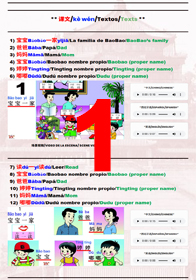
** 课文/kè wén/Textos/Texts **
1) 宝宝Bǎobǎo一家yījiā/La familia de BaoBao/BaoBao’s family
2) 爸爸Bàba/Papá/Dad
3) 妈妈Māmā/Mamá/Mom
4) 宝宝Bǎobǎo/Baobao nombre propio/Baobao (proper name)
5) 婷婷Tíngtíng/Tingting nombre propio/Tingting (proper name)
6) 嘟嘟Dūdū/Dudú nombre propio/Dudu (proper name)

场景视频/Video de la escena/ Scene video
中文/Chino/Chinese
西班牙语/Español/Spanish
英语/inglés/English
7) 读dú一yi读dú/Leer/Read
8) 宝宝Bǎobǎo/Baobao nombre propio/Baobao (proper name)
9) 爸爸Bàba/Papá/Dad
10) 婷婷Tíngtíng/Tingting nombre propio/Tingting (proper name)
11) 妈妈Māmā/Mamá/Mom
12) 嘟嘟Dūdū/Dudú nombre propio/Dudu (proper name)

中文/Chino/Chinese
西班牙语/Español/Spanish
英语/inglés/English
13) 宝宝Bǎobǎo/Baobao nombre propio/Baobao (proper name)

中文/Chino/Chinese
西班牙语/Español/Spanish
英语/inglés/English
14) 爸爸Bàba/Papá/Dad

中文/Chino/Chinese
西班牙语/Español/Spanish
英语/inglés/English
15) 婷婷Tíng tíng/Tingting nombre propio/Tingting (proper name)

中文/Chino/Chinese
西班牙语/Español/Spanish
英语/inglés/English
16) 妈妈Māmā/Mamá/Mom

中文/Chino/Chinese
西班牙语/Español/Spanish
英语/inglés/English
17) 嘟嘟Dūdū/Dudú nombre propio/Dudu (proper name)

中文/Chino/Chinese
西班牙语/Español/Spanish
英语/inglés/English
18) 说shuō一yī说shuō/Responde/Reply

中文/Chino/Chinese
西班牙语/Español/Spanish
英语/inglés/English
19) 宝宝Bǎobǎo/Baobao nombre propio/Baobao (proper name)

中文/Chino/Chinese
西班牙语/Español/Spanish
英语/inglés/English
20) 宝宝Bǎobǎo/Baobao nombre propio/Baobao (proper name)
21) 爸爸Bàba/Papá/Dad

中文/Chino/Chinese
西班牙语/Español/Spanish
英语/inglés/English
22) 婷婷Dū dū/Dudú nombre propio/Dudu (proper name)

中文/Chino/Chinese
西班牙语/Español/Spanish
英语/inglés/English
23) 嘟嘟Dūdū婷婷Tíngtíng/Dudú nombre propio, Tingting nombre propio/Dudu (proper name), Tingting (proper name)
24) 妈妈Māmā/Mamá/Mom

中文/Chino/Chinese
西班牙语/Español/Spanish
英语/inglés/English
25) 写xiě一yi写xiě/Escribe/Write
26) 横Héng/Trazo horizontal/Horizontal stroke

中文/Chino/Chinese
西班牙语/Español/Spanish
英语/inglés/English
27) 课堂kètáng活动huódòng/Juegos de clase/Classroom Activities
28) 我Wǒ的de家jiā/Mi familia/My family

中文/Chino/Chinese
西班牙语/Español/Spanish
英语/inglés/English
29- 儿歌érgē/Canción infantil/Nursery rhyme
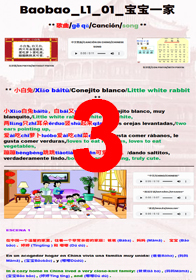
30- 小Xiǎo白bái兔tù/Conejito blanco/White bunny

中文/Chino/Chinese
西班牙语/Español/Spanish
英语/inglés/English
** 部首/bù shǒu/Radical/Radical **
中文
Español
English
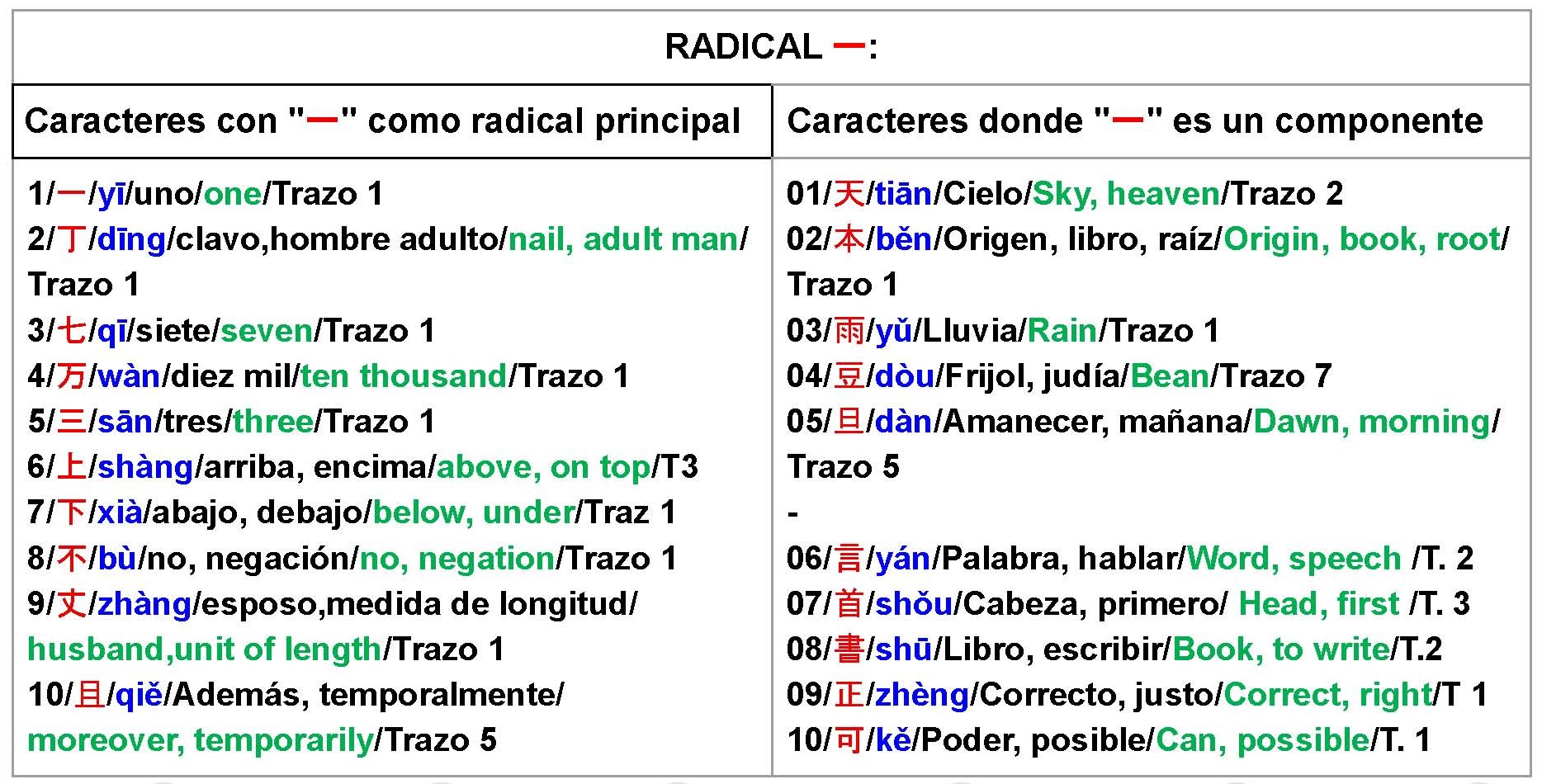
点击放大/clic para ampliar/click to enlarge
中文
Español
English
▶ 📝 评论 / Comentarios / Comments
• 并非绝对水平: 在真实的书法中,这个笔画很少是完全水平的。为了让字体显得生动流畅,它的右端通常会微微向上倾斜。
• 数字的起源: 这个笔画本身就构成了汉字 ’一’(yī),意为数字一。顺理成章地,两横构成 ’二’(èr),三横构成 ’三’(sān)。
• 笔顺规则: 当一个汉字有多个平行的横画时(如在’三’中),总是从上往下写。此外,汉字结构的黄金法则是’先横后竖’(xiān héng hòu shù)。
• No es perfectamente plano: En la caligrafía real, este trazo rara vez es completamente horizontal. Para darle vida y fluidez, suele tener una ligerísima inclinación hacia arriba en el lado derecho.
• El origen de los números: Por sí solo, este trazo forma el carácter ‘一’ (yī), que significa el número uno. De manera lógica, dos de estos trazos forman el dos (二 - èr) y tres forman el tres (三 - sān).
• Regla del orden de los trazos: Cuando un carácter tiene varios trazos horizontales apilados (como en 三), siempre se escriben de arriba hacia abajo. Además, la regla de oro de la estructura es ‘primero el horizontal, luego el vertical’ (先横后竖 - xiān héng hòu shù).
• Not perfectly flat: In actual calligraphy, this stroke is rarely completely horizontal. To give it life and fluidity, it usually has a very slight upward tilt towards the right side.
• The origin of numbers: On its own, this stroke forms the carácter ‘一’ (yī), meaning the number one. Logically, two of these strokes make up the number two (二 - èr) and three make up the number three (三 - sān).
• Stroke order rule: When a character has multiple stacked horizontal strokes (as in 三), they are always written from top to bottom. Furthermore, the golden rule of structure is ‘horizontal first, then vertical’ (先横后竖 - xiān héng hòu shù).
** 字符/zìfú/caracteres/characters **

AVI: 书写汉字/Escribir caracteres/ Writing Chinese characters
▶ 📝 评论 / Comentarios / Comments
• 爸爸妈妈 → (HSK 1)
• 小白兔 → (HSK 2)
• 爸爸妈妈 → papá y mamá (HSK 1)
• 小白兔 → conejito blanco (HSK 2)
• 爸爸妈妈 → father and mother (HSK 1)
• 小白兔 → little white rabbit (HSK 2)
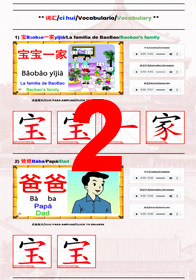
** 词汇/cí huì/Vocabulario/Vocabulary **

AVI: 词汇/Vocabulario/Vocabulary
中文/Chino/Chinese
西班牙语/Español/Spanish
英语/inglés/English

AVI: 听与重复/Escucha y repite/Listen and repeat
▶ 📝 评论 / Comentarios / Comments
• 动词 + 一 + 动词结构: 在’读一读’(dú yi dú)、’说一说’(shuō yi shuō)和 ’写一写’(xiě yi xiě)等表达中,汉字’一’放在两个相同的动词之间,表示短暂或随意的动作(’读一下’、’写一下’)。在这种结构中,’一’ 总是读作轻声(yi)。
• 拼音连写与分写规则: 对 xiǎo báitù(小白兔:小 + 白兔)应用了分写规则;而 kètáng(课堂) 和 huódòng(活动)作为双音节合成词,拼音则进行连写。
• Estructura Verbo + 一 + Verbo: En expresiones como 读一读 (dú yi dú), 说一说 (shuō yi shuō) y 写一写 (xiě yi xiě), el carácter 一 (yī) se coloca entre dos verbos idénticos para indicar una acción breve o casual (‘leer un poco’, ‘escribir un poco’ ó simplemente: lee, escribe. En esta estructura, el 一 siempre se pronuncia en tono neutro (yi).
• Agrupación en pinyin: Se aplica la regla de separación para xiǎo báitù (pequeño + conejo blanco) y se unen kètáng (clase) y huódòng (actividades) por ser palabras compuestas de dos caracteres.
• Verb + 一 + Verb structure: In expressions like 读一读 (dú yi dú), 说一说 (shuō yi shuō), and 写一写 (xiě yi xiě), the character 一 (yī) is placed between two identical verbs to indicate a brief or casual action (‘read a bit’, ‘write a bit’). In this structure, the 一 is always pronounced in a neutral tone (yi).
• Pinyin grouping: The separation rule is applied for xiǎo báitù (little + white bunny), while kètáng (class) and huódòng (activities) are grouped together as they are two-character compound words.
** 目录/mù lù/Indice de la página/Table of contents **
课文/Textos/Texts
词汇/Vocabulario/Vocabulary
补充材料/Materiales adicionales/Additional Materials

PDF与视频/PDF y videos/PDF and Videos
边玩边学/Aprenda jugando/Learn by Playing
学习西班牙语/Aprenda Español/Learn Spanish
