** 13_你吃什么?/Nǐ chī shénme?/¿Qué comes?/What do you eat? **
** 额外内容/Contenido adicional/Additional Content **
** 歌曲/gē qǔ/Canción/song **
无拼音/Sin pinyin/Without pinyin
中文歌曲/Canción en chino/Chinese song
有拼音/Con pinyin/With pinyin
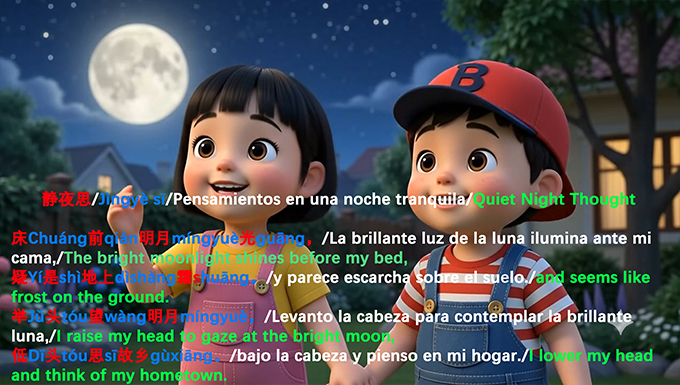
** 静夜思/Jìngyè sī/Pensamientos en una noche tranquila/Quiet Night Thought **
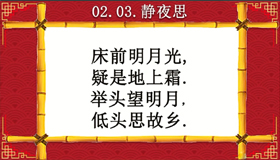
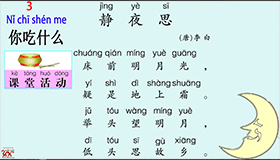
床Chuáng前qián明月míngyuè光guāng,/La brillante luz de la luna ilumina ante mi cama,/The bright moonlight shines before my bed,
疑Yí是shì地上dìshàng霜shuāng。/y parece escarcha sobre el suelo./and seems like frost on the ground.
举Jǔ头tóu望wàng明月míngyuè,/Levanto la cabeza para contemplar la brillante luna,/I raise my head to gaze at the bright moon,
低Dī头tóu思sī故乡gùxiāng。/bajo la cabeza y pienso en mi hogar./I lower my head and think of my hometown.
▶ 📝 评论 / Comentarios / Comments
** 历史/Lìshǐ/La historia/history **
** 月光下的大野餐/El gran picnic bajo la luna/The Great Moonlight Picnic **
AVI: 中文/En chino /En Chinese
中文/Chino/Chinese
AVI: 西班牙语/En español/En Spanish
西班牙语/Español/Spanish
AVI: 英语/En inglés /En English
英语/inglés/English
中文/Chino/Chinese
西班牙语/Español/Spanish
英语/inglés/English
场景1:准备野餐 / Escena 1: Preparando el picnic / Scene 1: Getting Ready for the Picnic
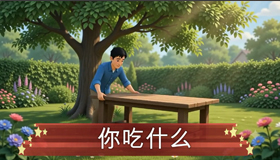
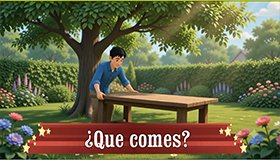
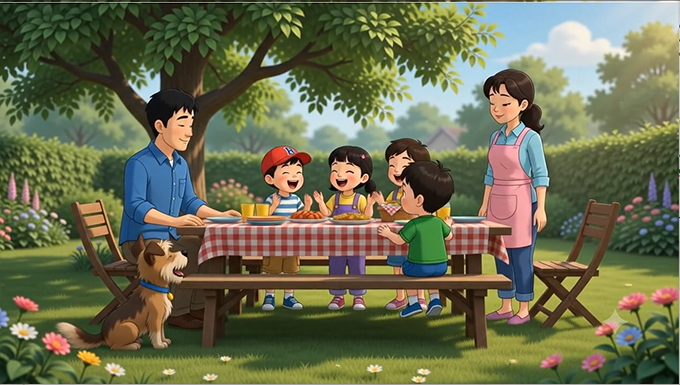
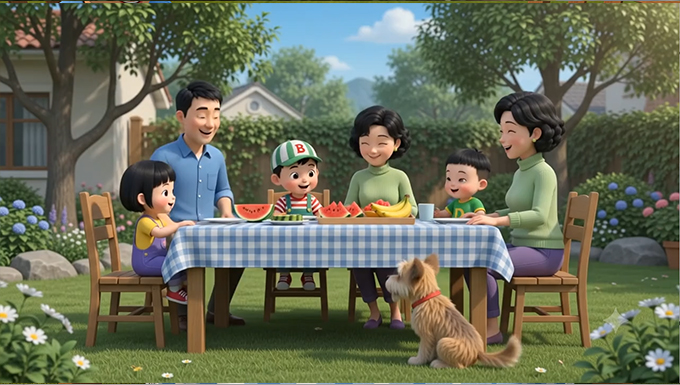
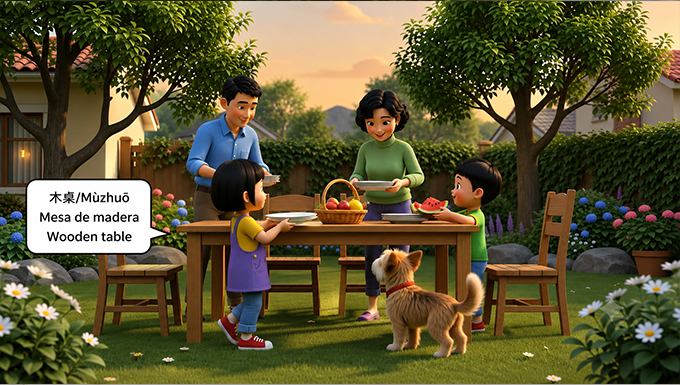
这是一个温暖的夏日下午。 (Papá,padre/Dad,father) 把一张 (Madera/Wood, Wooden) 桌子搬到花园的大树下。 (Mamá,madre/Mom,mother) 铺好漂亮的野餐布, (Baobao) 、 (Tíngting) 和 (Dudú) 一起摆放盘子。 (Rocky) 开心地围着桌子跑来跑去,不停地摇着尾巴,期待野餐开始。
Es una cálida tarde de verano. (爸爸Bàba) coloca una gran mesa de (木Mù) bajo la sombra de un árbol del jardín. (妈妈Māmā) extiende un bonito mantel de cuadros mientras (宝宝Bǎobǎo) , (婷婷Tíngtíng) y (嘟嘟Dūdū) ayudan a colocar los platos. (洛基Luòjī) corre alrededor de la mesa moviendo la cola, esperando que empiece el picnic.
It is a warm summer afternoon. (爸爸Bàba) places a large (木Mù) table under the shade of a tree in the garden. (妈妈Māmā) spreads out a beautiful picnic blanket while (宝宝Bǎobǎo) , (婷婷Tíngtíng) , and (嘟嘟Dūdū) help set out the plates. (洛基Luòjī) happily runs around the table, wagging his tail as he waits for the picnic to begin.
中文/Chino/Chinese
西班牙语/Español/Spanish
英语/inglés/English
场景2:你吃什么? / Escena 2: ¿Qué comes? / Scene 2: What Do You Eat?
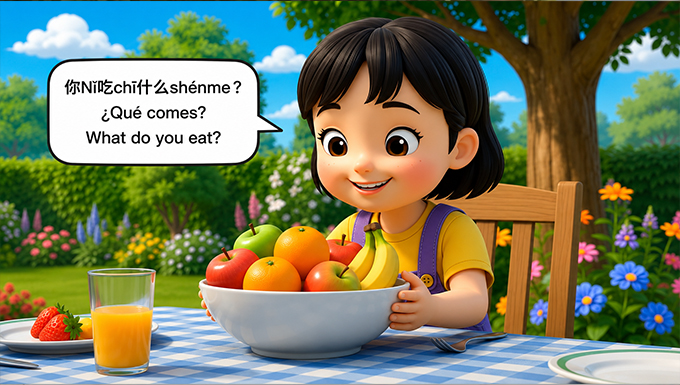
大家坐下来以后, (Tíngting) 看着装满水果的篮子,笑着问 (Baobao) :
— (¿Qué comes/What do you eat)
(Baobao) 认真地看着水果,准备回答。
Cuando todo está preparado, (婷婷Tíngtíng) observa la cesta llena de frutas y sonríe. Mira a (宝宝Bǎobǎo) con curiosidad y le pregunta:
— (你Nǐ吃chī什么shénme?) ?
(宝宝Bǎobǎo) mira atentamente todas las frutas antes de responder.
When everything is ready, (婷婷Tíngtíng) looks at the basket full of fruit and smiles. She turns to (宝宝Bǎobǎo) and asks:
— (你Nǐ吃chī什么shénme?) ?
(宝宝Bǎobǎo) carefully looks at all the fruit before answering.
中文/Chino/Chinese
西班牙语/Español/Spanish
英语/inglés/English
场景3:宝宝最喜欢的水果 / Escena 3: La fruta favorita de Baobao / Scene 3: Baobao Favorite Fruit
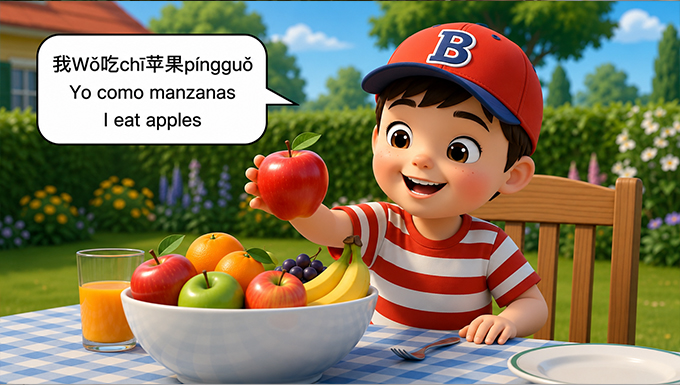
(Baobao) 高兴地举起一个红红的 (manzana(s)/apples) ,说:
— (Yo como manzanas/I eat apples) 。
(Rocky) 趴在桌子下面,高兴地摇着尾巴,希望也能得到一点好吃的。
(宝宝Bǎobǎo) levanta una brillante (2B) 苹果píngguǒ) roja y responde muy contento:
— (我Wǒ吃chī苹果píngguǒ) .
(洛基Luòjī) mueve la cola debajo de la mesa de (木Mù) esperando recibir también un pequeño premio.
(宝宝Bǎobǎo) happily holds up a shiny red apple and says:
— (我Wǒ吃chī苹果píngguǒ) .
(洛基Luòjī) wags his tail under the (木Mù) table, hoping to get a tasty treat too.
中文/Chino/Chinese
西班牙语/Español/Spanish
英语/inglés/English
场景4:嘟嘟最爱的甜点 / Escena 4: Los dulces de Dudu / Scene 4: Dudu Favorite Treats
(Mamá,madre/Mom,mother) 笑着看着 (Dudú) ,轻轻地问:
— (¿Qué comes/What do you eat)
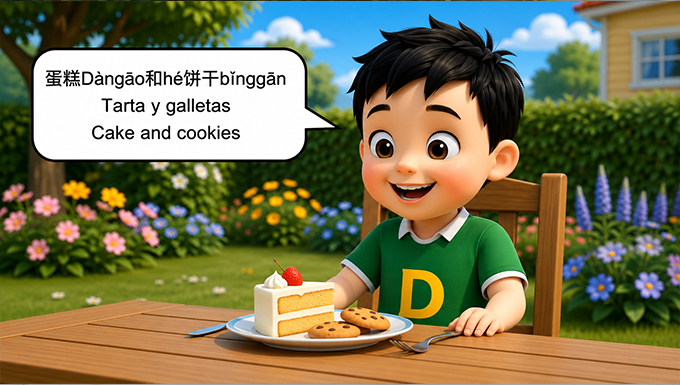
(Dudú) 开心地指着桌上的 (Tarta, pastel/Cake) 和 (Galleta(s)/Cookie(s) ) ,笑着说:
—我喜欢吃 (Tarta, pastel/Cake) 和 (Galleta(s)/Cookie(s) ) !
(妈妈Māmā) sonríe y mira a (嘟嘟Dūdū) .
— (你Nǐ吃chī什么shénme?) ?
(嘟嘟Dūdū) abre mucho los ojos al ver los postres y responde muy feliz:
—¡Yo como (蛋糕Dàngāo) y (饼干Bǐnggān) !
(妈妈Māmā) smiles at (嘟嘟Dūdū) .
— (你Nǐ吃chī什么shénme?) ?
(嘟嘟Dūdū) looks excited when he sees the desserts and answers:
—I eat (蛋糕Dàngāo) and (饼干Bǐnggān) !
中文/Chino/Chinese
西班牙语/Español/Spanish
英语/inglés/English
场景5:爸爸的大惊喜 / Escena 5: La gran sorpresa de Papá / Scene 5: Dad's Big Surprise
(Papá,padre/Dad,father) 去厨房,端着一个大托盘出来。
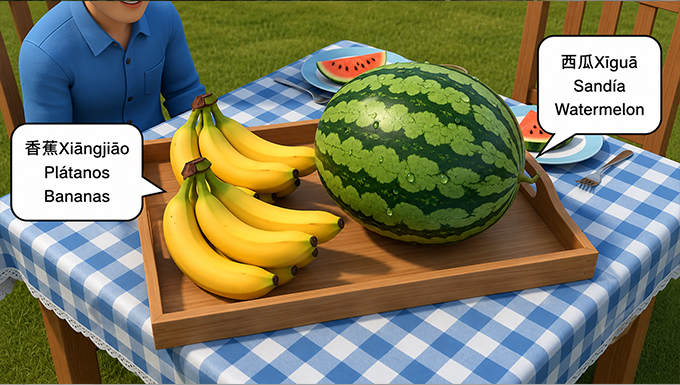
盘子里放着香甜的 (Plátano(s)/Banana(s) )和一个又大又圆的 (Sandía/Watermelon) 。
孩子们高兴地拍起手来。
(爸爸Bàba) va a la cocina y sale con una gran bandeja. Sobre ella hay unos deliciosos (香蕉Xiāngjiāo) y una enorme (西瓜Xīguā) muy fresca.
Los niños aplauden emocionados.
(爸爸Bàba) goes to the kitchen and comes out with a large tray. On it are delicious (香蕉Xiāngjiāo) and a huge fresh (西瓜Xīguā) .
The children clap with excitement.
中文/Chino/Chinese
西班牙语/Español/Spanish
英语/inglés/English
场景6:分享最快乐 / Escena 6: Compartir sabe mejor / Scene 6: Sharing Makes Everything Better
(Papá,padre/Dad,father) 把 (Sandía/Watermelon) 切成一块一块, (Mamá,madre/Mom,mother) 把 (Plátano(s)/Banana(s) )分给大家。
(Baobao) 、 (Tíngting) 和 (Dudú) 开心地一起分享水果。
(Rocky) 也得到了一份属于自己的小点心,高兴得直摇尾巴。
(爸爸Bàba) corta la (西瓜Xīguā) en grandes trozos y (妈妈Māmā) reparte los (香蕉Xiāngjiāo) . (宝宝Bǎobǎo) , (婷婷Tíngtíng) y (嘟嘟Dūdū) comparten la fruta entre todos. (洛基Luòjī) también recibe un pequeño premio especial.
(爸爸Bàba) cuts the (西瓜Xīguā) into big slices while (妈妈Māmā) shares the (香蕉Xiāngjiāo) . (宝宝Bǎobǎo) , (婷婷Tíngtíng) , and (嘟嘟Dūdū) happily share the fruit together. (洛基Luòjī) also receives a special treat.
中文/Chino/Chinese
西班牙语/Español/Spanish
英语/inglés/English
场景7:美丽的夜空 / Escena 7: Un cielo lleno de estrellas / Scene 7: A Sky Full of Stars
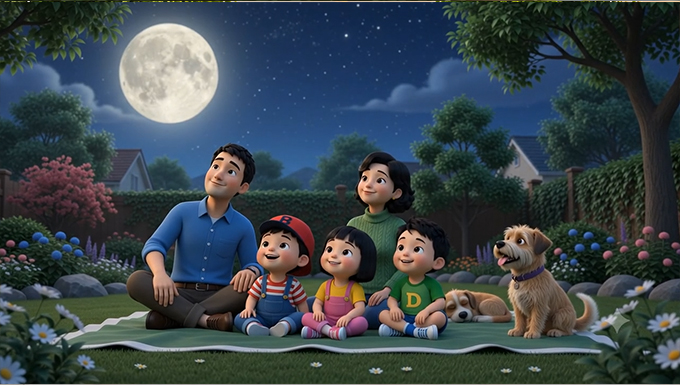
太阳慢慢落下,大家收拾好 (Madera/Wood, Wooden) 桌子,一起坐在花园的毯子上。
夜空中出现了许多星星,一轮明亮的月亮慢慢升起。
Poco a poco el sol comienza a esconderse. La familia recoge la mesa de (木Mù) y se sienta sobre una gran manta en el jardín. En el cielo aparecen las primeras estrellas y una luna enorme ilumina la noche.
As the sun slowly sets, the family puts away the (木Mù) table and sits together on a blanket in the garden. The first stars appear, and a bright moon lights up the night.
中文/Chino/Chinese
西班牙语/Español/Spanish
英语/inglés/English
场景8:静夜思 / Escena 8: La luna inspira un poema / Scene 8: The Moon Inspires a Poem
(Papá,padre/Dad,father) 抬头望着明亮的月亮,轻轻地说:
—这让我想起了《 (Pensamientos en una noche tranquila/Quiet Night Thought) 》。
孩子们也一起望向天空。
(爸爸Bàba) levanta la vista hacia la luna brillante y dice:
—Esta luna me recuerda al poema (静夜Jìngyè思sī) .
Los niños levantan la cabeza para contemplarla.
(爸爸Bàba) looks up at the bright moon and says:
—This moon reminds me of the poem (静夜Jìngyè思sī) .
The children look up at the moon with curiosity.
中文/Chino/Chinese
西班牙语/Español/Spanish
英语/inglés/English
场景9:一起背诗 / Escena 9: Recitando juntos / Scene 9: Reciting Together
(Tíngting) 和 (Baobao) 一起轻轻地朗诵《 (Pensamientos en una noche tranquila/Quiet Night Thought) 》。
(Dudú) 认真地听着, (Rocky) 静静地趴在旁边,好像也在欣赏这首美丽的古诗。
(婷婷Tíngtíng) y (宝宝Bǎobǎo) recitan juntos el poema (静夜Jìngyè思sī) . (嘟嘟Dūdū) escucha con mucha atención y (洛基Luòjī) se tumba tranquilamente a su lado.
(婷婷Tíngtíng) and (宝宝Bǎobǎo) recite (静夜Jìngyè思sī) together. (嘟嘟Dūdū) listens carefully while (洛基Luòjī) lies quietly beside them.
中文/Chino/Chinese
西班牙语/Español/Spanish
英语/inglés/English
场景10:最幸福的野餐 / Escena 10: El picnic más feliz / Scene 10: The Happiest Picnic
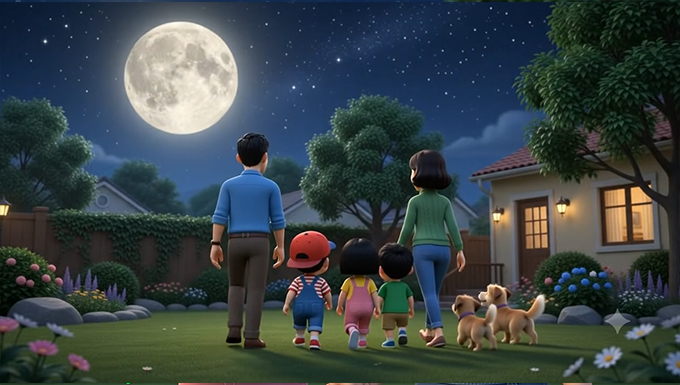
野餐结束了,大家一起收拾东西,开心地走回家。
(Baobao) 觉得,美味的水果、快乐的家人和《 (Pensamientos en una noche tranquila/Quiet Night Thought) 》,让这个夜晚变得特别美好。
La familia guarda la cesta del picnic y contempla una última vez la luna antes de volver a casa. (宝宝Bǎobǎo) piensa que compartir (2B) 苹果píngguǒ) , (蛋糕Dàngāo) , (饼干Bǐnggān) , (香蕉Xiāngjiāo) , (西瓜Xīguā) y el poema (静夜Jìngyè思sī) hace que este sea el mejor día del verano.
The family packs up the picnic basket and looks at the moon one last time before going home. (宝宝Bǎobǎo) thinks that sharing (2B) 苹果píngguǒ) , (蛋糕Dàngāo) , (饼干Bǐnggān) , (香蕉Xiāngjiāo) , (西瓜Xīguā) , and the poem (静夜Jìngyè思sī) has made it the happiest summer evening of all.
** 未替换/wèi tìhuàn/No sustituidas/Not substituted **
** 词汇/cí huì/Vocabulario/Vocabulary **
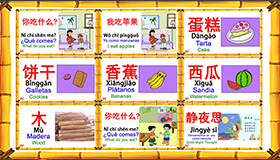
AVI: 词汇/Vocabulario/Vocabulary
中文/Chino/Chinese
西班牙语/Español/Spanish
英语/inglés/English
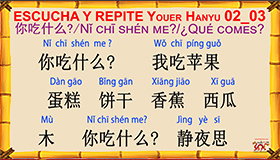
AVI: 听与重复/Escucha y repite/Listen and repeat



▶ 📝 评论 / Comentarios / Comments
2. 这节课为我们展示了中国传统文化的美丽一瞥,引入了汉字’木’(木头),它是中国哲学中自然界的五大基本元素之一。
2. La lección nos da una hermosa pincelada de la cultura tradicional china introduciendo el carácter 木 (madera) , que es uno de los cinco elementos fundamentales de la naturaleza en su filosofía.
2. The lesson gives us a beautiful brushstroke of traditional Chinese culture by introducing the character 木 (wood) , which is one of the five fundamental elements of nature in its philosophy.
** 食物和主菜/Shíwù hé zhǔcài/Comidas y Platos Principales/Meals and Main Dishes **
中文/Chino/Chinese
西班牙语/Español/Spanish
英语/inglés/English
▶ 📝 评论 / Comentarios / Comments
** 甜点、零食和饮料/Tiándiǎn, língshí hé yǐnliào/Dulces, Aperitivos y Bebidas/Sweets, Snacks, and Drinks **
中文/Chino/Chinese
西班牙语/Español/Spanish
英语/inglés/English
▶ 📝 评论 / Comentarios / Comments
** 听写/Tīngxiě/Dictado/Dictation **

点击放大/clic para ampliar/click to enlarge
听写音频/Audio del dictado/Dictation audio
AVI: 听写/Dictado/Dictation

DICTADO VOCABULARIO
** 目录/mù lù/Indice de la página/Table of contents **
课文/Textos/Texts
词汇/Vocabulario/Vocabulary
补充材料/Materiales adicionales/Additional Materials

PDF与视频/PDF y videos/PDF and Videos
边玩边学/Aprenda jugando/Learn by Playing
学习西班牙语/Aprenda Español/Learn Spanish
