
PRIMARIA_C1_N1_04_L04
** 04_L04_日月水火/Rì yuè shuǐ huǒ/Sol, luna, agua y fuego/Sun, Moon, Water and Fire **
** 额外内容/Contenido adicional/Additional Content **
** 扩大和替换/Kuòdà hé tìhuàn/Ampliar y sustituir/Expand and substitute. **
日/sol/sun
日出/salida del sol/sunrise
看日出/ver el amanecer/watch the sunrise
爸爸带我到海边看日出。/Papá me llevó a la playa a ver el amanecer./Dad took me to the seaside to watch the sunrise.
山/montaña/mountain
高山/montaña alta/high mountain
山上的石头/las piedras de la montaña/the stones on the mountain
山上有很多石头。/En la montaña hay muchas piedras./There are lots of stones on the mountain.
--------------------------------------------------------------------------------
田里的禾苗绿油油的。/Los brotes del campo están verdes y brillantes./The young crops in the field are lush and green.
--------------------------------------------------------------------------------
羊/oveja/sheep
· 像羊的头和角/parece la cabeza y los cuernos de una oveja./looks like a sheep's head and horns.
鸟/pájaro/bird
· 像一只站着的小鸟/parece un pájaro posado./looks like a perching bird.
木/árbol, madera/tree, wood
· 像一棵树/parece un árbol./looks like a tree.
竹/bambú/bamboo
· 像两根竹子/parece dos cañas de bambú./looks like two stems of bamboo.
** 想一想, 说一说/Xiǎng yi xiǎng, shuō yi shuō/Piensa y responde/Think and answer the following questions **
--------------------------------------------------------------------------------
猜一猜,连一连兔、鸟、竹、羊、木、网。/Adivina y une: conejo, pájaro, bambú, oveja, árbol, red./Guess and match: rabbit, bird, bamboo, sheep, tree, net.
日和月像什么?/¿A qué se parecen «日» y «月»?/What do “日” and “月” look like?
** 家庭/Jiātíng/FAMILIA/FAMILY **
--------------------------------------------------------------------------------
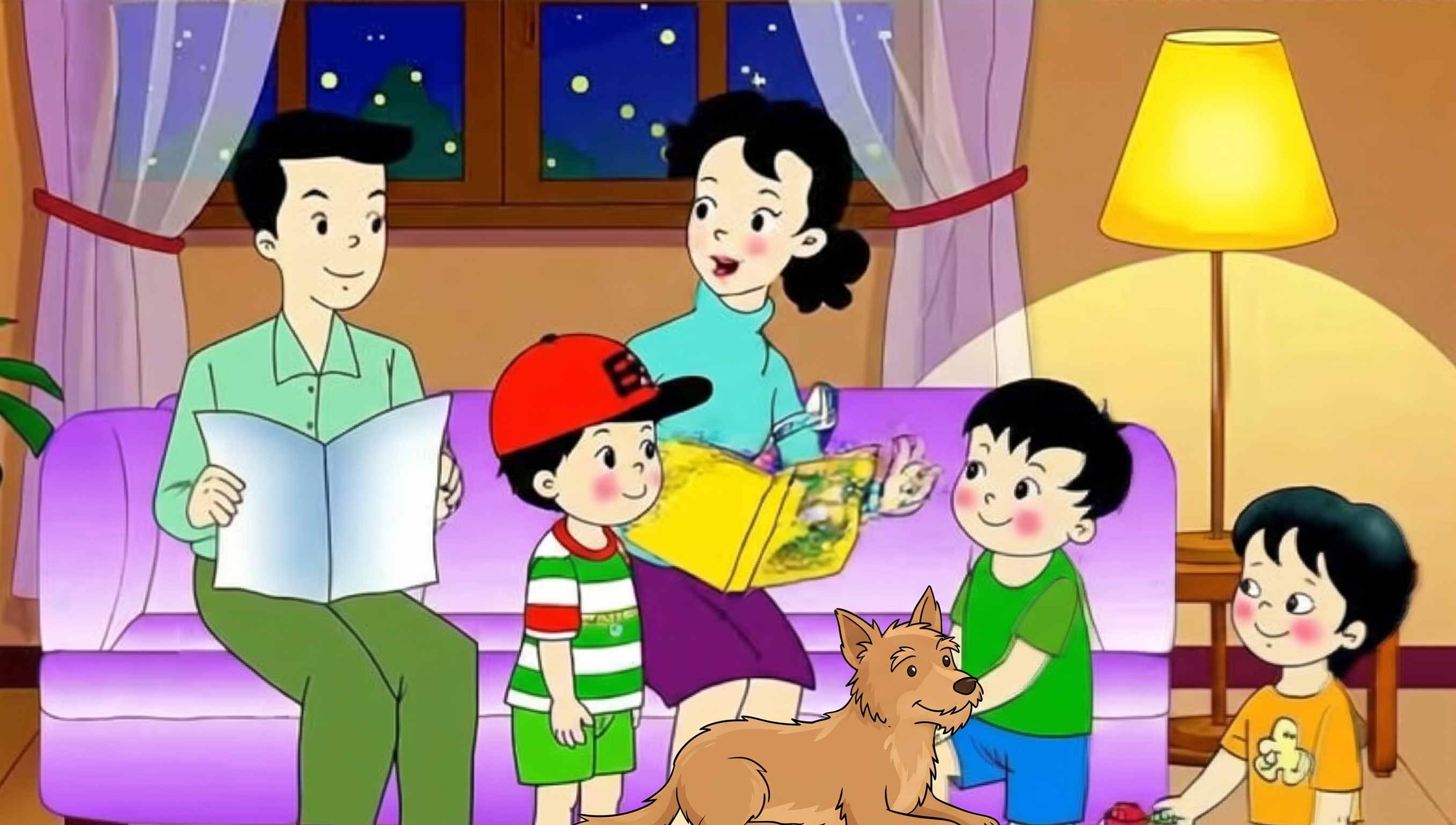
宝宝一家/La familia de Baobao/Baobao's family
爸爸/Papá, padre/Dad, father
妈妈/Mamá, madre/Mum, mother
宝宝/Baobao/Baobao
婷婷/Tíngting/Tíngting
嘟嘟/Dudú/Dudú
洛基/Rocky/Rocky
** 对话/Duìhuà/Diálogo/Dialogue **
--------------------------------------------------------------------------------
婷婷爸爸,日字为什么是方的?/Tíngting: Papá, ¿por qué el carácter «日» es cuadrado?/Tíngting: Dad, why is the character “日” square?
爸爸很久以前,日就是一个圆圆的太阳。/Papá: Hace mucho tiempo, «日» era un sol redondo./Dad: Long ago, “日” was a round sun.
嘟嘟月像弯弯的月亮!/Dudú: ¡«月» parece una luna curvada!/Dudú: “月” looks like a curved moon!
宝宝山像三座小山,火像火苗。/Baobao: «山» parece tres montañitas y «火», una llama./Baobao: “山” looks like three little hills and “火” like a flame.
妈妈对,这些字都是照着东西的样子造出来的。/Mamá: Sí, todos estos caracteres se crearon a partir de la forma de las cosas./Mum: Yes, all these characters were made from the shapes of things.
洛基汪汪!/Rocky: ¡Guau!/Rocky: Woof!
▶ 📝 评论 / Comentarios / Comments
日月水火:有趣的象形字:
1. 看图识字: 日 (rì) 、月 (yuè) 、水 (shuǐ) 、火 (huǒ) 、山 (shān) 、石 (shí) 、田 (tián) 、禾 (hé) 都是象形字。让学生把图画和古文字、楷书对照着看,发现字和事物的关系。
2. 猜一猜,连一连: 看古文字猜一猜是 兔 (tù) 、鸟 (niǎo) 、竹 (zhú) 、羊 (yáng) 、木 (mù) 、网 (wǎng) 中的哪一个,体会汉字的有趣。
3. 学写字: 写“日、田、禾、火”时注意笔顺,在田字格中写端正。
1. 看图识字: 日 (rì) 、月 (yuè) 、水 (shuǐ) 、火 (huǒ) 、山 (shān) 、石 (shí) 、田 (tián) 、禾 (hé) 都是象形字。让学生把图画和古文字、楷书对照着看,发现字和事物的关系。
2. 猜一猜,连一连: 看古文字猜一猜是 兔 (tù) 、鸟 (niǎo) 、竹 (zhú) 、羊 (yáng) 、木 (mù) 、网 (wǎng) 中的哪一个,体会汉字的有趣。
3. 学写字: 写“日、田、禾、火”时注意笔顺,在田字格中写端正。
Comentario Pedagógico: Sol, luna, agua y fuego: los divertidos pictogramas:
1. Mirar y reconocer: 日 (rì) , 月 (yuè) , 水 (shuǐ) , 火 (huǒ) , 山 (shān) , 石 (shí) , 田 (tián) y 禾 (hé) son pictogramas. Los alumnos comparan el dibujo, la escritura antigua y la actual, y descubren la relación entre el carácter y la cosa.
2. Adivinar y unir: A partir de la escritura antigua, adivinan cuál es 兔 (tù) , 鸟 (niǎo) , 竹 (zhú) , 羊 (yáng) , 木 (mù) o 网 (wǎng) , y descubren lo divertidos que son los caracteres.
3. Escribir: Al escribir “日、田、禾、火”, se cuida el orden de los trazos y se escribe bien centrado en el 田字格.
Pedagogical Commentary: Sun, Moon, Water and Fire: fun pictographs:
1. Look and recognise: 日 (rì) , 月 (yuè) , 水 (shuǐ) , 火 (huǒ) , 山 (shān) , 石 (shí) , 田 (tián) and 禾 (hé) are pictographs. Students compare the picture, the ancient form and the modern character, and discover how they relate.
2. Guess and match: From the ancient forms, students guess which is 兔 (tù) , 鸟 (niǎo) , 竹 (zhú) , 羊 (yáng) , 木 (mù) or 网 (wǎng) , and see how much fun characters can be.
3. Writing: When writing “日、田、禾、火”, students follow the stroke order and centre the character in the 田字格.

主题/Zhǔtí/Tema/Theme

其他/Qítā/Otros/Others.

词汇 Cíhuì/Vocabulario/Vocabulary

PDF与视频/PDF,videos Y Quiz/PDF, Videos and Quiz
